

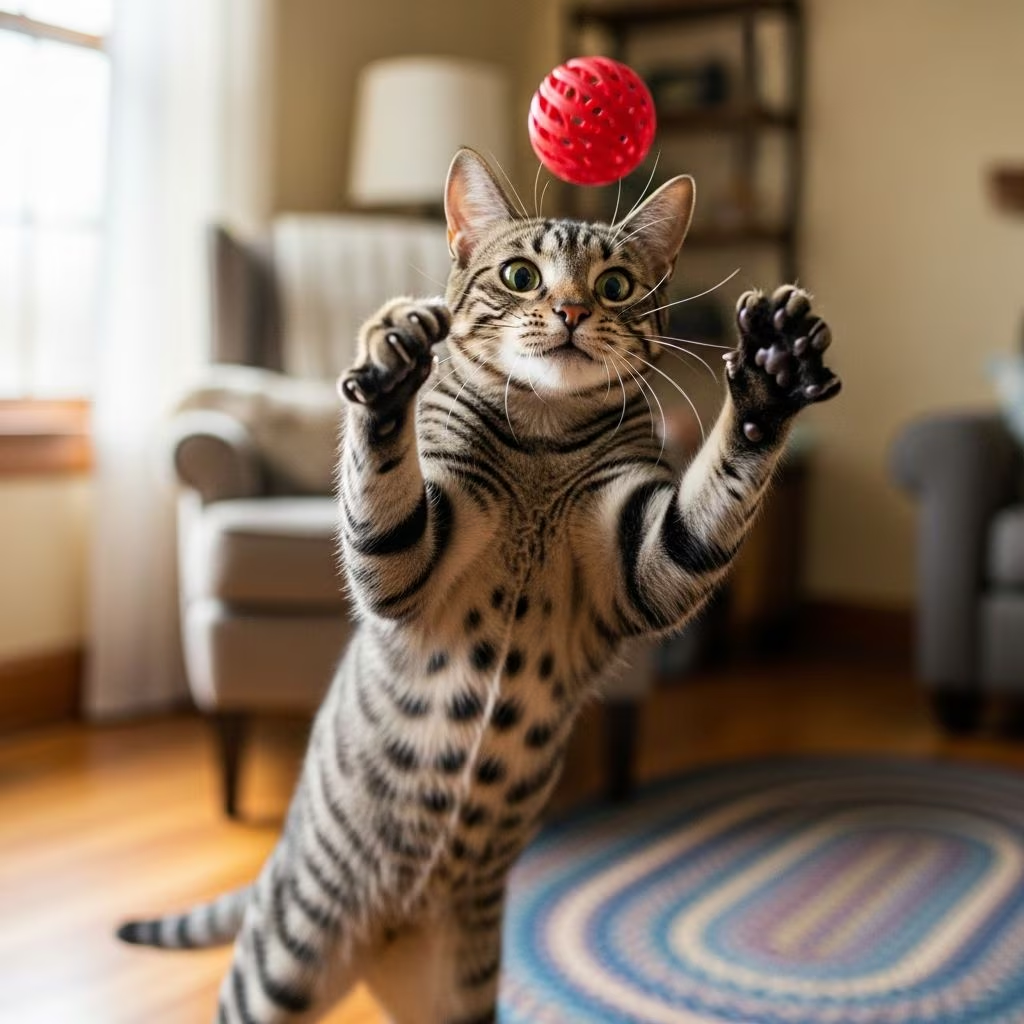
Teaching a cat to fetch might sound like a dog trick, but many felines can learn this engaging game with the right approach. Cats are intelligent and responsive to positive reinforcement, making fetch a fantastic way to stimulate their hunting instincts while strengthening your bond. This guide provides a detailed, step-by-step process based on expert veterinary advice and proven training methods.
Why Teach Your Cat to Fetch?
Fetch isn’t just entertaining; it offers multiple benefits for your cat’s physical and mental health. Regular play sessions like fetch help burn energy, reduce boredom, and prevent destructive behaviours such as scratching furniture or excessive meowing. It mimics their natural predatory chase, providing mental stimulation that keeps them sharp and content.
From a bonding perspective, fetch builds trust and communication between you and your cat. Unlike solitary play, it requires interaction, encouraging your cat to engage with you willingly. Vets note that trained cats often show reduced stress and improved overall well-being. Additionally, it’s a low-impact activity suitable for indoor cats, promoting exercise without the risks of outdoor adventures.
Interestingly, some cats take to fetch naturally, especially breeds like Bengals, Abyssinians, or Siamese known for their playful, dog-like personalities. However, any cat can learn with patience—kittens pick it up faster due to their curiosity, but adults respond well too.
Choosing the Right Toy for Fetch
The foundation of successful fetch training is selecting a toy your cat loves. Lightweight, easy-to-carry items work best, as cats prefer mouthing objects that don’t strain their jaws. Ideal choices include small soft balls, crinkle toys, or lightweight stuffed animals with bells or catnip.
Avoid heavy or oversized toys that discourage retrieval. Test several options: wave, roll, or toss them to gauge interest. The toy should excite your cat’s pouncing instinct—crunchy paper balls for some, jingly mice for others. Pro tip: Reserve this specific toy exclusively for fetch sessions to build its ‘high value’ status, increasing motivation.
- Ping-pong balls: Lightweight and bouncy, perfect for chasing on smooth floors.
- Felt balls or pom-poms: Soft for carrying, with optional catnip infusion.
- Toy mice with bells: Appeals to hunting drive with sound cues.
- Crinkle balls: Noisy texture that mimics prey rustling.
Store the toy out of reach between sessions to maintain novelty. When you retrieve it, your cat will associate the sound or sight with playtime fun.
Preparing the Perfect Training Space
Start in a small, enclosed area to minimize distractions and keep tosses short. A hallway, bathroom, or spare room works ideally—no clutter, few hiding spots, and soft flooring to prevent toy loss. As proficiency grows, expand to larger spaces like living rooms.
Timing matters: Train when your cat is alert and playful, ideally before mealtime when hunger heightens treat appeal. Keep sessions brief—3-10 minutes—to match cats’ shorter attention spans and end on a high note.
Step-by-Step Guide to Teaching Fetch
Break fetch into manageable skills: chase, pick up, return, and drop. Use positive reinforcement—treats, praise, or clickers—to mark successes instantly. Patience is key; progress may take days to weeks.
Step 1: Build Interest in the Toy
Wave the toy enticingly, roll it, or dangle it to spark curiosity. Engage in gentle tug-of-war if your cat engages. Reward any interaction with treats or verbal praise like ‘Good!’ to associate the toy with positivity.
Step 2: Short Tosses and Chasing
Once hooked, toss the toy 1-2 feet away. Praise lavishly if they chase and pick it up. Use a clicker for precise marking: click when they touch it, then treat. Repeat until chasing is consistent.
Step 3: Encourage Retrieval
Stay put after tossing—don’t approach. Call your cat’s name happily, luring with a treat. When they return with the toy, reward immediately and toss again. If they drop it midway, celebrate progress.
Step 4: Teach the Drop
If they won’t release, show a treat—they’ll drop to eat. Say ‘drop’ or ‘fetch’ consistently. Grab the toy quickly and reward. Advanced: Use a target like a lid to teach precise returns.
Step 5: Chain the Behaviour and Advance
Practice daily, gradually increasing distance. Introduce two-player fetch in a hallway for variety. Fade treats over time, using praise primarily.
| Step | Goal | Tips | Expected Time |
|---|---|---|---|
| 1. Interest | Engage with toy | Wave/roll, short play | 1-3 sessions |
| 2. Chase | Pursue tossed toy | Short tosses, click/treat | 3-7 days |
| 3. Return | Bring back | Call name, lure with treat | 1-2 weeks |
| 4. Drop | Release on command | Treat trade, verbal cue | 1 week |
| 5. Full Fetch | Complete cycle | Increase distance, consistency | 2-4 weeks |
Helpful Cat Training Tips
Cats learn differently from dogs—shorter sessions, intrinsic motivation over commands. Use clicker training for clarity: the sound bridges action and reward.
- Consistency: Same toy, cues, and rewards daily.
- Patience: Cats train slower; celebrate small wins.
- End positively: Stop before boredom sets in.
- Multi-tricks: Pair with sit, high-five for variety.
Operant conditioning drives success: reward desired actions, ignore others.
Common Challenges and Solutions
Challenge: Cat chases but doesn’t return. Lure with treats or toys; practice in confined spaces.
Challenge: Won’t drop toy. Use treat exchange; increase toy’s exclusivity.
Challenge: Loses interest. Shorten sessions, vary toys, train at peak energy times.
Challenge: Sits instead of approaching. Use targets or platforms to encourage movement.
Some cats never fully fetch—respect their personality. Focus on fun over perfection.
Frequently Asked Questions (FAQs)
Q: How long does it take to teach a cat fetch?
A: Varies by cat—kittens in weeks, adults 1-3 months with daily practice.
Q: What if my cat ignores the toy?
A: Try different textures/sounds; build interest through play first.
Q: Can older cats learn fetch?
A: Yes, with patience; senior cats benefit from gentle mental exercise.
Q: Is clicker training necessary?
A: Not essential but highly effective for marking behaviours precisely.
Q: Why use treats before meals?
A: Hunger boosts motivation without overfeeding.
Advanced Fetch Variations
Once mastered, try ‘monkey in the middle’ with a partner, or distance challenges. Teach ‘fetch to hand’ or specific drops. These keep sessions fresh and build skills.
Monitor for overexcitement—provide breaks to prevent scratches. Always supervise kittens.
References
- How to Teach a Cat To Fetch (Yes, It’s Possible) — Chewy. 2023. https://www.chewy.com/education/cat/training-and-behavior/how-to-train-a-cat-to-fetch
- How to Teach a Cat to Fetch — PetMD. 2023. https://www.petmd.com/cat/behavior/how-teach-cat-fetch
- How I Trained My Cat To Fetch — YouTube (Jackson Galaxy). 2020. https://www.youtube.com/watch?v=zrDskEObBs8



