

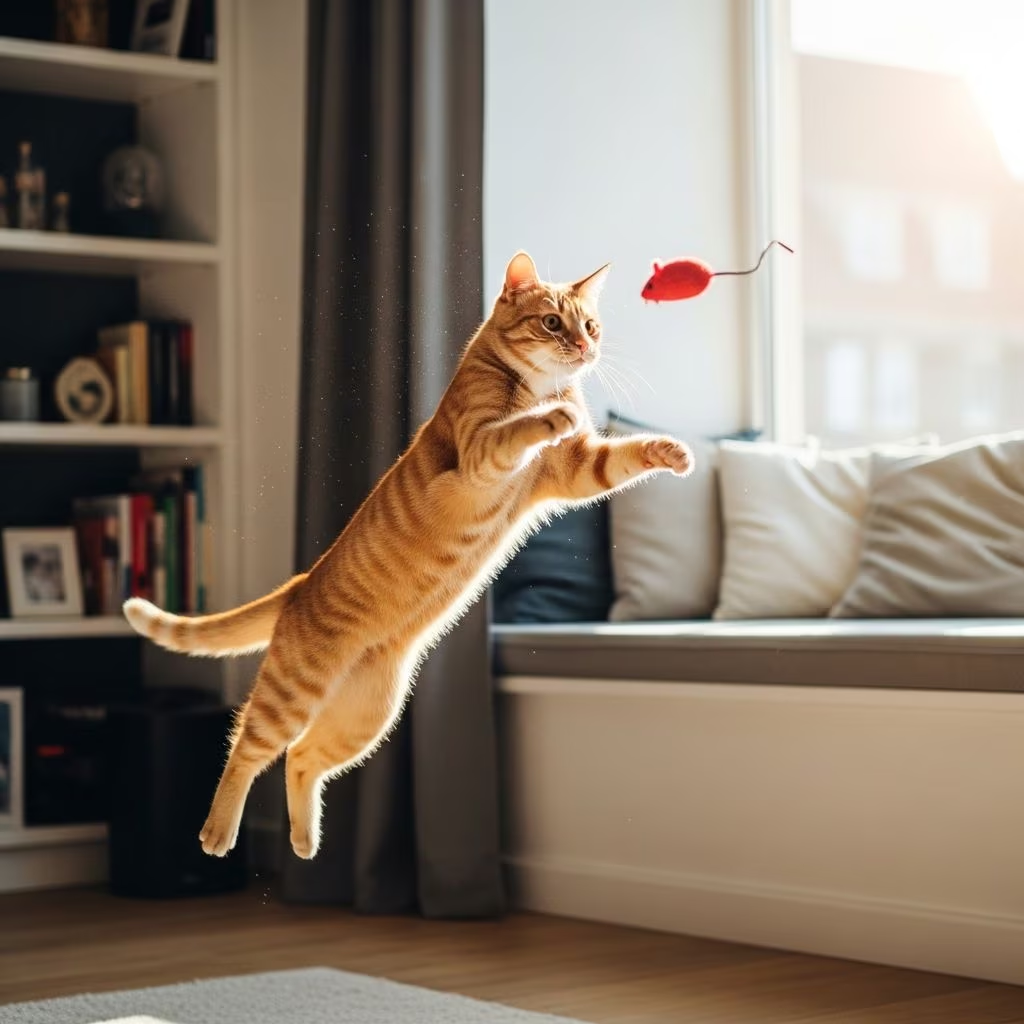
Teaching a cat to fetch might sound like a dog trick, but many felines can master it with patience and the right approach. A study reveals that around 40% of cats naturally enjoy fetch, linking it to their hunting instincts where they stalk, chase, and retrieve prey. This guide breaks down the process into actionable steps, drawing from clicker training methods and real-world examples to help you train your cat successfully.
Can Cats Learn to Fetch?
Yes, cats can absolutely learn to fetch. Unlike dogs bred for retrieval, cats retain strong predatory behaviors that make fetch appealing. Researchers note that fetch mimics the stalk-and-rush hunting pattern of cats, who chase short-distance prey and carry it to a safe spot. A survey found over 40% of cats engage in fetch, especially playful, active ones. Personality matters: energetic cats obsessed with toys or strings are prime candidates. Even aloof cats can learn through positive reinforcement, as clicker training marks desired behaviors precisely. Patience is key—some cats pick it up in days, others weeks.
Why Teach Your Cat to Fetch?
Fetch offers mental and physical stimulation, preventing boredom-related issues like destructive scratching. It strengthens the human-cat bond via interactive play, tapping into social behaviors often overlooked in felines. Training builds confidence, teaches cues like ‘drop it,’ and provides exercise in small spaces. Experts highlight its correlation with playfulness over pure predation, making it fun for both. Plus, it’s impressive—your cat fetching wows guests and counters the ‘lazy cat’ stereotype.
Choose the Right Fetch Toy
Select a toy your cat loves to ensure engagement. Cats prefer lightweight, crinkly items like plastic bags, small balls, or pom-poms that mimic prey. Test by rustling or tossing: if they pounce, it’s a winner. Avoid heavy or large toys; cats carry with mouths, not paws. Examples:
- Plastic bag balls: Crinkle sound excites hunting drive.
- Ping-pong balls: Light, bouncy, easy to mouth.
- Felt balls or mice: Soft texture for carrying.
- Catnip toys: Initial lure, fade out to prevent dependency.
Start small: one toy keeps focus. In a YouTube demo, a rolled paper with treats inside transitioned to plain toys. Kinship suggests toys matching natural interests for sustained play.
Tools You’ll Need for Training
Gather these essentials for effective sessions:
- Clicker: Marks exact behavior moment; charge by clicking then treating repeatedly.
- High-value treats: Tiny, soft pieces like chicken or tuna—irresistible rewards.
- Target stick or lid: Guides drops initially.
- Quiet space: Bathroom or small room minimizes distractions.
- Toy: Cat’s favorite, as selected.
Clicker training is superior for precision over verbal ‘yes,’ as cats distinguish sharp sounds clearly. Sessions last 5-10 minutes, 2-3 times daily.
Step-by-Step Guide to Teach Fetch
Break fetch into chains: pick up, carry, return, drop. Train each independently for a strong behavior. Use shaping: reward approximations, increasing criteria.
Step 1: Teach ‘Pick It Up’
Start easy—many cats mouth objects naturally. Roll paper with treat inside; click when cat takes it to access treat. Repeat until they target paper eagerly. Remove treat, offer empty paper—click mouth contact. Fade paper: present toy in hand, click pick-up. Reward heavily; aim for consistent mouthing.
Step 2: Teach ‘Hold and Carry’
Once picking up, encourage holding. Toss toy short distance; if cat grabs and approaches, click and treat. Use enthusiasm: act excited to lure back. If no chase, model by mouthing toy yourself and crawling back—cats mimic. Gradually increase distance.
Step 3: Teach ‘Come to You’
In a small room, sit opposite tossed toy. Call excitedly; click approach with toy. Pick up cat and toy if needed, returning to start. Treat on return reinforces path.
Step 4: Teach ‘Drop It’
Hardest step. Place treat lid nearby; cat drops toy on lid for reward. Click precise drops. Transition to hand: hold palm out, say ‘drop,’ click release into hand. Practice pick-up-drop cycle.
Step 5: Chain It Together
Toss toy, cue ‘fetch,’ click full sequence: retrieve and drop. Fade treats to every other success, then variable ratio for reliability. Sessions in ‘training mode’—fun with purring common.
Step 6: Fade the Clicker and Add Distance
Once solid, replace click with verbal ‘good’ or jackpot treats. Extend throws; practice outdoors on harness if advanced.
Pro tip: End on success; short sessions prevent frustration.
Clicker Training Basics for Fetch
Clicker bridges behavior and reward. ‘Charge’ first: click-treat 20-30 times so click predicts food. For fetch, click the instant of pick-up/drop—timing is everything. Verbal cues like ‘fetch’ added after 50% success rate. Adapt for kittens: start simpler.
Troubleshooting Common Problems
| Problem | Solution |
|---|---|
| Won’t pick up toy | Use treat-laced paper to shape mouthing; high-value lures. |
| Runs but won’t return | Model retrieval; shorten tosses; excite with voice. |
| Drops far away | Use target lid, then hand; reward only close drops. |
| Loses interest | End session; vary toys; ensure hunger before training. |
| Bats instead of mouths | Click only mouth attempts; ignore paws. |
Cats distract easily—keep sessions fun, not drills. If grudge forms, pause a day.
How Long Does It Take?
Varies: natural fetchers learn in 1-2 weeks; others 4-6. Daily 10-minute sessions yield fastest results. Track progress: video sessions. Kittens train quicker due to plasticity. Persistence pays—many cats fetch reliably lifelong.
Fun Variations and Next Tricks
Once mastered, try ‘fetch specific toy’ or ‘high-five fetch.’ Combine with ‘target’ for advanced chains. Leash walks or buttons next. Keeps engagement high.
Frequently Asked Questions (FAQs)
Can any cat learn fetch?
Most can with patience; playful personalities succeed fastest. 40% show natural interest.
What’s better, clicker or treats only?
Clicker for precision; treats reinforce. Combo ideal.
My cat fetches but randomly—how to fix?
Add consistent cue; variable rewards build reliability.
Is fetch tiring for cats?
Short bursts match hunt style; monitor energy.
Outdoor fetch safe?
Use long line; start indoors.
References
- How I Trained My Cat To Fetch — YouTube (Traveling with Jones). 2020-10-15. https://www.youtube.com/watch?v=zrDskEObBs8
- How to Train Your Cat: Tips and Cues for Kittens — Kinship. 2023-05-12. https://www.kinship.com/cat-behavior/how-to-train-your-cat
- Teach Your Cat to Fetch — Instructables. 2008-06-20. https://www.instructables.com/Teach-your-cat-to-fetch/
- Forty Percent of Cats Enjoy Playing Fetch, New Study Finds — Kinship (citing PLOS study). 2023-11-08. https://www.kinship.com/cat-behavior/cats-enjoy-fetch-study-news



