

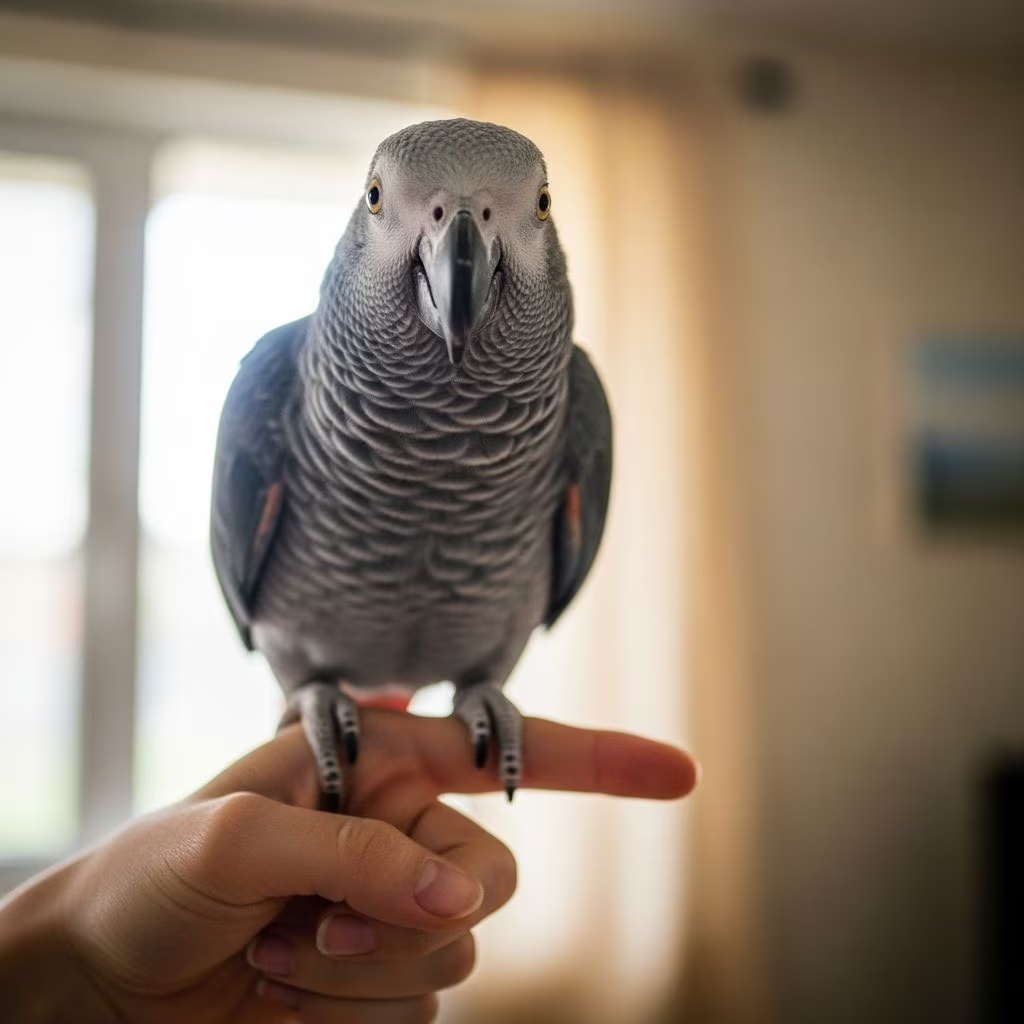
How to Teach a Bird to Talk: Training Tips and Techniques
Teaching your pet bird to talk is one of the most rewarding experiences a bird owner can have. The ability to communicate with your feathered companion through words and phrases strengthens the bond between you and creates a more interactive relationship. However, many bird owners wonder where to start, how long the process takes, and what strategies work best. This comprehensive guide will walk you through everything you need to know about teaching your bird to talk, from understanding individual learning timelines to implementing effective training techniques.
How Long Does It Take to Get a Bird to Talk?
One of the most common questions bird owners ask is how long they should expect to wait before their bird speaks its first word. The answer is that each bird learns at their own pace, and there is no fixed timeline for bird speech development. Some birds may begin mimicking words within days or weeks of consistent training, while others might take months or even years to say their first word. The variation in learning speed depends on several factors, including the individual bird’s personality, species, age, and the consistency of training efforts.
With consistent training and positive reinforcement using treats or praise, many pet birds can start to mimic words and phrases within a few months to a year. However, the timing largely depends on your individual bird. Frequent repetition and the tone of your voice can greatly influence when your bird begins to talk. Birds that receive daily interaction and consistent verbal engagement tend to learn faster than those with irregular training schedules. The key is to maintain patience and understand that learning to vocalize human speech is not a natural behavior for birds, so progress may feel slow at times.
How to Teach Your Bird to Talk
Step 1: Get Familiar With Your Bird
Before you begin any training, it’s essential to understand your individual bird’s personality and preferences. Pay close attention to when your bird is most social and open to interaction with you. Some birds may initially prefer to be spoken to from the safety of their cage, while more confident birds may like perching on you or on a bird perch nearby. Observing your bird’s behavior patterns helps you identify the optimal times for training sessions.
Understanding your bird’s mood and energy levels is crucial for successful training. You’ll know your bird is eager for attention if she’s moving around or making noise in her cage. This is your bird telling you that right now is probably a good time for training. However, if your bird looks tired and doesn’t seem very active, it’s better to take a rain check and try again another day. Forcing training sessions when your bird isn’t receptive will lead to frustration for both of you and can slow down the learning process.
Step 2: Start Talking to Your Bird
Birds in the wild use contact calls to stay connected with their flock, and pet birds often use contact calls with their human family members. This natural behavior can be leveraged to teach your bird human speech. If you greet your bird with a hearty “hello” every time you enter their room, they might say “hello” as a response call. This transforms your daily interactions into informal training opportunities.
When talking to your bird, use short, commonly used words that are easy to pronounce and remember. To build context and help your bird understand the meaning of words, associate specific words or phrases with actions. For example, say “treat” when giving your bird a treat, say “shower” before misting, or say “step up” when asking your bird to climb onto your hand. This contextual learning helps birds make connections between words and real-world actions, making the words more meaningful and easier to remember.
Since bird vocalization is often a social connectivity mechanism, reinforcing words with social interactions and enthusiastic praise can help some birds learn, while others benefit from receiving other rewards after saying the word. Every bird is unique, so you may need to experiment with different reward systems to find what motivates your individual bird the most.
Step 3: Repeat Words Often
Repetition is the fundamental key to bird learning. Birds learn by hearing words and phrases repeatedly over extended periods. You’ll have much more success by focusing on one word or phrase as opposed to overwhelming your bird with an array of words all at once. This focused approach prevents confusion and allows your bird to develop clarity with each individual word before moving on to new vocabulary.
Here are essential tips for effective repetition:
- Use an upbeat, enthusiastic tone when speaking to your bird
- Repeat one- or two-syllable words often throughout the day
- Play a recording on loop to help reinforce learning, even when you’re not actively training
- Turn on the radio or TV occasionally—some birds naturally pick up words and phrases when listening to background noise
- Avoid cursing around your bird! The emphasis often placed on curse words, combined with human reactions when birds repeat them, actually encourages birds to learn those words faster than other vocabulary
You can also teach your bird to say a cue word for an activity or action. For example, associate a foot toy with the phrase “Wanna play?” or consistently say “Step up” when asking your bird to climb onto your hand or a perch. Many birds become so accustomed to hearing these phrases in context that they begin repeating them on their own.
Step 4: Use Treats and Rewards as Motivators
Positive reinforcement through treats and praise is essential for successful bird training. Place your parrot on a perch in a calm area where your bird can focus on you without any distractions. Hold a treat up to your bird’s eye level and say an easy word like “hello!” As soon as your bird makes any sound—any sound at all—give him lots of praise and a treat that’s easy for him to eat quickly. This creates an immediate positive association between vocalizing and receiving rewards.
Repeat this process several times until your bird associates being vocal with a reward. Once your bird consistently makes sounds in response to your training, you can become more selective. Now only treat your parrot when he makes a sound that’s closer to the word you said. This shaping technique gradually refines your bird’s vocalizations to more closely resemble the actual word. This will take a couple of tries, so remember to keep training positive and always praise your parrot pal. The goal is to make the learning experience enjoyable and rewarding.
Step 5: Stay Patient and Maintain Realistic Expectations
Just because a bird can talk doesn’t mean they will. Even if your bird never learns to speak words, they may still communicate through chirps, whistles, or mimicking household noises like door bells, phone rings, or microwave beeps. It’s best to have realistic expectations about your bird’s vocal abilities. Some companion parrots will learn quicker than others, and not all companion parrots will mimic human speech. This doesn’t mean your bird is incapable or that your training has failed—it simply means your bird has chosen a different method of communication.
Patience is perhaps the most important trait for bird trainers. Keep training sessions short, with sessions lasting anywhere between thirty seconds and ten minutes, depending on your bird’s age and engagement level. If your bird starts looking away from you or grooming himself, that’s when you’ll know it’s time to end the session. Watching your bird’s body language helps you recognize when they’re reaching their limit. Signs that your bird is checking out include turning around, stretching, or preening. When you see these signs, it’s time to stop for the day.
Words and Phrases Your Bird Can Learn
When deciding what to teach your bird, choose words and phrases that are meaningful and useful in your daily interactions. Here are categories of words that work well for bird training:
Greetings: “hi,” “hello,” “bye,” “how are you?,” “who’s a good bird?,” “pretty bird”Affectionate phrases: “I love you,” “good bird,” “kisses,” “tickle, tickle”Silly sounds: kisses, laughing, whistlesTricks and training: “spin,” “wave,” “dance,” “step up,” “go potty”Names: your name, your bird’s name, other pets’ names, family member names
Starting with simple, one- or two-syllable words is recommended. Words like your bird’s name or “hello” are excellent starting points. Once your bird has successfully learned a few words, the learning process often accelerates, and they become more receptive to acquiring additional vocabulary.
The Science Behind Bird Vocalization
Understanding how birds naturally learn to communicate can improve your training approach. Budgies and parrots learn language during times when they are quiet and listening. When they’re verbal, they are practicing or using the words they’ve been learning. One indication that learning is occurring is that even birds that do not repeat words we say to them can understand and react to what we say. You can ask a non-talking bird, “Want a nut?” or “Would you like a shower,” and the bird will react appropriately. This demonstrates that comprehension develops before vocalization, and your bird is learning even if they haven’t started speaking yet.
Building the Bond Through Training
While not all birds will become chatty companions, following key steps on how to teach your bird to talk can greatly improve their chances of picking up words and phrases. Whether your bird learns a few words or develops an extensive vocabulary—or prefers whistles to words—the process itself strengthens the bond between you and your feathered friend. Training creates opportunities for daily interaction, demonstrates that you’re your bird’s friend, and helps your bird associate you with positive experiences like treats, praise, and quality time together.
Frequently Asked Questions (FAQs)
Q: At what age should I start teaching my bird to talk?
A: You can begin talking to your bird at any age, though young birds often learn faster than older birds. Starting early with consistent interaction helps establish good habits, but older birds can still learn words and phrases with patience and persistence.
Q: Which bird species are best at learning to talk?
A: African grey parrots, Amazon parrots, and macaws are known for their exceptional talking abilities and large vocabularies. However, budgies, cockatiels, and other parakeets can also learn to speak with consistent training. The best talker is often the one that receives the most consistent, positive interaction.
Q: What should I do if my bird learns curse words?
A: This is a common issue because birds learn words that receive strong emotional reactions quickly. The best approach is to avoid swearing around your bird in the first place. If your bird has already learned inappropriate words, try not to react strongly when they say them, as your reaction reinforces the behavior. Instead, redirect their attention to learning appropriate words through positive reinforcement.
Q: How many words can a bird learn?
A: This varies by species and individual. Some parrots can learn hundreds of words, while others may learn only a handful. The quality of interaction and consistency of training play significant roles in vocabulary development.
Q: What if my bird isn’t progressing in speech training?
A: If your bird isn’t making progress with words, consider teaching them to whistle first, as some birds find whistling easier than speech. Also, ensure you’re training during times when your bird is alert and receptive. If progress remains slow after several months of consistent effort, your bird may simply prefer other forms of communication, which is perfectly normal and acceptable.
Q: How often should I have training sessions?
A: Daily training sessions are ideal, even if they’re just 2-3 minutes long. Short, frequent training sessions are more effective than long, infrequent ones. Multiple brief sessions throughout the day can accelerate learning.
Q: Should I use recordings to teach my bird?
A: Yes, recordings can be helpful. Playing a recording on loop of words you want your bird to learn can reinforce learning, especially when you’re not actively training. However, direct interaction with you is still important, as your bird learns that speaking is a way to connect with their human family member.
References
- How To Teach a Bird to Talk — Chewy. 2025. https://www.chewy.com/education/bird/training-and-behavior/how-to-teach-a-bird-to-talk
- Teach Your Parakeet To Talk — Chewy. 2025. https://www.chewy.com/education/bird/parakeet/teach-your-budgie-parakeet-to-talk
- How To Train a Bird — PetMD. 2024. https://www.petmd.com/bird/how-train-bird
- 5 Basic Bird Training Tips for Beginners — Chewy. 2025. https://www.chewy.com/education/bird/training-and-behavior/5-basic-bird-training-tips-for-beginners



