

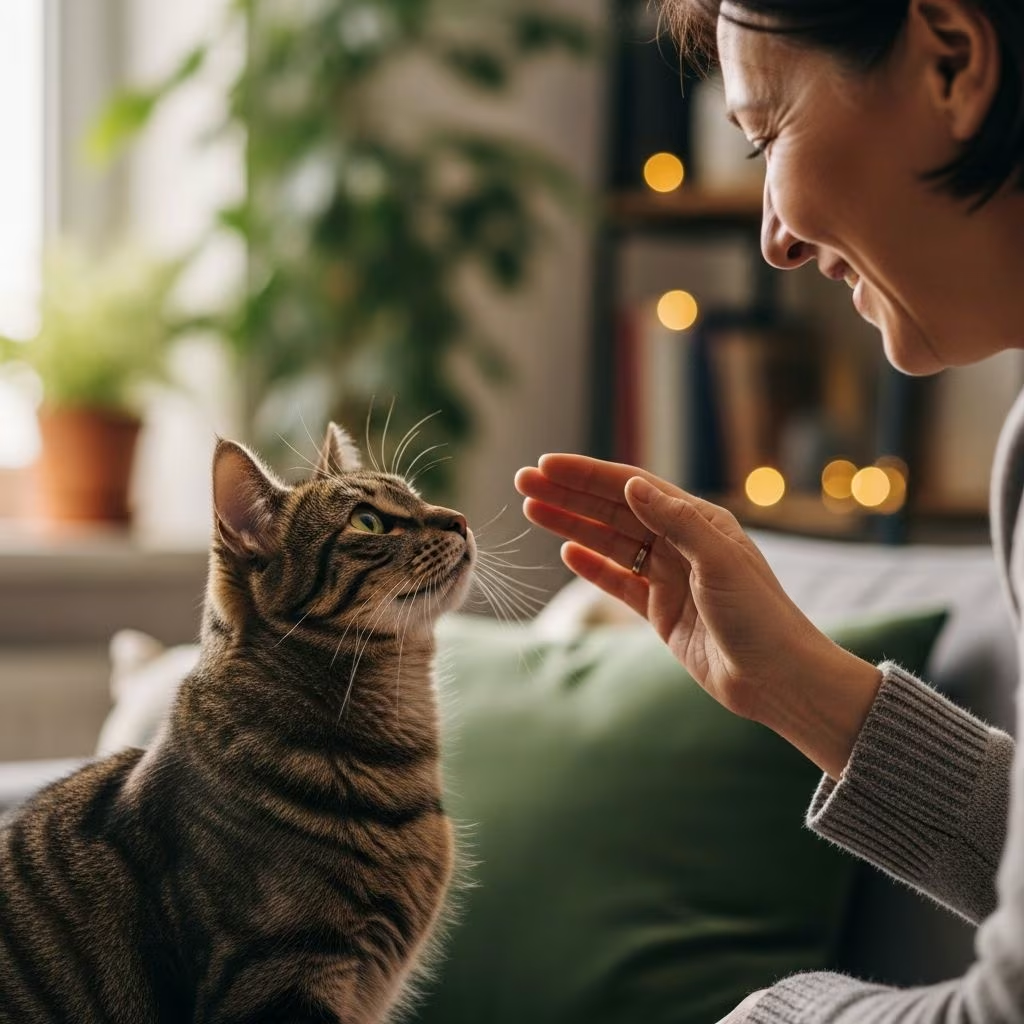
How to Talk to Your Cat: A Complete Guide to Feline Communication
Cats are fascinating creatures with complex communication systems that rival many other animals in sophistication. While your feline friend may not speak English, they definitely know how to communicate their needs, emotions, and desires through a combination of sounds, body language, and physical cues. Understanding these communication methods is essential for building a strong, healthy relationship with your cat and ensuring their well-being.
Unlike dogs, cats have one of the widest vocabularies of all carnivore species, with researchers documenting up to 21 different vocalizations and over 100 distinct sounds that cats can produce. This rich vocal repertoire, combined with their sophisticated body language, makes cats remarkably expressive animals. By learning to interpret these signals, you’ll gain valuable insights into your cat’s mental and emotional state.
Understanding Cat Vocalizations
Vocal communication is one of the primary ways cats express themselves. Cats make a wide range of sounds directed at each other and at their human companions across a variety of contexts including greeting, hostility, courtship, and mother-kitten interactions. Learning to recognize and respond to these different vocalizations will help you communicate more effectively with your feline friend.
The Meow: The Primary Cat Sound
The meow is perhaps the most recognizable cat sound and is primarily used for human communication rather than cat-to-cat interaction. Kittens meow to their mothers for attention and food, and adult cats have learned that meowing effectively communicates with their human caregivers. Each meow can mean something different depending on the context, tone, and pitch. Your cat may meow to indicate hunger, a desire to go outside, attention-seeking, or simply as a greeting. By paying attention to the various meows your cat produces and the situations in which they occur, you can begin to understand what your cat is trying to tell you.
The Trill: A Friendly Vocalization
The trill is a sweet, high-pitched rolling sound that translates roughly to “Hello! I’m so glad to see you. Gimme a little pet.” This vocalization is often accompanied by rubbing against your leg and arching up for petting. Cats will greet both their humans and other cats in this affectionate way, making the trill a clear sign of positive emotion and friendliness. If you hear your cat trilling, you can be confident they’re in a good mood and open to interaction.
The Chirrup: Calling and Greeting
The chirr or chirrup sounds like a meow rolled on the tongue and is commonly used by mother cats to call their kittens inside the nest. Interestingly, kittens recognize their own mother’s chirp but do not respond to the chirps of other mothers. This vocalization is also used in a friendly manner by cats when they are greeted by another cat or a human. People can mimic this sound to reassure and greet their pet cats, making it a useful tool for strengthening your bond.
Purring: The Sound of Contentment
Purring is one of the most well-known cat sounds and is generally a positive indicator of your cat’s emotional state. Purring tends to be formed with the mouth closed and is generally a sound used for greeting, attention, acknowledgement, and approval. Kittens may purr when they are being nursed as a sign of contentment, and the mother may also purr to reassure the kittens. Later in life, purring is generally used as a greeting and is often used during allogrooming (mutual grooming between cats). While purring typically indicates contentment and pleasure, some cats may also purr when they’re stressed or in pain, so it’s important to consider the context.
Hisses and Growls: Warning Signals
Hisses and growls are defensive vocalizations that serve as warning signals. When a cat hisses, they’re essentially saying “back off” in no uncertain terms. This is often your last warning before your cat may launch an attack with claws and teeth. Growling similarly indicates that your cat is unhappy and wants distance. These sounds should be respected, and if your cat is hissing or growling, it’s best to give them space and time to calm down.
Decoding Cat Body Language
While vocal communication is important, much of what cats are trying to tell you comes through their body language. Cats use visual signals and body language to express emotions like relaxation, fear, and aggression. Understanding these signals is crucial for recognizing your cat’s emotional state and responding appropriately.
Tail Communication
A cat’s tail is remarkably expressive and can convey a wealth of information about their emotional state:
- Tail held high: A tail held high and straight up indicates “Hi there! I’m happy, confident and comfortable.” This is a sign of a content and friendly cat.
- Tail wrapped around you: When your cat wraps their tail around your leg or arm, it shows affection and connection.
- Puffed-up tail: A tail that appears to double in size shows that your cat is scared, defensive, or trying to appear larger to intimidate a threat.
- Tail swishing or thumping: Rapid tail movement can indicate agitation, frustration, or intense focus (such as when stalking prey).
- Tail tucked: A tail held low or tucked under the body indicates fear or submission.
Eye Contact and Blinking
Your cat’s eyes provide important clues about their emotional state. One of the most significant discoveries in cat communication research is the importance of the slow blink. When your cat gazes into your eyes and blinks slowly, it’s the equivalent of a kitty kiss and means “I love being around you.” Research has shown that this simple gesture makes cats—both familiar and strange—more likely to approach and engage with humans.
Scientists confirmed through controlled experiments that this simple gesture of narrowing your eyes and blinking slowly is interpreted by cats as a friendly gesture. To try this technique yourself, try narrowing your eyes at your cat as you would in a relaxed smile, followed by closing your eyes for a couple of seconds. You’ll find they respond in the same way themselves, and you can start a sort of conversation.
Ear Position and Movement
A cat’s ear position provides valuable information about their emotional state and level of attention:
- Ears held naturally: When a cat’s ears are in their normal, relaxed position, it means the cat is feeling calm and content.
- Ears pinned back: Ears that are flattened against the head indicate that the cat is afraid, angry, or defensive.
- Ears facing forward and close together: When a cat’s ears are pointed forward and close together, it means the cat is interested in something and paying close attention.
- Ears twisted to the side: When a cat twists its ears so that the opening is to the side, it means the cat is angry or irritated.
Whiskers and Facial Expressions
Your cat’s whiskers also communicate their emotional state. Forward-pointing whiskers indicate curiosity and confidence, while whiskers pulled back suggest fear or defensiveness. The overall facial expression, combined with ear position and eye contact, provides a complete picture of your cat’s emotional state.
Tactile Communication: Touch and Bonding
Touch is an important form of communication between cats and their humans. Common forms of tactile communication include allorubbing (cats rubbing their bodies against each other or against you), allogrooming (mutual grooming), nose touching, and curling up together. These physical interactions are believed to be forms of social bonding and affection.
Head Bunting
When your cat rubs their head against your leg or hand, they’re engaging in a behavior called head bunting. This is a positive sign of affection and marks you with their scent glands as part of their family or territory. Reciprocating this affection by gently petting your cat or scratching under their chin strengthens your bond.
Appropriate Petting Techniques
Many cats are head-shy, meaning that when they see a large hand coming straight over their head they get nervous or afraid because they’re not sure if you’re going to grab or hit them. Under-the-chin scratches are the best way to make a fast friend. Start underneath and slowly work your way to the back of the ear and then to the back of their head. Then you can pet from the head to their tail in nice, even strokes until your cat gives you a signal to “please stop”.
Responding to Your Cat’s Communication
Understanding your cat’s communication is only half the battle; responding appropriately is equally important. Your responses should match your cat’s emotional state and needs.
Mirroring Your Cat’s Vocalizations
You can try communicating back with your voice by mimicking some of the sounds your cat makes. While you may not perfectly replicate feline vocalizations, the effort demonstrates engagement and can be interpreted as friendly by your cat. Additionally, if you want to communicate that playtime is over or that your cat has scratched you too hard, you can let out a shriek of your own, which will communicate clearly to your cat that it’s time to stop.
Meeting Your Cat’s Needs
Much of cat communication is about expressing needs. Your cat may meow because they want food, water, or to go outside. By combining your cat’s vocalizations with their body language and the context of the situation, you can determine what your cat needs. Responding promptly to these needs builds trust and strengthens your relationship.
Respecting Your Cat’s Boundaries
Not all cat communication is an invitation to interaction. A cat displaying warning signs such as a swishing tail, pinned-back ears, or a hiss should be given space. A swat with the front feet may have claws exposed or shielded depending on how strongly the cat wants to relay the message that they want to be left alone. Learning to recognize and respect these boundaries is essential for maintaining a safe and positive relationship with your cat.
The Slow Blink Technique: A Scientifically-Proven Connection
One of the most exciting discoveries in cat-human communication research is the effectiveness of the slow blink. In 2020, scientists conducted experiments observing cat-human interactions and confirmed that this simple gesture makes cats more likely to approach and engage with humans. The researchers found that when humans performed the slow-blink process and extended their hand toward the cat, not only were the cats more likely to blink back, but they were also more likely to approach the human’s hand after the human blinked.
This technique is accessible to anyone and can be practiced with your own cat or with cats you meet in the street. It’s a great way of enhancing the bond you have with cats. The expression occurs when the cat is relaxed and content and is interpreted as a kind of cat smile. You can start this “conversation” by slowly narrowing your eyes and then closing them for a couple of seconds, mimicking the feline smile.
Building a Stronger Bond Through Communication
Effective communication is the foundation of a strong, healthy relationship with your cat. By learning to interpret your cat’s vocalizations, body language, and tactile signals, and by responding appropriately, you demonstrate that you value and understand your feline companion. This mutual understanding leads to increased trust, better behavioral outcomes, and a more satisfying relationship for both you and your cat.
Take time each day to observe your cat’s communication patterns. Notice which meows accompany which activities, how your cat’s body language changes in different situations, and what types of interaction your cat enjoys most. This ongoing observation and response will naturally improve your communication skills over time.
Frequently Asked Questions
Q: Can cats really understand when I talk to them?
A: While cats don’t understand human language in the way humans do, they can learn to associate certain sounds and tones with specific actions or emotions. Cats can follow visual cues from their owners and respond to consistent vocal patterns, making them capable of understanding basic human communication patterns and intent.
Q: What does it mean when a cat slowly blinks at me?
A: A slow blink from your cat is a sign of affection and trust. It’s equivalent to a kitty kiss and means your cat feels safe and comfortable around you. You can return this gesture by slowly narrowing your eyes and closing them briefly, which research shows encourages cats to approach and interact with you.
Q: How can I tell if my cat is upset or angry?
A: Signs that your cat is upset include pinned-back ears, a swishing or thumping tail, hissing, growling, dilated pupils, and a crouched or defensive body posture. If you notice these signals, give your cat space and time to calm down rather than attempting to interact with them.
Q: Why does my cat chirp at me?
A: The chirp or trill is a friendly vocalization used by cats to greet humans and other cats. When your cat chirps at you, they’re essentially saying hello and indicating that they’re happy to see you. You can respond by petting them or chirping back in a friendly manner.
Q: Is it okay to pet my cat on the head?
A: Some cats are head-shy and may become nervous when hands approach their head directly. Instead, try offering under-chin scratches or petting gently, starting from underneath and working toward the back of the head and ears. Always watch your cat’s body language to ensure they’re enjoying the interaction.
Q: What does it mean when my cat wraps their tail around me?
A: When your cat wraps their tail around your leg or arm, it indicates affection and connection. This is a positive sign that your cat enjoys your company and considers you part of their family. It’s often accompanied by other friendly behaviors like purring or head bunting.
References
- Cat communication — Wikipedia. https://en.wikipedia.org/wiki/Cat_communication
- Cat language: How to Speak & Communicate with Your Cat — Fresh Step. https://www.freshstep.com/cat-care/how-to-communicate-with-your-cat/
- Scientists Reveal a Simple Technique to Communicate With Your Cat — ScienceAlert. https://www.sciencealert.com/scientists-reveal-a-simple-technique-to-communicate-with-your-cat
- Cat Communication — International Cat Care. https://icatcare.org/articles/cat-communication
- Cat Communication — SPCA of Northern Nevada. https://spcanevada.org/services/pet-education/animal-ally/cat-communication/
- How to Speak Cat: Tips to Communicate With Your Cat — Cats.com. https://cats.com/how-to-talk-to-cats



