

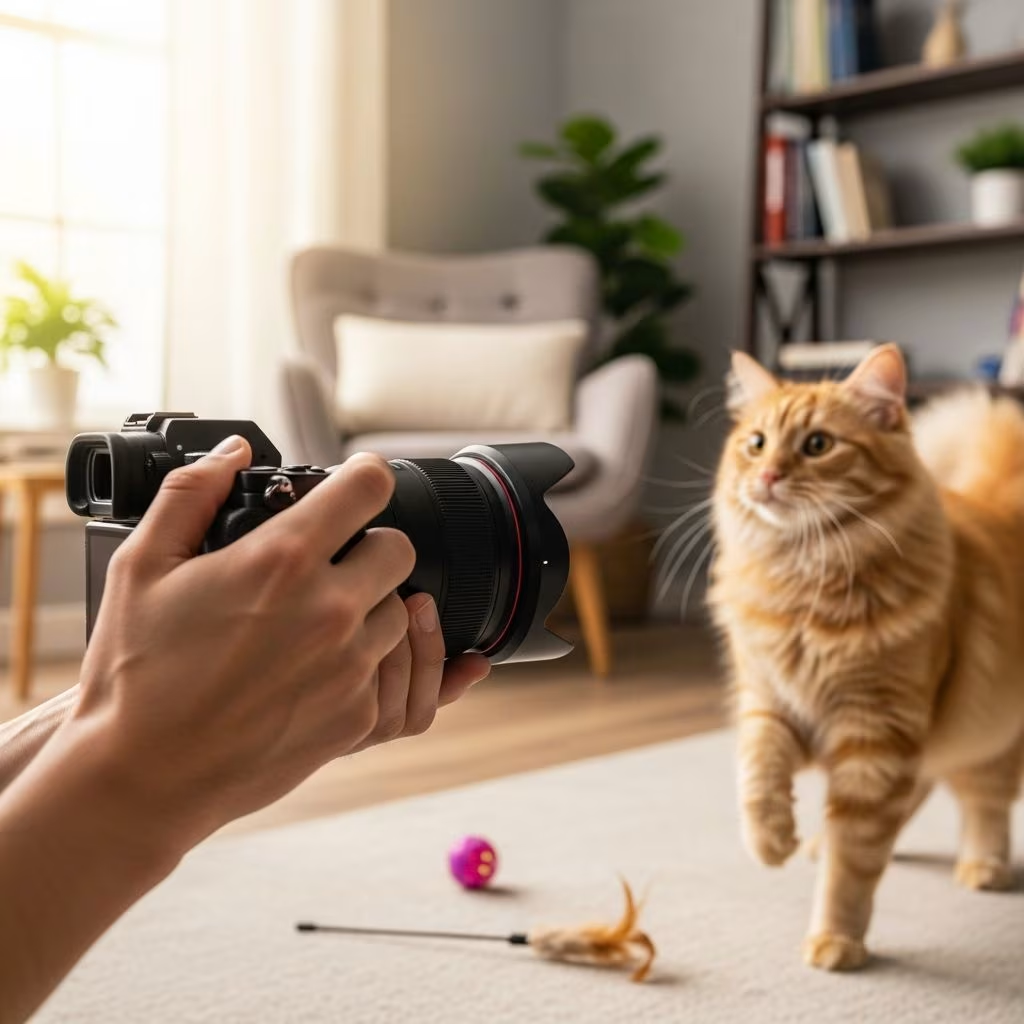
Capturing the perfect photo of your cat can be challenging, but with the right techniques, you can showcase their unique personality and beauty. Whether you’re aiming for a holiday card, social media post, or just a cherished memory, these expert tips will help you get shots as impressive as those from professional photographers like Taylor Swift’s famous Benjamin Button portrait.
Work Around Your Cat’s Tolerance Level
Not all cats love the spotlight. **Start by assessing your cat’s comfort with handling and photography.** Cat behavior expert Dr. Mikel Delgado emphasizes respecting your cat’s boundaries to avoid stress. Some cats enjoy being held for photos, while others prefer staying in their safe space. Observe if your cat tolerates being picked up long enough for a few shots or if they get anxious quickly.
Observe their body language: relaxed ears, slow blinks, and a loose tail indicate comfort. Tense posture or flattened ears mean it’s time to stop. Always prioritize their well-being over getting the perfect shot—happy cats cooperate longer.
Practice Your Poses in Advance
To avoid frustrating both you and your cat, **rehearse poses beforehand without the camera.** Hold your cat in different positions, like on your shoulder or lap, and reward with treats for tolerance. Dr. Delgado recommends positive reinforcement training, which builds comfort over time but requires patience—not ideal for last-minute holiday shoots.
Common poses include:
- Cat on your lap for a cozy vibe.
- Perched on a shelf beside you.
- Shoulder drape, like Taylor Swift’s style (if your cat allows).
Practice sessions should be short, fun, and treat-filled to associate posing with positivity.
Skip the Sweaters and Cutesy Costumes
Your cat looks best in their natural fur. **Avoid costumes during photoshoots, especially new ones.** They can cause stress and discomfort, ruining the mood. Photographer YoonSoo Kang advises against forcing outfits, as cats’ natural expressions shine brightest.
If festivity is desired, opt for a holiday-themed collar or harness your cat already wears comfortably. Never introduce new accessories mid-shoot—stick to what they know to keep them relaxed.
Take the Photo Shoot to Them
Skittish cats hate being moved. **Bring the camera to their favorite spots.** Dr. Delgado suggests photographing where your cat feels secure, like their bed or windowsill, rather than relocating them. This minimizes stress and captures authentic behaviors.
Popular cat hangouts include:
- Sunny windowsills.
- Cardboard boxes or tunnels.
- High shelves or cat trees.
Let them settle naturally before snapping.
Clean the House in Advance
A tidy environment reduces stress. **Clean shooting areas a day before to avoid last-minute chaos.** Photographer BriAnne Wills recommends neat spaces, lint rollers for fur, and treats handy. Clutter distracts and stresses cats, leading to poor cooperation.
Focus on high-traffic cat zones: vacuum fur, remove obstacles, and ensure soft lighting spots are pristine. A calm home equals a calm cat model.
Have Patience
**Patience is the top rule in cat photography.** Professional photographer YoonSoo Kang starts workshops by telling attendees to lower expectations and breathe deeply. Cats won’t pose on command, so wait for natural moments.
Take hundreds of shots; only a few will be gems. Rushing leads to blurry or stressed photos. Sessions should last 10-20 minutes max, with breaks. Persistence pays off—your cat’s personality emerges when they’re relaxed.
Be Natural
**Let cats be themselves for the best shots.** Kang never forces poses, as it upsets them. Instead, acclimate them to you and your gear with pets and treats until they’re comfortable.
Build trust: show the camera, offer toys, and let them rub against it. Authentic behaviors—like playful pounces or curious stares—create compelling images far better than staged ones.
Let There Be Light
**Natural light is key to flattering cat photos.** Position near a window for soft, even illumination that highlights fur textures without harsh shadows. Avoid direct sun to prevent squinting or overexposure.
Lighting tips:
- Shoot with light behind or to the side of the camera.
- Use sheer curtains for diffusion.
- Avoid flash—cats hate it and it creates red-eye.
Golden hour (early morning or late afternoon) offers the most magical glow.
Get Low
**Shoot at cat-eye level for intimate perspectives.** Humans tower over cats, so standard shots look distant. Lie on the floor or use a low tripod to match their viewpoint.
This technique reveals details like whisker expressions and captures their world uniquely, giving cats ‘agency’ in the frame. It’s transformative for dynamic, engaging portraits.
Toys Are Your Friend
**Use toys to direct attention and freeze motion.** Crinkle balls or wand toys create sight and sound lures. Dangle above or behind the lens to get eyes on camera.
Steps for toy trick:
- Make noise to engage cat.
- Wave toy to focus interest.
- Quickly position behind lens and shoot.
This works wonders for eye contact, crucial for adoption or portrait photos.
Consider Blocking Hiding Spots (Carefully)
Encourage visibility by **temporarily blocking bolt-holes**, per BriAnne Wills—but monitor stress. Use pillows or boxes to redirect to open areas with treats. If hiding increases anxiety, abandon and go to them.
Additional Pro Tips
Elevate your game with these:
- Burst mode: Capture sequences for the perfect mid-action frame.
- Neutral backgrounds: Plain walls or seamless paper avoid distractions.
- Team up: A helper holds toys while you shoot.
- Edit lightly: Adjust exposure, but preserve natural colors.
| Aspect | Indoor | Outdoor |
|---|---|---|
| Stress Level | Low (home turf) | High (new environment) |
| Lighting | Window-controlled | Natural but variable |
| Control | High | Low (weather, escapes) |
Frequently Asked Questions (FAQs)
What if my cat won’t look at the camera?
Use toys like crinkle balls behind the lens to draw their gaze naturally. Patience and sound cues help too.
What’s the best time of day for cat photos?
Golden hour near windows for soft, flattering light without harsh shadows.
How do I handle a hyperactive cat?
Tire them out with play first, then shoot during calm post-play naps.
Should I use a phone or DSLR?
Phones work great with good cameras; prioritize burst mode and low-light performance.
My cat hates being held—what now?
Photograph them in natural poses on furniture or the floor. Respect their space.
References
- 8 Ways to Get a Photo With Your Cat as Good as Taylor Swift’s — Kinship. 2024. https://www.kinship.com/uk/cat-lifestyle/8-ways-to-get-a-photo-with-your-cat
- How to Do the Impossible: Take Great Photos of Your Cat — Kinship. 2020. https://www.kinship.com/cat-lifestyle/how-to-take-cat-photos
- How to Photograph Your Pet Like a Pro — Kinship. N/A. https://www.kinship.com/pet-lifestyle/pet-photo-day



