

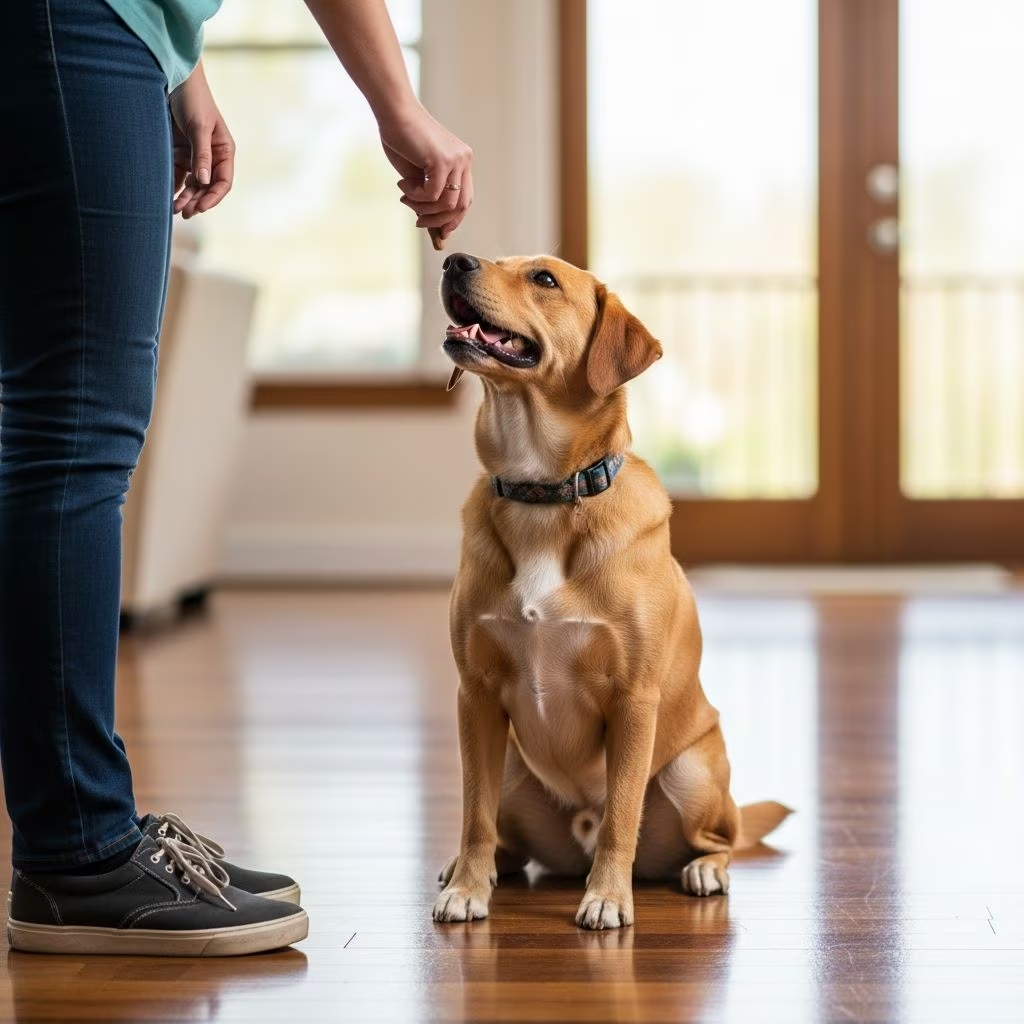
Jumping up is one of the most common dog behavior complaints, but it is also a perfectly normal way for dogs to say hello, seek attention, and release excitement. The goal is not to punish your dog for being happy to see you; it is to show them a different, calmer way to greet people that still works for them.
This guide explains why dogs jump, common triggers, and step-by-step, reward-based methods to teach polite greetings instead. You will also find management tips, safety guidance for families and visitors, and answers to frequently asked questions.
Why Dogs Jump on People
To change jumping behavior effectively, it helps to understand what your dog is getting out of it. Behavior science is clear: behaviors that are rewarded are more likely to continue. When jumping results in attention, play, or access to people, your dog learns that jumping works.
Common Reasons Dogs Jump
- Greeting rituals: Dogs naturally greet by coming close to faces; for many, that means jumping up toward our heads and hands.
- Excitement and arousal: Increased heart rate and muscle readiness during arousal make bouncy behavior like jumping more likely.
- Attention-seeking: Even being pushed away or scolded can function as attention, which reinforces the jumping.
- Investigating interesting things: Dogs may jump to smell food, toys, or scents on your clothing and breath.
- Reunion emotion: After separation, some dogs jump in intense, joyful greetings, and in some cases, anxiety-driven clinginess.
Because multiple motivations can overlap, it is important to watch what happens right before and right after your dog jumps. This tells you what is rewarding the behavior.
Is Jumping Ever a Problem?
Jumping is not always dangerous, but it can become a serious concern when:
- Your dog is large or powerful and can knock people down.
- There are children, older adults, or people with mobility challenges in the home.
- Your dog scratches, bruises, or frightens visitors.
- Jumping appears alongside signs of stress, fear, or frustration, such as stiff posture or growling.
In these cases, training polite greetings and using management are not just about manners; they are about safety and preventing bites or falls.
Understanding the Triggers for Jumping
Before you can change your dog’s jumping, you need to know when and where it happens. Behaviorists call this looking at the antecedents (what happens before) and the consequences (what happens after) of the behavior.
Typical Situations Where Dogs Jump
- When you walk through the front door after being away.
- When guests enter the house or stand up to leave.
- When you pick up a leash, toy, or food bowl.
- When joggers or visitors pass nearby on walks or at the yard fence.
- When the dog is prevented from reaching something exciting, building frustration.
How to Observe and Record Jumping
For one week, jot down notes about each jumping episode:
- Before: Who approached, what you were holding, any words or movements.
- During: How high the dog jumped, body language (loose and wiggly vs. stiff, growly).
- After: What you and others did (pushed away, laughed, petted, yelled, turned away).
Patterns will emerge that show what is reinforcing the behavior. For example, you might notice that the dog only jumps at guests who squeal and hug them, not at guests who calmly ignore them at first.
Step-by-Step Training: Teaching Polite Greetings
Effective training focuses on two things:
- Preventing jumping from being rewarded (no attention for jumping).
- Teaching and rewarding an alternative behavior that is incompatible with jumping, like sitting or keeping four paws on the floor.
Core Principle: Reward What You Want
Dogs repeat actions that earn them good outcomes. If sitting or standing calmly earns attention, petting, and treats, while jumping reliably ends the interaction, your dog will gradually choose the calmer option.
| Situation | Old Outcome | New Outcome You Create |
|---|---|---|
| Dog jumps when you walk in | Talking, petting, pushing away | Turn away, no attention until four paws are on floor |
| Dog sits instead of jumping | Sometimes ignored | Immediate praise, treats, calm petting |
| Guest enters, dog jumps | Guest laughs and pets dog | Guest turns their body away, only greets calm dog |
Exercise 1: Four Paws on the Floor
- Set up controlled practices. Start with one familiar person entering a room or standing up from a chair. Keep the environment quiet.
- Use a leash if needed. A leash helps prevent accidental reinforcement and keeps everyone safe, especially with big dogs.
- When your dog approaches and begins to jump, the person immediately turns their body sideways and looks up and away. No talking, touching, or pushing.
- The instant all four paws are on the floor, mark it with a cheerful “Yes!” or click (if using a clicker), and then calmly give a treat and gentle petting.
- If the dog jumps again, repeat: attention disappears until paws are on the ground.
Short, frequent sessions help the dog learn that keeping feet on the floor makes people predictable and rewarding.
Exercise 2: Teach a Sit-to-Greet
Sit is a simple, incompatible behavior: a dog that is sitting cannot be jumping at the same time.
- Teach a solid sit in a quiet space using treat rewards until your dog responds quickly and stays seated for a few seconds.
- Practice with a helper. The helper approaches from a few steps away. Before your dog starts to jump, cue “Sit.”
- Reward the sit generously with treats and calm praise while the helper comes closer.
- If your dog stands or jumps, the helper turns away and steps back. As soon as the dog sits again, the helper returns and gives attention.
- Gradually increase difficulty by adding mild excitement: talking, moving hands, or entering through a doorway.
Over time, your dog learns that people only move toward them and give affection when they are sitting politely.
Exercise 3: “Up” and “Off” Cues (Optional)
Some families enjoy occasional jumping, like brief hugs when invited, but want control in other situations. In that case, you can teach two distinct cues:
- “Up” – jumping is allowed only when you invite it.
- “Off” – all four paws return to the floor.
Always be consistent: if you allow jumping on cue, everyone in the household must stick to the rules so you do not confuse the dog.
Management Strategies to Prevent Practice
Training alone is not enough. Dogs get better at whatever they practice, so you must also prevent rehearsal of the jumping behavior, especially in high-intensity situations.
Practical Management Tools
- Leashes and front-clip harnesses: Use these during greetings so you can prevent lunges without harsh corrections.
- Baby gates or exercise pens: Create a barrier between your dog and visitors until everyone is settled.
- Crate or safe room: For very excitable dogs, allow them to decompress in a quiet space with a chew while guests arrive.
- Pre-visit exercise: A walk, play session, or training games before guests arrive can reduce excess energy.
- Environmental control outdoors: If your dog jumps on or at a fence when people pass, supervise and keep them on leash in the yard while you work on calm behavior.
Coaching Family and Guests
Every person your dog meets becomes part of the training plan. Inconsistent responses are one of the main reasons jumping persists.
- Explain the rules before they enter: no eye contact, no talking, and no petting if the dog jumps.
- Show them how to turn sideways and ignore jumping.
- Hand them a few treats and coach them to reward the dog for sitting or standing calmly.
Friendly, clear instructions prevent well-meaning visitors from undoing your hard work.
Special Cases: Fear, Frustration, and Fence Jumping
Not all jumping is simple happy excitement. Sometimes it is mixed with fear, frustration, or protective behavior, such as when a dog lunges and jumps at people near a fence or on walks.
Fence-Jumping and Barking at Strangers
When a dog charges and jumps at a fence, barks intensely, and then sees people move away, they may learn that this behavior is what makes strangers leave. Over time, this can strengthen protective responses and make the dog more worried about people near their territory.
Safer, more effective strategies include:
- Supervising yard time and using a leash at first to prevent rehearsing fence attacks.
- Teaching calm behaviors outdoors and rewarding the dog for looking at people and returning attention to you.
- Pairing the appearance of people with high-value treats to change the dog’s emotional response from concern to anticipation of good things.
- Avoiding punishment tools such as shock collars or invisible fences, which can increase fear and aggression, as noted by veterinary behavior organizations.
When to Call a Professional
Seek help from a certified professional trainer or veterinary behaviorist if:
- Your dog’s jumping includes growling, stiff posture, or snapping.
- Your dog has a history of biting or intense guarding of people or property.
- You feel unsafe managing greetings or yard time.
Board-certified veterinary behaviorists are veterinarians with specialized training in animal behavior and can assess medical, emotional, and environmental factors.
Staying Positive: Why Force-Free Methods Matter
Modern veterinary behavior guidelines recommend positive-reinforcement-based training as the first choice and caution against methods that rely on pain, fear, or intimidation.
Risks of Punitive Methods
- Pain or fear can suppress behavior temporarily without addressing the underlying emotion.
- Dogs may associate punishment with people or situations, increasing anxiety or aggression.
- Harsh corrections can damage trust between you and your dog.
In contrast, reward-based methods are associated with better welfare and a lower risk of aggression, and they build more reliable behavior in the long term.
Realistic Expectations: How Long Does It Take?
Every dog is different, but a realistic plan looks like this:
- First 1–2 weeks: Heavy management and basic training; you see fewer jumps in simple situations.
- Weeks 3–6: Your dog starts to offer sits or four-on-the-floor more often, even when mildly excited.
- Beyond 6 weeks: With consistent practice and visitor cooperation, polite greetings become the default.
Progress is rarely perfectly linear. Expect small setbacks after exciting events or schedule changes, and treat them as information, not failure.
Frequently Asked Questions (FAQs)
Q: Is it okay to let my dog jump on me but not on guests?
A: You can, but it makes training more complex. If you allow any jumping, teach clear cues like “up” (allowed) and “off” (end the contact), and make sure all family members respond consistently so the dog does not get mixed messages.
Q: What should I do in the moment if my dog jumps on someone?
A: Calmly interrupt by guiding the dog away with a leash or body block, ask for a sit or stand, and then let the person reward calm behavior. Avoid yelling or pushing, which can increase excitement and still count as attention.
Q: Can ignoring alone stop my dog from jumping?
A: Ignoring removes some reinforcement, but it works best when combined with actively rewarding an alternative behavior, like sitting. Without showing the dog what to do instead, progress can be slow or inconsistent.
Q: My dog only jumps on certain people. Why?
A: Dogs quickly learn which people are most rewarding. If some guests squeal, bend over, or let the dog lick their face, your dog may reserve their bounciest greetings for those individuals. Coach visitors so they respond in the same calm, consistent way.
Q: When should I worry that my dog’s jumping is more than just excitement?
A: Be concerned if jumping is paired with stiff body language, staring, growling, or snapping, or if it occurs in guarding contexts (like at fences or doors). In these cases, consult a certified trainer or veterinary behaviorist for a tailored plan.
References
- How to Stop Your Dog Jumping on People — Adopt a Pet. 2024-01-10. https://www.adoptapet.com/blog/behavior-training/how-to-stop-dog-jumping
- Ask a Trainer: How to Keep My Dog From Jumping at the Fence — Kinship. 2022-08-15. https://www.kinship.com/dog-behavior/dog-jumping-fence-solutions
- Dogs Jumping on People — Pet Harmony Animal Behavior & Training. 2023-03-20. https://petharmonytraining.com/dogs-jumping-on-people/
- Position Statement on the Use of Dominance Theory in Behavior Modification of Animals — American Veterinary Society of Animal Behavior. 2008-01-01. https://avsab.org/wp-content/uploads/2018/03/Dominance_Position_Statement_download-10-3-14.pdf
- Guidelines for the Behavioral Management of Dogs and Cats — American Animal Hospital Association. 2015-11-01. https://www.aaha.org/globalassets/02-guidelines/behavioral-mgmt/behavioralmanagement_dogsandcats.pdf



