

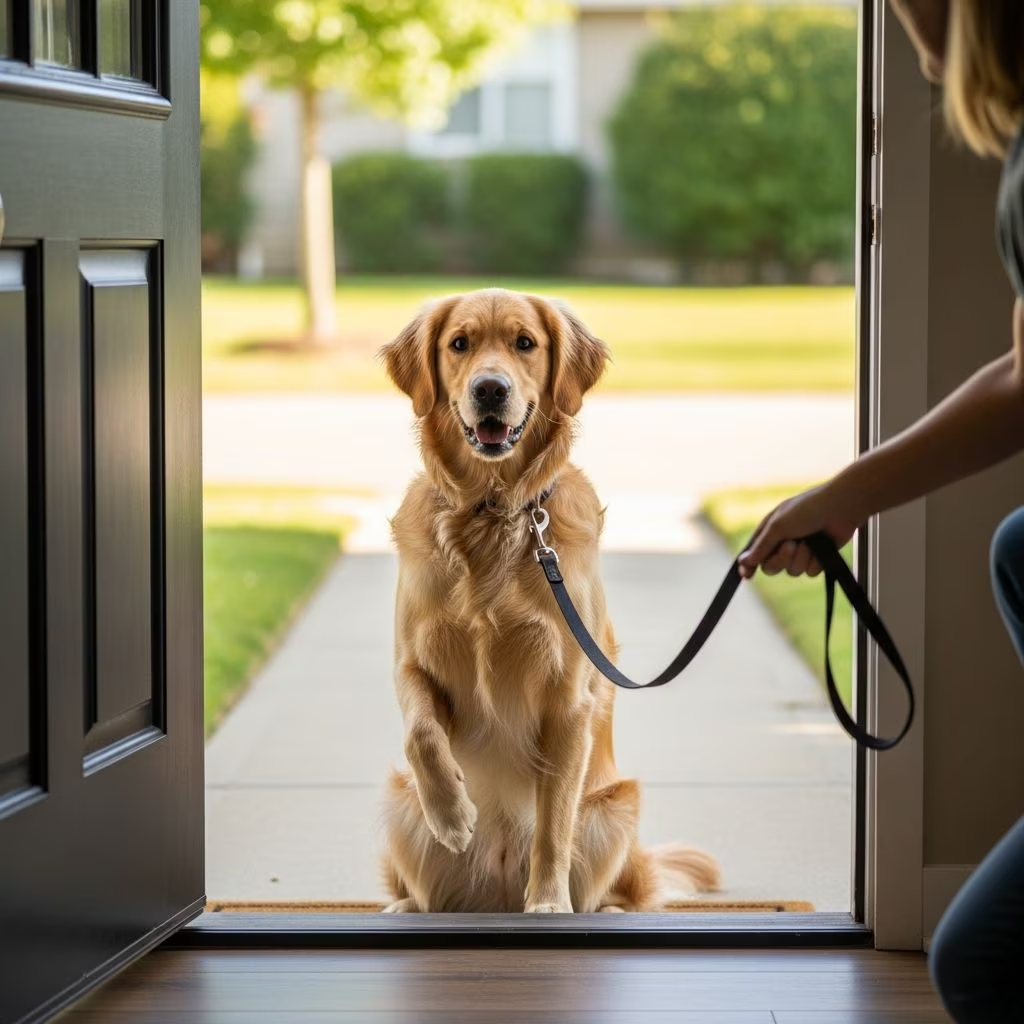
Door darting, where dogs bolt through open doors uncontrollably, poses serious safety risks like traffic accidents or getting lost. This behavior stems from excitement, impulse lack of control, and self-rewarding exploration, but it can be curbed through consistent training, management, and positive reinforcement.
What Is Door Darting?
Door darting occurs when a dog rushes out an open door without permission, often during greetings or exits. It’s an impulse-control issue amplified in busy households with children or visitors, turning simple tasks like answering the door into high-stakes challenges. Dogs find it thrilling as the outside world offers endless scents, sights, and play opportunities, reinforced by chasing games with owners.
In multi-dog homes, competition or puppy energy can worsen it, confusing roles and encouraging rivalry. Unlike purposeful escapes, door darters act on excitement, not fear, making prevention focus on self-control rather than punishment.
Why Do Dogs Door Dart?
- Excitement and Reinforcement: Outside is fun—sniffing, running—and owners chasing reinforces it as play.
- Lack of Impulse Control: Dogs haven’t learned to wait, viewing doors as gateways to adventure.
- Household Dynamics: High foot traffic, no boundaries, or rewarding excited behavior confuses dogs.
- Self-Rewarding Behavior: Even brief escapes provide joy, strengthening the habit.
Punishments like yelling or grabbing fail, as dogs link them to capture, not darting, worsening future recalls.
The Dangers of Door Darting
Bolting dogs risk busy streets, predators, fights, or injury. Lost pets strain reunions, and in heavy-traffic homes, it’s a constant hazard. Training prevents rehearsal of this dangerous impulse.
How to Get Your Door-Darting Dog Back Safely
If escape happens, avoid chasing—it fuels the game. Instead:
- Grab a squeaky toy, squeak it outside, then run away from the dog to reverse roles.
- Play tug if they chase, trading for treats, luring back to safety like a fenced yard.
- Use high-value treats or commands like “come” calmly, avoiding frustration.
Prevention trumps retrieval; management buys training time.
Training Methods to Stop Door Darting
Build self-control with positive techniques, focusing on rewards for calm behavior.
Establish an Invisible Boundary
Create a 10-15 foot “wait zone” from the door using flooring changes or tape.
- Approach door; if dog advances, calmly back them up to boundary with treats.
- Praise calm positioning, toss kibble away: “Find it!” to redirect.
- Practice 2-3 times daily; block alternate paths initially.
This lowers excitement, teaching distance respect.
Teach “Wait” and “Get Back”
Wait Cue: With dog leashed, command “sit/wait.” Touch knob, jiggle, crack door—reward stillness. Movement closes door (“Oops!”). Gradually open fully, release with “free” sometimes, leave others inside post-close.
Get Back: Mark threshold; lure back with calm praise/treats, building duration.
Desensitization and Door Drills
Practice door approaches without opening, progressing to family simulations. Toss treats away for distance rewards. Use leashes by doors until reliable.
| Method | Steps | Benefits |
|---|---|---|
| Invisible Boundary | 15ft line, back-up luring, daily reps | Reduces intensity, builds habit |
| Wait Training | Sit, knob touch to full open, release cue | Teaches threshold control |
| Treat Toss (Feeding Chickens) | Kibble scatter on approach | Redirects focus, calms |
| Desensitization | Doorbell sims, gradual exposure | Handles real scenarios |
Crate Training Integration
Make crate positive; doorbell sends dog there with treats. Consistency builds preference over darting.
Basic Obedience Foundation
Master “sit,” “stay,” “come,” tricks for door alternatives. High-value treats (meat, cheese) match excitement.
Door Management Strategies
- Leashes/Gates: Keep leash handy, use baby gates to block access.
- Structure/Rules: Pet purposefully, reward calm to clarify roles.
- Multi-Dog Homes: Address rivalry with boundaries, separate training.
- Real-Life Practice: Simulate guests, walks for consistency.
Management prevents practice of bad habits while training embeds good ones.
Tips for Success and Common Mistakes
- Consistency: All household members enforce rules.
- Positive Only: Avoid punishment; it backfires.
- Patience: Progress gradually; puppies/multi-dogs need extra time.
- Mistakes: Chasing escapees, inconsistent cues, low-value rewards.
Pet with purpose: Reward desired states, ignore/redirect undesired.
Frequently Asked Questions (FAQs)
Why does my well-fed dog still door dart?
It’s not need-driven; outside is reinforcing fun, and chases become play.
Is punishment effective?
No—dogs blame capture, not darting, eroding trust and recall.
How long until my dog stops?
Weeks of daily practice; consistency speeds results.
What if I have multiple dogs?
Set boundaries, train separately, watch guarding; structure reduces rivalry.
Best treats for training?
High-value like hot dogs/chicken bits for high-stimulation moments.
Long-Term Maintenance
Once trained, reinforce randomly. Fade treats, maintain management in chaos. Impulse control generalizes to walks, greetings.
Door darting solvable with patience yields safer, calmer dogs.
References
- How to Train Dogs to Behave at the Door and Stop Door Dashing — Dog Gone Problems. 2023-05-15. https://www.doggoneproblems.com/beau-henry/
- How to Stop a Dog From Running Out the Door — Kinship. 2024-08-20. https://www.kinship.com/dog-behavior/door-darting
- Put A Stop to Door-Darting Dogs — Whole Dog Journal. 2023-11-10. https://www.whole-dog-journal.com/behavior/put-a-stop-to-door-darting-dogs/
- How to Curb Open Door Darting — AKC Reunite. 2024-02-28. https://www.akcreunite.org/curb-open-door-darting/



