

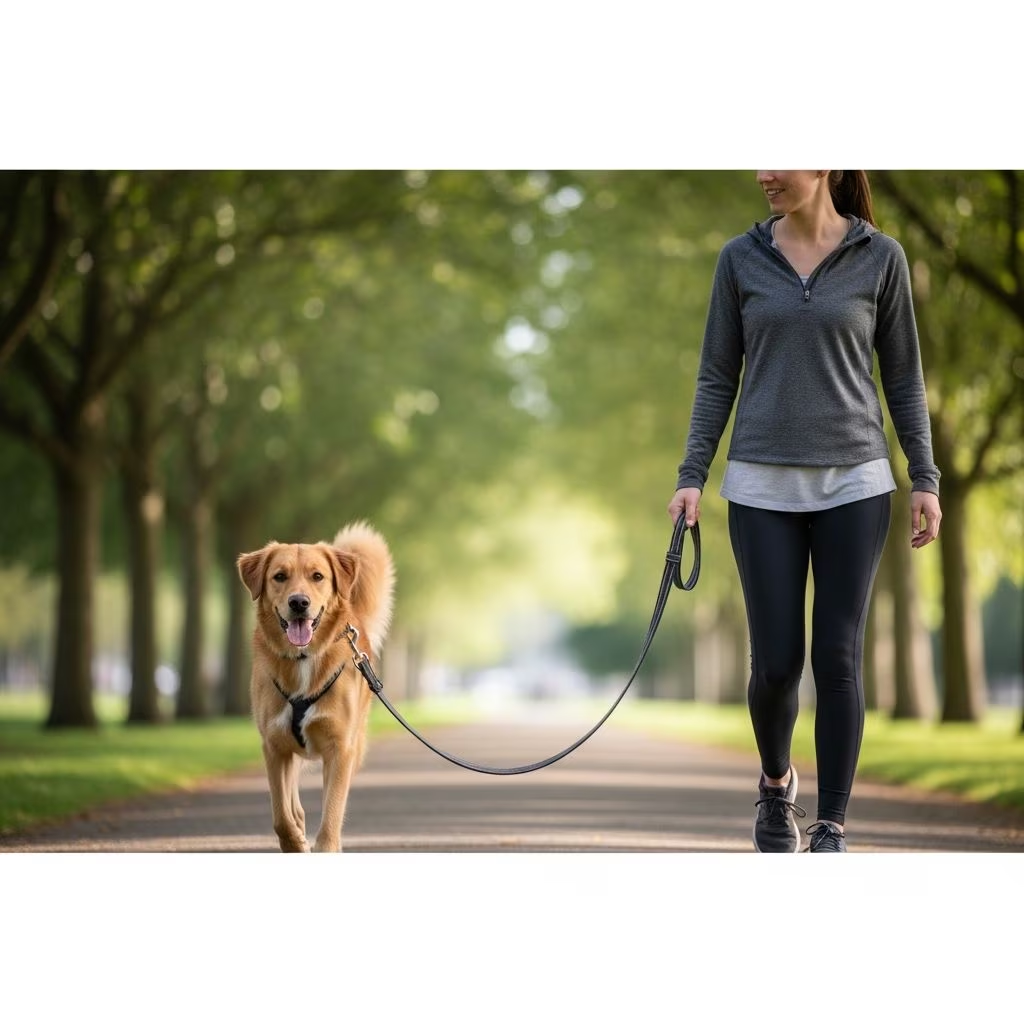
How to Stop Your Dog from Pulling on the Leash
One of the most common challenges dog owners face is their pet pulling excessively during walks. This frustrating behavior can make daily outings stressful, potentially dangerous, and less enjoyable for both you and your canine companion. Whether you have a small breed or a large, powerful dog, leash pulling is a learned behavior that can be effectively addressed through proper training techniques, consistency, and positive reinforcement. Understanding why dogs pull and implementing the right strategies will transform your walks into pleasant experiences where your dog walks calmly at your side.
Understanding Why Dogs Pull on the Leash
Before addressing solutions, it’s important to understand the motivations behind leash pulling. Dogs pull on their leashes for several reasons: they want to reach something interesting, they’re excited about the walk itself, they haven’t learned appropriate leash etiquette, or they’re seeking attention. The critical mistake many owners make is inadvertently rewarding this behavior. When your dog pulls and you move forward, you’re essentially telling them that pulling works. Dogs learn quickly that the harder they pull, the faster they get where they want to go. This reinforcement cycle makes the behavior increasingly difficult to break if not addressed immediately.
The Foundation: Always Reward Good Leash Behavior
The cornerstone of stopping leash pulling is recognizing and rewarding the behavior you want. Many dog owners focus exclusively on what their dog is doing wrong and overlook the moments of good behavior. This creates a missed training opportunity. Dogs repeat behaviors that result in rewards—whether that reward is a treat, verbal praise, physical affection, or the chance to explore something interesting.
When your dog walks politely on a loose leash, immediately acknowledge this positive behavior with a reward. During the initial training phase, be generous with treats and praise. Don’t hold back; your dog needs to clearly understand that walking nicely earns exciting rewards. As your dog’s leash walking skills improve over time, you can gradually reduce the frequency of treat rewards and begin substituting them with other reinforcements such as allowing your dog to sniff a tree, greeting another dog, or playing with a favorite toy.
The key is consistency: every instance of polite leash walking should be acknowledged and rewarded. This positive approach builds your dog’s motivation to choose loose leash walking over pulling.
Never Let Your Dog Walk While They Are Pulling
This principle directly addresses the reward cycle that reinforces pulling. Your dog pulls because they want to move forward and explore. If you allow movement to continue while they’re pulling, you’re providing exactly the reward they’re seeking, which guarantees the behavior will persist and likely intensify.
The solution is straightforward but requires discipline: the moment your dog begins pulling, stop walking immediately. Plant your feet firmly and remain stationary. Don’t jerk the leash, yell, or show frustration. Simply become an immovable object. Your dog will quickly learn that pulling results in a complete halt to forward progress. Over time, this teaches them that pulling doesn’t work and is counterproductive to their goal of moving forward.
This technique works because it removes the reward. Your dog will eventually try a different behavior—returning to your side or releasing tension on the leash. This is the exact moment you’re waiting for to resume walking and offer rewards.
Wait for a Loose Leash Before You Walk
Knowing exactly when to resume walking is crucial for training success. After you stop walking due to pulling, wait for your dog to either return to you or create slack in the leash. The leash should form a J-shape, indicating there’s no tension on it.
In the early stages of training, this waiting period might seem frustratingly long. Your dog may take considerable time to figure out that returning to you is the solution. Be patient. Eventually, curiosity will prompt your dog to turn around or come closer to see what’s holding up the walk. The moment the leash becomes slack and your dog’s attention returns to you, praise enthusiastically and offer a treat at your side. Then resume walking.
Initially, you may need to stop and start every few steps. This is normal and actually an important part of the learning process. Your dog is beginning to understand the cause-and-effect relationship: pulling makes the walk stop, and loose leash walking allows it to continue. Persistence pays off, as most dogs quickly internalize this lesson.
Maintain a Brisk Walking Pace
Many owners unknowingly set themselves up for failure by walking too slowly. Most dogs naturally walk at a faster pace than humans prefer, and this speed difference contributes to pulling. When a dog feels they’re being held back from their natural pace, they’re more inclined to pull forward.
While training, choose a walking speed that feels brisk and comfortable for both you and your dog. This quicker pace actually makes the training process easier because your dog feels more engaged and less frustrated. Once your dog has mastered loose leash walking at a faster pace, you can gradually slow down if desired. Many owners find that this faster pace continues to work well because the dog remains engaged throughout the walk.
Consistency Is Your Most Powerful Tool
Training success depends almost entirely on consistent application of your chosen techniques. It’s tempting to relax your standards when circumstances are inconvenient—when you’re running late for work, it’s extremely cold outside, or you’re tired. However, every single time you allow your dog to pull without consequence, you’re undoing your previous training progress and sending a confusing message: sometimes pulling is acceptable.
Inconsistent enforcement sets your training back significantly. If you’ve made progress over several weeks, one occasion of allowing pulling can restart the clock. Until your dog consistently walks on a loose leash for extended distances, avoid permitting any pulling. If you’re short on time, allow your dog to relieve themselves in your yard or at the curb rather than attempting a full walk. Save the structured walks for times when you can properly supervise and enforce your no-pulling rule.
Managing Distractions and Maintaining Focus
Dogs pull harder when they become overly stimulated by environmental distractions—another dog in the distance, a squirrel, interesting smells, or unfamiliar people. Prevention is more effective than reaction in these situations.
The strategy is to capture your dog’s attention before they notice the distraction. When you anticipate a potential trigger, offer treats, initiate a game, or ask for simple behaviors like sitting or a hand target. These engaging activities keep your dog focused on you rather than the distraction. You can also teach your dog to make eye contact using a “watch me” cue, which gives you control over their visual attention and prevents them from fixating on something that would trigger pulling.
By being proactive and redirecting attention before distractions fully capture your dog’s interest, you prevent the pulling behavior from occurring in the first place. This is far more effective than trying to correct pulling after your dog has already become fixated on something.
Choosing the Right Equipment
While training techniques are paramount, the right equipment can facilitate better leash walking. Different collar and harness options provide varying levels of control and comfort:
| Equipment Type | Effectiveness | Best For |
|---|---|---|
| Head Halters | Most Effective | Strong pullers, large breeds |
| Martingale Collars | Highly Effective | Dogs requiring gentle guidance |
| Slip Leads | Highly Effective | Training situations |
| Standard Collars | Moderate | Well-trained dogs |
| Front-Clip Harness | Moderate | Medium pullers |
| Rear-Clip Harness | Least Effective | Non-pullers, most comfortable |
Equipment closer to your dog’s head provides greater control and makes it more difficult for them to pull. Head halters are the most effective, though some dogs require an adjustment period. Martingale collars work by briefly tightening when tension is applied, then loosening again—they should never remain tight continuously. Importantly, equipment should complement training efforts rather than replace them. Your goal is for your dog to learn to walk politely, not to become dependent on restrictive equipment.
Training Techniques for Severe Pullers
For dogs with especially strong pulling habits, additional techniques can accelerate progress. The Corrective U-Turn involves silently turning around and walking in the opposite direction when your dog pulls, before they even realize you’ve changed direction. This technique works best when executed quietly without fanfare. The dog’s momentum carries them forward, then they suddenly discover you’ve gone the other way, creating a natural teaching moment.
For particularly aggressive pullers, the Stop-and-Pop technique combines a complete halt with a correction only if the dog fails to stop with you. When you stop, if your dog also stops, they’ve succeeded and should be rewarded. If they continue forward, a brief leash correction follows. This approach gives your dog the opportunity to make the right choice before any correction is necessary.
The key with any technique is consistency and clarity. Your dog should understand the rules: pulling always results in a consequence (forward motion stops), while loose leash walking always results in a reward. Without this clarity, training takes considerably longer.
Advanced Training with Longlines
Once your dog has improved on regular walks, practicing with a longline (an extended lead of 15-30 feet) can reinforce loose leash walking in open environments. Longlines allow your dog more freedom while still maintaining control. They’re particularly useful for practicing in parks or beaches where you want to give your dog additional exploration opportunities without completely off-leash freedom.
Common Mistakes to Avoid
Understanding what not to do is as important as knowing the correct techniques. Avoid these common mistakes:
– Allowing occasional pulling when convenient (inconsistency)
– Pulling back on the leash aggressively as a correction
– Yelling, scolding, or showing frustration
– Rewarding pulling by moving forward when it occurs
– Walking too slowly, frustrating your dog
– Failing to reward good behavior consistently
– Switching techniques randomly without giving any single approach time to work
– Using equipment without combining it with proper training
Expected Timeline for Progress
Most dogs show noticeable improvement in leash pulling within 1-2 weeks of consistent training. However, complete mastery typically requires 4-8 weeks of dedicated effort. The exact timeline depends on your dog’s age, temperament, the severity of the pulling habit, and your consistency in applying training techniques. Puppies often learn faster, while adult dogs with years of pulling experience may require longer. The key is maintaining your commitment throughout the process.
Frequently Asked Questions
Q: How long should training sessions be?
A: Every walk is a training session. Rather than separate training periods, apply your techniques consistently during all daily walks. Sessions naturally vary in length based on your dog’s needs and schedule.
Q: Can older dogs learn to stop pulling?
A: Absolutely. While puppies may learn faster, adult and senior dogs are fully capable of changing behavior. They simply need consistent training and may require slightly more patience.
Q: Should I use treats on every reward?
A: Initially, yes—treats help clarify to your dog what you’re rewarding. As training progresses, gradually substitute treats with verbal praise, petting, or permission to sniff, which your dog also finds rewarding.
Q: What if my dog ignores treats during walks?
A: Use higher-value treats they absolutely love, or practice training in less distracting environments initially. Once your dog is responding reliably, gradually increase the difficulty level.
Q: Is a head halter cruel?
A: No. When properly fitted and introduced gradually, head halters are humane tools that simply direct your dog’s head, making pulling impossible. They do not restrict eating, drinking, or panting.
Q: Should I stop walking if my dog pulls just slightly?
A: In early training, yes. This teaches your dog that any tension is unacceptable. As behavior improves, you can become slightly more lenient with minor slack in the leash.
References
- Expert Tips on Dog Leash Issues — American Kennel Club. 2024. https://www.akc.org/expert-advice/training/expert-tips-dog-leash-issues/
- How To Fix Leash Pulling Techniques — American Standard Dog Training. November 22, 2024. https://www.youtube.com/watch?v=mM-YIoJyko8
- Best Dog Collars, Halters & Leads to Stop Dog Pulling — Best Mate Dog Training. 2024. https://www.bestmatedogtraining.co.nz/dog-training-blog/best-dog-collars-and-leads-to-stop-dogs-pulling-on-the-lead
- How to Train Your Dog to Walk Nicely on the Lead — RSPCA. 2024. https://www.rspca.org.uk/adviceandwelfare/pets/dogs/training/walknicely



