

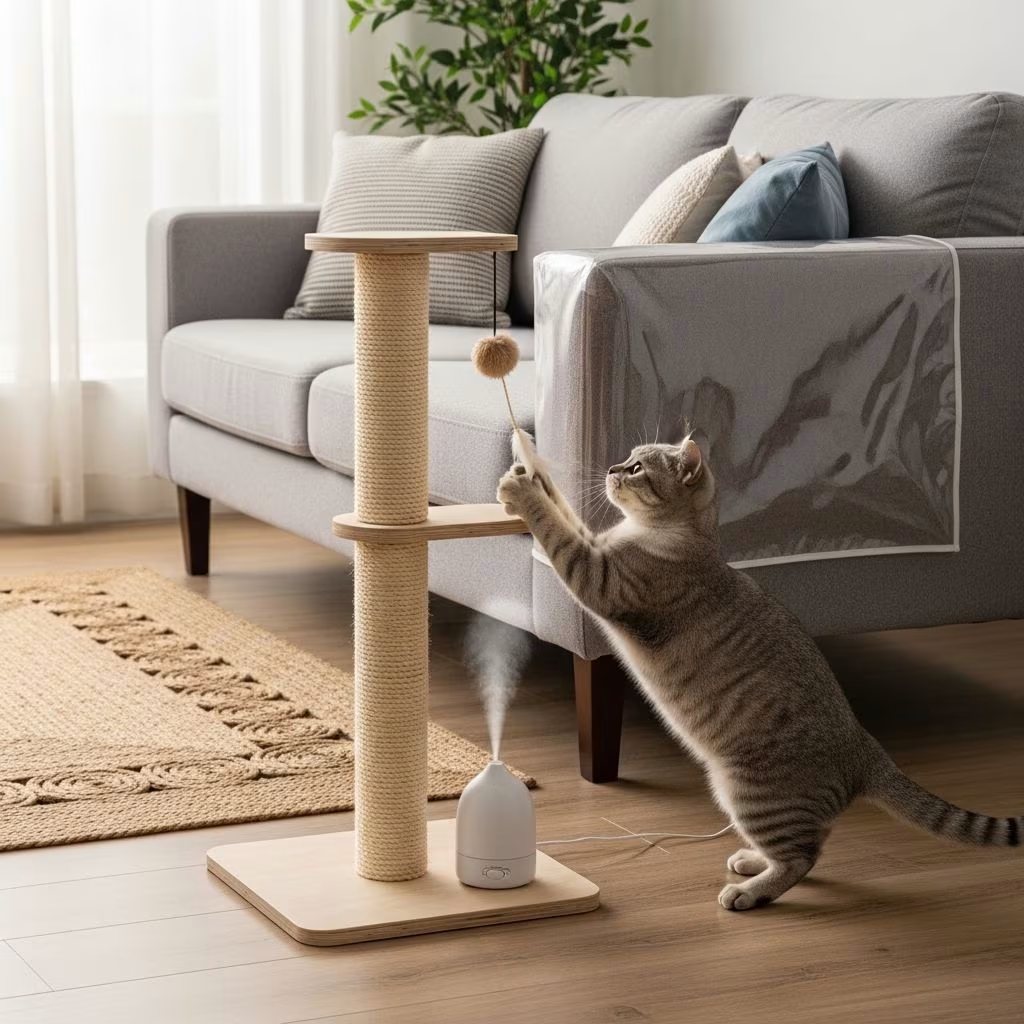
Scratching is a completely natural and essential behavior for cats, serving purposes like claw maintenance, territory marking, stretching, and stress relief. While it’s instinctive, it often leads to damaged furniture, frustrating many cat owners. The good news is that with understanding and consistent strategies, you can redirect this behavior to appropriate surfaces, preserving your home while meeting your cat’s needs.
This comprehensive guide draws from veterinary research and expert recommendations to provide step-by-step solutions. By providing appealing alternatives, using deterrents, trimming nails, enriching the environment, and employing positive reinforcement, most cats can be trained to scratch designated posts instead of couches, chairs, or carpets.
Why Do Cats Scratch Furniture?
Cats scratch for several biological and behavioral reasons. Primarily, it helps them shed old claw sheaths, keeping nails sharp and healthy. Scratching also stretches their muscles after rest and allows them to mark territory with scent glands in their paws, communicating with other cats.
Environmental factors play a role too. Stress from household changes, boredom, or high activity levels can increase scratching. Research shows cats in homes with children scratch more due to heightened stress or stimulation. Personality traits, like high energy or boldness, also influence the intensity of this behavior.
Understanding these motivations is key: punishment doesn’t work and can worsen stress-related scratching. Instead, focus on redirection and enrichment to satisfy innate needs.
Step-by-Step Guide to Stopping Furniture Scratching
Implement these proven steps consistently for best results. Patience is essential, as behavior change may take weeks.
Step 1: Trim Your Cat’s Nails Regularly
Regular nail trims blunt sharp edges, minimizing damage even if scratching occurs. Every 10-14 days, gently clip just the tips using cat-specific clippers—avoid the quick (pink part with blood vessels).
- Acclimate your cat by touching paws daily and rewarding with treats.
- If uncomfortable, seek a vet or groomer.
- Soft claw caps offer a non-invasive alternative for extended protection.
This simple maintenance reduces destruction immediately while you address root behaviors.
Step 2: Provide Appealing Scratching Alternatives
Not all scratching posts are equal—match your cat’s preferences for vertical/horizontal orientation and materials like sisal rope, carpet, cardboard, or wood.
- Observe what they scratch: textured wallpaper? Offer ridged vertical posts. Couch fabric? Try carpeted or rope-wrapped options.
- Provide variety: tall posts for stretching, flat boards for horizontal scrappers, and kitten/senior-friendly soft cardboard scratchers.
- Catnip-impregnated posts attract many cats initially.
Multiple options increase success rates, as cats choose based on texture and height that mimic damaged items.
Step 3: Strategically Place Scratching Stations
Convenience is crucial—position posts near problem areas, resting spots, or high-traffic paths.
- Place near couch or stairs if targeted there.
- Ensure stability to build confidence.
- For multi-cat homes, provide one per cat plus extras.
Proximity reinforces good habits before bad ones form.
Step 4: Make Furniture Unappealing with Deterrents
Protect surfaces temporarily while training. Cats avoid sticky, noisy, or citrus-scented textures.
| Deterrent Type | Examples | Pros | Cons |
|---|---|---|---|
| Covers/Guards | Furniture slips, plastic guards | Durable protection | May look temporary |
| Texture Barriers | Double-sided tape, aluminum foil | Cats dislike feel | Needs frequent reapplication |
| Sprays | Citrus, lavender, commercial repellents | Easy to apply | Odor fades; test fabrics |
| Motion Devices | Air sprays, noise emitters | Hands-free | May startle sensitive cats |
Combine with pheromones (Feliway sprays/diffusers) to reduce stress and marking urges.
Step 5: Use Positive Reinforcement
Reward desired scratching immediately to build associations.
- Play predatory games (wand toys) near posts; treat/praise on contact.
- Use clickers for precise timing.
- Intermittent rewards (like slot machines) sustain long-term behavior.
Never punish— it increases anxiety and furniture targeting.
Step 6: Enrich Environment and Tire Them Out
Boredom fuels destructive scratching. Daily interactive play mimics hunting, reducing stress.
- 3-5 short sessions (5-10 mins) with wands, lasers, or puzzle feeders.
- Offer climbing trees, hiding spots, window perches.
- Rotate toys for novelty.
This meets physical/mental needs, fostering better human-cat bonds.
Additional Tips for Success
- Start Early: Kittens adapt easiest—provide posts from day one.
- Multi-Cat Homes: More posts reduce competition; monitor dynamics.
- Seniors/Kittens: Softer, angled scratchers suit weaker claws.
- Pheromones: Synthetic feline pheromones calm and deter marking.
- Consistency: All household members must follow the plan.
If issues persist, consult a vet to rule out pain, anxiety, or medical causes like arthritis prompting compensatory scratching.
Frequently Asked Questions (FAQs)
Do plastic guards stop cats from scratching couches?
Plastic guards help during training by protecting surfaces, much like tape or covers, but pair with alternatives for permanent results.
Can I buy scratch-resistant furniture fabric?
No fabric is truly cat-proof—if it feels good to you, it appeals to cats. Trim nails and train instead.
Will declawing stop scratching?
Declawing is inhumane, painful, and illegal in many places. It doesn’t address behavioral needs and can cause lifelong issues. Focus on humane redirection.
How long until my cat stops scratching furniture?
1-4 weeks with consistency; some take longer. Track progress and adjust.
What if my cat ignores scratching posts?
Experiment with materials/placements. Use play/treats to entice; persistence pays off.
Conclusion: A Scratch-Free Harmony
Stopping cats from scratching furniture requires empathy for their instincts combined with proactive strategies. By trimming nails, offering tailored alternatives, deterring bad spots, rewarding good behavior, and enriching their world, you’ll create a happy cat and intact home. Research confirms these methods work, especially play and pheromones for stress reduction. Stay consistent—your patience will yield a peaceful coexistence.
References
- Scientists pinpoint strategies that could stop cats from scratching furniture — Frontiers in Veterinary Science. 2024-07-03. https://www.frontiersin.org/news/2024/07/03/strategies-stop-cats-scratching-furniture
- How to Stop Your Cat From Scratching Your Couch — Kinship. Accessed 2026. https://www.kinship.com/cat-behavior/how-to-stop-cat-from-scratching-couch
- Preventing Furniture Scratching: Effective Strategies for Cat Owners — The International Cat Association (TICA). Accessed 2026. https://tica.org/blogs/preventing-furniture-scratching-effective-strategies-for-cat-owners/
- Scratching on furniture and carpets — International Cat Care. Accessed 2026. https://icatcare.org/articles/scratching-on-furniture-and-carpets
- Having Kids In Your Home Will Make Your Cat Scratch More — Kinship. Accessed 2026. https://www.kinship.com/cat-behavior/why-cats-scratch-and-how-to-stop-news



