

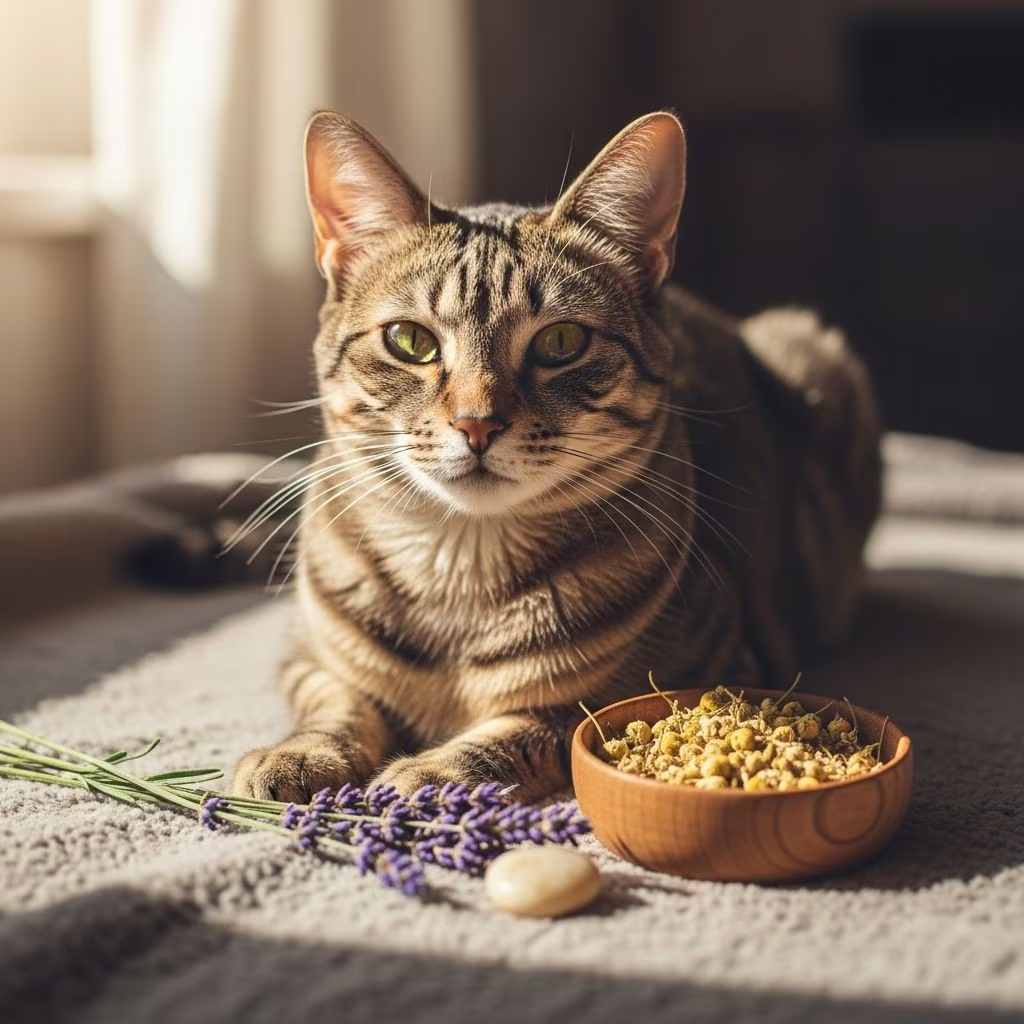
Preventing unwanted pregnancies in cats is a common concern for pet owners, especially those who prefer to avoid permanent surgical procedures like spaying or neutering. While spaying remains the gold standard for long-term prevention, natural and temporary alternatives exist for cats intended for future breeding or in situations where surgery isn’t immediately feasible. This article explores vet-approved methods to stop cats from getting pregnant naturally, including their effectiveness, application, and potential risks. Understanding your cat’s reproductive cycle is key: female cats, or queens, can enter heat as early as 4-6 months and cycle every 2-3 weeks during breeding season unless pregnant or ovulating.
The 4 Natural Ways to Stop Cats From Getting Pregnant
While no method matches the reliability of spaying, these four approaches offer non-surgical birth control options. They range from behavioral management to hormonal interventions, each with varying durations of effectiveness and side effect profiles. Always consult a veterinarian before implementing any method, as individual cat health factors play a significant role.
1. Quarantine
**Quarantine** stands out as the most natural and cost-free method to prevent pregnancy. It involves completely isolating your female cat from intact males during her heat cycles, which typically last 4-10 days and recur every 15-21 days in non-pregnant queens. This approach requires vigilance, as unspayed females release pheromones detectable from afar, attracting toms (male cats).
Signs your cat is in heat include:
- Rubbing excessively on furniture, people, or objects
- Excessive rolling on the floor
- Raising hindquarters when stroked on the back (lordosis posture)
- Loud vocalizing or yowling, especially at night
- Increased affection-seeking behavior
- Frequent urination or spraying on vertical surfaces
To implement quarantine effectively:
- Keep your cat indoors exclusively during heat, using a secure room if needed.
- Supervise all outdoor access or transitions to an outdoor enclosure (catio).
- Track cycles via a calendar; breeding season peaks in spring/summer but can occur year-round indoors.
- Provide environmental enrichment like toys, scratching posts, and pheromone diffusers to ease stress.
Pros: Zero cost, no medications, preserves fertility for future breeding.
Cons: Labor-intensive, stressful for the cat, high failure risk if males access the home. Outdoor cats make this impractical, as strays or neighbors’ toms can detect scents from blocks away. Studies show quarantine alone fails in up to 70% of multi-cat households without strict enforcement.
2. Hormone Injections or Pills
Hormonal contraceptives mimic progesterone to suppress estrus (heat) cycles. The most common is **medroxyprogesterone acetate (MPA)**, available as weekly pills or injections every 3-6 months via veterinary prescription. These progestins thicken cervical mucus, prevent ovulation, and stabilize hormone levels, effectively halting pregnancy risk.
Administration is straightforward: pills mixed into food weekly, or a single injection providing 4-6 months protection. Dosage is weight-based, typically 2.5-5 mg for cats under 4 kg.
However, side effects are notable and can be severe:
- Increased thirst (polydipsia) and appetite (polyphagia), leading to obesity
- Hair loss (alopecia) and skin changes
- Lethargy and personality shifts (e.g., aggression or withdrawal)
- Uterine infections (pyometra) or cystic endometrial hyperplasia
- Diabetes mellitus risk with prolonged use
- Mammary tumors or adrenal suppression
Vets recommend short-term use only (under 2 years total), with regular bloodwork monitoring. MPA is FDA-approved for cats in some regions but carries black-box warnings for long-term risks. Alternatives like megestrol acetate (MA) offer similar effects at lower doses but share comparable concerns.
Pros: Reliable (95%+ efficacy), reversible, suitable for multi-cat homes.
Cons: Prescription required, side effects common (up to 30% of cats affected), not truly ‘natural’ due to synthetic hormones.
3. Hormone Chip
The **GnRH implant** (e.g., deslorelin chips like Suprelorin) provides slow-release gonadotropin-releasing hormone, initially stimulating then suppressing reproductive hormones—a process called chemical castration. Effective for both males (reduces testosterone, spraying) and females (prevents ovulation) for 12-24 months.
Implanted subcutaneously by a vet (quick 5-minute procedure under light sedation), one chip lasts up to 2 years. Fertility returns post-absorption, ideal for planned breeders.
Notable benefits include behavior improvement: less roaming, fighting, and vocalizing. Efficacy exceeds 98% in trials.
Limitations: Unavailable in the US due to regulatory restrictions (approved in EU, Australia). Potential initial flare-up (brief hormone surge causing intensified heat). Rare side effects: injection site reactions or delayed return to fertility.
Pros: Long-duration, non-pill compliance, reversible.
Cons: Veterinary procedure, regional availability issues, higher upfront cost ($100-300).
4. Melatonin Chip
**Melatonin implants** suppress pineal gland activity, shortening or preventing estrus for 2-4 months. This bioidentical hormone (naturally produced in cats) is implanted similarly to GnRH chips, offering a gentler alternative.
Vets insert the rice-sized chip under the skin, with effects peaking in 1-2 weeks. Repeat every few months as needed. Research shows 80-90% success in delaying heat without major disruptions to other hormones.
Side effects are minimal: occasional drowsiness or coat changes. Safer profile than progestins, but less studied long-term.
Pros: Natural hormone, fewer side effects, short-term flexibility.
Cons: Temporary (requires re-implantation), variable efficacy, vet visit mandatory.
Why Spaying and Neutering Are Still the Best Choice
Despite natural alternatives, **spaying (ovariohysterectomy)** removes ovaries/uterus, eliminating heat, pregnancy, pyometra (fatal 20-50% untreated), and 91% mammary cancer risk if done before first heat. **Neutering** removes testes, curbing aggression, marking, and roaming. Procedures are routine, low-risk (under 1% complications), and low-cost via shelters/clinics.
| Method | Duration | Efficacy | Side Effects | Cost |
|---|---|---|---|---|
| Quarantine | Per cycle | Variable | Stress | Free |
| Hormone Pills/Injections | Weekly/6 mo | 95% | High | $50-200/yr |
| GnRH Chip | 24 mo | 98% | Low | $150-300 |
| Melatonin Chip | 2-4 mo | 85% | Minimal | $100 ea |
| Spay/Neuter | Lifetime | 100% | Surgery risks | $50-500 |
For outdoor cats, natural methods falter against persistent males. Emerging options like anti-Müllerian hormone (AMH) gene therapy show promise (100% efficacy in trials, 2+ years), but remain experimental.
Frequently Asked Questions (FAQs)
Can cats get pregnant the first time they go into heat?
Yes, queens are fertile from their first estrus, often at 4 months. Ovulation is induced by mating.
Are there herbal birth controls for cats?
Wild carrot seeds or papaya are folk remedies with anecdotal use, but lack veterinary endorsement and proven safety/efficacy. Consult a vet before use.
How soon after mating can I prevent pregnancy?
Post-mating, options are limited; progesterone early may help, but spaying is safest if not pregnant. Ultrasound confirms at 21 days.
Is hormone birth control safe long-term?
No; risks accumulate. Limit to <2 years with monitoring.
What if my cat is already pregnant?
Allow term (63 days); spay post-weaning. Natural termination unethical/illegal.
Conclusion
Natural pregnancy prevention suits temporary needs but demands commitment. For most, spay/neuter offers unmatched health benefits. Discuss with your vet for tailored advice—your cat’s well-being depends on informed choices.
References
- Alternative methods for feline fertility control — Michelle A Kutzler. 2015-09-28. https://journals.sagepub.com/doi/abs/10.1177/1098612×15594988
- Breakthrough cat contraceptive with a single shot — Parsemus Foundation. 2025-02-01. https://www.parsemus.org/2025/02/breakthrough-cat-contraceptive-a-single-shot-to-prevent-pregnancy/
- Non-surgical Contraception for Cats: A Potential Lifesaver During COVID-19 — Alley Cat Allies. 2020-04-15. https://www.alleycat.org/resources/non-surgical-contraception-for-cats-a-potential-lifesaver-during-covid-19/
- Guidelines for Spay/Neuter of Cats — Association of Shelter Veterinarians. 2022-01-10. https://www.sheltermedicine.com/library/guidebooks/spayneuter/what_age
- Feline Reproduction and Neonatal Care — Winn Feline Foundation. 2024-06-15. https://www.winnfelinefoundation.org/education/cat-health-news-blog/details/cat-owners-guide-to-feline-reproduction



