

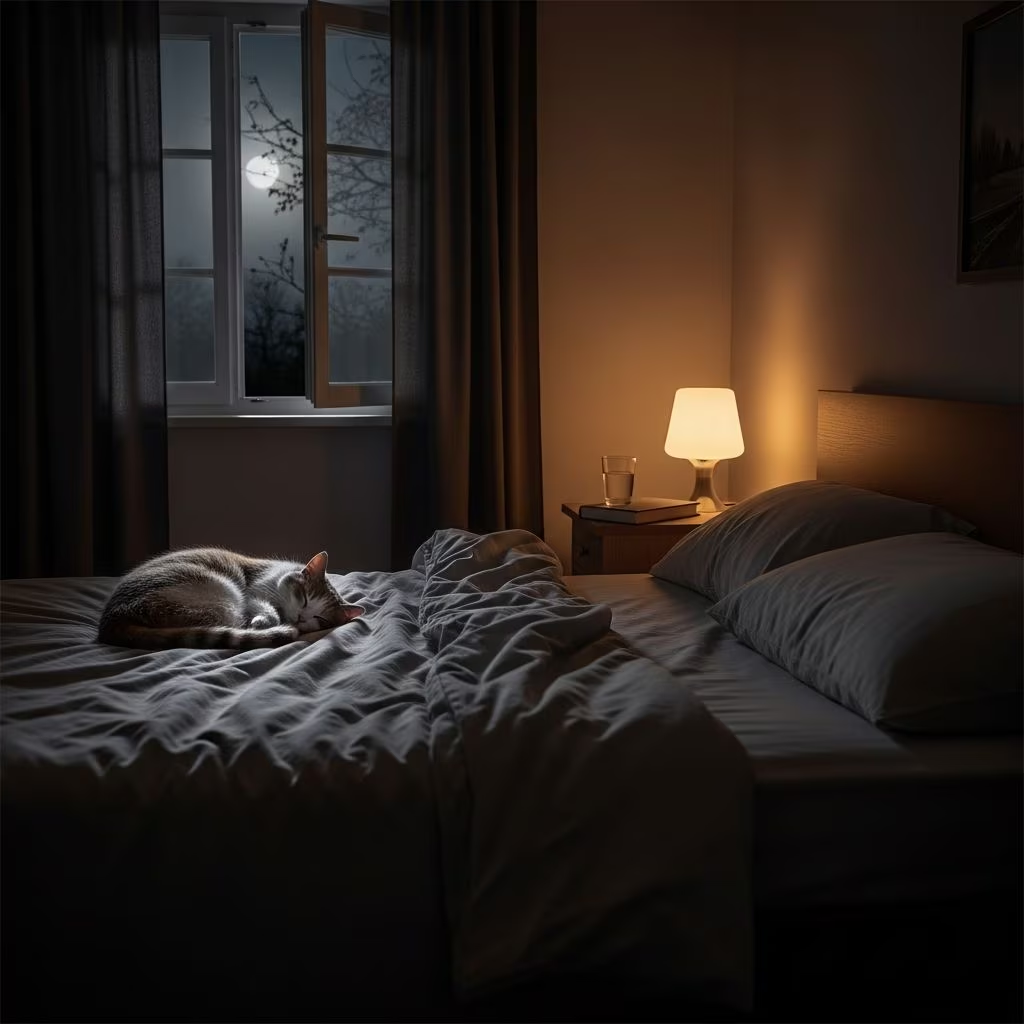
How To Stop Your Cat From Meowing at Night
If you’re lying awake at night listening to your cat vocalize at volume levels that rival a concert, you’re not alone. Nighttime meowing is one of the most common complaints cat owners make. While it’s completely normal for cats to be more active during twilight hours, excessive meowing during your sleep time can be frustrating and exhausting. The good news? There are multiple strategies and solutions that can help reduce or eliminate these disruptive nighttime vocalizations.
Understanding why your cat meows at night is the first step toward addressing the behavior. Once you identify the underlying cause2Dwhether it’s hunger, boredom, medical issues, or attention-seeking2Dyou can implement targeted solutions that work for both you and your feline friend.
Why Your Cat Meows at Night
Before you can stop the meowing, it’s essential to understand what drives this behavior. Cats meow for specific reasons, and nighttime vocalizations are no exception. Let’s explore the primary causes of nighttime meowing in cats.
Normal Feline Behavior
First and foremost, it’s important to recognize that cats are crepuscular animals, meaning they’re naturally more active during dawn and dusk. This is hardwired into their biology from their wild ancestors who hunted during these cooler parts of the day. So some nighttime activity and vocalization is completely normal and expected. The issue arises when this natural behavior becomes excessive or disruptive to your sleep schedule.
Boredom and Lack of Stimulation
One of the most common reasons cats meow excessively at night is boredom. If your cat spends most of the day napping while you’re at work, they may have an abundance of pent-up energy by evening. Without adequate mental stimulation and physical exercise during daylight hours, indoor cats become fully charged and ready for action precisely when you want to sleep. This phenomenon is sometimes called the “zoomies,” where cats engage in sudden bursts of frantic activity.
Hunger and Thirst
Hunger is another major culprit behind nighttime meowing. Many cats don’t eat their entire meal at once; instead, they prefer grazing throughout the day and night. If your cat’s food or water bowl is empty by evening, they may express their displeasure through vocalization. Additionally, some cats develop an expectation of instant gratification when it comes to food. They learn that meowing loudly prompts you to open a can of food immediately, and they continue this behavior because it works.
Medical Issues
If your cat has suddenly started meowing at night when this wasn’t previously a behavior pattern, a veterinary visit should be your first priority. Various medical conditions can cause nighttime vocalization, including hyperthyroidism, kidney disease, arthritis, dental disease, hypertension, and cognitive dysfunction syndrome. Older cats, in particular, may experience confusion or disorientation in the dark, leading to increased vocalization. Pain from any source will also cause cats to cry out at night.
Attention-Seeking
Some cats simply enjoy attention and have learned that meowing at night gets results. If you’ve responded to nighttime meowing by getting up, talking to your cat, playing with them, or providing food, your cat has learned that meowing is an effective communication tool. This creates a cycle where meowing is rewarded with the exact attention your cat desires.
Stress and Environmental Changes
Cats are creatures of habit and can become stressed by changes in their environment. The introduction of a new pet, a new family member, moving furniture, or even changes to your schedule can trigger anxiety that manifests as restlessness and nighttime vocalization. Stressed cats may also exhibit other behavioral changes including destructive behavior and increased hiding.
Assessing Your Cat’s Nighttime Meowing
Before implementing solutions, take time to carefully observe your cat’s behavior. Ask yourself these key questions: Is this a new behavior or has your cat always been vocal at night? Are the meows accompanied by other symptoms like weight loss, increased thirst, or behavioral changes? Does your cat seem to meow at specific times? Is your cat meowing at the door, at the food bowl, or near your bed? The answers to these questions will help you pinpoint the underlying cause and choose the most effective solution.
Solutions to Stop Nighttime Meowing
Schedule a Veterinary Checkup
If your cat has recently begun meowing excessively at night, your first step should be contacting your veterinarian. A professional examination can rule out medical issues that may be causing discomfort or anxiety. Your vet can check for signs of hyperthyroidism, kidney disease, dental problems, and other conditions that commonly cause vocalization. This is especially important for older cats or those experiencing other behavioral changes. Once medical issues are ruled out, you can confidently address behavioral solutions.
Implement Proper Feeding Strategies
If hunger appears to be the culprit, modify your feeding schedule. Feed your cat a larger meal or a special meal closer to your bedtime so they feel satisfied during your sleep hours. Ensure fresh water is available throughout the night in multiple locations around your home.
More importantly, train your cat to break the habit of expecting immediate gratification. Your cat has learned that meowing produces food, so they continue the behavior. Use an automatic feeder with a timer set to dispense food at different times throughout the day and night. This way, your cat learns that food appears without their vocalization prompting it, and they’re not relying solely on you as the food source. This behavioral modification takes time but teaches your cat to manage their frustration and stop demanding immediate feeding.
Increase Daytime Exercise and Stimulation
Combat boredom by increasing your cat’s physical activity and mental stimulation during daylight hours. Interactive play sessions are crucial for indoor cats. Aim for multiple play sessions throughout the day, each lasting 5-15 minutes, using toys that simulate hunting like feather wands, laser pointers, and balls. Rotate your cat’s toys regularly to maintain novelty and interest. Climbing structures like cat trees or wall-mounted shelves provide vertical space that cats naturally crave.
The goal is to tire out your cat mentally and physically during the day so they’re more inclined to sleep through the night. One hour before bedtime, engage in 45 minutes of intense playtime to help burn off excess energy and prepare your cat for sleep.
Environmental Modifications
Create an environment that supports calm nighttime behavior. Set up a comfortable sleeping area for your cat away from your bedroom if possible, or establish a cozy spot in your room that’s separate from your bed. Use nightlights around your home to help older cats feel more secure and reduce disorientation and confusion in the dark.
Consider using calming products like pheromone diffusers that mimic natural cat calming scents, which can help reduce anxiety and stress-related vocalization. Provide perches and hiding spots where your cat can feel secure. A cat wall or tall scratching post gives cats a safe vantage point where they feel protected.
Ignore Attention-Seeking Behavior
This is one of the most challenging solutions but also one of the most effective. If your cat meows at night seeking attention, your best response is to ignore the behavior completely. Don’t get up, don’t talk to your cat, don’t provide food, and don’t engage in any interaction whatsoever. This includes negative attention like yelling or clapping. Any response, positive or negative, reinforces the behavior and teaches your cat that meowing works.
Instead, reward your cat with attention, playtime, and affection during daylight hours. Make daytime interactions so rewarding that your cat doesn’t need to seek attention at night. This behavioral modification requires consistency from everyone in your household and patience, as the behavior may worsen initially before improving.
Maintain a Consistent Routine
Cats thrive on routine and predictability. Establish consistent feeding times, play times, and sleep times. A stable routine helps your cat understand what to expect and reduces anxiety-related vocalization. Try to maintain the same schedule even on weekends and days off.
Address Stress and Life Changes
If your cat is experiencing stress from environmental changes, give them time to adjust. Provide a calm, familiar space where they can retreat and feel safe. Keep their routine as normal as possible during transitions. If you’ve introduced a new pet or family member, allow gradual introductions rather than sudden changes. Consider using calming supplements or consulting with a veterinary behaviorist for severe stress-related vocalization.
When to Consider Additional Help
If nighttime meowing persists despite your efforts, consult with your veterinarian about other options. Some cats with very high stimulation and arousal levels may benefit from supplements or medications prescribed by your vet. Additionally, a veterinary behaviorist can provide specialized guidance for complex behavioral issues.
Common Myths About Cat Meowing
Many cat owners believe that declawing or other extreme measures will help reduce meowing2Dthis is false and inhumane. Others think that keeping a cat awake all day will guarantee night sleep2Dthis often backfires by making cats more stressed and vocal. Some believe that punishment will deter meowing2Dpunishment typically increases anxiety and can worsen vocalization. Effective solutions focus on understanding your cat’s needs and modifying behavior through positive reinforcement and environmental adjustment.
Frequently Asked Questions About Nighttime Cat Meowing
Q: Is it normal for cats to meow at night?
A: To some degree, yes. Cats are naturally more active during dawn and dusk due to their crepuscular nature. However, excessive meowing that disrupts your sleep may indicate an underlying issue that needs addressing through the solutions outlined above.
Q: How long does it take to stop a cat from meowing at night?
A: The timeline varies depending on the cause and your cat’s individual temperament. Behavioral modifications typically take 2-4 weeks of consistent effort to show results. Some solutions like medical treatment or feeding schedule changes may show improvement more quickly.
Q: Can I use white noise to mask my cat’s meowing?
A: White noise can help mask some sounds, but it addresses the symptom rather than the underlying cause. It’s better to identify and resolve why your cat is meowing in the first place.
Q: Should I close my bedroom door to keep my cat out?
A: Closing your bedroom door can work temporarily, but if your cat is meowing due to boredom, hunger, or other unmet needs, they may meow outside your door or engage in other disruptive behaviors. It’s best to address the root cause rather than simply separating from your cat.
Q: What if my cat meows at night but seems healthy?
A: If your vet has ruled out medical issues, focus on behavioral solutions including increased daytime exercise, feeding schedule adjustments, environmental enrichment, and ignoring attention-seeking meowing. These changes should significantly reduce nighttime vocalization within a few weeks.
Q: Can spaying or neutering help with nighttime meowing?
A: Yes, if your cat is unspayed or unneutered and is meowing due to heat cycles or mating behavior, spaying or neutering will resolve this issue. If this isn’t the cause of the meowing, these procedures may have minimal impact on vocalization.
The Bottom Line
Nighttime cat meowing can be addressed through a combination of veterinary evaluation, behavioral modification, environmental enrichment, and consistent training. By understanding why your cat meows and implementing targeted solutions, you can significantly reduce or eliminate this disruptive behavior while improving your cat’s overall wellbeing. Remember that patience and consistency are key, and that your goal should be meeting your cat’s needs while establishing healthy boundaries around nighttime sleep for both of you.
References
- Why Your Cat Meows at Night (and How to Help) — Petrebels. 2024. https://www.petrebels.com/en/blog-cat-behavior-why-cats-meow-at-night/
- 10 Reasons Your Cat Cries Or Meows At Night (and What To Do About It) — Atlantic Veterinary Hospital Seattle. 2024. https://atlanticvetseattle.com/10-reasons-your-cat-cries-or-meows-at-night/
- 5 Reasons Your Cat Won’t Stop Meowing At Night & How To Stop It — YouTube. 2024. https://www.youtube.com/watch?v=1gWWnz8IhHA
- Stop Cat Meowing at Night — All Cats Rescue, Sioux Falls. 2018. https://allcatsrescue.org/blog/2018/01/06/stop-cat-meowing-at-night
- Why Do Cats Meow at Night? See These Effective Tips for Minimizing Nighttime Meowing — Modkat. 2024. https://modkat.com/blogs/modkat-purrr/6-tips-for-quieting-night-time-meowing



