

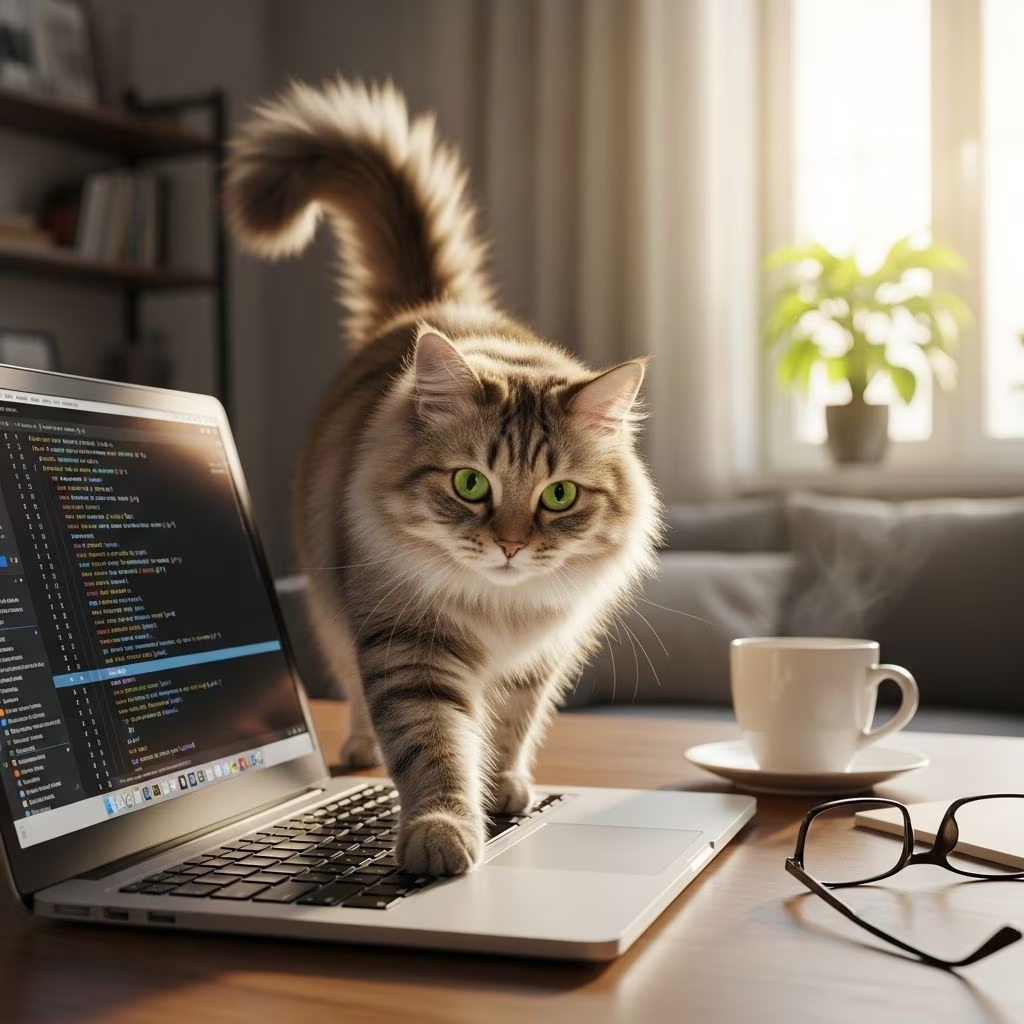
Cats have an uncanny ability to choose the most inconvenient moments to assert their presence, especially when you’re deep in work on your laptop. Whether it’s the warmth of the device or a bid for your undivided attention, these furry intruders can turn productivity into chaos. Drawing from insights by certified cat behaviorist Cristin Tamburo, this guide explores the reasons behind this behavior and provides practical, humane solutions to reclaim your workspace while keeping your cat happy and engaged.
Why Are Cats Obsessed with Laptops?
Cats aren’t just being mischievous when they saunter across your keyboard or plop down squarely on your screen. This behavior stems from deep-seated instincts and preferences that make laptops irresistible. Understanding these motivations is the first step to addressing the issue effectively.
Cats Crave Proximity to Their Humans
At the heart of it, cats are social creatures who thrive on closeness to their favorite people. ‘Cats like to be near their humans,’ explains Tamburo, ‘and a lot of cats do things that are attention-seeking because they would like to have our undivided attention all the time.’ In the era of remote work, when you’re glued to your laptop for hours, your cat sees it as competition for your focus. They insert themselves literally between you and the screen to reclaim that bond.
This attention-seeking isn’t new, but the shift to home offices has amplified it. Your cat interprets your screen-staring as neglect, prompting them to ‘interrupt’ with paws on keys or a full sprawl across the trackpad. It’s their way of saying, ‘Pay attention to me, not that glowing box.’
The Allure of Warmth and Comfort
Laptops generate heat from their processors and batteries, creating a toasty spot that’s pure bliss for a cat. ‘Laptops are usually warm and toasty, and cats like to be warm and cozy,’ Tamburo notes. This warmth mimics the body heat cats seek in sunbeams, laps, or piled laundry. Combine that with the soft keyboard texture, and it’s a five-star hotel bed in your cat’s eyes.
Related behaviors extend to other warm items. Cats often sit on phones, freshly printed papers, or even your arms while typing because they retain residual heat from your touch. Dr. Nita Vasudevan, a veterinary consultant, confirms: ‘Phones, laptops, warm laundry, or a freshly handled towel are potentially warmer objects that can give off some cozy heat for them to rest on.’
Scent Marking and Ownership
Your scent on the laptop—transferred through fingerprints and proximity—makes it smell like home. Cats have scent glands on their paws and cheeks, so walking on it allows them to mix their aroma with yours, reinforcing territorial bonds and feelings of security. Cat behaviorist Stephen Quandt adds, ‘Your stuff smells like you… Sitting on them is your cat’s way of feeling close to you and mixing their scent with yours.’
This marking behavior signals trust: your cat claims the laptop as part of their trusted environment. It’s affectionate, even if disruptive.
Attention-Seeking as a Primary Driver
Ultimately, the laptop represents whatever you’re ignoring in favor of work. ‘They know the object is important to you because you’re focusing on it, and that means you’re not focusing on them,’ says Quandt. Veterinary insights echo this: cats interrupt reading papers or knock pens off desks to spotlight themselves. It’s classic feline strategy—crafty and effective.
Tips to Remedy Cat Keyboard Takeovers
Frustration peaks mid-Zoom call or deadline, but punishment won’t work; cats don’t connect it to the behavior. Instead, focus on prevention, enrichment, and redirection. Tamburo advises: ‘The more mentally and physically active and stimulated we can keep our cats, the less likely they are to be bothering us for our attention all the time.’
Provide Mental and Physical Enrichment
Idle cats cause trouble. Stock up on interactive toys to tire them out during your work hours:
- Puzzle feeders: Dispense treats or kibble as they solve challenges, mimicking hunting.
- Interactive wands: Feather toys on strings for 10-15 minute sessions twice daily.
- Automatic toys: Laser pointers or ball tracks that move on their own.
Nothing replaces playtime with you, so schedule short bursts. A stimulated cat naps instead of keyboard surfing.
Create Alternative Perches Near Your Workspace
Deny access? Cats rebel. Compromise with cozy spots nearby. Tamburo, with her seven cats, uses: ‘A couple of cat towers by my desk; an iPad playing aquarium videos; a blanket on my desk next to a cat tower.’
- Position heated cat beds or towers within eyesight.
- Run cat TV (bird or fish videos) on a secondary device.
- Drape a blanket over a side table for a warm, elevated spot.
This meets their need for proximity without disruption.
Use Positive Reinforcement and Redirection
Reward desired behaviors. Ignore keyboard antics completely—’The more we can ignore their disruptive and unwanted behaviors, the more they realize that it doesn’t earn them what they’re trying to get,’ Tamburo says.
| Undesired Behavior | Response | Desired Alternative | Reward |
|---|---|---|---|
| Walking on laptop | Ignore completely | Go to cat tower | Pets, treats, or play |
| Meowing for attention | No eye contact | Sit on designated bed | Verbal praise |
| Pawing screen | Turn away | Engage with toy | Short play session |
Tailor rewards: some cats prefer treats, others pets or play. Toss treats away from your desk to lure them off.
Tech Aids for Remote Work
Leverage gadgets:
- Remote treat dispensers: App-controlled to drop goodies in another room.
- Laptop covers: Clear, paw-resistant shields (though not foolproof).
- Double-sided tape: Temporary on keyboard edges—cats hate the stickiness.
For multi-cat homes, rotate toys to prevent boredom.
Establish Routines and Boundaries
Cats love predictability. Feed, play, then work in sequence. Use baby gates or desk enclosures if needed, but prioritize positive setups. During return-to-office transitions, cats may amp up demands—extra play helps.
Personal Experiences from Cat Experts
Tamburo shares real-life hacks from her multi-cat household: one cat chills on a lap blanket, another on an iPad-streamed video, others on towers. ‘Keeping them busy and away from the desk is great, but if you have cats who are more insistent… make an area for them that is close to you, but a compromise.’ Her boy cat claims her lap, a tolerable spot.
These anecdotes prove persistence pays off. Start small: one new perch, one toy routine. Track progress weekly.
Frequently Asked Questions (FAQs)
Why does my cat only walk on the laptop when I’m using it?
It’s warm from use, smells like you, and steals your attention—prime real estate for a cat seeking comfort and connection.
Is it okay to scold my cat for this behavior?
No—scolding confuses cats and erodes trust. Ignore bad actions, reward good ones instead.
What if my cat ignores toys and keeps coming back?
Increase play frequency and variety. Try food puzzles or vertical spaces like shelves.
Will a cat bed solve this?
Not alone—place it near you, warm it up, and reward use. Proximity matters.
How long until my cat stops?
Consistency yields results in 1-4 weeks. Patience is key; every cat learns differently.
Long-Term Strategies for a Cat-Friendly Workspace
Transform your office into a feline paradise. Invest in wall shelves for ‘cat highways,’ window perches for bird-watching, and rotating scent toys. Daily exercise prevents obesity too—vital for health.
Monitor for stress: excessive meowing or hiding signals unmet needs. Consult a vet if behavior persists, ruling out medical issues like hyperthyroidism.
Embrace the chaos—cats enrich life. With these tools, harmony awaits.
References
- Why Do Cats Sit on Laptops? — Kinship. 2023. https://www.kinship.com/cat-behavior/how-to-stop-cat-from-walking-on-laptop
- Why Your Cat Always Has to Sit on Whatever You’re Using — Kinship. 2023. https://www.kinship.com/cat-behavior/why-does-my-cat-sit-on-household-items
- Cat Behaviour Guidelines — American Association of Feline Practitioners (AAFP). 2024-07-15. https://catvets.com/resources/feline-behavior-guidelines
- Understanding Feline Enrichment — Journal of Feline Medicine and Surgery (Sage Journals). 2023-05-01. https://doi.org/10.1177/1098612X231166892
- Environmental Needs Guidelines — International Cat Care. 2024-02-20. https://icatcare.org/advice/environmental-needs-guidelines



