

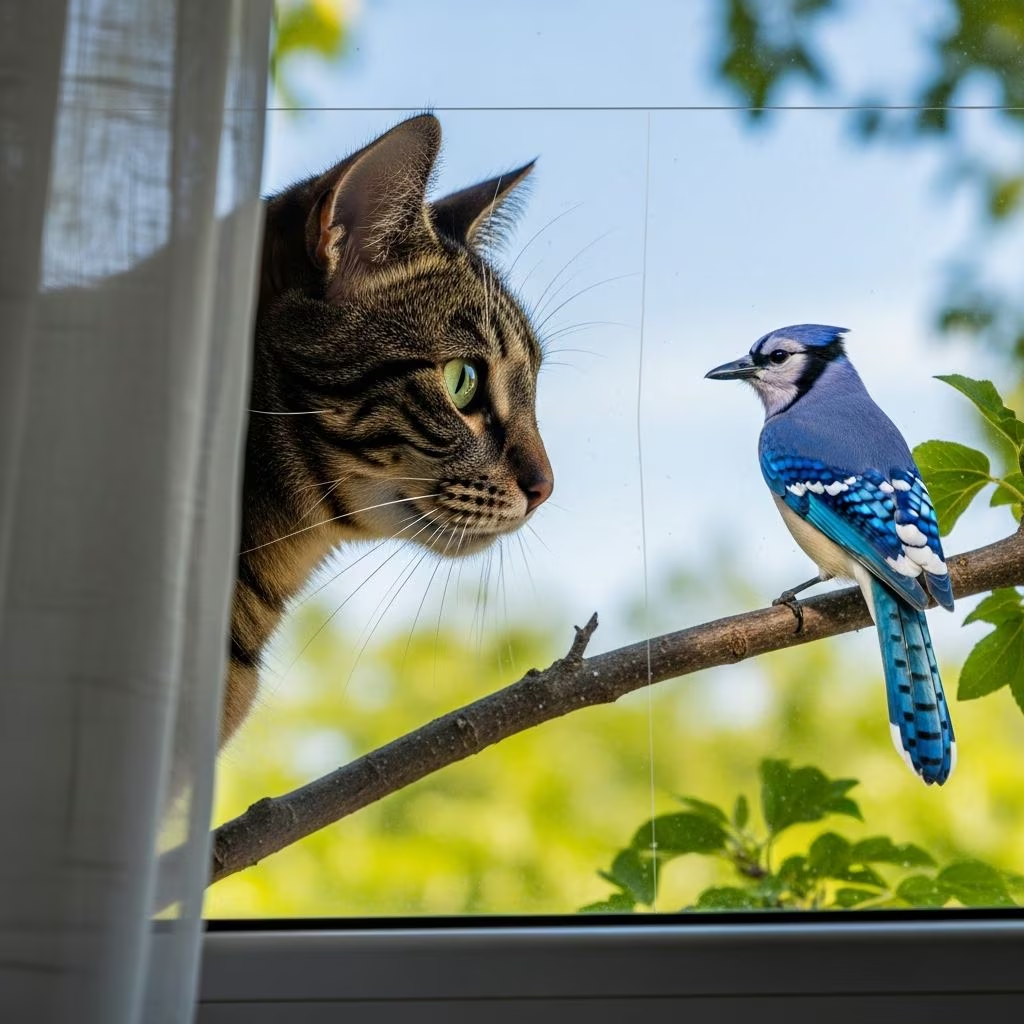
How to Stop Your Cat From Killing Birds
Cats are natural hunters, and for outdoor felines, birds represent tempting prey. However, as a responsible cat owner, you can take numerous steps to reduce predation while allowing your cat to enjoy the outdoors safely. This comprehensive guide explores evidence-based methods to protect birds from cat attacks without compromising your pet’s wellbeing or quality of life.
Understanding the Challenge
The reality is that no single solution will completely eliminate a cat’s hunting instincts. Cats possess exceptional stealth, speed, and predatory skills honed over thousands of years of evolution. However, research shows that combining multiple strategies can significantly reduce the number of birds your cat captures. Understanding what works and what doesn’t is the first step toward creating a bird-safe environment while respecting your cat’s natural behaviors.
Collar Solutions and Visibility
One of the most popular recommendations for reducing bird predation is equipping your cat with a collar designed to warn birds of their presence.
Bells: A Common Misconception
Despite being widely recommended, traditional bells attached to cat collars are largely ineffective. Birds often don’t hear the bell sound, and cats are too stealthy to be adequately warned by the noise. Additionally, bells can inadvertently alert larger predators like foxes and coyotes to your cat’s location, potentially putting your pet at risk.
Multicolored Collars: The Better Option
Research demonstrates that multicolored collars work significantly better than bells. Since birds rely heavily on sight to detect predators, highly visible multicolored collars alert birds to your cat’s presence before an attack occurs. Studies show that BirdsBeSafe multicolored collars can reduce prey brought home by over 50%, making them one of the most effective collar-based solutions. Several collar varieties can reduce hunting behavior by up to 25%, with multicolored options providing the best results.
Dietary Modifications
Your cat’s diet may influence hunting behavior. While hunger isn’t typically the primary driver of hunting, nutritional deficiencies can motivate your cat to seek additional food sources.
High-Protein Diets
Many commercial cat foods contain low-quality meat proteins padded with grains and cheaper protein sources. Switching to a diet rich in high-quality meat proteins has been shown to reduce hunting behavior by 36%. This dietary change addresses potential nutritional gaps your cat may be seeking to fill through hunting. Consider consulting with your veterinarian to select premium cat foods with higher meat protein percentages and fewer grain fillers.
Environmental Modifications
Modifying your yard and garden can significantly reduce opportunities for successful cat predation on birds.
Feeder Placement and Spacing
Strategic placement of bird feeders is crucial for bird safety. Place feeders and birdbaths at least 10 to 12 feet away from potential hiding places for cats, such as shrubs, bushes, or dense vegetation. This distance gives birds crucial reaction time to spot an approaching cat before it gets close enough to pounce. Hanging feeders at heights of 8 feet or more above the ground provides additional protection.
Ground Cover Management
Prune low-hanging branches and remove dense ground cover near feeders. A cat hiding in bushes has a much better chance of a successful ambush than one exposed in open space. Trim vegetation so birds can see underneath plants, eliminating hiding spots that give cats tactical advantages.
Protective Fencing for Feeders
Installing a low fence around bird feeders can provide birds with a critical microsecond advantage. The fence mesh should be large enough for birds to fly through but small enough to force cats to jump over it. Experts recommend 3″ x 3″ or 4″ x 4″ mesh to allow larger birds like doves to escape while slowing cats down. When cats must jump over a barrier, birds gain precious time to flee.
Reducing Ground-Level Feeding
Avoid placing food in ground feeding trays or scattered on the ground. Instead, offer no-mess food options that keep the majority of seed inside the feeder, preventing spillage that attracts birds to vulnerable ground-level positions.
Tree and Shrub Protection
Cover the base of trees and shrubs near feeders with barriers made of plastic or metal fencing. This slows cats when they spring from cover and gives birds additional escape time. You can also wrap tree trunks with cling film to make them too slippery for cats to climb.
Physical Barriers and Deterrents
Beyond feeder-specific barriers, yard-wide physical barriers can help protect birds.
Perimeter Fencing
A six-foot fence made of smooth wood or vinyl can deter many cats, though it won’t completely prevent access since cats are skilled climbers. Avoid planting vegetation against the outside of the fence, as cats use plants as ladders to climb over.
Motion-Activated Devices
Motion-activated lights and sprinklers can help deter cats from your yard, though they’re not 100 percent effective. The sudden bright light or water spray can startle roaming cats and teach them that your yard is an unwelcoming hunting ground. These devices work best as part of a multi-layered approach.
Cat Deterrent Sprays
Various commercial products claim to deter cats from specific areas. Ultrasonic cat deterrents like CatStop may be worth trying, though results vary depending on your yard layout and individual cat behavior.
Enrichment and Play
Providing physical and mental stimulation through play can reduce hunting drive and help tire out your cat.
Daily Interactive Play
Playing with your cat using toys such as fake mice or feather toys can satisfy hunting instincts without harming wildlife. Just 5 to 10 minutes of daily play can reduce hunting by up to 25%. Interactive play sessions quench your cat’s thirst for hunting and can make them too tired to bother hunting birds.
Puzzle Feeders and Environmental Enrichment
Puzzle feeders and hidden food around the house provide mental stimulation that mimics hunting behavior without real prey. These enrichment activities keep cats engaged and satisfied without the need to hunt outside.
Behavioral Management Strategies
Time-Based Restrictions
If complete indoor living isn’t feasible, consider keeping your cat indoors during peak wildlife activity times. Dawn and dusk are when birds are most active and vulnerable, as they feed and sing during these periods. Bringing your cat inside before sunset and keeping it indoors until the sun is fully risen the next day can significantly reduce bird deaths. This strategy is especially important during breeding season when fledglings unable to fly effectively are highly vulnerable to predation.
Harness Training
For new cat owners, training a kitten to walk on a harness offers a compromise between outdoor access and wildlife protection. Harness walking allows supervised outdoor time while eliminating the predatory freedom cats have when roaming unsupervised. This also protects your cat by reducing fighting injuries and road accidents.
Complete Indoor Living
The most effective method of preventing wildlife predation by cats is to keep them indoors. While training an older cat to stay indoors after a lifetime of outdoor freedom is challenging, it completely eliminates the risk of bird predation and protects your cat from outdoor dangers.
Veterinary Interventions
Neutering and Spaying
In addition to preventing unwanted litters, neutering and spaying—particularly in males—decreases territory size and activity level, both of which lead to reductions in hunting behavior. These procedures provide dual benefits of responsible pet ownership and wildlife protection.
Alternative Feeding Approaches
Natural Food Sources
If outdoor cats are regularly hunting at your bird feeders, consider removing feeders entirely and focusing instead on feeding birds naturally through native plants. Native plants provide seeds, berries, and insects while offering natural cover and nesting sites. Unlike concentrated feeders that attract hunting cats, natural food sources don’t cause birds to congregate in vulnerable numbers in one predictable location.
Nest Box Protection
If you maintain bird nest boxes, protect them from cat predation by keeping boxes at least 8 feet off the ground and away from cat hiding places. Choose designs with steep roofs that provide no perching spots for predators.
What Doesn’t Work
Mothballs
Mothballs are often recommended as cat deterrents but are ineffective as long-term solutions. More importantly, they contain toxic chemicals that shouldn’t be broadcast throughout your yard where they can harm pets, children, and wildlife.
Feeder Height Myths
No feeder height is tall enough to completely prevent cat attacks on birds. While higher feeders reduce accessibility, determined cats can still climb nearby trees or reach feeders through other means.
Frequently Asked Questions
Q: Will a bell on my cat’s collar prevent bird predation?
A: No. Bells are largely ineffective because birds often don’t hear them and cats are too stealthy for the sound to provide adequate warning. Multicolored collars work better by using visual cues birds can detect.
Q: How much can changing my cat’s diet reduce hunting?
A: Switching to a high-protein meat-based diet can reduce hunting behavior by up to 36%, as it addresses potential nutritional gaps your cat may be seeking through hunting.
Q: What’s the best feeder placement for bird safety?
A: Place feeders at least 10 to 12 feet away from shrubs, bushes, or other hiding places, and hang them at least 8 feet above the ground. Open space around feeders allows birds to spot approaching cats.
Q: Can I train my adult cat to stay indoors?
A: Training an older cat to remain indoors after outdoor freedom is very difficult. However, restricting outdoor time to dawn and dusk hours, or training them to walk on a harness, are viable alternatives.
Q: How much daily play reduces hunting behavior?
A: Just 5 to 10 minutes of daily interactive play can reduce hunting by up to 25%, as it satisfies predatory instincts without harming wildlife.
Q: Is keeping my cat indoors the most effective solution?
A: Yes, keeping cats indoors is the most effective method of preventing wildlife predation. It completely eliminates bird predation risk while also protecting your cat from outdoor dangers.
References
- Problem-Solving Cats — Wild Birds Unlimited McKinney. Accessed January 14, 2026. https://mckinney.wbu.com/Problem-Solving-Cats
- 6 Ways to Stop Your Cat Hunting Birds — SongBird Survival. Accessed January 14, 2026. https://www.songbird-survival.org.uk/post/blog-6-ways-to-stop-your-cat-hunting-birds-1
- Keeping Birds Safe from Outdoor Cats — National Wildlife Federation Blog. September 2017. https://blog.nwf.org/2017/09/keeping-birds-safe-from-outdoor-cats/
- Resolving Conflicts Between Cats and Wildlife — Humane Society of the United States. https://humanepro.org/sites/default/files/documents/ResolvingConflictsbetweenCatsandWildlife_HumaneWorld.pdf
- Protecting Birds from Cats — Bird Town Pennsylvania. Accessed January 14, 2026. https://birdtownpa.org/protecting-birds-from-cats/
- Keep Cats Indoors — American Bird Conservancy. Accessed January 14, 2026. https://abcbirds.org/solutions/keep-cats-indoors/
- How Free-Roaming Cats Impact Wildlife, Disease Transmission — Texas A&M College of Veterinary Medicine & Biomedical Sciences. https://vetmed.tamu.edu/news/pet-talk/cats-and-wildlife/



