

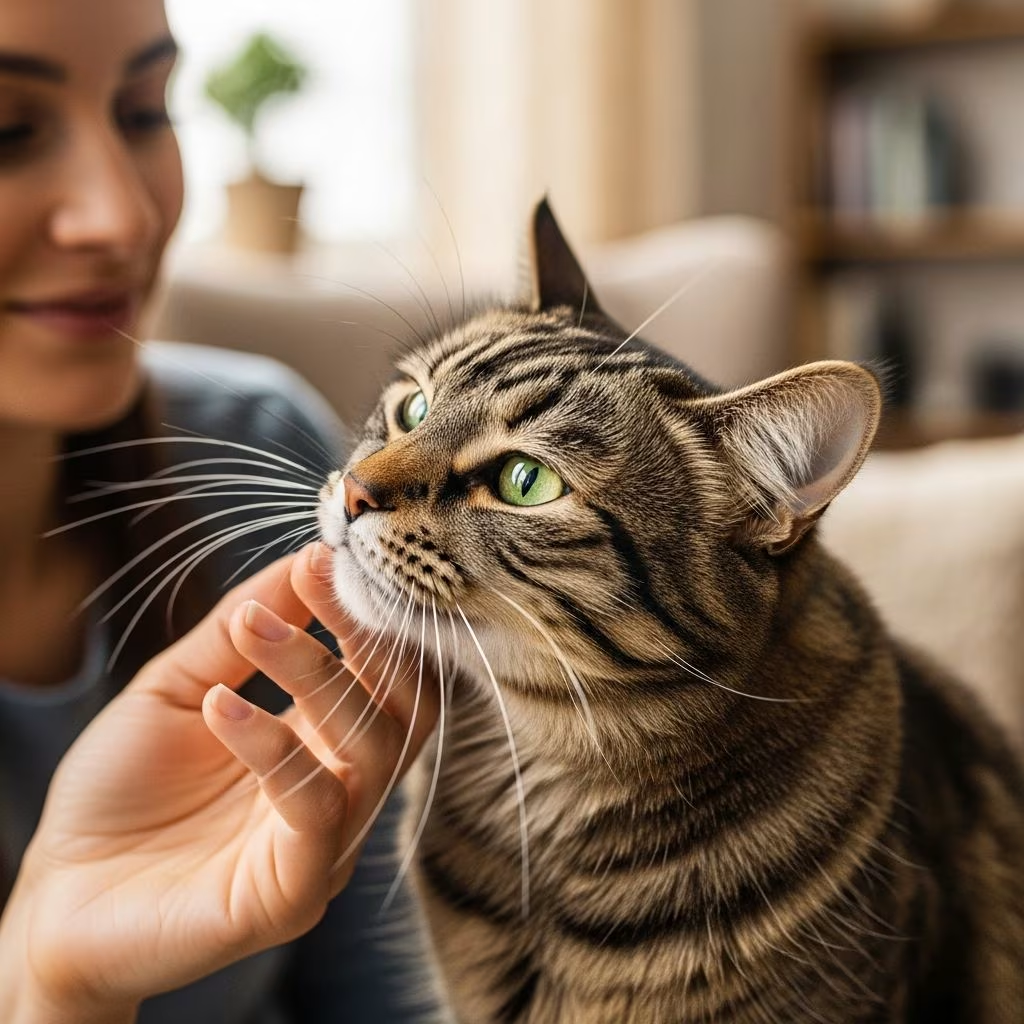
Communicating with cats can transform your relationship from one of coexistence to true companionship. Cats convey a wide range of emotions and needs through subtle vocalizations, intricate body language, and behaviors refined over thousands of years of evolution. By learning to “speak cat,” you can interpret their signals accurately, respond appropriately, and foster mutual understanding. This guide draws on veterinary insights and behavioral studies to equip you with practical tools for decoding and reciprocating your cat’s messages, ultimately enhancing trust and reducing misunderstandings.
Understanding Cat Communication
Cats are masterful communicators, employing a sophisticated system that includes vocal sounds, physical postures, scents, and touch. Unlike dogs, which vocalize extensively with each other, cats reserve many sounds primarily for humans, adapting their wild instincts to domestic life. Primary methods include body language for immediate emotional states and vocalizations for specific requests or alerts. Observing these in context reveals whether your cat feels content, threatened, playful, or distressed, allowing you to meet their needs proactively.
Research indicates cats produce over 20 distinct vocalizations, each tied to particular scenarios. Body language often amplifies these signals; for instance, a relaxed purr accompanies loose postures, while tension shows in rigid stances. Mastering this dual system is key to fluent “cat speak.”
Vocalizations
Cat vocalizations form the audible backbone of their communication repertoire. These sounds vary in pitch, duration, and intensity to express everything from affection to alarm. Adult cats meow far more to humans than to each other, suggesting they’ve evolved this as a learned interspecies dialogue. Common vocalizations include purrs for contentment, meows for attention, and hisses for defense. Paying attention to accompanying body language sharpens interpretation accuracy.
- Purr: Often signals pleasure or relaxation, like during petting or nursing kittens. It can also indicate self-soothing during pain or stress, as vibrations promote healing.
- Meow: Versatile greeting or demand, varying from short chirps for hello to drawn-out yowls for urgency, such as hunger or door access.
- Hiss or Spit: Defensive warning of fear or aggression; ears flatten, and fur bristles in tandem.
- Trill or Chirrup: Friendly greeting, especially from mothers to kittens, conveying affection and invitation to interact.
Studies confirm cats tailor vocalizations to their human companions, mimicking infant cries to elicit responses, underscoring their adaptability.
Chatter
The chatter is a rapid, staccato sound cats emit while fixated on prey just out of reach, like birds at a window. Characterized by chomping jaw movements and intense stares, it reflects frustrated hunting instinct. Ears forward, pupils dilated, and tail twitching accompany this vocalization, signaling high arousal. Owners often capture it on video, as it’s both comical and a window into your cat’s primal drives. Responding by providing interactive toys can channel this energy constructively.
Yowling
Yowling delivers a prolonged, wailing cry that pierces the night. Unneutered cats in heat use it to attract mates, but it also signals distress, illness, loneliness, or cognitive decline in seniors. Accompanied by pacing or disorientation, persistent yowling warrants a vet check. Neutering significantly reduces heat-related yowls, promoting quieter households.
Body Language Cues
Body language offers the most nuanced insights into a cat’s inner world, with every twitch and posture conveying intent. From tail position to ear orientation, these nonverbal cues are instinctive and universal among felines. Misreading them leads to scratches or avoidance; correctly interpreting them builds rapport. Always consider the full picture—tail alone doesn’t tell the whole story.
- Tail Signals: Upright with a curl: greeting and confidence. Thrashing: irritation or overstimulation. Puffed up: fear or aggression. Wrapped around body: insecurity.
- Ear Positions: Forward: interest or affection. Flat: anger or fear. Swiveling: alertness to sounds.
- Whiskers: Forward: curiosity or hunting mode. Backwards: caution or defense. Relaxed: calm.
- Posture: Arched back with fur raised: threat display. Belly up: trust (but proceed cautiously). Crouched low: stalking or fear.
- Eyes: Slow blink: “I love you” signal of trust. Dilated pupils: excitement, fear, or low light. Direct stare: challenge.
Focused hunting shows in forward ears, narrowed pupils, and stalking crouch, often preceding a butt-wiggle pounce. Slow blinking back at your cat reinforces bonds, mimicking their trust gesture.
How to Speak Cat Language and Communicate With Your Cat
While you can’t verbatim “talk” cat, you can bridge the gap using their cues and your responses. Effective communication involves observation, consistency, and respect for their boundaries. Start by mirroring positive signals and using voice tones they recognize. Over time, cats learn your patterns, creating a shared language.
Does Meowing Do Anything?
Meowing back at your cat rarely conveys meaning; they may reciprocate out of habit, not comprehension. Humans meows sound alien to feline ears, lacking contextual relevance. Instead, focus on tones and actions they associate with outcomes, like a cheerful “treat” prompting approach.
Use Familiar Words
Cats excel at associating words with actions, much like dogs. Their name, “food,” “play,” or “no” become cues through repetition. Speak clearly and pair with gestures. Many learn door-opening commands or recall words, enhancing daily interactions. Consistency is crucial—mixed signals confuse.
Understand the Impact of Inflection
Inflection trumps words; cats discern happy, soothing tones from sharp, scolding ones. High-pitched, sing-song voices elicit playfulness; low, firm ones signal boundaries. Match your mood to theirs—gentle for pets, authoritative for corrections. This emotional syncing deepens empathy.
Be Firm
Firmness prevents unwanted behaviors without punishment. Ignore demands for midnight snacks or use timeouts for biting. Positive reinforcement—treats for good choices—works best. Consistency asserts leadership respectfully, as cats thrive on predictable routines.
Additional Ways to Communicate
Beyond basics, tactile and olfactory methods enrich dialogue. Slow blinks convey safety; gentle head rubs mimic allogrooming. Scent swapping via shared blankets builds familiarity. Toys simulate hunting, satisfying instincts verbally unaddressed.
- Spend time observing daily patterns to personalize responses.
- Identify vocalizations in context for nuanced understanding.
- Talk during interactions; tone fosters security.
- Respect space when cues indicate overload.
Play sessions with wand toys channel energy, reducing aggression. For fearful cats, short, positive encounters build confidence.
Frequently Asked Questions (FAQs)
Why does my cat meow so much at me but not other cats?
Cats meow primarily at humans as a learned behavior from kittenhood, using it to solicit attention or needs, unlike peer communication via body language.
What does a cat’s slow blink mean?
A slow blink signals trust and affection; reciprocate to strengthen your bond.
How can I tell if my cat is stressed?
Signs include hiding, flattened ears, tail thrashing, dilated pupils, or excessive grooming. Address with calm environments and vet checks.
Do cats understand their names?
Yes, most recognize and respond to their names when consistently used.
Is chattering normal for indoor cats?
Absolutely—it’s a harmless expression of hunting frustration from watching prey they can’t catch.
References
- How To Communicate With Your Cats: Talking & Understanding — Catster. 2023. https://www.catster.com/lifestyle/how-to-communicate-with-your-cats/
- How to Speak Cat: Vet-Verified Ways of Communicating with your Kitty — Catster. 2023. https://www.catster.com/cat-behavior/how-to-speak-cat/
- Cat Body Language—How to Speak Cat — My Lovely Feline. 2023. https://mylovelyfeline.com/blogs/content/cat-body-language-how-to-speak-cat
- Cat Behavior Articles — The Cat Coach. 2023-01-14. https://www.thecatcoach.com/writing/
- How to Talk to Cats (and Are They Really Listening?) — Hill’s Pet. 2023. https://www.hillspet.co.id/cat-care/behavior-appearance/how-to-talk-to-cats



