

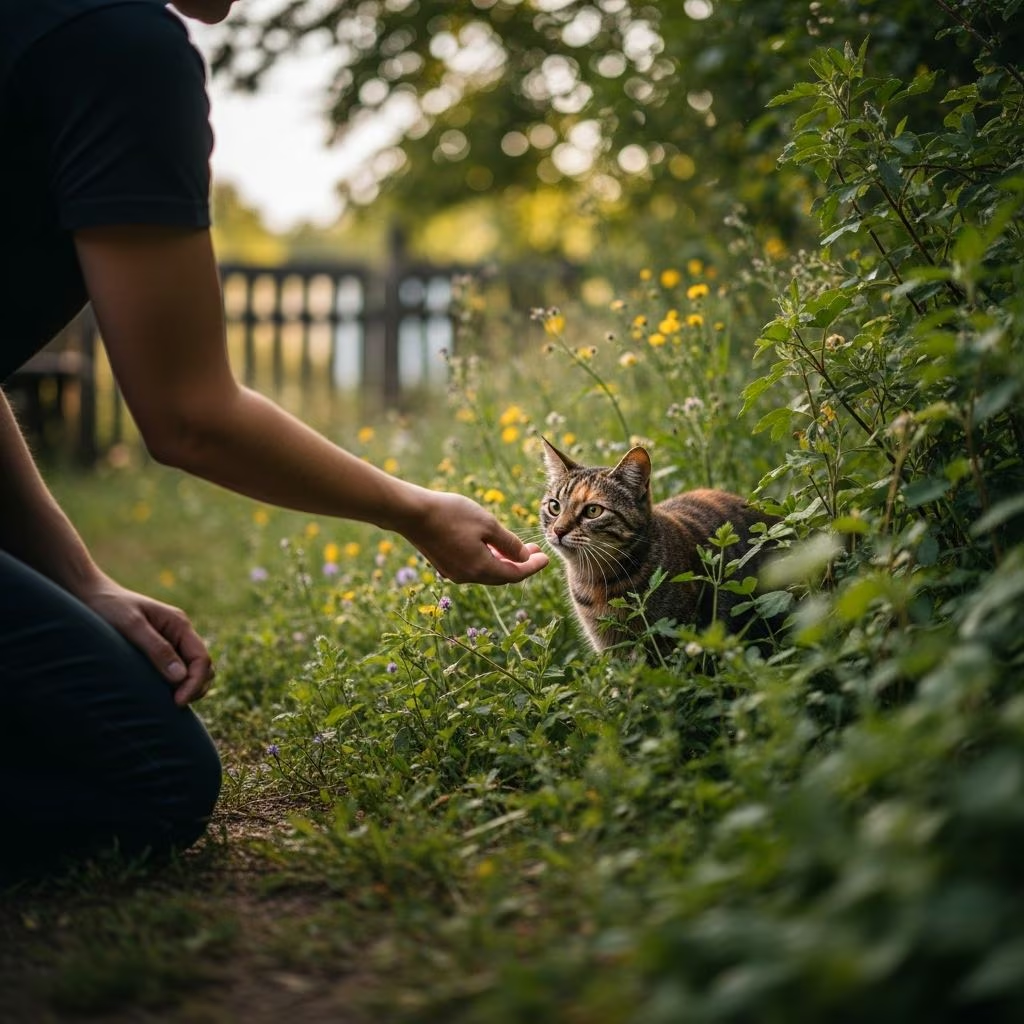
Socializing feral cats involves gradually acclimating them to human touch, spaces, sights, sounds, and smells to help them transition from wild fear to comfortable companionship. This process requires patience, consistency, and positive reinforcement, as feral cats often view humans as threats. Success rates are higher with kittens under 8 weeks, but adults can be socialized too with dedicated effort.
What Is a Feral Cat?
Feral cats are domesticated cats that have lived their entire lives without human contact, often born to unowned mothers in colonies. Unlike stray cats, which were once pets and may quickly warm to humans, ferals exhibit fear-based behaviors such as fleeing, hiding, flat ears, dilated pupils, and swiping. They may vocalize minimally, wrap their tails tightly, and maintain tense postures around people. Socialized cats, by contrast, approach humans, purr, rub, knead, expose their stomachs, and stay visible during the day.
Understanding the Cat Socialization Continuum
The socialization continuum ranges from fully feral to fully socialized. Feral cats avoid touch and hide, while semi-socialized ones may tolerate handling from familiar people but fear strangers. Socialized cats seek human interaction. Key to progress is positive association: handling, petting, food, treats, play, and safe environments build comfort. Observing behaviors like raised ears, tail up, relaxed posture, and interest in household sounds indicates progress.
Steps to Socialize Feral Cats
Step 1: Rescuing and Creating a Safe Space
Begin by humanely trapping the cat using a drop trap baited with strong-smelling food like tuna. Cover the trap with fabric to calm the cat during transport. Transfer to a small, quiet enclosed space such as a bathroom, large crate, or soft-sided playpen to minimize stress and hiding spots. Equip the area with a litter box, food/water dishes, bed/blanket, scratching post, cat cave, and toys. Avoid loud noises or sudden movements; a kitten-proofed room prevents escapes under furniture. This setup provides security while limiting overwhelming stimuli.
Step 2: Establish Trust with Food and Routine
Food is the primary tool for trust-building, especially for hungry kittens. Feed at consistent times indoors, staying nearby during meals to associate your presence with positivity. Use high-value wet foods, tuna, salmon, or treats to lure wary cats. Initially, only enter for care tasks like feeding and litter changes to avoid flooding the cat with stimuli. Implement a predictable daily schedule for feeding, interaction, and cleaning, as cats thrive on structure per Ohio State University research. Hand-feeding treats from your palm at muzzle level further links you to good things.
Step 3: Desensitize with Calm, Non-Threatening Behavior
Act non-threatening by avoiding direct eye contact, speaking softly, slow-blinking, sitting sideways, and playing calm music. Enter briefly at first, gradually extending visits while working nearby (e.g., on a laptop) and inching closer daily. Lower your head submissively and let the cat approach on its terms. Positive body language like slow blinks gives the cat control, reducing perceived threat. Repeat sessions several times daily at set times for expectation and security.
Step 4: Introduce Play and Touch Gradually
Once the cat eats comfortably near you, introduce interactive play with non-threatening toys like a string on a stick or feather wand from a distance. This engages the cat without face-to-face pressure. For touch-averse cats, start with a sock or fabric-wrapped stick scented with your smell, applying Feliway if available, stroking the neck and head. Progress to your index finger for sniffing, then gentle petting if the cat responds positively—focus on head and cheeks, avoiding paws, belly, and tail initially. Reward with treats or departure after slow blinks. With very fearful cats, use wand toys to encourage rubbing against your hand substitute.
Step 5: Expand Interactions and Environment
As trust builds, allow petting for longer durations and introduce handling by others to generalize socialization. Distract with food/toys while sneaking touches behind the head. Gradually move food, water, and litter to other rooms to explore the home, starting at night when cats are bolder. Provide comfortable perches, sleep spots, and play areas throughout. Monitor for socialized signs like purring, rubbing, and play.
Tips for Socializing Feral Kittens vs. Adults
- Kittens (under 8 weeks): Highest success; move directly to playpen in quiet room. Use short, frequent sessions with play, treats, and touch.
- Older kittens/juveniles: Similar but may need more time; consistent routine key.
- Adults: Challenging; focus on food motivators, stick-petting, and patience. Some remain semi-feral but can live indoors.
Match rewards to preferences: test treats, toys, or attention. Never force interaction; progress at the cat’s pace to avoid setbacks.
Common Mistakes to Avoid
- Rushing touch or overwhelming with multiple people/noise.
- Inconsistent schedules disrupting security.
- Staring, reaching over the head, or petting sensitive areas early.
- Leaving toys in enclosure unsupervised.
- Ignoring fear signals like hissing/swiping—pause and retry later.
How Long Does It Take to Socialize a Feral Cat?
Timeline varies: kittens may socialize in 2-4 weeks with daily effort, while adults can take months or remain semi-social. Factors include age, prior exposure, individual temperament, and consistency. Track progress via reduced hiding, voluntary approaches, and relaxed body language. Patience is essential; some cats bond deeply after initial fear.
Frequently Asked Questions (FAQs)
What is the first step in socializing a feral cat?
Create a safe, enclosed space with essentials and use scheduled feeding to build positive associations.
Can adult feral cats be fully socialized?
Yes, though it takes longer; many become loving pets with gentle, consistent methods.
What if my feral cat hisses or swipes?
Respect the signal, withdraw calmly, and try again later with food or play from a distance.
Is play important for socialization?
Yes, interactive toys help associate humans with fun without direct contact initially.
How do I know socialization is working?
Look for purring, rubbing, raised tail/ears, and seeking touch.
Benefits of Socializing Feral Cats
Socialized ferals gain indoor safety, veterinary care, and companionship, reducing euthanasia in shelters. They often become affectionate pets, enriching homes while addressing community cat overpopulation. Programs like trap-neuter-return (TNR) complement socialization for non-adoptable cats.
References
- Feral to Friendly: Tips for Socializing Shy Kittens and Cats — Community Cats Podcast. Accessed 2026. https://www.communitycatspodcast.com/feral-to-friendly-tips-for-socializing-shy-kittens-and-cats/
- How to Socialize a Feral Cat: A Step-by-Step Guide for Beginners — GARCOK. Accessed 2026. https://garcok.org/how-to-socialize-a-feral-cat-a-step-by-step-guide-for-beginners/
- The Cat Socialization Continuum: A Guide to Interactions — Alley Cat Allies. Accessed 2026. https://www.alleycat.org/resources/cat-socialization-continuum-guide/
- Colony Management – Socializing Feral Kittens — Feral Cat Focus. Accessed 2026. https://feralcatfocus.org/colony-management-socializing-feral-kittens/
- APA Guide to Socializing Adult Cats — American Pets Alive!. 2023. https://americanpetsalive.org/uploads/resources/APA-Guide-to-Socializing-Adult-Cats.pdf



