

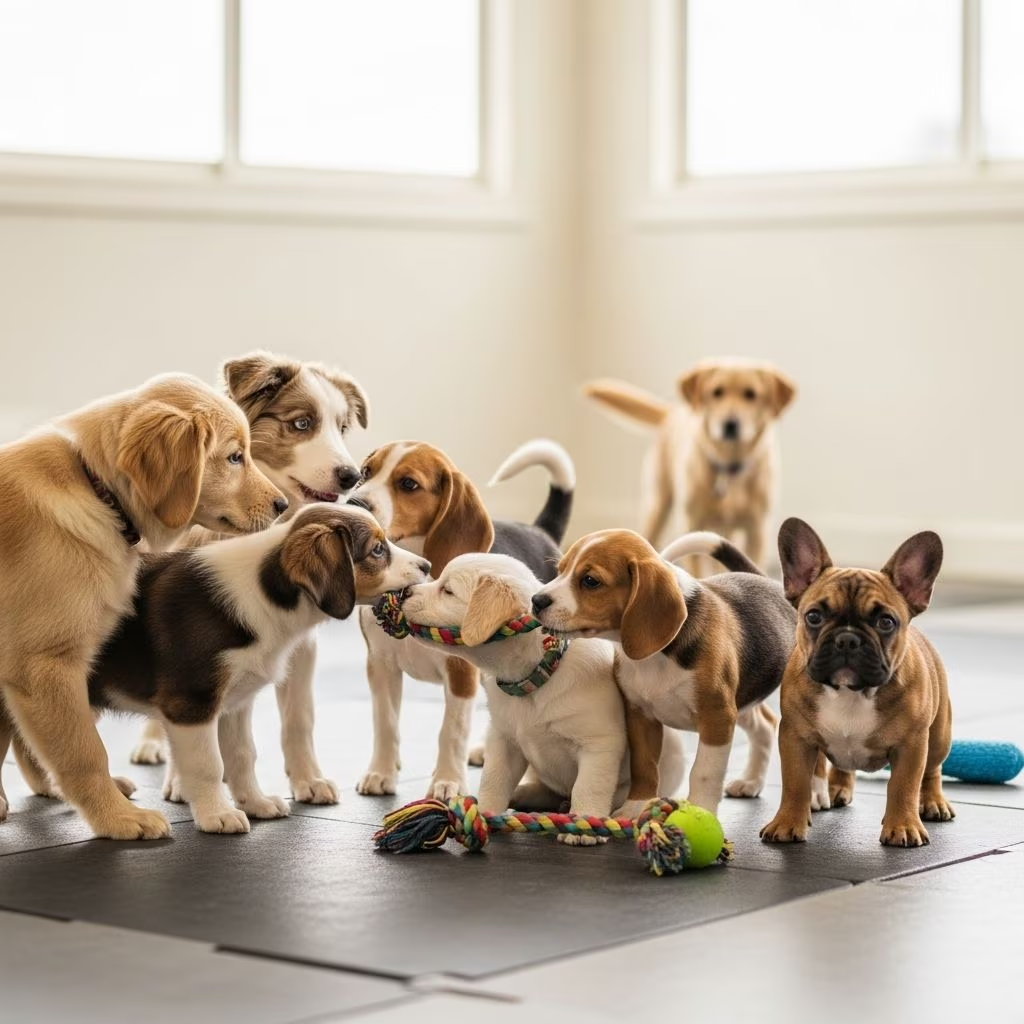
Puppy socialization is the process of exposing young dogs to a wide variety of people, animals, environments, sounds, and experiences in a positive way during their critical developmental periods. This foundational step shapes their behavior, reduces fearfulness, and promotes confidence throughout life.
Why Puppy Socialization Matters
The early experiences a puppy has profoundly influence the adult dog they become. During specific sensitive periods, puppies are highly receptive to new stimuli, forming lasting associations. Proper socialization prevents fear-based behaviors like aggression or anxiety toward unfamiliar people, dogs, objects, or environments. Puppies missing this window often struggle with new situations later, leading to behavioral issues that are harder to resolve.
Research shows that puppies socialized adequately between 3 and 12 weeks are virtually immune to permanent negative impressions from brief fearful experiences, recovering quickly. However, after 12 weeks, caution and fearfulness increase, peaking during social fearfulness stages. Veterinary consensus emphasizes starting socialization early, even before full vaccinations, to capitalize on this openness.
The Critical Socialization Period
Dogs have defined developmental stages where socialization is most effective:
- Neonatal period (birth to 12 days): Basic sensory development begins.
- Transitional period (12-21 days): Eyes and ears open; initial awareness.
- Primary socialization (3-5 weeks): Kinship recognition, play with littermates, bite inhibition develops. Puppies start responding to humans and animals instantly.
- Social fearfulness (peaks at 12 weeks): Caution toward new contacts grows.
- Secondary socialization (6-12 weeks): Optimal for broad exposures; most important overall period (3-12 weeks total).
- Social dominance (10-16 weeks): Hierarchies form; continued positive interactions key.
This 3-12 week window is the sensitive period for socialization, where positive experiences create persistent comfort with the world. Smaller breeds progress faster; variations exist by individual.
Safe Puppy Socialization Before Vaccinations
Most vets advise waiting for full vaccines, but this risks missing the window. Safe alternatives exist:
- Choose private, clean spaces like friends’ fenced yards with known healthy dogs.
- Use puppy classes following AVSAB (American Veterinary Society of Animal Behavior) guidelines: disease-free venues with vaccinated dogs.
- Carry puppies for observational exposure; avoid floor contact in public.
- Focus on controlled home introductions to family, gentle strangers, household sounds.
Balance health risks with behavioral benefits—fearful adults pose greater long-term risks than measured exposures.
Interactive vs. Observational Socialization
Socialization divides into two complementary categories: interactive (direct contact) and observational (passive exposure).
Interactive Puppy Socialization
This involves controlled meetings with people and dogs. Goal: Pair new individuals with positive outcomes like treats, gentle play, calm handling.
- With people: Invite calm friends of varied ages, sizes, hats/glasses/umbrellas. They offer treats, pet gently. Avoid surprises, loud voices, rough handling.
- With dogs: Arrange playdates with polite, vaccinated puppies/adults. Monitor for overwhelm; separate if needed.
Read body language: relaxed ears/tail, play bows = good; tucked tail, avoidance = stop immediately. Puppy-centric: continue only if enjoying.
Observational Puppy Socialization
Expose to world’s stimuli without direct interaction. Pair with treats/support for positive associations.
- Sounds: Vacuum, doorbell, traffic (from distance), baby cries, thunderstorms (recordings).
- Sights: Bikes, strollers, crowds (watch from safety).
- Surfaces/Textures: Grates, grass, tile, carpet.
- Smells: Spices, lawnmower, other animals (via blankets).
Start low-intensity; gradually increase. If puppy ignores happily, success achieved.
Step-by-Step Socialization Plan
Systematic approach ensures comprehensive coverage:
- Weeks 3-5 (breeder stage): Daily handling, littermate play, household noises. Request breeder photos/videos of exposures.
- Weeks 6-8 (home transition): Quiet introductions. Teach basic cues (sit, name response) for control. Short car rides, vet visits as positives.
- Weeks 9-12 (peak window): Expand outings: parks (carry), stores (pet-friendly), elevators. Enroll in puppy class.
- Weeks 13-16+: Reinforce with novel experiences; desensitize fears. Continue learning components like deference protocols.
Incorporate learning: Use cues to guide responses, building security. Avoid flooding (overwhelm); if scared, retreat and retry later.
| Week | Focus Areas | Safe Activities |
|---|---|---|
| 3-5 | Litter, humans | Handling, play |
| 6-8 | Family, home | Sounds, surfaces |
| 9-12 | Public, dogs | Classes, walks |
| 13+ | Novelty | Travel, events |
Common Mistakes to Avoid
- Overwhelming exposures: Too much too soon creates fear.
- Forcing interactions: Never push scared puppies; negative = counter-productive.
- Ignoring body language: Learn signs of stress (yawning, lip-licking, stiffening).
- Neglecting positives: Always pair new with rewards, not just exposure.
- Delaying for vaccines: Misses prime window.
Benefits of Well-Socialized Puppies
Confident dogs adapt easily, reducing reactivity, separation anxiety, leash issues. Owners enjoy stress-free outings, fewer training challenges. Long-term: healthier behavior supports better health outcomes.
Frequently Asked Questions (FAQs)
What is the best age to socialize a puppy?
The critical period is 3-12 weeks, with peak effectiveness 6-12 weeks. Start immediately upon adoption.
Can I socialize before full vaccines?
Yes, safely via controlled, low-risk methods like private yards or carrying for observation.
How do I know if my puppy is overwhelmed?
Watch for stiff body, averted gaze, tucked tail, hiding. Stop and comfort immediately.
What if I missed the socialization window?
Remediation possible with gradual desensitization, counter-conditioning, professional help. Earlier is ideal.
Do all puppies need puppy classes?
Highly recommended for safe dog interactions, supervised play, instructor guidance.
Advanced Tips: Imprinting and Protocols
Certain skills imprint best at specific times: potty training (7-9 weeks), retrieval (week 9). Use protocols like deference/relaxation: teach mat stays, eye contact for security in new situations.
Genetics influence but don’t determine; first impressions guide responses. Diverse, positive exposures build resilient dogs.
References
- On Puppy Socialization — OnDogBehavior. Accessed 2026. https://ondogbehavior.com/on-puppy-socialization/
- There Is More Than One “Right” Way to Socialize Your Puppy — Kinship. Accessed 2026. https://www.kinship.com/dog-behavior/socialize-your-puppy
- Here’s Why You Need to Socialize Your Dog ASAP — Kinship. Accessed 2026. https://www.kinship.com/dog-behavior/how-to-socialize-a-puppy
- Tips on Socializing Puppies Before They’re Fully Vaccinated — Adopt-a-Pet. Accessed 2026. https://www.adoptapet.com/blog/adoption/puppies-around-other-dogs
- American Veterinary Society of Animal Behavior Puppy Socialization Position Statement — AVSAB (referenced in multiple sources). 2008 (authoritative standard, remains foundational). https://avsab.org/wp-content/uploads/2018/03/Puppy_Socialization_Position_Statement_download-10-3-14.pdf



