

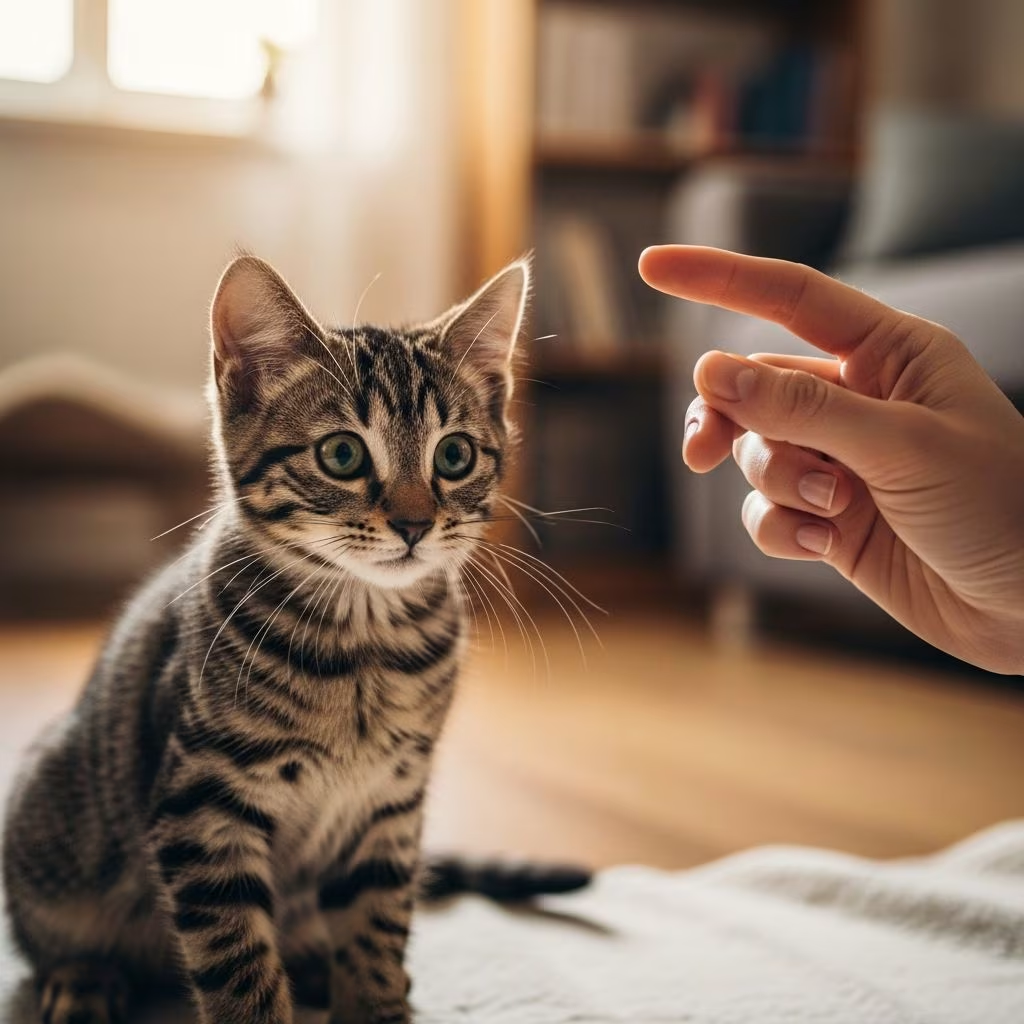
Socialising a kitten is a crucial process that helps them develop into confident, well-adjusted adult cats comfortable with humans, other animals, and various environments. The prime window for kitten socialisation occurs between 2 and 7 weeks of age, but even older kittens can benefit from patient, positive reinforcement techniques. By gradually exposing your kitten to new stimuli while pairing them with rewards like food and play, you build lasting positive associations that prevent fearfulness and behavioural issues later in life.
This guide draws from expert recommendations by humane societies and animal welfare organisations, emphasising consent-based interactions, treats, and gradual desensitisation to ensure your kitten thrives.
Why Socialisation Matters
Socialisation shapes your kitten’s lifelong behaviour, determining how they respond to touch, sounds, strangers, and household routines. Well-socialised kittens exhibit relaxed postures, vocalise positively, approach people, purr, rub, and play eagerly. In contrast, undersocialised cats may hide, hiss, or become aggressive due to fear.
Key benefits include:
- Reduced stress and fear responses in new situations
- Stronger bonds with family members
- Better tolerance for grooming, vet visits, and travel
- Improved adaptability to multi-pet households or busy homes
- Lower risk of destructive behaviours stemming from anxiety
Research from animal behaviourists underscores that early, positive human interaction is foundational, with food as a primary motivator to associate people with safety and pleasure.
The Best Age to Socialise a Kitten
The critical socialisation period for kittens is from 2 to 12 weeks, peaking at 3-7 weeks when they are most receptive to new experiences. During this time, their brains are highly plastic, forming neural pathways based on exposures. Kittens adopted after 8 weeks, like those from shelters, require more deliberate efforts but can still be successfully socialised using counter-conditioning techniques.
- 2-4 weeks: Gentle handling by one person; focus on maternal bonding.
- 4-8 weeks: Introduce varied stimuli, people, sounds; use treats liberally.
- 8-12 weeks: Expand to handling, play, and short outings.
- Over 12 weeks: Patience is key; use desensitisation starting from a safe space.
For fearful kittens over 8 weeks, a structured 7-step approach works well: start with presence near food, progress to touch and holding.
Signs of a Well-Socialised Kitten
Observe these behaviours to gauge progress:
- Raised ears and tail when approaching people
- Slow blinks, purring, kneading, or rubbing against you
- Relaxed body posture, exposed belly (without aggression)
- Interest in play, vocalising (meows, chirps)
- Comfortable staying visible and sniffing household sounds
- Allows gentle petting on head, chin, shoulders without flinching
If your kitten pins ears back, tucks tail, hisses, or hides persistently, pause interactions and revert to food association steps.
Step-by-Step Guide to Socialising Your Kitten
Follow this progressive checklist, adapted from humane society protocols. Always prioritise your kitten’s consent—stop if they show stress and end on a positive note with treats.
Step 1: Create a Safe Space and Build Trust
Confine your kitten to a small, quiet room with litter, food, water, hiding spots, and toys. Sit nearby without eye contact, reading or playing on your phone for 20-30 minutes daily. Offer food to associate your presence with positivity. Use slow blinks to signal safety in ‘cat speak’.
- Leave radio/TV on low when absent to habituate to human voices.
- Reward any glance or approach with treats within 3 seconds.
Step 2: Introduce Touch and Handling
Once eating near you, start with a paintbrush or glove for petting cheeks, chin, ears. Progress to hand petting only after they relax (ears forward, tail up). Avoid belly initially.
- Touch paws, toes, mouth gently while feeding treats.
- End sessions before stress; always pair with food.
Step 3: Use the ‘Burrito Method’ for Holding
For fearful kittens, swaddle in a towel (burrito style): slide under body, fold ends securely. Hold while offering canned food or baby food, speaking softly. Release only on relaxation signals like purring or eating. Gradually lift without towel as trust builds.
Step 4: Incorporate Play and Toys
Play activates prey drive without direct contact. Use wand toys, mimicking erratic prey movements—wiggle on floor or air, pause often. Toys like balls, tunnels, treat puzzles provide enrichment.
- Land games (rodents) vs. air games (birds)—experiment.
- Post-play treat rewards confidence.
Step 5: Desensitise to Sounds and Handling
Play household sounds (doorbells, vacuums) at low volume, increasing gradually with treats for calm responses. Handle all body parts: lift paws, check ears, simulate grooming.
Step 6: Introduce New People
Inviting guests toss treats from afar; let kitten approach voluntarily. Encourage slow movements, soft voices, wand play. No direct staring or forcing interaction.
Step 7: Expand Experiences
Once confident, introduce carriers, leashes, short car trips paired with treats. Monitor for stress and progress slowly.
Kitten Socialisation Checklist
| Week | Activities | Rewards |
|---|---|---|
| 1-2 | Safe room setup, presence, slow blinks | Food near you |
| 3-4 | Gentle brush touch, paw handling | Treats during touch |
| 5-6 | Hand petting, burrito holds, wand play | Canned food, play sessions |
| 7+ | New people, sounds, outings | Praise, high-value treats |
This checklist ensures comprehensive coverage.
Common Mistakes to Avoid
- Forcing interactions: Leads to shutdown or fear reinforcement.
- Overwhelming with stimuli: Introduce one at a time.
- Ignoring body language: Flat ears or swishing tail means stop.
- No positive reinforcement: Always pair new things with treats.
- Rushing handling: Build from brush to hands gradually.
Socialising Fearful or Older Kittens
For kittens over 8 weeks or ferals, extend timelines. Use classical counter-conditioning: presence + food, then touch during eating, lifting with dish incentives. Persistence yields results; many fearful kittens become affectionate.
Frequently Asked Questions (FAQs)
What if my kitten hisses or hides?
Reduce pressure; revert to distant food association. Patience and treats rebuild trust.
How often should I socialise sessions last?
3-5 short sessions (10-20 mins) daily, ending positively.
Can I socialise a 4-month-old kitten?
Yes, using desensitisation; it may take longer but is effective.
What treats work best?
Canned food, chicken baby food, commercial treats—high value for motivation.
Is play essential?
Absolutely; builds bond, provides exercise, and encourages approach without pressure.
References
- Socializing a Fearful Kitten — Wisconsin Humane Society. Accessed 2026. https://www.wihumane.org/socializing-fearful-kitten
- Kitten Socialization Checklist — San Diego Humane Society. Accessed 2026. https://sdhumane.org/resources/kitten-socialization-checklist/
- Socializing kittens over 8 weeks old — Toronto Humane Society. 2021-05. https://www.torontohumanesociety.com/wp-content/uploads/2021/05/Socializing_kittens_over_8_weeks_old.pdf
- The Cat Socialization Continuum: A Guide to Interactions — Alley Cat Allies. Accessed 2026. https://www.alleycat.org/resources/cat-socialization-continuum-guide/
- How to Introduce and Socialize Cats and Kittens — ASPCA Pet Insurance. Accessed 2026. https://www.aspcapetinsurance.com/resources/how-to-socialize-your-cat/



