

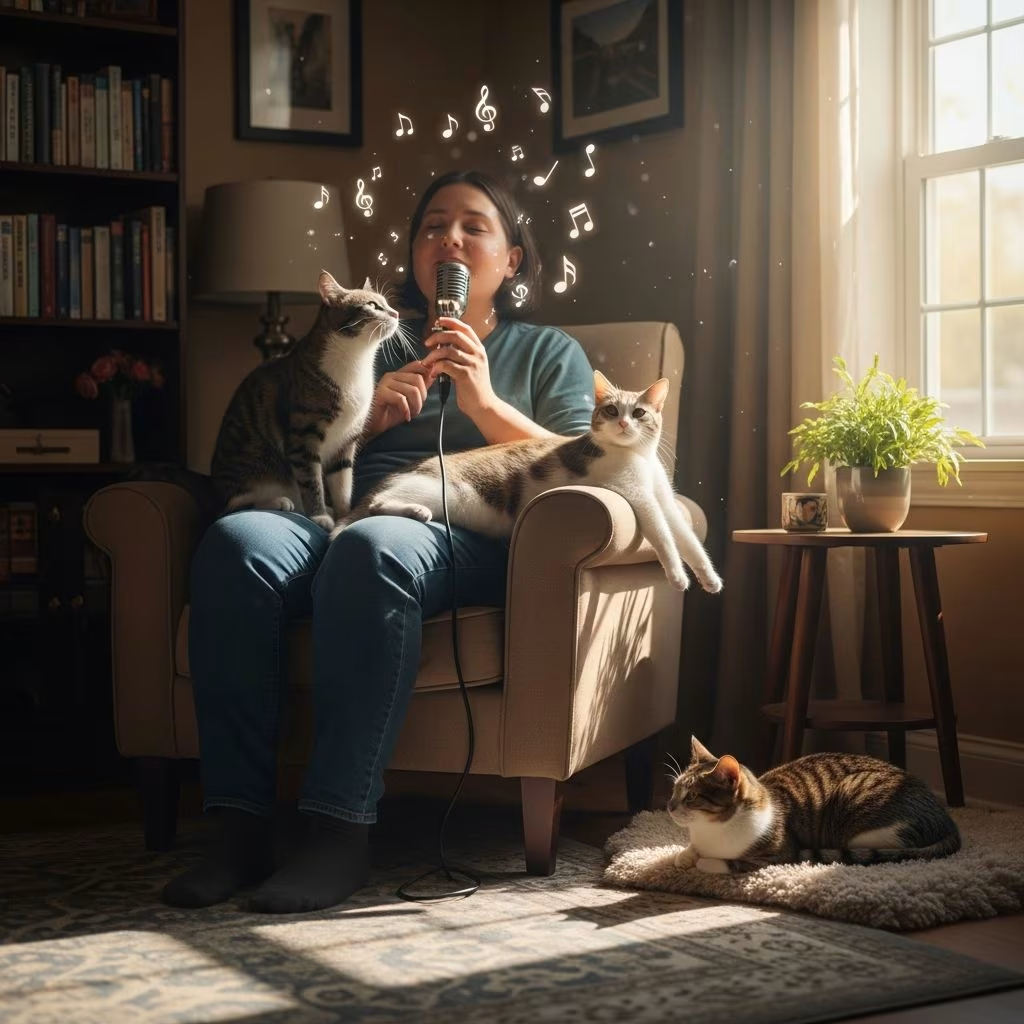
How to Sing to Your Cats (& Do They Like It)? Feline Musical Facts
If you’ve ever wondered whether your cat enjoys listening to you sing, you’re not alone. Many cat owners find themselves humming tunes, making up silly songs, or replacing song lyrics with their cat’s name. The question remains: do cats actually appreciate these musical gestures, or are they simply tolerating their owner’s vocal performances? The answer may surprise you, as it combines scientific insight with individual feline personality.
Do Cats Like When You Sing to Them?
The straightforward answer is: most likely, yes. You can sing to your cats throughout the day to observe their individual reactions, and many will respond positively to your vocalizations. Singing to your cat represents a delightful and somewhat silly way to strengthen your bond together. However, the seriousness of your singing ability matters far less than you might think. Your cat doesn’t expect concert-quality vocals or perfect pitch—they simply appreciate your presence, attention, and the emotional energy you’re investing in the interaction.
The reality is that while few comprehensive studies have examined exactly how cats perceive music, general observations suggest that cats do seem to enjoy music, though their preferences will depend significantly on their individual personality and the type of music you sing or play. Some cats will enthusiastically respond to your singing with purring, head bumps, or by remaining nearby. Others may appear completely indifferent, while a small subset might even seem annoyed. Understanding your specific cat’s preferences is part of the joy of this bonding experience.
Why Might Cats Like Singing?
There are several compelling reasons why individual cats might absolutely love when you break out in song. Understanding these motivations can help you appreciate why this simple activity creates such meaningful moments between you and your feline companion.
It’s the Soothing Melody
When you melodically play an instrument while singing, or simply deliver a well-paced vocal performance, your cat might enter a trance-like state of relaxation. Research has demonstrated that certain music genres, particularly classical music, can genuinely lower a cat’s stress levels. This neurological response explains why your singing voice might make your cat feel warm, cozy, and emotionally secure on the inside. The rhythmic patterns, gentle tones, and predictable nature of melodic singing can activate calming responses in your cat’s nervous system.
It Could Be Your Energy
Cats are extraordinarily sensitive to energy—any cat owner can confirm this observable truth. They rapidly pick up on emotions, movements, and all sorts of environmental stimuli with remarkable precision. If you maintain a very positive, uplifting energy while singing, your cat will likely become complacent or might even mirror that enthusiasm by displaying high energy themselves. If your singing energizes your kitty, prepare yourself for an exciting romping session complete with zoomies around the house and enthusiastic play.
They May Just Love You
Sometimes the simplest explanation is the most accurate one. Your cat might not have a complex, scientific reason for enjoying your singing. Many cats won’t understand the mechanics of what you’re doing at all. However, the reality is that they could simply enjoy hearing your unique voice and being in close physical proximity to you. Singing to your cat becomes comparable to singing a lullaby to a baby—it’s an act of care, affection, and presence that strengthens emotional bonds regardless of the actual musical quality.
Not All Cats Will Be a Fan
It’s important to acknowledge that not every cat will be enthusiastic about your musical performances. Some cats will literally look at you as though you’ve lost your mind, while others might be visibly annoyed by the activity. This variation reflects the universal truth that different cats have different preferences—different strokes for different folks, or in this case, different strokes for different cats. Your cat’s reaction to singing depends on their personality, past experiences with sound, and individual sensory preferences.
How to Sing to Your Cat
Most cats will enjoy you singing to them, or at minimum remain indifferent to the experience. Very few cats will absolutely despise singing unless you’re simultaneously playing a loud instrument that frightens them. Here are practical, actionable methods you can use to incorporate singing into your cat care routine.
1. Make Up Silly Songs of Your Own
You don’t need to follow any particular musical format or adhere to established melodies. Creating silly, original songs is one of the most effective and enjoyable approaches. If you’re someone who loves making daily activities more entertaining while moving around your house, you can compose and perform whatever you wish in that moment. Your cat might regard you with confusion or mild disdain—but honestly, when don’t they? Sing anyway and don’t let your feline friend’s judgment cramp your creative style. Make up songs about what your cat is doing, how silly they look, or what you’re about to feed them. The absurdity and personalization make these moments special.
2. Replace Words in Songs With Your Cat’s Name
If you’re already humming a familiar tune, you can effortlessly replace certain lyrics with things that directly relate to your cat. For instance, you might add your cat’s name in place of another word in the song. Alternatively, you could replace entire lyrics with descriptions of what your cats are doing at that particular moment. The possibilities for creative adaptation are genuinely endless. Get creative and have fun with well-known melodies—whether it’s adapting “You Are My Sunshine” or turning “Soft Kitty” from The Big Bang Theory into a personalized tribute to your specific feline. Consider incorporating songs like Bob Marley’s “Three Little Birds” or Fleetwood Mac’s “Dreams” if you enjoy reggae or soft rock genres.
3. Practice for Your Cat’s Reaction
Experiment with different singing styles and observe how your cat responds to the variations. Try singing in a very soothing, angelic voice if you’re capable of achieving that tone. Then, deliberately shift to singing with excitement and energy to see how your cat’s behavior changes. You might discover that your cat reacts differently to various singing approaches, or you might notice that your cat seems to have minimal reaction regardless of your singing style. This experimentation process is valuable because it helps you understand your specific cat’s preferences and sensory sensitivities. Some cats prefer calm, gentle vocals, while others respond better to playful, energetic performances.
Benefits of Singing to Your Cat
While comprehensive scientific research on singing to cats remains limited, the observable benefits are significant and well-documented by cat owners who engage in this practice regularly.
- Bonding Strengthening: Singing definitely helps strengthen the emotional bond between you and your cat. Cats respond to their owner’s singing voices and seem to develop a sense of security and connection when their humans vocalize. This creates shared moments of vulnerability and affection.
- Stress Reduction: For both cats and humans, singing can be a deeply soothing activity. When you’re frustrated or stressed about something your cat has done, you can redirect that negative energy by singing to your cat in a melodic voice. This practice demonstrably lowers stress levels in both the singer and the listener.
- Personal Enjoyment: Singing to your pet can be genuinely fun and boost your own mood significantly. Playfully engaging with your cat through song brings joy to your daily life and creates shared moments of silliness that brighten both of your days.
Human Singing vs. Cat Purr: Are They More Similar Than You Think?
When you pause to consider the matter thoughtfully, a cat’s purr and a human’s ability to sing can both offer genuine healing benefits. This isn’t merely anecdotal—it’s supported by scientific research. A cat’s purr represents their own special form of biological magic. The purr emits specific frequencies that can actually heal the body. Beyond being a simple sign of affection, purring transmits a frequency with measurable healing properties that can mend their own bodies and those of creatures they’re close to. Similarly, when humans sing—particularly in soothing tones—we’re engaging in an activity that promotes relaxation and healing in ourselves and those around us. The resonance between these two vocalizing behaviors creates a powerful therapeutic environment when cats and humans sing together or engage in vocal interaction.
The Best Music Genres for Cats
Research has shown that cats respond most favorably to certain musical genres. Classical music stands out as the most effective genre for reducing stress and promoting relaxation in felines. However, cats can find comfort in any soothing genre that features soft melodies, gentle rhythms, and predictable patterns. Soft rock songs, gentle reggae, and acoustic performances can all provide a calming environment for your cat. The key is focusing on the tone, pace, and emotional quality of the music rather than the specific genre classification.
Frequently Asked Questions (FAQs)
Q: What if my cat seems annoyed when I sing?
A: Not all cats enjoy singing equally. If your cat appears annoyed, try adjusting your singing style—perhaps singing more quietly, more gently, or in a different musical range. You might also try singing less frequently. Some cats simply have different preferences, and that’s completely normal and acceptable.
Q: Can I teach my cat to sing along with me?
A: While cats cannot sing in the human sense, you can encourage vocalizations through positive reinforcement. Use treats, encouraging tones, and patient practice. Reward your cat when they vocalize in response to your singing. This creates a form of musical interaction unique to your cat’s abilities.
Q: How often should I sing to my cat?
A: Singing to your cat can be a daily activity if both you and your cat enjoy it. There’s no strict frequency requirement—let your cat’s reactions guide how often you incorporate singing into your routine. Some cats enjoy constant musical companionship, while others prefer occasional singing sessions.
Q: Does my cat actually understand the words I’m singing?
A: Your cat likely doesn’t understand human language in the literal sense, but they respond to the tone, pitch, rhythm, and emotional energy conveyed through your voice. They may recognize their own name when you sing it repeatedly, and they definitely pick up on whether you’re calm or excited.
Q: What songs do cats respond to best?
A: Classical music has the strongest scientific support for calming cats. Popular personalized songs include “You Are My Sunshine,” “Soft Kitty” from The Big Bang Theory, “Three Little Birds” by Bob Marley, and “Dreams” by Fleetwood Mac. The best songs are those you sing with positive energy and genuine affection.
Conclusion
You absolutely can sing to your cat—and honestly, you should sing to your cat—and consider playing music for your cat to relax. Remember that research proves cats respond optimally to classical tunes, but they can find comfort in virtually any soothing musical genre. If you’re creating original songs and spontaneously blurting them out, your cat might genuinely wonder what’s wrong with you, but they probably love your weird and wonderful shenanigans at heart. Make up songs, hum, whistle, or whatever strikes your fancy in that moment, then watch for your cat’s unique reaction. This simple activity strengthens your bond while potentially providing genuine health and wellness benefits to both you and your feline companion.
References
- How to Sing to Your Cats (& Do They Like It)? Feline Musical Facts — Catster. 2024. https://www.catster.com/lifestyle/how-to-sing-to-your-cats/
- Songs We Sing to Baby Cat: Benefits of Living Amongst the Melodies — Hepper. 2024. https://articles.hepper.com/songs-we-sing-to-baby-cat/
- The Benefits of Singing to Your Pets: Which Music Genres Do They Prefer — Katzen World. 2023. https://katzenworld.co.uk/2023/07/08/singing-these-songs-to-your-pet-can-help-to-boost-their-wellbeing/



