

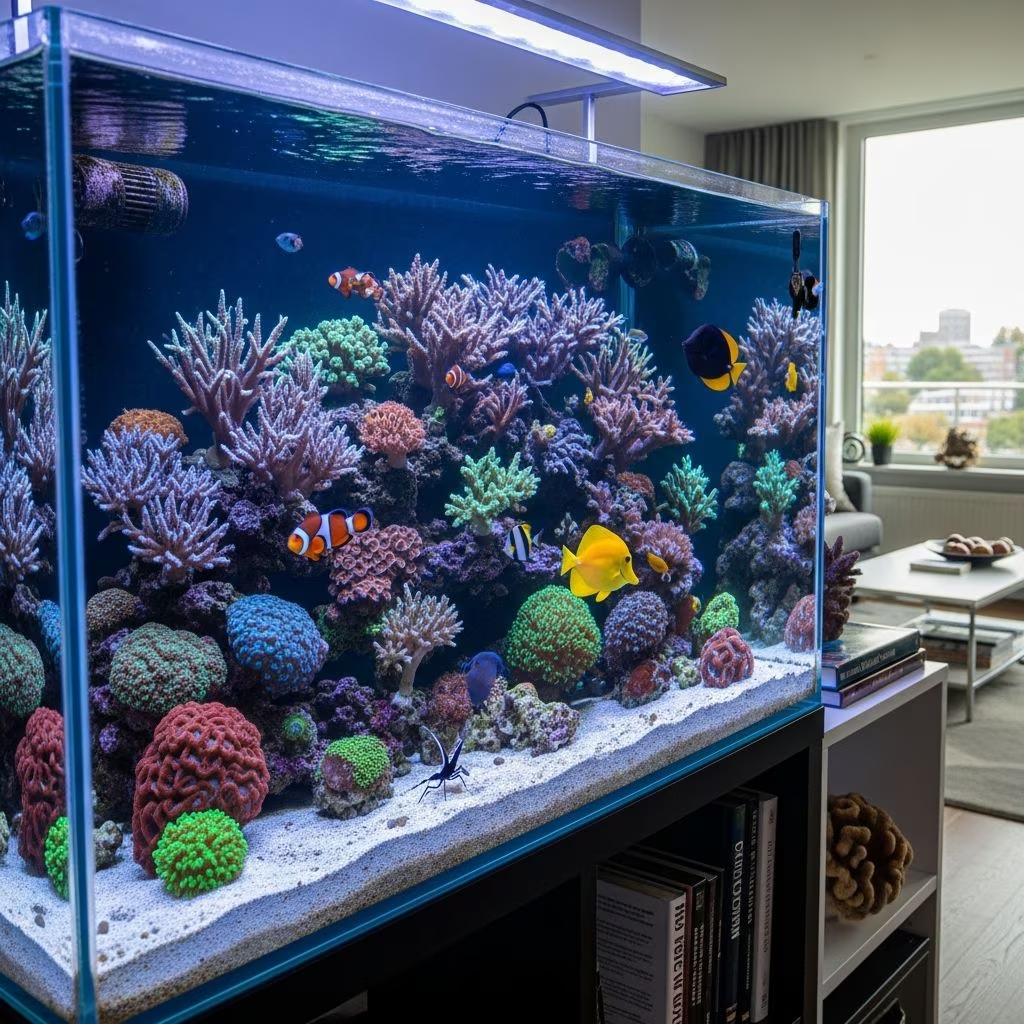
How to Set Up a Saltwater Aquarium: A Comprehensive Beginner’s Guide
Setting up a saltwater aquarium is an exciting endeavor that allows you to create a thriving marine ecosystem right in your home. While the process may seem daunting at first, following a structured approach makes it manageable and rewarding. This guide walks you through each essential step to establish a healthy saltwater aquarium that will provide years of enjoyment.
Unlike freshwater aquariums, saltwater systems require more careful planning and attention to water chemistry, equipment needs, and biological cycling. However, the fundamental principles remain similar, and with proper preparation, anyone can successfully set up and maintain a saltwater tank.
Understanding Types of Saltwater Aquariums
Before diving into the setup process, it’s important to understand the different types of saltwater aquariums available. Your choice will significantly impact your equipment needs, maintenance requirements, and the species you can keep.
Fish-only tanks are the simplest option, requiring only basic filtration and equipment. Reef aquariums are more complex, featuring live corals, invertebrates, and requiring specialized lighting and filtration systems. Hybrid systems combine elements of both, offering a middle ground for enthusiasts. Understanding which type aligns with your interests and commitment level is crucial before purchasing equipment.
Step 1: Plan Your Saltwater Aquarium
Proper planning is the foundation of a successful saltwater aquarium. Before purchasing any equipment, take time to research and consider your goals.
Determine Your Tank Size and Type
Start by deciding what fish and creatures you want to keep. Research their specific requirements, including water parameters, tank size, temperament, and dietary needs. This information will guide all subsequent decisions about your aquarium setup. Larger tanks generally provide more stability and forgiving conditions, making them ideal for beginners.
Budget and Space Considerations
Establish a realistic budget that accounts for the tank itself, stand, equipment, decorations, and ongoing maintenance supplies. Assess your available space carefully, considering not just the tank footprint but also room for equipment, lighting fixtures, and maintenance access.
Research Equipment and Species Compatibility
Take time to thoroughly understand the equipment you’ll need, the compatibility of species you’re interested in, and the specific water conditions required. This research phase prevents costly mistakes and ensures you invest in appropriate equipment from the start.
Step 2: Prepare Your Tank
Once you’ve completed your planning, it’s time to prepare the physical tank itself.
Clean the Tank Thoroughly
Even new tanks can contain dust and manufacturing residue. Clean the tank with deionized water only—never use soap or chemicals, as residue can harm marine life. Use a soft cloth or sponge to gently clean all interior surfaces. Pay special attention to corners and seams where debris tends to accumulate.
Check for Leaks
Before placing the tank in its final location, test it for leaks. Fill it with just a couple of inches of water and let it sit for approximately one hour. Check the bottom and sides carefully for any signs of water escape. Small leaks can typically be repaired with aquarium-grade sealant, while significant leaks may require professional repair or tank replacement.
Select and Position Your Tank
Choose a stable, level location for your aquarium away from direct sunlight, heating vents, and air conditioning units. Ensure the floor can support the substantial weight of a filled tank—a 50-gallon tank weighs approximately 500 pounds with water and equipment. Once positioned, use a level to verify the tank sits perfectly straight. Uneven tanks experience uneven pressure distribution on the glass, potentially compromising structural integrity. Avoid moving the tank once it’s filled, as this is extremely difficult and risks damage.
Step 3: Add Substrate
Substrate serves both aesthetic and functional purposes in your saltwater aquarium.
Choosing Appropriate Substrate
Common substrate options for saltwater tanks include aragonite sand, crushed coral, and live sand. Aragonite and crushed coral are calcium carbonate-based materials that help maintain proper pH levels. Live sand contains beneficial bacteria that assist with the nitrogen cycle. The depth should typically range from 1-4 inches, depending on your tank type and the creatures you plan to keep.
Preparing and Installing Substrate
Always rinse substrate before adding it to your tank. Rinse repeatedly with fresh water until the water runs clear, removing excess dust and debris. To avoid scratching the tank glass, create a thin protective base layer along the bottom first. Then gradually add the remaining substrate, building up to your desired depth.
Substrate Considerations
Consider whether you’ll have bottom-dwelling fish or creatures that burrow—these require deeper substrate. Lighter-colored substrates can highlight tank inhabitants but show debris more readily. Darker substrates hide imperfections but may make your tank appear smaller.
Step 4: Add Water
Adding water is a critical step that requires careful attention to quality and chemistry.
Use Appropriate Water
Never fill your tank directly from the tap. Municipal tap water contains chlorine, chloramine, and other chemicals harmful to marine life. Instead, use reverse osmosis (RO) water or distilled water. Many aquarium stores sell pre-treated RO water, or you can invest in your own RO filter system for long-term cost savings.
Add Salt Mix
Saltwater aquariums require marine salt mix, not table salt. Mix the salt according to package directions before adding it to the tank. Most quality salt mixes are formulated to maintain proper mineral balances and pH stability. Use a hydrometer or refractometer to verify that salinity reaches the appropriate specific gravity (typically 1.025 for fish-only tanks and 1.024-1.026 for reef tanks).
Filling Process
Fill the tank slowly to avoid disturbing substrate and decorations. As you fill, the water may become cloudy—this is normal. The cloudiness results from substrate particles and will clear within 24-48 hours as particles settle. Avoid the temptation to drain and refill the tank; patience allows the water to naturally clarify.
Step 5: Install Equipment
Proper equipment installation ensures your tank maintains stable conditions for aquatic life.
Essential Equipment
Nearly all saltwater systems require adequate filtration. Options include canister filters, hang-on-back filters, or sump systems. A reliable heater maintains stable water temperature between 72-78°F, critical for most marine species. Install these components according to manufacturer instructions.
Additional Equipment
Consider adding a protein skimmer, which removes organic compounds before they degrade water quality. UV sterilizers help prevent parasites and disease. LED lighting illuminates the tank and supports photosynthesis in reef systems. An air pump and airstone improve water circulation and oxygenation.
Equipment Positioning
Position equipment for optimal water flow and accessibility for maintenance. Ensure power cords reach outlets safely and aren’t submerged. Test all equipment before proceeding, confirming proper operation and flow rates.
Step 6: Add Decorations and Hardscape
Decorations create habitat structure while adding visual appeal to your aquarium.
Live Rock Selection
Live rock contains established bacterial colonies that help establish the nitrogen cycle. Select lighter-colored live rock, as lighter coloration indicates more interior gaps and holes that provide surface area for bacterial growth. Lighter rock also typically indicates less dense structure, facilitating better water flow.
Aquascaping Principles
Arrange rock to create visual interest using a focal point, typically slightly off-center. Leave open swimming space for fish and ensure accessibility for cleanup crew members like snails and crabs. Create caves and crevices where shy fish can hide. Ensure the structure is stable and won’t collapse if fish or equipment disturb it.
Artificial Decorations
Coral skeletons, ceramic caves, and other artificial decorations complement live rock. Ensure all decorations are aquarium-safe and won’t leach harmful substances into the water. Clean all decorations thoroughly before placing them in the tank.
Step 7: Cycle the Tank
Tank cycling is perhaps the most critical step, establishing the biological processes that maintain water quality.
Understanding the Nitrogen Cycle
Fish produce ammonia through their gills and waste. Beneficial bacteria convert ammonia into nitrite, which other bacteria convert into nitrate. This three-stage process requires beneficial bacteria populations to establish. Live rock accelerates this process by introducing established bacteria colonies.
Cycling Methods
Live rock cycles are typically the fastest method, taking 3-6 weeks. If live rock doesn’t generate sufficient ammonia sources, you can add small ammonia doses to establish bacterial populations. Some aquarists use fish food or dead shrimp as ammonia sources. Test water parameters regularly throughout the cycle, monitoring ammonia, nitrite, and nitrate levels.
Monitoring Progress
Ammonia and nitrite should rise and then fall to zero, while nitrate rises. Once ammonia and nitrite consistently test at zero while nitrate is detectable, your cycle is complete. This typically requires 4-8 weeks depending on your cycling method.
Step 8: Add Fish Gradually
After your tank is fully cycled, you can begin adding fish, but do so carefully and gradually.
Acclimation Process
Fish experience significant stress during transport and face different water conditions than they’ve been accustomed to. Proper acclimation minimizes this stress. Float the fish bag in the tank for 10-15 minutes to equalize temperatures. Open the bag and gradually add small amounts of tank water every 4-5 minutes until the bag water is approximately 75% tank water. Using a net, gently transfer the fish into the tank and discard the bag water.
Stocking Strategy
Add fish slowly over several weeks rather than all at once. Introducing too many fish simultaneously can restart the nitrogen cycle by overwhelming the bacterial population. Begin with hardy, beginner-friendly species that tolerate minor water quality fluctuations.
Species Selection
Research which species are compatible with each other and appropriate for your tank size. Some fish are aggressive and territorial, while others are peaceful community species. Consider adult size, temperament, dietary requirements, and compatibility before purchasing. Local aquarium clubs and experienced aquarists can provide valuable recommendations.
Important Setup Considerations
Water Chemistry Monitoring
Regularly test pH, salinity, ammonia, nitrite, nitrate, calcium, alkalinity, and magnesium. Maintaining stable water parameters prevents stress-related illness and disease. Invest in quality test kits or electronic testing equipment for accurate readings.
Maintenance Schedule
Establish a regular maintenance routine including partial water changes (typically 20-25% weekly or bi-weekly), equipment cleaning, and parameter testing. Consistent maintenance prevents issues before they develop.
Temperature Stability
Fluctuating temperatures stress fish and invite disease. Use a reliable heater with a thermostat to maintain steady conditions. Monitor temperature daily, especially during extreme seasons.
Common Beginner Mistakes to Avoid
Skipping the planning phase leads to incompatible equipment and stocking decisions. Rushing the cycling process results in fish loss and tank failure. Overstocking too quickly overwhelms biological filtration. Using inadequate filtration creates poor water quality. Inconsistent maintenance allows water parameters to drift, stressing inhabitants. Neglecting to acclimate fish properly causes stress and disease susceptibility.
Setting Up Different Saltwater Tank Types
Fish-Only Tanks
These simplest setups require only basic filtration and heating. They’re ideal for beginners learning saltwater fishkeeping fundamentals. Standard powerheads and hang-on-back filters suffice for most fish-only systems.
Reef Tanks
Reef aquariums demand more sophisticated equipment, including intense lighting (typically LED or metal halide), protein skimmers, and powerful circulation. Corals and invertebrates have specific parameter requirements and lighting needs. These systems require more research and careful planning.
Nano Tanks
Smaller systems under 30 gallons offer space-saving benefits but less water parameter stability. Nano tanks require more frequent maintenance and careful stocking to prevent overcrowding and water quality issues.
Frequently Asked Questions
Q: How long does it take to set up a saltwater aquarium?
A: Initial setup typically takes a few hours, but the complete process including cycling takes 4-8 weeks before fish can be added. The nitrogen cycle is the most time-consuming but critical component.
Q: What’s the minimum tank size for beginners?
A: A 40-gallon breeder or 55-gallon tank provides adequate volume for a beginner fish-only setup. Larger tanks offer more stability and forgiving conditions, making them ideal for learning.
Q: Can I use tap water in my saltwater aquarium?
A: No, tap water contains chlorine and other chemicals harmful to marine life. Always use reverse osmosis (RO) water, distilled water, or deionized water for your saltwater aquarium.
Q: How often should I test water parameters?
A: During the cycling phase, test at least twice weekly. After the tank is established, weekly testing is recommended to monitor water quality and catch issues early.
Q: What fish are best for beginners?
A: Hardy species like damselfish, clownfish, gobies, and tangs tolerate minor water quality fluctuations. Avoid aggressive species or those with specialized feeding requirements until you have experience.
Q: Do I need a protein skimmer?
A: While not absolutely essential for fish-only tanks, protein skimmers significantly improve water quality by removing organic compounds before they degrade. They’re highly recommended for reef systems.
Q: How do I maintain stable salinity?
A: Use a hydrometer or refractometer to monitor specific gravity. As water evaporates, add only fresh water (not salt water) to maintain proper salinity. Salt remains behind, so adding salt water increases salinity.
References
- How to Set Up A Saltwater Aquarium (8 Easy Steps) — Ocean Floor Store. 2025. https://www.oceanfloorstore.com/saltwater-aquarium-setup/
- Step-by-step Guide to Creating a Reef Aquarium — LiveAquaria. 2025. https://www.liveaquaria.com/article/39/
- The Supreme Guide To Setting Up A Saltwater Reef Aquarium — Reef2Reef Forum. 2025. https://www.reef2reef.com/threads/the-supreme-guide-to-setting-up-a-saltwater-reef-aquarium.138750/
- Saltwater Aquarium Tips For Beginners: Don’t Fail Year One — My First Fish Tank. 2025. https://myfirstfishtank.com/top-tips-for-saltwater-aquariums/
- Ultimate Reef Aquarium Setup Guide — Hackers Reef. 2023. https://hackersreef.com/ultimate-reef-aquarium-guide/



