

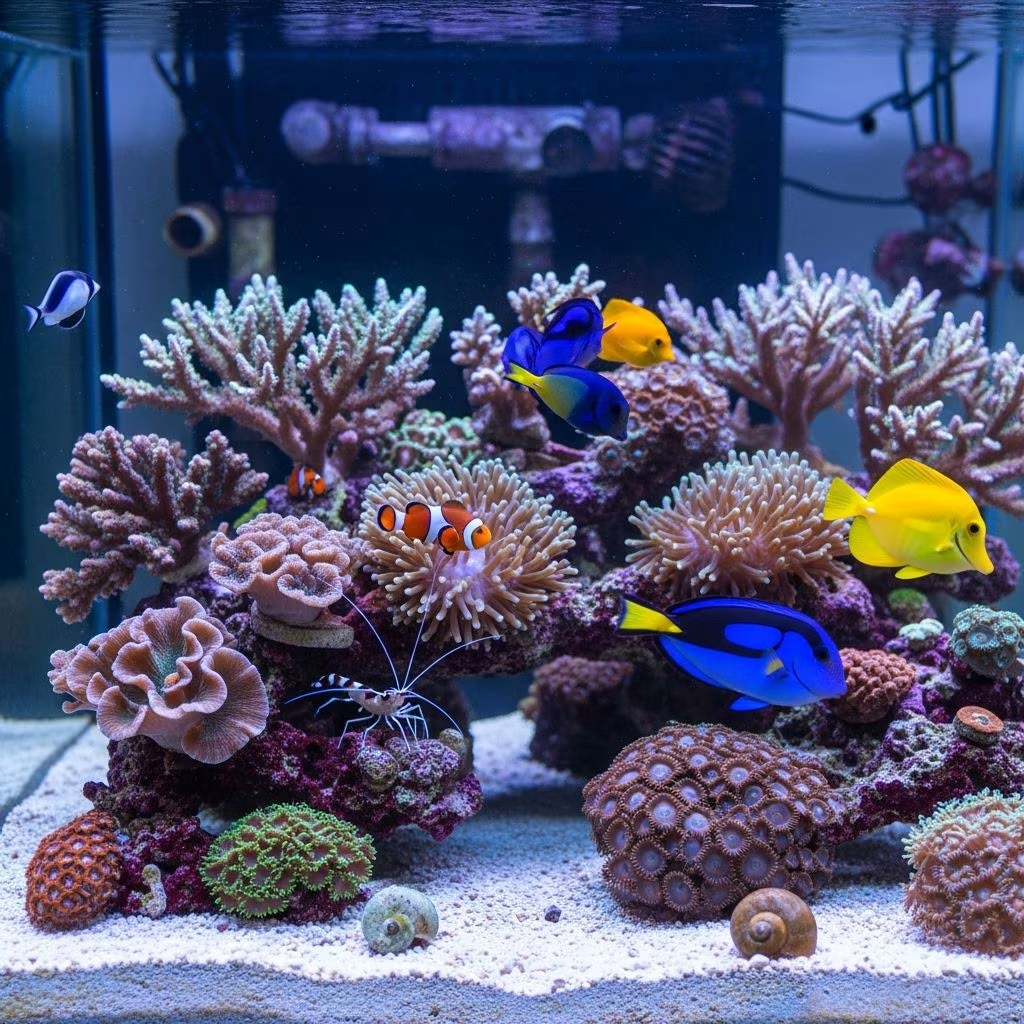
How to Set Up a Reef Aquarium: Complete Guide for Beginners
Setting up a reef aquarium is an exciting journey into the world of marine aquaculture. Whether you’re a seasoned aquarist or a complete beginner, understanding the fundamental steps to establish a thriving reef tank is essential for long-term success. This comprehensive guide will walk you through each critical phase of reef aquarium setup, from selecting your tank to cycling your system and preparing it for livestock.
Choosing the Right Tank Size and Type
The foundation of any successful reef aquarium begins with selecting an appropriate tank. Tank size significantly impacts your ability to maintain stable water parameters and recover from mistakes. Generally, larger tanks are more forgiving than smaller ones because they have greater water volume to dilute waste products and maintain consistent conditions.
For beginners, a minimum tank size of 40 gallons is recommended, though 55 gallons or larger provides additional stability. Larger tanks allow for better temperature regulation, less dramatic pH fluctuations, and more space for a diverse range of corals and fish. When selecting your tank, consider whether it features a drilled design with an overflow or drain system, as this setup enables the use of a sump—an essential component for many reef systems.
Tank orientation matters as well. Shallower tanks with greater surface area relative to depth are generally easier to maintain than tall, narrow tanks, as they provide better gas exchange and more consistent lighting penetration. A rectangular 40-gallon breeder tank or larger rectangular setup provides an ideal starting point for most beginners.
Understanding Tank Stands and Placement
Before filling your tank, proper placement and preparation of the stand is critical. Ensure your stand is completely level using a spirit level, making adjustments with shims as needed. An unleveled tank can cause uneven stress on the glass and potentially lead to structural failure over time.
Consider your flooring type carefully. Solid concrete or tile floors provide excellent support, while wood floors may require reinforcement or waterproof mats beneath the stand to prevent water damage in case of spillage or leakage. Position your tank away from direct sunlight, heating vents, and air conditioning units, as these can cause dramatic temperature swings that stress corals and fish.
Accessibility is another important consideration. Ensure your tank is positioned where you can easily perform maintenance tasks, add water, and view your reef comfortably. Plan adequate space behind the tank for equipment access and power outlet availability.
Setting Up Filtration and Water Movement Systems
A robust filtration system is the backbone of any reef aquarium. Most reef systems utilize a combination of mechanical, biological, and chemical filtration to maintain water quality. A sump system—a separate reservoir typically placed beneath the main tank—allows you to incorporate multiple filtration stages in one convenient location.
Key filtration components include:
- Protein skimmer: Removes organic compounds before they break down into harmful nitrates, essential for reef systems
- Return pump: Circulates water from the sump back to the main tank
- Biological media: Provides surface area for beneficial bacteria colonization
- Filter socks or media bags: Capture particulate matter before it enters the main system
Beyond the main filtration, water movement and circulation are vital. Powerheads or circulation pumps create water flow throughout the tank, ensuring nutrients reach corals and waste reaches filtration equipment. Aim for a turnover rate of 10-20 times per hour, meaning the total volume of water in your tank circulates through your filter system 10-20 times daily.
Configure your water movement to create multiple flow patterns without creating dead spots where detritus accumulates. Position powerheads to prevent sand bed erosion in areas where corals are placed, and avoid pointing water directly at coral polyps unless you’re familiar with the specific species’ requirements.
Preparing and Installing Substrate
The substrate—or sand bed—serves multiple purposes in a reef aquarium: biological filtration, nutrient cycling, and aesthetic appeal. For reef tanks, reef-specific sand is recommended, typically consisting of crushed coral, aragonite, or specialized reef sand mixtures.
Before adding sand to your tank, rinse it thoroughly to remove excess debris and silt. Place the sand in a bucket, fill with water, stir vigorously in a circular motion, then carefully pour out the cloudy water. Repeat this process multiple times until the rinse water runs clear. Some live sand packaged locally may contain beneficial microfauna, so consider whether to rinse locally-sourced sand or skip this step.
When adding rinsed sand to your tank, spread it to your desired depth—typically 1 to 3 inches depending on your aquascape design and the species you plan to keep. A deeper sand bed (3+ inches) supports beneficial anaerobic bacteria important for nutrient cycling, while shallower beds (1-2 inches) are easier to maintain and less prone to compaction.
Add sand gently to minimize water cloudiness. Some aquarists pour sand into a bucket lid or plate positioned on the tank bottom to reduce disturbance. Allow the sand to settle completely before proceeding with other setup steps.
Aquascaping: Arranging Live Rock and Dry Rock
Rock selection and arrangement—aquascaping—creates the landscape of your reef ecosystem. Live rock colonized with beneficial bacteria, algae, and organisms provides superior biological filtration compared to dry rock alone. However, dry rock is less expensive, ships easily, and contains no hitchhiker organisms or algae spores that might cause problems.
Most successful reef aquariums combine both types: dry base rock for structure and economy, with live rock pieces added to seed the system with beneficial organisms. Plan your rockscape before adding water by laying out rocks on paper or newspaper cut to your tank’s footprint size.
Consider these aquascaping principles:
- Fit rocks together like a jigsaw puzzle, minimizing gaps and creating stability without relying on sand alone
- Use plastic zip ties, PVC rods, or acrylic frameworks to secure structures safely
- Create caves, overhangs, and crevices for fish shelter and cleanup crew access
- Ensure water can flow through all areas and detritus can be reached by your cleanup crew
- Leave open space for coral growth and fish swimming area
Build your rockscape with maintenance in mind. Imagine navigating your tank as a small snail or fish—can you access all caves and crevices? Design should balance aesthetics with functionality, providing natural-looking hiding spots while ensuring no dead zones accumulate waste.
Preparing and Adding Water
Water quality is paramount in reef systems. Always use reverse osmosis/deionized (RO/DI) water or distilled water rather than tap water, which contains dissolved minerals and chemicals that will accumulate and degrade water quality over time. Many local pet stores sell RO/DI water, or you can purchase your own RO/DI system for long-term cost savings.
Mix your saltwater in a separate container before adding to the tank. Use high-quality aquarium salt designed for marine systems, mixing it according to package instructions to achieve a specific gravity of 1.023-1.025 (for reef systems) or salinity of approximately 32-34 ppt (parts per thousand).
Aerate your saltwater mixture for several hours before adding to the tank, allowing the salt to fully dissolve and oxygen levels to stabilize. When adding water to your tank, pour it slowly to avoid disturbing the sand and rock. Pour water over a plate, bucket lid, or into a gentle stream to disperse the water gradually and prevent cloudiness.
Fill your tank slowly over several hours if possible. This gradual approach reduces stress on equipment and allows the system to stabilize. Use a small pump if available to gently transfer water into the tank rather than pouring directly.
Installing Heating and Lighting Equipment
Temperature control is critical for reef health. Most reef organisms thrive in the 75-80°F range. Install an aquarium heater sized appropriately for your tank volume—typically 3-5 watts per gallon is a good starting point. Position the heater in the sump if you have one, or in a low-flow area of the main tank to prevent temperature variations.
Use an aquarium thermometer to monitor temperature constantly. Consider adding a temperature controller and backup heater for system redundancy, as temperature swings can rapidly stress or kill sensitive corals and fish.
Lighting enables coral photosynthesis and reproduction while showcasing your reef’s colors and activity. Most reef systems require 8-12 hours of quality lighting daily. LED lighting has become the standard for reef aquariums, offering energy efficiency, customizable spectrums, and reduced heat output compared to metal halide systems.
Select lighting that provides appropriate spectrum and intensity for your intended coral types. Shallow tanks (18-24 inches) generally require less intense lighting than deeper systems. Gradually introduce lighting over 1-2 weeks to allow corals time to acclimate to new light levels and prevent photosynthetic stress.
Testing and Establishing Water Parameters
Before adding livestock, test your water chemistry to ensure stability. Essential parameters include:
Salinity: Use a refractometer for accurate measurement (target 1.023-1.025 specific gravity). Digital hydrometers are less accurate than refractometers but still useful for monitoring.
pH: Should range from 8.1-8.3 in reef systems
Alkalinity: Maintain between 8-12 dKH
Calcium: Keep between 400-450 ppm to support coral skeleton growth
Ammonia and Nitrite: Must read 0 ppm after cycling completes
Nitrate: Keep below 20 ppm through regular maintenance
Invest in quality test kits. Liquid reagent kits provide superior accuracy compared to test strips, though they require more effort to perform. Test daily during the first month, then weekly for the next two months, then monthly once parameters stabilize.
The Nitrogen Cycle: Why Patience Matters
The nitrogen cycle establishes beneficial bacteria colonies that convert toxic ammonia (produced by fish waste and decomposing food) into less toxic nitrite, then into nitrate. This critical process takes 4-6 weeks to establish fully.
During cycling, ammonia and nitrite will spike then gradually decline to zero. Never add fish until both ammonia and nitrite consistently read 0 ppm for several days. Adding fish too early introduces excess bio-load that these bacteria haven’t yet established capacity to handle, resulting in fish death.
Cycle your tank using either of two methods:
- Fish-in cycling: Add hardy fish slowly, monitoring parameters daily and performing large water changes if ammonia or nitrite spike dangerously high. Less popular now due to stress on animals.
- Fishless cycling: Add ammonia source (bottled ammonia or ammonium chloride) to feed the bacteria without risking animal death. More humane and predictable.
Live rock accelerates cycling since it arrives pre-colonized with beneficial bacteria, often reducing cycling time to 2-3 weeks.
Adding Cleanup Crew and Initial Livestock
Once cycling completes and parameters stabilize, introduce your cleanup crew first—herbivorous snails, crabs, and shrimp that consume algae and detritus. These hardy invertebrates typically tolerate beginner mistakes better than fish or corals.
Add fish gradually over several weeks, allowing the biological filter to acclimate to increased bio-load. Start with hardy, peaceful species suitable for reef environments. Never overcrowd—an aquarium cannot biologically handle unlimited fish populations regardless of tank size.
Introduce corals last, after fish have settled and parameters remain consistently stable. Soft corals and hardy stony corals are good beginner choices, as they tolerate slight parameter variations better than delicate species.
Maintenance Schedule and Best Practices
Successful reef keeping requires consistent maintenance. Establish a routine schedule:
Daily: Feed fish appropriately (only what they consume in 2-3 minutes), observe for signs of disease or stress, check temperature
Weekly: Test water parameters, perform 20-25% water changes, clean protein skimmer cup, top off evaporated water with freshwater
Monthly: Clean filter socks or media, test all parameters including calcium and alkalinity, inspect equipment for malfunction
Quarterly: Deep clean powerheads, inspect plumbing for leaks, prune fast-growing corals
Never make dramatic changes to parameters—adjust gradually over days or weeks. Sudden pH swings, temperature fluctuations, or salinity changes shock corals and fish, potentially causing death even if parameters fall within acceptable ranges.
Common Beginner Mistakes to Avoid
Overstocking: Adding too many animals too quickly overwhelms the biological filter, causing die-offs
Skipping the cycle: Adding fish during cycling results in ammonia and nitrite poisoning
Inconsistent maintenance: Missing water changes or parameter testing allows dangerous accumulation of waste products
Poor rock arrangement: Dead zones and unstable structures create maintenance nightmares
Inadequate lighting: Underlit corals slowly starve and weaken over weeks
Tap water use: Dissolved minerals accumulate, eventually degrading water quality irreversibly
Frequently Asked Questions
Q: How long does it take to set up a reef aquarium?
A: Initial setup takes 1-2 days, but the nitrogen cycle requires 4-6 weeks before adding livestock. Total time from purchase to fully stocked reef is typically 8-12 weeks for beginners.
Q: Can I use tap water in my reef aquarium?
A: No. Tap water contains dissolved minerals, chlorine, and other chemicals that accumulate and degrade water quality. Always use RO/DI or distilled water for water changes and mixing saltwater.
Q: What size tank should a beginner start with?
A: Minimum 40 gallons, though 55 gallons or larger is recommended. Larger tanks provide greater stability and forgive beginner mistakes more readily.
Q: Do I need a protein skimmer?
A: Yes. Protein skimmers are essential for reef systems, removing organic compounds before they break down into harmful nitrates. They’re non-negotiable for long-term reef health.
Q: How often should I test my water parameters?
A: Test daily during the first month, weekly for the next two months, then monthly once parameters stabilize. More frequent testing during parameter instability helps catch problems early.
Q: What corals are best for beginners?
A: Soft corals like mushrooms, zoanthids, and leather corals are hardy and forgiving. Easy stony corals include hammer corals and torch corals. Avoid delicate species until you gain experience.
Q: How much does it cost to set up a reef aquarium?
A: A basic 40-gallon setup typically costs $800-1500 initially, with ongoing maintenance costs of $50-100 monthly. Costs increase with tank size and premium equipment choices.
References
- Saltwater Aquarium Setup: How to Set Up a Beginner’s Reef Tank — Reef Cleaners Educational Resources. 2025. https://www.reefcleaners.org/beginners-guide
- Tips and Tricks for Beginner Saltwater Aquarium — TFH Magazine. 2025. https://www.tfhmagazine.com/articles/saltwater/tips-and-tricks-for-beginner-saltwater-aquarium
- Ultimate Reef Aquarium Setup Guide (2025 Edition) — Hackers Reef. 2025. https://hackersreef.com/ultimate-reef-aquarium-guide/
- How to Set Up a Saltwater Aquarium: Step by Step Beginner’s Guide — Fish Shop Matt. June 1, 2025. https://www.youtube.com/watch?v=7yROM5IfXK4
- The Supreme Guide To Setting Up A Saltwater Reef Aquarium — Reef2Reef Community Forums. 2025. https://www.reef2reef.com/threads/the-supreme-guide-to-setting-up-a-saltwater-reef-aquarium.138750/
- Saltwater Aquarium Tips For Beginners: Don’t Fail Year One — My First Fish Tank. 2025. https://myfirstfishtank.com/top-tips-for-saltwater-aquariums/



