

How to Reprimand Your Dog: A Guide to Positive Reinforcement
When it comes to training your puppy, the question of how to handle misbehavior is one every dog parent faces. However, the answer may surprise you: punishment is not the answer. Modern dog training science has moved far beyond outdated punishment-based methods, and veterinarians and professional trainers now overwhelmingly recommend positive reinforcement as the most effective approach to shaping your dog’s behavior.
Understanding the difference between punishment and positive reinforcement is crucial for developing a healthy relationship with your puppy while achieving the training results you desire. This comprehensive guide explores why punishment fails, how positive reinforcement works, and practical strategies you can implement today.
Why Punishment Doesn’t Work for Dogs
The fundamental problem with punishment is straightforward: dogs do not understand punishment in the way humans intend it. When you punish a dog for misbehavior, your puppy doesn’t connect the punishment to the specific action you want to discourage. Instead, your dog learns to fear you and the situations in which punishment occurs.
Research has revealed concerning consequences of punishment-based training:
- Dogs become insecure and may stop listening altogether
- Punishment creates fear and resentment rather than understanding
- Dogs trained with aversive methods show signs of being more “pessimistic” and hesitant in their daily behaviors
- The bond between dog and owner can be diminished
- Behavior often worsens because dogs feel compelled to protect themselves
When a dog is punished for doing something unwanted, such as barking or jumping, they may not connect the punishment to the behavior at all. This fundamental disconnect is why punishment-based training frequently fails and often makes behavioral problems worse.
Understanding Positive Reinforcement
Positive reinforcement is based on the science of how animals learn, rooted in the pioneering work of American psychologist B.F. Skinner and modern behavioral science. Rather than teaching your dog what not to do through punishment, positive reinforcement teaches your dog exactly what you want them to do.
The key principle is simple: when your dog performs a desired behavior, you immediately reward them, which makes that behavior more likely to happen again. This creates a willing, eager learner who understands their role in the training process.
Benefits of positive reinforcement training include:
- Builds your dog’s confidence and security
- Creates a dog willing and eager to follow commands
- Teaches correct behavior instead of punishing wrong behavior
- Strengthens the bond between you and your dog
- Results in more playful, happy dogs
- Improves your dog’s ability to learn novel behaviors
Core Components of Positive Reinforcement Training
Successful positive reinforcement relies on three primary components that work together to create effective learning experiences for your puppy.
Treat-Based Rewards
In the beginning stages of positive reinforcement training, treats are often a large piece of the puzzle. However, not all treats are created equal when it comes to training value.
The key is to match the value of the treat to the difficulty of the task:
- High-value treats (liver, low-sodium turkey dogs, freeze-dried raw kibble pieces) are used when your puppy is learning new skills, practicing particularly tricky behaviors, or working in overstimulating environments
- Lower-value treats can be used for behaviors your dog already knows well and can perform easily
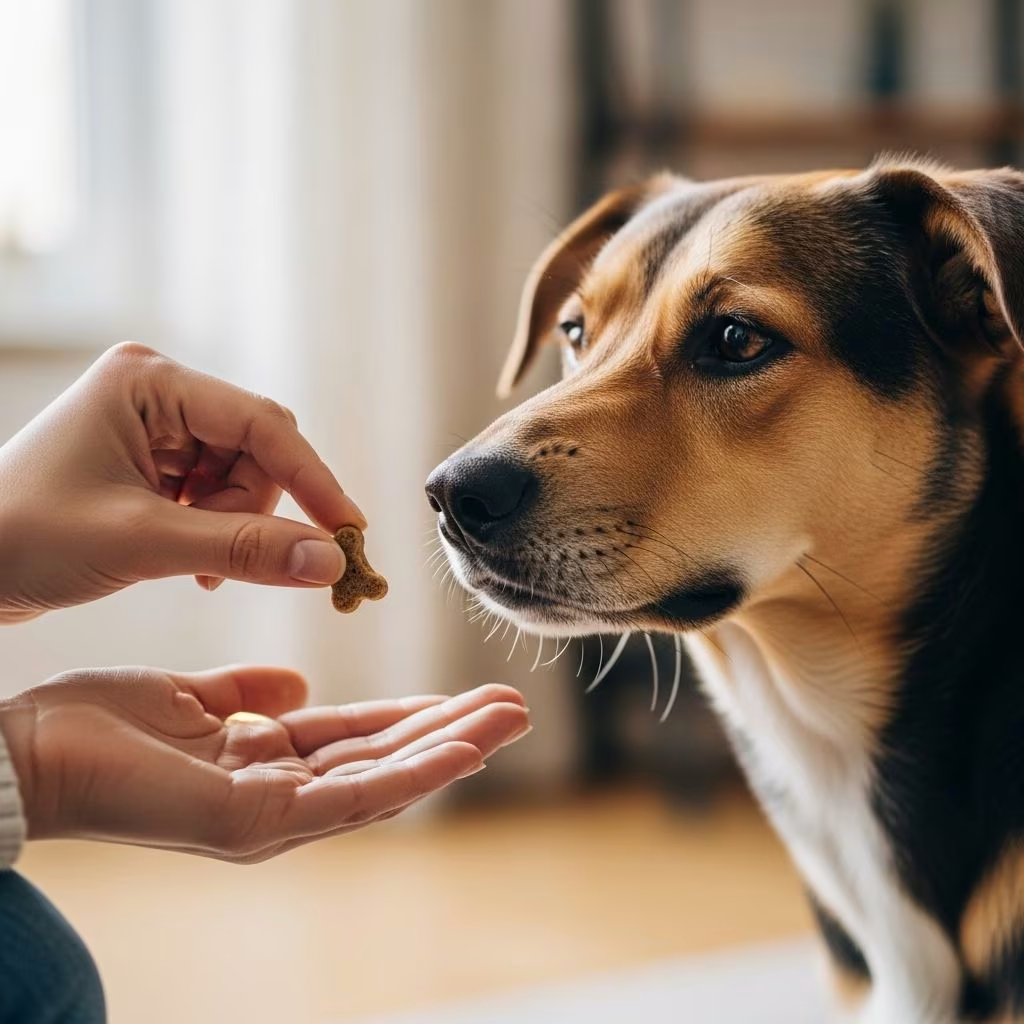
- Treats allow you to reward your dog quickly and precisely, helping them understand that the treat came because they completed the desired behavior
As your dog learns and masters behaviors, you can gradually fade treats from the equation. Eventually, your dog will be happy to perform behaviors for love, affection, and your approval alone.
Praise and Affection
While treats are effective, they should never be your only reward. Pair treats with enthusiastic praise and physical affection from the very beginning of training. This strategy serves multiple purposes:
- It helps you transition away from treat dependency over time
- It creates multiple positive associations with good behavior
- It strengthens your emotional bond with your puppy
- It teaches your dog that your approval and attention are also valuable rewards
When rewarding your puppy, think of the sequence as: treat, pet, voice, treat, pet, voice. This rhythm helps you naturally pepper in all three components of positive reinforcement—tangible rewards, physical affection, and verbal encouragement—each time your puppy does something great.
However, it’s important to note that not all petting is equally rewarding. Some dogs find pats on the head aversive rather than pleasant, so observe your individual puppy’s preferences and reward them in ways they genuinely enjoy.
Identifying and Reinforcing Alternative Behaviors
One of the most powerful aspects of positive reinforcement is teaching your puppy what to do instead of just correcting what they shouldn’t do. By identifying and reinforcing an alternative behavior, you give your dog a clear pathway to success.
A practical example is addressing unwanted jumping when you greet your puppy or when visitors arrive:
- Ask your dog to sit before petting them or letting visitors approach
- Give them all the pets, love, and attention they could want when sitting
- The moment they step out of the sit position, stop petting and ignore them
- When they sit back down, immediately resume petting and affection
- Repeat this game consistently with all family members and visitors
Dogs are intelligent and quickly learn that sitting results in the reward of your attention and affection. Over time, your puppy will actively request love and pets by sitting next to you instead of jumping. This is far more effective than any form of punishment could ever be.
Advanced Positive Reinforcement Techniques
Counterconditioning for Fear and Anxiety
Counterconditioning is a specialized positive reinforcement technique designed to help your dog learn to feel positive about something they currently fear or dislike.
The process works as follows:
- Identify your dog’s trigger (something that causes fear or anxiety)
- Whenever your dog sees or experiences their trigger, reward them with high-value treats and praise
- Repeat this consistently, regardless of how your dog initially reacts
- Over time, the repeated pairing of the trigger with positive rewards conditions your dog to feel differently about it
This technique is particularly valuable for dogs with anxiety issues, fear-based aggression, or negative reactions to common stimuli. By consistently associating the feared trigger with good things, you can gradually transform your dog’s emotional response.
Classical Conditioning for Behavior Modification
Classical conditioning is an extremely powerful learning mechanism that goes beyond simple reward-and-behavior associations. When applied correctly, it can completely transform a dog’s emotional response to situations or stimuli.
Consider a dog afraid of new people. Without proper training:
- The dog barks, growls, and lunges at strangers
- If you yell at or punish the dog, they learn that “when a person appears, bad things happen”
- This only increases their fear and worsens the behavior
With positive reinforcement and classical conditioning:
- You gradually expose the dog to new people in controlled, manageable situations
- Each appearance of a new person is paired with high-value rewards
- Your dog learns to associate new people with positive experiences
- Over time, the dog becomes happy to see new people
- The undesirable behavior stops naturally because the underlying fear has been addressed
Addressing Nipping and Biting Behaviors
Nipping and biting are completely natural behaviors for puppies. Understanding how to appropriately address these behaviors is crucial for developing a well-mannered adult dog.
The Importance of Bite Inhibition
Bite inhibition is one of the most important skills your puppy needs to learn, and it’s typically taught during the critical early weeks with their littermates and mother.
When puppies play together, they learn:
- How hard they can bite before it causes pain
- When nipping is appropriate in play versus when it crosses a line
- How to control the force of their bite
This skill is invaluable because if a dog ever has a reason to bite someone or something, they will be able to control how hard they bite, which can prevent breaking skin and minimize injury. This is why it’s recommended to keep puppies with their siblings and mother for at least eight weeks.
Discouraging Rough Play Through Yelping
When your puppy is playing too roughly with you or other people, you can help them understand appropriate play levels by yelping and stopping play for a few minutes. This mimics the natural behavior of other puppies who communicate disapproval of overly rough play through similar vocalizations.
This technique:
- Gives your puppy immediate feedback about play intensity
- Replicates natural puppy communication
- Teaches boundary-setting without punishment or fear
- Helps your puppy self-regulate their bite force and play behavior
Why Punishment Backfires with Aggressive Behaviors
Understanding the root causes of aggressive behavior is essential for addressing it effectively. The majority of aggressive dogs—approximately 80 percent—display aggression primarily because they are afraid.
When you punish or yell at a fearful, aggressive dog:
- The dog learns that the stimulus (the trigger) predicts bad things happening to them
- Fear and anxiety increase rather than decrease
- The dog becomes more likely to display aggressive behaviors as they attempt to protect themselves
- The training relationship deteriorates because you’re not addressing the underlying emotion
Positive reinforcement, by contrast, addresses the root fear by creating new positive associations. When done correctly, the dog only experiences situations they can handle, and their tolerance gradually expands over time.
The Science Behind Positive Reinforcement
Professional organizations representing dog trainers, including the Association of Professional Dog Trainers (APDT) and the International Association of Animal Behavior Consultants (IAABC), now limit the use of aversive tools like e-collars among their members. This shift reflects decades of behavioral science research demonstrating that punishment-based methods are overused and ineffective.
Research comparing training methods has consistently shown:
- Dogs trained with rewards are more playful and happy
- Dogs trained with positive reinforcement learn novel behaviors more effectively
- Positive techniques build relationships and strengthen bonds through shared positive experiences
- Punishment-based training compromises the relationship and creates fear-based associations
Common Misconceptions About Dog Training
Several myths persist about dog training that can lead owners astray:
Misconception: Dogs feel guilt and understand punishment.
Reality: Dogs do not experience guilt. When punished, they learn only to feel afraid. They don’t connect the punishment to their past behavior; they simply learn to fear the situation or person administering the punishment.
Misconception: You need to be “tough” to train a dog effectively.
Reality: Strength of training comes from clear communication and consistency, not harshness. Dogs respond best to trainers who set clear expectations and reward compliance.
Misconception: Dogs will take advantage of you if you use positive reinforcement.
Reality: Dogs trained with positive reinforcement are often more compliant and eager to please because they understand what’s expected and find training rewarding rather than stressful.
Frequently Asked Questions
Q: How long does it take for positive reinforcement training to work?
A: Timeline varies depending on the behavior, your consistency, and your individual dog. Some basic behaviors can be learned in days or weeks, while addressing deeply ingrained issues or fear-based behaviors may take months. Consistency is more important than speed.
Q: Can I use positive reinforcement for adult dogs or only puppies?
A: Positive reinforcement works for dogs of all ages. While puppies may learn quickly, adult dogs can absolutely learn new behaviors and unlearn problematic ones through positive reinforcement techniques.
Q: What if my dog doesn’t like treats?
A: Every dog has something they value. If treats don’t work, try toys, play time, access to favorite activities, or enthusiastic praise and affection. The key is finding what genuinely motivates your individual dog.
Q: Is it ever appropriate to use any form of punishment?
A: Modern dog training science does not support punishment as a training method. Instead, focus on teaching your dog what you want them to do through positive reinforcement and redirecting unwanted behaviors to acceptable alternatives.
Q: Can positive reinforcement training prevent aggression?
A: Yes. By addressing the underlying fear or anxiety driving aggressive behavior and building confidence through positive reinforcement, you can effectively prevent or resolve aggression issues.
References
- How to Reprimand Your Dog: A Guide to Positive Reinforcement — Kinship. 2024. https://www.kinship.com/dog-behavior/how-to-punish-puppy
- Punishment, Puppies, and Science: Bringing Dog Training to Heel — Undark Magazine. September 12, 2022. https://undark.org/2022/09/12/punishment-puppies-and-science-bringing-dog-training-to-heel/
- Positive Punishment for Dogs: Choosing the Best Training Rewards — Kinship. 2024. https://www.kinship.com/dog-behavior/positive-punishment-for-dogs
- Dogs Do Not Actually Feel Guilt — Kinship. 2024. https://www.kinship.com/dog-behavior/dogs-do-not-feel-guilt
- Why Positive Reinforcement Training Works — Kinship. 2024. https://www.kinship.com/dog-behavior/positive-reinforcement-training-works



