

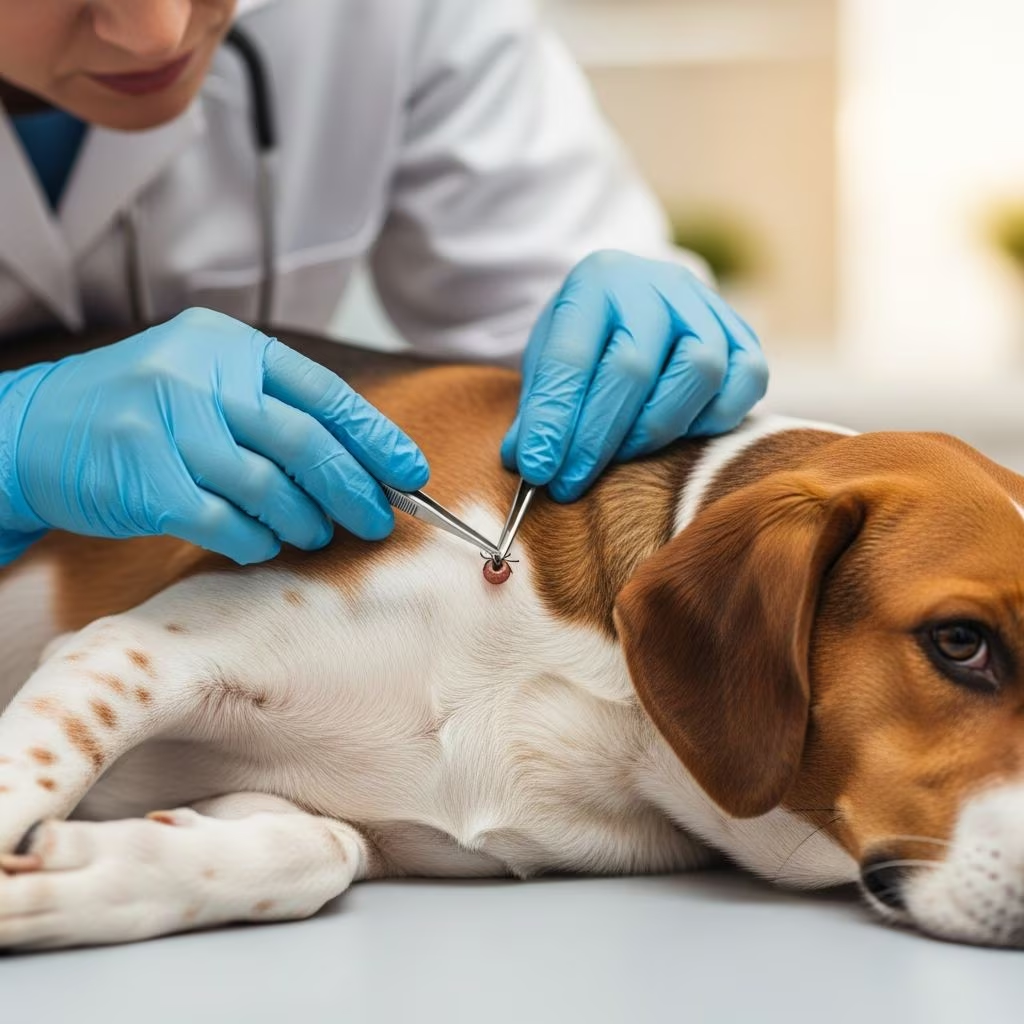
Ticks pose a significant health risk to dogs, capable of transmitting serious diseases such as Lyme disease, babesiosis, and ehrlichiosis if not removed promptly. Proper tick removal prevents infection and ensures your dog’s safety, with pathogen transmission possible within 3-6 hours of attachment. This guide provides detailed steps, tools, prevention strategies, and expert advice to handle ticks effectively.
What Does a Tick Look Like on a Dog?
Identifying a tick early is crucial for timely removal. Ticks appear as small, dark bumps on your dog’s skin, often mistaken for moles or skin tags. Unlike fleas, which jump, ticks crawl slowly and embed their mouthparts into the skin to feed on blood, swelling to the size of a grape as they engorge.
- Size and shape: Unfed ticks are pinhead-sized (1-2mm), oval, and brown, black, or reddish-brown. Engorged ticks balloon to 1cm or larger, becoming gray-blue.
- Common locations: Ears, armpits, groin, between toes, under collar, and eyelids—warm, moist, hidden areas.
- Identification tips: Part the fur and feel for bumps. Ticks don’t wash off easily and resist brushing.
Regular checks after outdoor activities in wooded, grassy, or brushy areas are essential, especially in spring and summer when ticks peak, though mild weather extends activity year-round.
How to Check Your Dog for Ticks
Perform thorough tick checks daily during tick season using a fine-tooth comb or your fingers. Calm your dog with treats and work in good light.
- Start at the head: Check ears (inside flaps), around eyes, muzzle, and neck.
- Move down the body: Comb through shoulders, back, underbelly, groin, and tail base.
- Examine legs: Between toes, paw pads, armpits, and knees.
- Feel for lumps: Run hands over the entire body, feeling for irregular bumps.
Bathe your dog weekly and use a tick comb post-bath. Ticks often cluster, so finding one means checking everywhere thoroughly.
Tools You Need to Remove a Tick
Use specialized tools to avoid squeezing the tick, which can inject infectious fluids.
- Fine-point tweezers: Precision tips grasp close to skin without crushing.
- Tick removal hooks/tools: Like Tick Tornado or Tick Stick—slide under tick, twist, and lift.
- Gloves: Disposable to protect against pathogens.
- Disinfectant: Rubbing alcohol, antiseptic wipes, or vet-recommended solution.
- Container for tick: Sealed bag or jar with alcohol for disposal or vet submission.
Avoid household tweezers, fingers, matches, petroleum jelly, or nail polish—these increase infection risk by agitating the tick.
Step-by-Step Guide: How to Remove a Tick from Your Dog
Follow these vet-recommended steps for safe removal. Have a helper hold your dog if needed, using treats to keep calm.
- Wear gloves and prepare: Part fur to expose the tick fully.
- Grasp the tick: With tweezers or hook, grip as close to skin as possible at the head/mouthparts—never the body.
- Pull steadily: Apply even, upward pressure in a slow, straight motion. For hooks, twist clockwise 2-3 times while lifting.
- Check removal: Ensure no mouthparts remain; the tick should be intact.
- Clean the site: Dab with rubbing alcohol or antiseptic; monitor for redness.
- Dispose safely: Submerge tick in alcohol, seal in bag, or flush. Wash hands/tools thoroughly.
If mouthparts break off, don’t panic—your immune system usually handles them, but consult a vet if inflammation persists.
What NOT to Do When Removing Ticks from Dogs
Common mistakes worsen risks:
- Squeezing/crushing: Forces infected saliva into the wound.
- Twisting/pulling jerkily: Leaves mouthparts embedded.
- Burning/suffocating: Causes regurgitation of pathogens.
- Ignoring tiny ticks: Nymphs (size of poppy seeds) transmit most diseases.
Never use bare fingers—ticks carry zoonotic diseases transmissible to humans.
What to Do After Removing a Tick from Your Dog
Post-removal care minimizes complications.
- Monitor the bite site: Watch for redness, swelling, limping, or pus for 2-4 weeks.
- Observe symptoms: Fever, lethargy, loss of appetite, lameness, swollen joints/lymph nodes signal tick-borne illness.
- Save the tick: For vet identification if symptoms arise.
- Vet visit: If unsure or symptoms appear; tests for Lyme, etc., may be needed.
Some ticks transmit within hours, so prevention is key.
Treatments and Prevention for Ticks on Dogs
Prevention beats removal. Consult your vet for tailored options.
| Method | Description | Pros | Cons |
|---|---|---|---|
| Spot-on treatments | Liquid applied to skin (e.g., fipronil) | Easy, long-lasting (monthly) | Toxic to cats |
| Oral tablets | Chewables killing ticks post-bite | Waterproof, convenient | Prescription needed |
| Collars | Slow-release repellents | 8-month protection | Not for water lovers |
| Sprays/shampoos | Immediate kill | Good for checks | Short-term |
Combine with environmental control: Mow lawns, avoid tick habitats, check after walks. Year-round prevention in endemic areas.
When to See a Vet After Tick Bites on Dogs
Seek immediate care if:
- Mouthparts remain embedded.
- Bite site infects (pus, severe swelling).
- Dog shows illness signs: fever, joint pain, anemia.
- Multiple ticks or high-risk area.
Vets may prescribe antibiotics or tests. Early intervention prevents chronic issues like Lyme arthritis.
Frequently Asked Questions (FAQs)
Can I remove a tick with my fingers?
No, never use fingers—squeezing injects pathogens. Use tools only.
How long can a tick stay on a dog?
Days to weeks if undisturbed, increasing disease risk.
What if the tick head stays in my dog?
Monitor; it usually sheds. Vet removal if inflamed.
Are ticks dangerous to humans?
Yes, wear gloves; diseases like Lyme transmit via bites.
How often should I check my dog for ticks?
Daily in season, after outdoor time.
References
- Ticks on dogs | How to remove a tick from a dog — Blue Cross. 2023. https://www.bluecross.org.uk/advice/dog/health-and-injuries/ticks-on-dogs
- How to Remove a Tick from Your Dog — American Kennel Club. 2023-05-01. https://www.akc.org/expert-advice/health/how-to-remove-tick-from-dog/
- How to Correctly Remove Ticks? — FOUR PAWS International. 2023. https://www.four-paws.org/our-stories/publications-guides/correctly-remove-ticks
- Dogs and Ticks: How to Spot & Remove — American Red Cross. 2023. https://www.redcross.org/take-a-class/resources/learn-pet-first-aid/dog/ticks
- Ticks on dogs and cats — RSPCA. 2023. https://www.rspca.org.uk/adviceandwelfare/pets/general/ticks



