

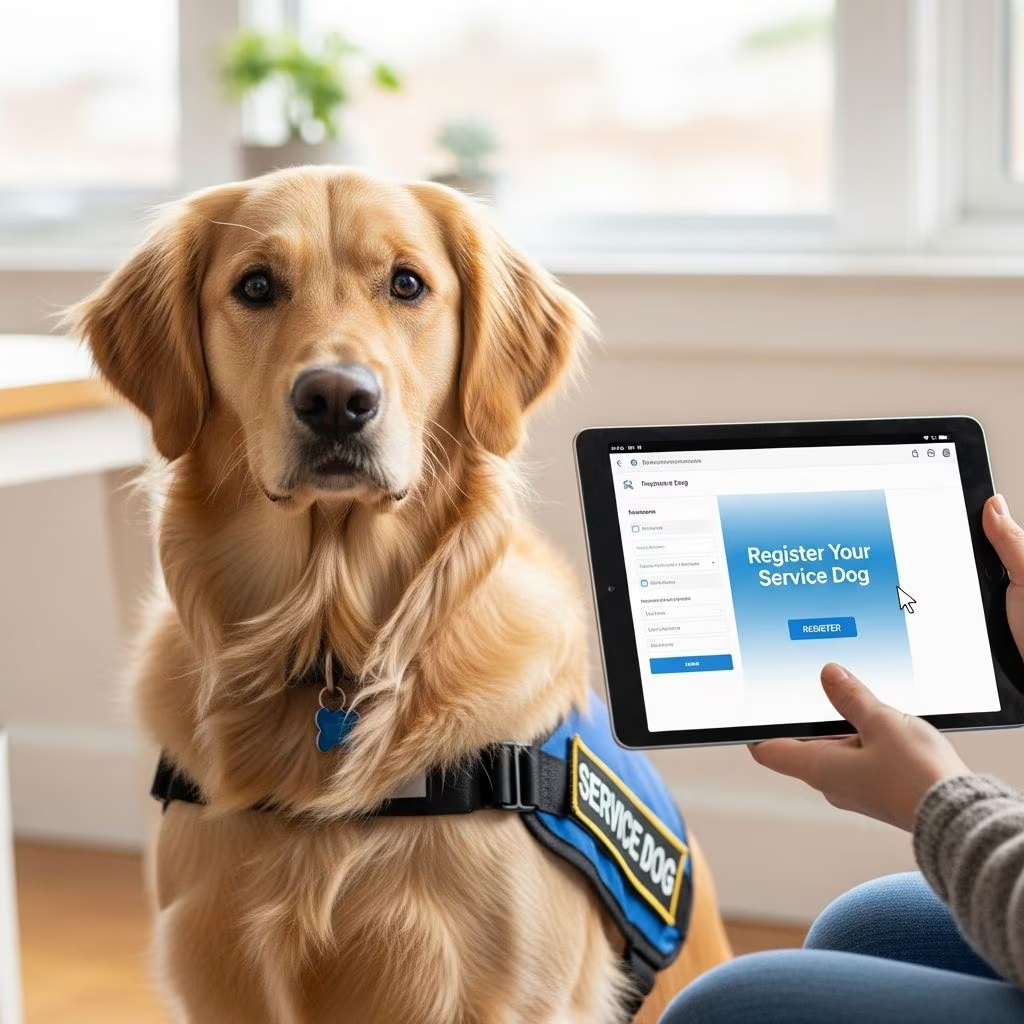
**Service dogs provide essential support for people with disabilities, but myths about mandatory registration abound.** Under the Americans with Disabilities Act (ADA), no federal registration, certification, or ID is required for service dogs to access public places. This guide demystifies the process, outlines legal requirements, training essentials, and why voluntary registration can still be valuable despite no legal mandate.
What Is a Service Dog?
A **service dog** is defined under the ADA as a dog individually trained to perform specific tasks for a person with a disability. These tasks directly relate to the disability, such as guiding the blind, alerting to seizures, or retrieving items for mobility-impaired individuals. Service dogs must be under control at all times and housebroken, but no special vest, tag, or certification proves their status.
Key distinctions:
- Service Dog: Task-trained for disabilities; full public access rights.
- Emotional Support Animal (ESA): Provides comfort; no public access, but housing and air travel protections (with letter).
- Therapy Dog: Comforts others in controlled settings like hospitals; no public access.
Only dogs qualify as service animals under the ADA; miniature horses are the only other species allowed in limited cases.
Service Dog Laws: Federal and State Overview
The **ADA** governs service dog public access nationwide, prohibiting discrimination in places of public accommodation like restaurants, stores, and transportation. Businesses may ask only two questions: (1) Is the dog a service animal required because of a disability? (2) What work or task has the dog been trained to perform? No proof of training or registration can be demanded.
States like California align with ADA but add protections. California law permits service dogs in training public access and requires reasonable accommodations everywhere the public is invited. No state registration is mandatory, though local dog licensing applies universally.
| Law | Public Access | Housing | Registration Required? |
|---|---|---|---|
| ADA (Federal) | Yes, full | FHAct covers | No |
| California | Yes, incl. in-training | Yes, FEHA | No |
| Fair Housing Act | N/A | Yes, service dogs | No |
Penalties for misrepresentation exist: in 48 states, falsely claiming a dog is a service animal is illegal, with fines up to $1,000 and jail time.
Is Service Dog Registration Required?
**No, service dog registration is not required by federal or state law.** The ADA explicitly states service animals are not required to be certified, trained by professionals, or wear identifying gear. Registries claiming ‘official’ status are often scams selling worthless documents.
However, voluntary registration offers practical benefits:
- Digital ID cards to show skeptical staff (though not legally required).
- Entry into private databases for verification.
- Peace of mind in disputes, as businesses unfamiliar with laws may demand ‘proof’.
Ventura County, CA, offers optional ID tags under state code for specially trained dogs, requiring rabies vaccination and affidavit—but this is local and not proof of service status.
How to ‘Register’ Your Service Dog: Step-by-Step
Since no official process exists, ‘registration’ means voluntary certification. Here’s how:
Step 1: Choose the Right Dog
Any breed can be a service dog if temperament suits tasks. Consider size, energy, and instincts—e.g., Labrador Retrievers for mobility, Golden Retrievers for psychiatric support. Assess for calm demeanor, focus, and trainability. Puppies from breeders or rescues work; no breed bans under ADA.
Step 2: Train Your Service Dog
**Training is the core requirement:** At least 120-220 hours typically needed for public access readiness. Self-training is legal; no professional certification required. Focus on:
- Task Training: Disability-specific (e.g., deep pressure therapy for PTSD).
- Public Access Test (PAT): Heeling, ignoring distractions, clean manners.
- Obedience: Sit, stay, down, recall under stress.
California allows dogs in training public access. Resources: owner-training programs, nonprofits like Canine Companions.
Step 3: Obtain Voluntary Certification/ID
Enroll in reputable private registries for IDs:
- Provide dog details (breed, photo).
- Get digital certificate/ID instantly.
- Optional mail package with vest, leash.
Avoid ‘government registry’ claims—they’re fraudulent. Legit options note voluntary status.
Service Dogs in Housing
Under the **Fair Housing Act (FHA)**, landlords must accommodate service dogs regardless of no-pet policies—no pet fees/deposits. ESAs also qualify with a doctor’s letter. California FEHA strengthens this. Provide notice of disability-related need; no task details required privately.
Service Dogs in Public Places
Service dogs enter all public areas: restaurants, stores, buses, theaters. Staff cannot isolate you or charge extra. If issues arise, educate politely or contact ADA enforcement (justice.gov).
In California, statewide access includes taxis, schools. Remove disruptive dogs voluntarily to avoid access denial.
Service Dogs vs. Emotional Support Animals
| Aspect | Service Dog | ESA |
|---|---|---|
| Training | Task-specific | No training needed |
| Public Access | Everywhere public | No |
| Housing | Yes | Yes (letter) |
| Air Travel | Yes (cabin) | Limited post-2021 |
ESAs need licensed professional letter; register for housing docs.
Training Your Own Service Dog
Handlers often self-train successfully. Steps:
- Basic obedience (6-12 months).
- Task training (customize to disability).
- PAT practice: 100+ hours in varied environments.
- Proof: Video tasks, reliable behavior.
Cost: $0-$20K vs. $20K+ for programs. Track hours for credibility.
Common Myths About Service Dog Registration
- Myth: Vests/certificates required. Fact: Optional; ADA bans ID mandates.
- Myth: Only purebreds qualify. Fact: Any dog.
- Myth: Government registry exists. Fact: None; beware scams.
- Myth: Businesses can demand papers. Fact: Only two questions allowed.
Frequently Asked Questions (FAQs)
Is service dog certification legally required?
No, under ADA, no certification, registration, or ID is required.
Can I train my own service dog?
Yes, self-training is fully legal and common.
Do service dogs need vests or tags?
No, but they help signal status voluntarily.
What if a business denies my service dog?
Educate on ADA; file complaint at ada.gov if needed.
Are there penalties for fake service dogs?
Yes, fines/jail in most states.
Can ESAs go in public like service dogs?
No, ESAs lack public access rights.
Does California require service dog registration?
No, but optional local tags available.
This comprehensive guide empowers handlers with accurate info. Consult ada.gov or legal aid for specifics.
References
- US Service Animals | Emotional Support & Service Animal Registration — US Service Animals. 2023. https://usserviceanimals.org
- How To Easily Register A Service Dog In California — Service Dog Certificates. 2024. https://servicedogcertificates.org/service-dog-in-california/
- Service, Therapy and Emotional Support Animals — Ventura County Animal Services. 2024-01-14. https://animalservices.venturacounty.gov/service-therapy-and-emotional-support-animals/
- FAQ – Service Animal Registry of California — Service Animal Registry of California. 2023. https://www.serviceanimalregistryofcalifornia.com/faq/
- The Truth About Service Dog Certification and Registration — Mobility Dog. 2025-04-03. https://mobilitydog.org/blog-about-mobility-service-dogs-and-their-ada-handlers/2025/4/3/xbgqzbkcwc67tak515oli5m5afupkk
- California Service Dog Requirements — Service Dog Certifications. 2024. https://www.servicedogcertifications.org/california-service-dog-requirements/
- California Service Dog Laws — USA Service Dog Registration. 2024. https://usaservicedogregistration.com/statelaws/california-service-dog-laws/
- Service Animals | ADA.gov — U.S. Department of Justice. 2023-07-14. https://www.ada.gov/topics/service-animals/



