

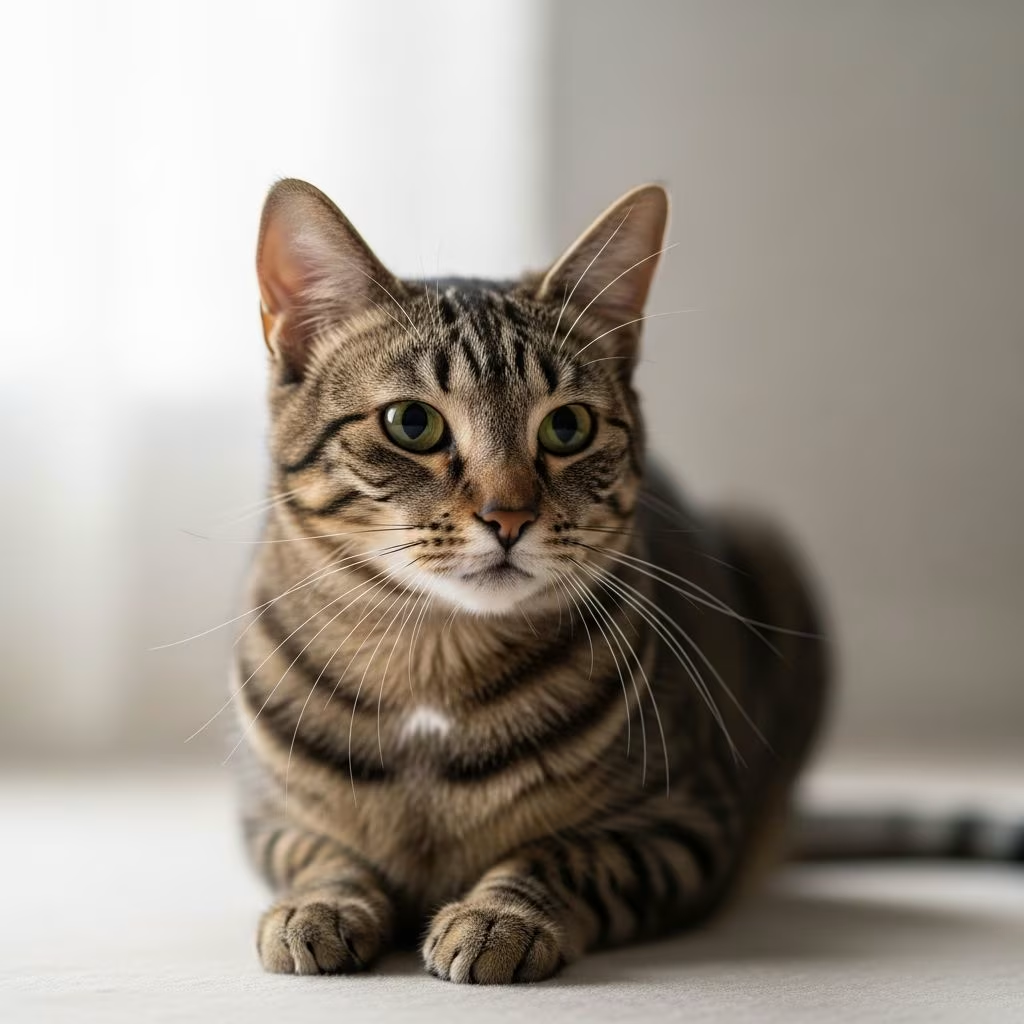
How to Read a Cat’s Body Language
Cats are fascinating creatures with complex ways of communicating their feelings and intentions. Unlike dogs, who wear their emotions on their sleeves with enthusiastic tail wags and vocal barks, cats communicate in subtler ways. Understanding feline body language is essential for cat owners who want to strengthen their bond with their pets and respond appropriately to their needs. By learning to interpret your cat’s tail position, ear movements, body posture, and vocalizations, you’ll unlock a whole new level of connection with your feline companion.
Understanding the Three Main Components of Cat Body Language
Cats primarily use three key indicators to express their emotions and intentions: their tails, ears, and overall body posture. These three elements work together to create a complete picture of your cat’s emotional state. Each component provides important clues about whether your cat is feeling confident, anxious, playful, or threatened. By paying attention to these signals, you can better understand your cat’s needs and respond appropriately to prevent stress or conflict.
Decoding Your Cat’s Tail Language
Your cat’s tail is one of the most expressive parts of their body. The position, movement, and shape of the tail can reveal a wealth of information about your cat’s current mood and intentions. Learning to interpret these signals is crucial for understanding what your feline friend is trying to communicate.
Common Tail Positions and Their Meanings
- Question Mark Position: When your cat’s tail curves into a question mark shape, it typically indicates playfulness and friendliness. This is an excellent time to engage your cat with toys or interactive play sessions.
- Straight Up in the Air: A tail held vertically and high demonstrates confidence, contentment, and a willingness to interact positively. This cat is likely feeling good about their surroundings and open to engagement.
- Wrapping Around You: When your cat wraps their tail around another cat or a person, it’s a clear sign of affection and trust. This is the perfect moment to reciprocate with gentle petting or scratches under the chin.
- Tucked Away: A tail tucked close to the body or underneath your cat signals fear, uncertainty, and vulnerability. Give your cat space and try to identify what might be causing their distress.
- Puffed Up: Unless your cat is playing, a puffed-up or bottlebrush tail indicates agitation or fear. This is a warning sign that you should give your cat time and space to calm down.
Tail Movements and Their Significance
Beyond stationary positions, the way your cat moves their tail provides additional insight into their emotional state. A quivering or vibrating tail often indicates happy excitement and eagerness to engage. However, the context is critical—this movement can sometimes resemble the vibration a cat makes before urine marking, so observe the overall body language for clarity.
Flicking or rapid tail movements, on the other hand, typically signal agitation, frustration, or a need for personal space. If your cat’s tail is flicking back and forth while you’re petting them, it’s often a sign that they’ve reached their tolerance limit and would prefer you to stop. Tail thrashing can also indicate anger or severe irritation, so it’s important to respect these signals and give your cat distance.
Reading Your Cat’s Ears
A cat’s ears are incredibly expressive and provide valuable clues about their emotional state and level of alertness. The position of the ears can shift rapidly in response to sounds and emotional changes, making them excellent indicators of your cat’s immediate feelings.
Ear Positions Explained
- Forward and Relaxed: Ears pointed forward in a relaxed manner indicate a content, alert, and confident cat who is calmly observing their environment. This is a sign your cat is comfortable and engaged.
- Swiveling or High and Erect: When a cat’s ears are standing straight up or constantly swiveling, the cat is highly alert and trying to gather information about their surroundings. This could indicate excitement or alertness to interesting sounds.
- Turned to the Side: Ears rotated to the side often signal mild irritation or annoyance about something in the cat’s vicinity. Your cat is noticing something bothersome but isn’t yet seriously distressed.
- Flattened or Pinned Back: When a cat’s ears flatten against their head, it’s a clear sign of fear, anger, or a defensive stance. A cat in this position should not be approached, as they may be preparing to fight or flee.
- Ears All the Way Back: Ears fully flattened and pointing backward are a definitive warning sign. This cat is either feeling very threatened or preparing for aggressive behavior and needs to be left alone.
Interpreting Your Cat’s Body Posture
A cat’s overall body posture provides comprehensive information about their emotional state and intentions. Whether your cat is stretched out, crouching, arched, or rolled to the side, these positions communicate important messages about comfort levels and readiness to interact.
Key Postures and Their Meanings
- Stretched Out on Their Side: A cat laying stretched out and relaxed on their side is feeling at ease, comfortable, and safe in their environment. This is an ideal time to approach your cat and offer affection.
- Upright and Purposeful Stride: A cat walking with an upright, confident gait and tail held high is feeling sociable and content. This cat is open to interaction and engagement.
- Crouched Position: Crouching can have multiple meanings depending on context. Your cat might be afraid and trying to make themselves smaller, experiencing pain, or preparing to pounce on something they want to catch or play with.
- Arched Back: Not to be confused with a stretching motion, an arched back accompanied by a rapidly swishing or curved tail is a warning sign of agitation or stress. Your cat needs alone time and space.
- Rolled Slightly to the Side: When a cat rolls slightly to the side while tense, it’s different from the relaxed stretching position. This indicates your cat feels threatened and is positioning themselves to use their claws defensively. Combined with tucked ears and bared teeth, this signals imminent conflict and means your cat should be left alone.
Open Versus Closed Postures
Understanding whether your cat’s posture is “open” or “closed” is fundamental to interpreting their emotional state. An open posture, where your cat stretches out and voluntarily exposes their body, shows they don’t feel threatened and are comfortable in their environment. This relaxed positioning indicates safety and contentment.
Conversely, a closed posture where your cat scrunches into a ball-like shape suggests anxiety, worry, fear, or potentially pain. When cats feel scared or unwell, they protect their vital organs by making themselves as small and compact as possible. If your cat adopts this posture and freezes upon seeing you, they’re likely not feeling comfortable and need space.
Understanding Context in Cat Body Language
One critical aspect of reading cat body language is recognizing that the same signal can have different meanings depending on context. For example, a high, vertical tail typically indicates confidence and happiness, but in certain situations—such as when a cat is defending their territory from an intruder—the same tail position can signal an intent to attack.
Similarly, a crouched position might indicate fear or pain, but it could also mean your cat has spotted something interesting to pounce on. By observing all the components of your cat’s body language together rather than focusing on individual signals, you’ll develop a more accurate understanding of what your cat is trying to communicate.
Cat Vocalizations and What They Mean
While not technically body language, the sounds your cat makes are incredibly important forms of communication. Vocalizations often accompany body language signals and provide additional context for understanding your cat’s emotional state.
Happy and Friendly Sounds
- Meowing: Most commonly directed at humans, meowing is a care-seeking behavior. Your cat is asking for something—whether it’s food, water, attention, cuddles, or simply asking you to open the blinds so they can watch the birds outside.
- Purring: Purring typically indicates contentment, comfort, and relaxation. A purring cat is generally happy and enjoying whatever is happening at that moment.
- Chirping or Trilling: A chirp combined with an upright tail usually signals excitement or a friendly greeting, often used when cats see their owners or anticipate something pleasant.
Fear and Aggression Sounds
- Growling: A growling cat is issuing a clear warning to back away. This sound indicates your cat is feeling threatened and wants you to respect their space.
- Hissing: Hissing is a defensive vocalization that shows a cat is feeling threatened and may be preparing to fight or flee. It’s also an effective way of demonstrating to potential aggressors that the cat has sharp fangs and teeth.
- Yowling or Screaming: These intense vocalizations indicate severe distress, pain, or extreme agitation and require immediate attention to identify the cause.
Other Important Body Language Signals
Beyond tail, ears, and posture, other physical cues contribute to understanding your cat’s emotional state. Eye contact, whisker position, and facial expressions all play roles in feline communication.
Eyes and Whiskers
Relaxed, soft eyes indicate a content and comfortable cat, while constricted pupils can signal anger or intense focus. Slow blinking from your cat is actually a sign of affection and trust—some behaviorists recommend slow blinking back at your cat to reinforce this positive communication.
Fearful cats typically pull their whiskers close to their face, attempting to make themselves appear smaller. Confident cats, by contrast, often push their whiskers forward, projecting boldness and assurance.
Signs of a Happy Cat
When your cat is genuinely happy, you’ll notice several indicators working together: an upright tail, relaxed eyes, relaxed whiskers, relaxed overall posture, ears forward, and possibly slow blinking. A happy cat might also engage in cheek rubbing, rolling on their back, or approaching you for interaction.
Common Situations and What Your Cat’s Body Language Means
| Situation | Cat’s Body Language | What It Means |
|---|---|---|
| Your cat greets you at the door | Upright tail, forward ears, maybe rubbing against your legs | Happy to see you, looking for affection or food |
| Your cat is lying in your lap while you pet them | Purring, relaxed eyes, tail wrapped around your arm | Comfortable and content, enjoying your affection |
| Your cat is playing with a toy | Crouched, tail up or swishing, ears forward | Engaged and having fun, feeling playful |
| Your cat stops mid-play and freezes | Still posture, eyes forward, ears alert | Something caught their attention, they’re focused |
| Your cat’s tail starts flicking while petting | Tail flicking, ears slightly back, moving away | Reaching petting tolerance, needs space soon |
| You hear your cat hissing and see them arched | Arched back, hissing, ears back, raised fur | Threatened or scared, preparing to defend |
Tips for Building Better Communication with Your Cat
- Observe your cat regularly to learn their individual quirks and personality—not all cats communicate identically.
- Watch multiple body language signals together rather than interpreting single indicators in isolation.
- Respect your cat’s boundaries when they show signs of needing space or being uncomfortable.
- Learn to recognize the progression from contentment to irritation, so you can stop petting before your cat becomes upset.
- Use your understanding of body language to anticipate your cat’s needs and prevent behavioral issues.
- Pay attention to what precedes certain body language signals to understand triggers and context.
Frequently Asked Questions About Cat Body Language
Q: Is an exposed belly always an invitation to pet?
A: Not necessarily. While sometimes a cat rolling on their back shows trust and comfort, exposing their belly can also be a defensive posture if the cat feels threatened. When in a tense state, cats position themselves to use their claws. Always observe the overall body language and context before attempting to touch your cat’s belly.
Q: Why does my cat flick its tail when lying down?
A: Tail flicking while lying down often indicates focus, mild irritation, or a sign that your cat’s petting tolerance is running low. Pay attention to other body language cues to determine whether your cat is content, concentrating on something, or asking for you to stop petting them.
Q: What does a slow blink from my cat mean?
A: A slow blink is a sign of affection and trust. Your cat is essentially giving you a “cat kiss.” You can reciprocate by slow blinking back at them, which reinforces positive communication and strengthens your bond.
Q: Why do cats knead with their paws?
A: Kneading is a comforting behavior that cats carry over from kittenhood when they would knead their mother while nursing. Adult cats knead when they’re feeling relaxed, comfortable, and content in their environment or on a preferred person’s lap.
Q: How can I tell if my cat is in pain based on body language?
A: Cats in pain often display a hunched or tense posture, may crouch low to the ground, and show changes in their normal behavior or activity levels. A cat in pain might avoid interaction, hide, or react defensively if touched in uncomfortable areas. If you suspect your cat is in pain, consult with a veterinarian.
Q: What’s the difference between a playful crouch and a fearful crouch?
A: A playful crouch usually occurs with the tail up or twitching, ears forward and alert, and the cat’s body appears ready to spring into action toward a toy or target. A fearful crouch involves the body pressed low to the ground, ears back, tail tucked, and overall tension in the posture.
References
- Understanding the Body Language of Your Cat — Purina. https://www.purina.com/articles/cat/behavior/understanding-cats/body-language-of-a-cat
- The Definitive Guide to Cat Behavior and Body Language — Tuft & Paw. https://www.tuftandpaw.com/blogs/cat-guides/the-definitive-guide-to-cat-behavior-and-body-language
- Cat Body Language: An Expert Guide to Understanding Your Cat — Chewy. https://www.chewy.com/education/cat/training-and-behavior/decoding-cats-body-language
- Understanding Cat Body Language — Veterinary Health Center. https://vethealthcenter.com/2025/09/29/cat-body-language-saginaw-mi/
- Cat Body Language — Cats Protection. https://www.cats.org.uk/help-and-advice/cat-behaviour/cat-body-language
- How to read your cat’s body language — Animal Humane Society. https://www.animalhumanesociety.org/resource/how-read-your-cats-body-language
- Understanding Your Cat’s Behaviour — RSPCA. https://www.rspca.org.uk/adviceandwelfare/pets/cats/behaviour



