

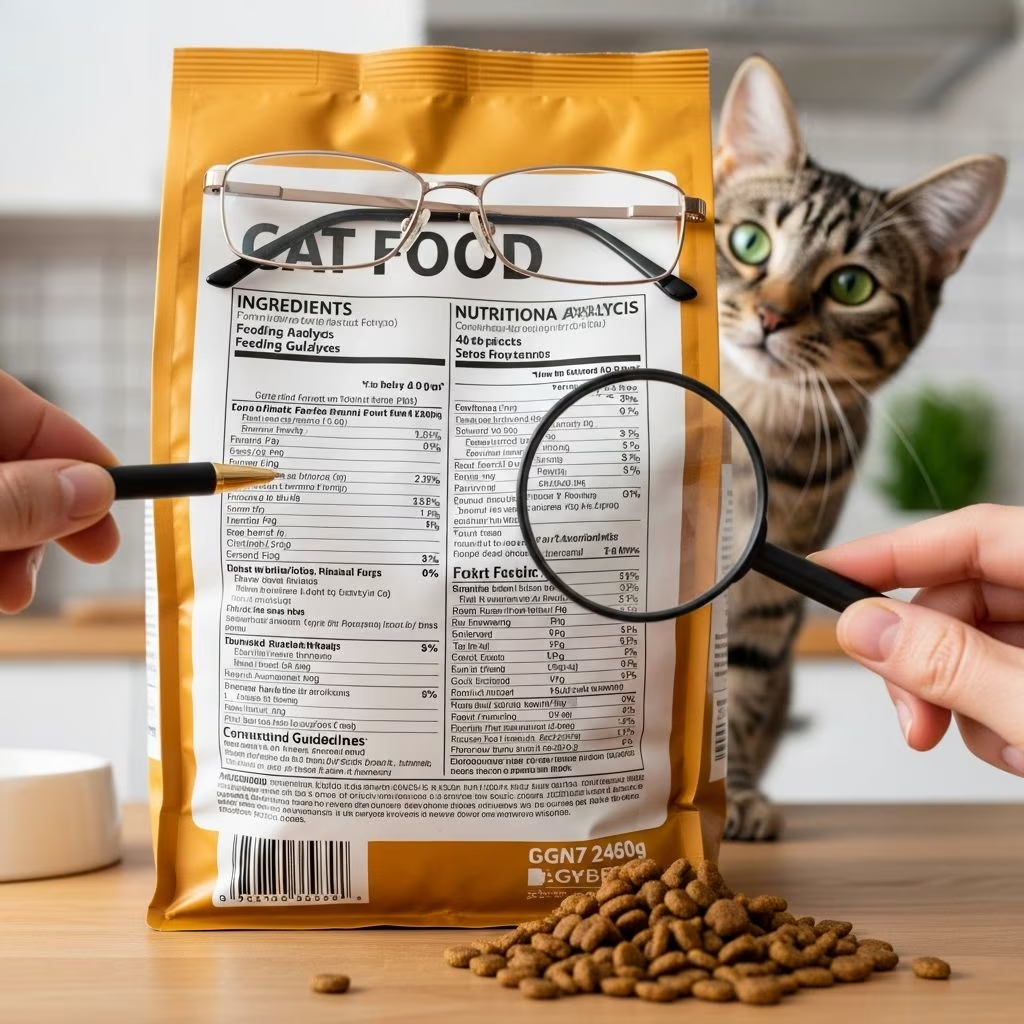
How to Read Cat Food Labels Like a Pro
Choosing the right food for your cat is one of the most important decisions you can make as a pet owner. However, with countless brands and formulations on the market, deciphering cat food labels can feel overwhelming. Understanding what information appears on these labels and how to interpret it will empower you to make informed decisions about your cat’s nutrition. This comprehensive guide will walk you through every element of a cat food label, from ingredient lists to nutritional guarantees, helping you select the best food for your feline companion.
Understanding the Principal Display Panel
The front of the cat food package, known as the principal display panel (PDP), contains essential information that you should review first. This is the portion of the label that catches your eye when the product is displayed on a store shelf under normal retail conditions. According to regulatory requirements, three critical pieces of information must appear on the front label.
The product name and brand name should be clearly displayed. While not every product has a brand name, each product must have a unique identifier to distinguish it from competitors. Below this, you’ll find the intended species—in this case, it should explicitly state that the food is for cats. A picture of a cat alone is insufficient; the label must clearly indicate the species in text form.
The net weight or volume of the product is also required on the principal display panel and should be stated in both English units (pounds or ounces) and metric units (grams or kilograms). This dual measurement system makes it easier to compare prices and values between different brands and package sizes. The purpose of the product—whether it’s a complete and balanced cat food, a treat, snack, or supplement—should also be clearly identified.
Decoding the Ingredient List
The ingredient list is perhaps the most important section of a cat food label for understanding what you’re actually feeding your pet. According to FDA regulations, all ingredients must be listed in descending order of predominance by weight. This means the ingredient present in the largest quantity appears first, followed by progressively smaller amounts.
When examining the ingredient list, focus on the first five items, as these make up the majority of the product. For cats, which are obligate carnivores, you should prioritize finding high-quality protein sources as the primary ingredients.
Identifying Quality Protein Sources
To ensure your cat receives adequate protein from quality sources, check the first three ingredients on the label. Look for real meat or clearly named meat meals such as chicken, beef, fish, and lamb. These named meat sources are preferable to vague terms like “meat meal” or “animal by-products.”
Understanding the difference between meat and meal is crucial. Meat meal refers to rendered meat products that have had moisture removed, making them a concentrated protein source. While meal-based products can provide adequate nutrition, whole meat sources are generally considered superior because they contain higher moisture content and may offer better bioavailability.
Be cautious of ingredient names that use vague language. Terms like “meat by-products” or “animal by-products” are less transparent than named sources and may indicate lower-quality protein sources. When a product name includes ingredients (such as “Chicken Cat Food”), regulations allow inclusion of that named ingredient at just 3% of the formula, so always verify the actual ingredient list.
Understanding Descriptors and Marketing Terms
Pet food labels often include various descriptors and marketing claims. Understanding these terms will help you see through marketing language and focus on substantive nutritional information.
When you see terms like “with” or “similar” in the product name, such as “Cat Food with Salmon,” the named ingredient must comprise at least 3% of the product. Flavor claims like “chicken-flavored” require only that the food contain some ingredient providing that flavor—not necessarily whole chicken.
For organic certifications, check for official USDA labels. A product labeled “organic” must contain at least 95% organic ingredients, not counting added water or salt. Products marked “Made With Organic Ingredients” must contain at least 70% organic ingredients under the same exclusions. If organic ingredients comprise less than 70% of the total, manufacturers may denote individual organic ingredients in the list without displaying an official seal.
The Guaranteed Analysis Section
The guaranteed analysis is a mandatory component of every pet food label that provides crucial nutritional information. Located on the back or side of the package, this section lists minimum percentages of crude protein and crude fat, as well as maximum percentages of crude fiber and moisture.
The term “crude” may sound unappealing, but it simply refers to the testing method used to determine nutrient content, not the quality of the nutrients themselves. While the guaranteed analysis provides measurable nutrient levels, it’s important to understand that this section does not indicate ingredient quality, digestibility, or the overall quality of the food.
For cats, protein is particularly important due to their carnivorous nature. Compare protein percentages across different brands to ensure you’re providing adequate protein levels for your cat’s life stage and health status. Additionally, check for taurine levels if listed separately, as this amino acid is essential for feline health.
Nutritional Adequacy Statements
The nutritional adequacy statement is a mandatory declaration that confirms the food meets minimum nutritional requirements established by AAFCO (Association of American Feed Control Officials). This statement typically reads: “[Product name] is formulated to meet the nutritional levels established by the AAFCO Cat Food Nutrient Profiles for [life stage(s)].”
There are different formats for nutritional adequacy statements, and each carries specific meaning. A formulation statement indicates that the manufacturer has created the recipe to meet AAFCO standards based on ingredient analysis. This is the most common type of statement.
An even stronger indicator is the feeding trial statement, which reads: “Animal feeding tests using AAFCO procedures substantiate that [product name] provides complete and balanced nutrition for [life stage].” AAFCO feeding trials are considered the gold standard in pet food testing, as they involve actual feeding trials with real pets. Companies like Hill’s Pet Nutrition and Nestle Pet Care that conduct these costly tests will prominently display this information on their labels.
Choosing the Right Life Stage Formula
Cat foods are generally marked with one of two AAFCO life stage labels: “All Life Stages” or “Adult Maintenance.”
“All Life Stages” formulations are designed to meet the nutritional requirements of growing kittens and lactating cats. These foods are typically higher in calories, calcium, and phosphorus to support growth and reproduction.
For healthy adult cats, the “Adult Maintenance” label is the appropriate choice. This formulation meets the nutritional needs of cats that have reached full growth and are not reproducing. Selecting the correct life stage formula ensures your cat receives appropriate nutrient levels for their current life phase.
Feeding Directions and Caloric Content
Feeding directions are required on most complete and balanced cat food products. These instructions provide guidance on portion sizes based on your cat’s weight and activity level. Following these recommendations helps prevent overfeeding and maintains appropriate body condition.
The label should also include information about the caloric content of the food. Understanding calories helps you calculate appropriate daily intake and compare the nutritional density of different products. Higher-calorie foods may result in smaller recommended portions, while lower-calorie options may require larger amounts to meet your cat’s daily energy needs.
Manufacturer and Guarantor Information
Every pet food label must include the name and address of the guarantor—the manufacturer or distributor responsible for the product. This information allows you to contact the company with questions or concerns about the product. It’s also valuable if you need to report adverse reactions or request additional nutritional information.
When evaluating brands, consider the manufacturer’s reputation for quality control and customer service. Companies that stand behind their products and provide comprehensive nutritional information are generally more trustworthy than those with limited transparency.
Navigating Certifications and Special Labels
You may encounter various certifications and seals on cat food packaging, but it’s important not to let these distract you from the core nutritional information. Organizations like AAFCO, the FDA’s Center for Veterinary Medicine (CVM), and the USDA all invest resources in pet food research and regulation, but a seal from one of these organizations does not necessarily indicate that a particular food is the best option for your cat.
The FDA takes the lead in the United States for establishing pet food label requirements, while state Departments of Agriculture may add additional requirements. Understanding the regulatory framework helps you recognize which claims are backed by rigorous testing and which may be primarily marketing-focused.
Comparing Products Effectively
To make informed comparisons between cat food products, create a simple comparison framework:
- Check the first five ingredients in the ingredient list for quality protein sources
- Compare crude protein percentages in the guaranteed analysis
- Verify the presence of a nutritional adequacy statement
- Identify whether feeding trials support the formulation
- Note the intended life stage (Adult Maintenance vs. All Life Stages)
- Review caloric content for weight management considerations
- Consider any special certifications relevant to your preferences
Reading Between the Lines: What Labels Don’t Tell You
While pet food labels provide valuable information, they have limitations. The guaranteed analysis does not provide details about ingredient quality, digestibility, or overall food quality. For example, two products with identical crude protein percentages may have very different nutritional value depending on ingredient sources and processing methods.
Labels don’t typically indicate ingredient freshness, sourcing practices, or manufacturing standards beyond regulatory minimums. To gather this additional information, you may need to contact manufacturers directly or research brand reputation through veterinary recommendations and customer reviews.
Frequently Asked Questions
Q: What does “crude” mean on the guaranteed analysis section?
A: “Crude” refers to the testing method used to analyze nutrient content, not the quality of the nutrients themselves. It’s a standardized scientific term used across the pet food industry to ensure consistent measurement and comparison.
Q: Why are feeding trials considered the gold standard?
A: Feeding trials involve actual testing of the food with real pets under AAFCO procedures. This provides real-world evidence that the food delivers the nutrients it claims, rather than relying solely on formulation calculations. This makes feeding trial results more reliable than formulation statements alone.
Q: Does organic certification guarantee better nutrition?
A: Organic certification indicates that ingredients meet specific sourcing standards, but it doesn’t necessarily mean the food is nutritionally superior. Evaluate organic products using the same criteria as conventional foods—examine ingredient quality, guaranteed analysis, and nutritional adequacy statements.
Q: How can I identify low-quality protein sources on labels?
A: Vague terms like “meat by-products,” “animal by-products,” or simply “meat meal” without a named source indicate lower quality than specifically named proteins like “chicken” or “salmon meal.” Compare the first three to five ingredients across different brands to identify quality differences.
Q: Should I choose kitten food or adult maintenance food for my adult cat?
A: Once your cat reaches adulthood, switch to “Adult Maintenance” formulations. Kitten foods labeled “All Life Stages” contain higher levels of calories, calcium, and phosphorus suited for growth. Adult cats fed kitten food may consume excess nutrients unnecessary for their life stage.
Q: What role does moisture play in cat food labels?
A: The guaranteed analysis lists maximum moisture percentages. Wet cat foods typically contain 70-80% moisture, while dry kibble contains around 10% moisture. Higher moisture can benefit cats’ hydration, though it affects the concentrate of other nutrients in the food.
References
- How to Read Cat Food Label — PetMD. 2024. https://www.petmd.com/cat/slideshows/nutrition-center/determining-best-cat-food-ingredients-label
- Reading Labels — Association of American Feed Control Officials (AAFCO). 2024. https://www.aafco.org/consumers/understanding-pet-food/reading-labels/
- How to Read and Understand Cat Food Labels — Hill’s Pet Nutrition. 2024. https://www.hillspet.com/cat-care/nutrition-feeding/how-to-read-a-cat-food-label
- Pet Foods: How to Read Labels — University of Nebraska-Lincoln Extension. 2024. https://extensionpublications.unl.edu/assets/html/g1960/build/g1960.htm
- How To Read Pet Food Labels — Pet Food Institute. 2024. https://www.petfoodinstitute.org/how-to-read-pet-food-labels/



