

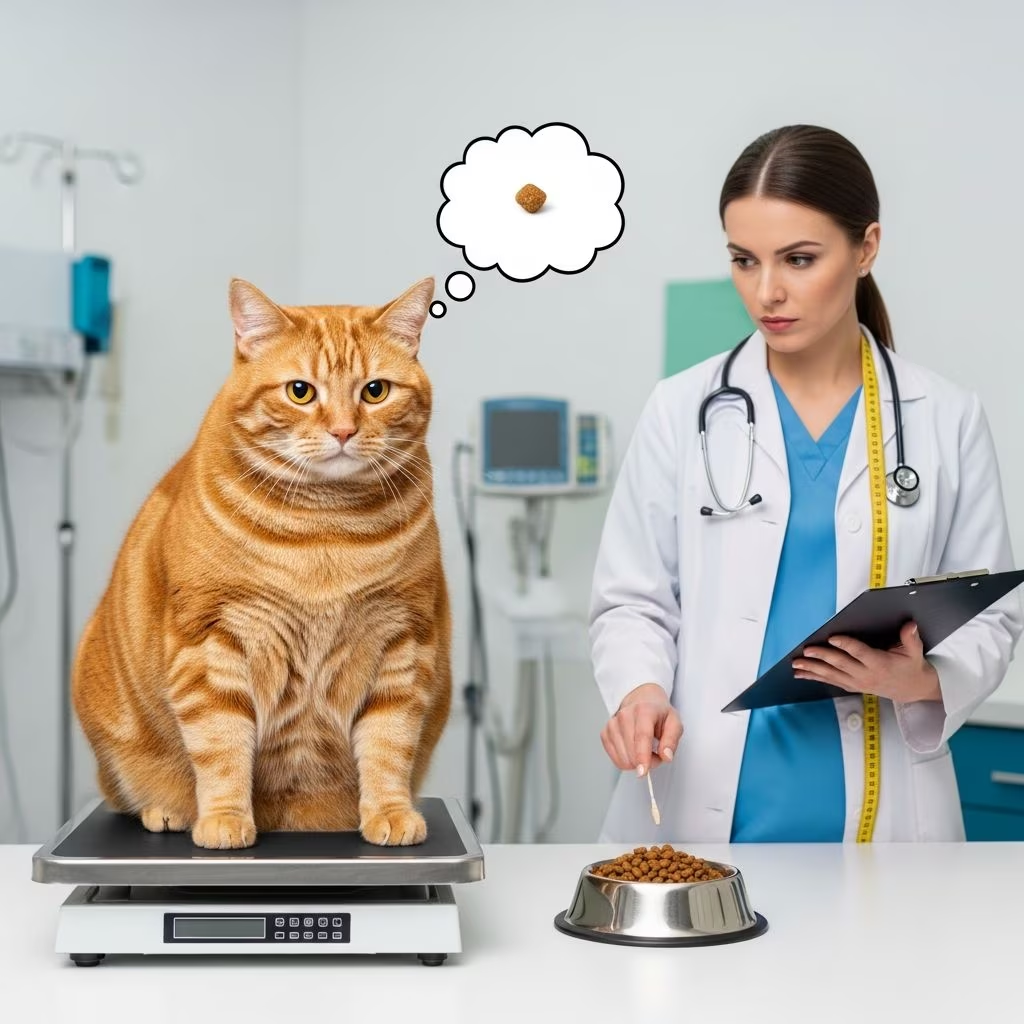
Overweight cats face serious health risks like diabetes, arthritis, and heart disease, yet with proper guidance, you can help your feline friend achieve a healthy weight. This comprehensive guide outlines how to assess your cat’s condition, create a safe diet plan, incorporate exercise, and track progress for long-term success.
Why Is My Cat Overweight?
Obesity in cats stems from multiple factors including overfeeding, lack of exercise, neutering which slows metabolism, genetic predisposition, and age-related declines in activity. Studies show 61% of cats in America are overweight or obese, with nearly one-third of owners unaware of the issue. Indoor lifestyles contribute significantly, as cats evolved to hunt frequently but now lead sedentary lives.
Symptoms include difficulty jumping, reluctance to play, fatty deposits around the base of the tail or between the legs, and a pear-shaped body. Excess weight strains joints, increases diabetes risk, and shortens lifespan.
How Do I Know If My Cat Is Overweight?
Assess your cat using the Body Condition Score (BCS), a 9-point scale where 1 is emaciated and 9 is severely obese; ideal is 4-5. Run your hands along the ribcage—ribs should be felt easily without excess fat. From above, the waist should be visible; from the side, a slight abdominal tuck.
- BCS 1-3: Ribs highly visible, no fat cover, severe waist definition.
- BCS 4-5: Ribs palpable with slight fat, waist visible, abdominal tuck present—ideal.
- BCS 6-9: Hard to feel ribs, no waist, rounded abdomen—overweight to obese.
Weigh your cat regularly; a healthy adult averages 8-10 lbs, but varies by breed. Consult a vet for accurate BCS and ideal target weight.
Consult Your Veterinarian First
Before starting any diet, schedule a vet exam to rule out underlying conditions like hyperthyroidism, diabetes, or kidney disease mimicking obesity. Vets calculate Daily Energy Requirements (DER) based on BCS and set a safe weight loss goal of 1-2% body weight per week.
They may recommend prescription diets formulated for weight loss, high in protein and low in carbs. Avoid sudden changes to prevent hepatic lipidosis, a life-threatening liver condition in obese cats.
Choosing the Right Diet Food for Your Cat
Opt for high-protein, low-carbohydrate foods as cats are obligate carnivores needing animal-based proteins. Prescription therapeutic diets often provide 30-50% protein on a dry matter basis.
Compare options:
| Food Type | Pros | Cons | Best For |
|---|---|---|---|
| Prescription Wet | High moisture (78-82%), low carb, palatable | More expensive, spoils quickly | Weight loss, kidney health |
| Prescription Dry | Convenient, calorie-controlled | Higher carbs, lower moisture | Maintenance, multi-cat homes |
| Mixed Feeding | Balances moisture and convenience | Requires precise measuring | Transitioning cats |
Commercial foods labeled for weight management are ideal; transition gradually over 7-10 days: 25% new/75% old on day 1-2, up to 100% new by day 7.
Calorie Counting and Portion Control
Adult cats need 20 kcal per pound of ideal body weight daily. A 10-lb cat targets 200 kcal/day for maintenance, less for weight loss (e.g., 173 kcal for prone-to-weight-gain).
Sample daily caloric needs:
| Cat Profile | Weight | Daily kcal |
|---|---|---|
| Spayed Adult | 10 lbs | 260 kcal |
| Weight Loss | 10 lbs | 173-216 kcal |
| Senior | 10 lbs | 180-220 kcal |
Read labels for kcal per oz/cup. Divide into meals; use a kitchen scale for precision.
Establish a Feeding Schedule
Avoid free-feeding; it promotes obesity. Feed adults 2 meals/day, kittens 3-4, seniors 2-3 smaller ones. Include a bedtime ‘midnight snack’ of high-protein food to curb hunger.
- Kittens (<6 mo): 3-4 meals, 2-3x adult intake.
- Adults: 2 meals, 200-300 kcal total.
- Seniors: 2-3 meals, 180-220 kcal.
Use automatic feeders for portion control in multi-cat homes.
Increase Exercise and Playtime
Diet alone isn’t enough; aim for 15-30 minutes daily play. Toys like feather wands, laser pointers, or food puzzles burn calories and mimic hunting.
Tips: Elevate food bowls, use puzzle feeders to slow eating, encourage climbing with cat trees. Track activity; gradual increases prevent injury.
Monitor Progress and Adjust
Weigh bi-weekly; expect 0.5-1% loss/week. If stalled, reduce calories 10-20% or increase play. Log intake/weight in a journal.
Signs of success: Visible waist, palpable ribs. Reassess BCS every 4 weeks with vet.
Common Mistakes to Avoid
- Free-feeding or eyeballing portions.
- Table scraps/treats exceeding 10% calories.
- Abrupt diet switches causing refusal or illness.
- Ignoring multi-cat dynamics—feed separately.
- Overlooking health issues delaying loss.
Special Considerations for Multi-Cat Homes
Use microchip feeders or mealtime separation. High-perches for thin cats access food safely.
Maintaining Weight After the Diet
Transition to maintenance food gradually. Continue scheduled feeding, play, and weigh-ins monthly. Annual vet checks ensure sustained health.
Frequently Asked Questions (FAQs)
What is a safe weight loss rate for cats?
1-2% of body weight per week to avoid hepatic lipidosis.
Can I use human diet food for my cat?
No—cats require taurine and specific nutrients absent in human foods.
How much wet food for a 10-lb overweight cat?
Approx. 3-4 oz/day divided into meals, per prescription guidelines.
Should I switch to all wet food?
Ideal for hydration, but mix if preferred; wet has fewer carbs.
What if my cat won’t eat the diet food?
Warm it, add tuna juice, or try flavors; consult vet if persistent.
References
- Ask the Vet: How Much Should I Feed My Cat? Feeding Chart — Whisker. 2023. https://www.whisker.com/blog/how-much-should-i-feed-my-cat
- Your Guide to Understanding Cat Weight, Diet, and Exams — Cat Clinic. 2024. https://www.catclinic.net/your-guide-to-understanding-cat-weight-diet-and-exams
- Cat Weight Loss Information — Association for Pet Obesity Prevention. 2025-01-10. https://www.petobesityprevention.org/weight-loss-cats
- How Much to Feed a Cat: Portions, Calories, and More — Chewy. 2024. https://www.chewy.com/education/cat/food-and-nutrition/how-much-should-i-feed-my-cat
- Cat Nutrition Tips — ASPCA. 2023. https://www.aspca.org/pet-care/cat-care/cat-nutrition-tips
- Nutrition – General Feeding Guidelines for Cats — VCA Animal Hospitals. 2024. https://vcahospitals.com/know-your-pet/nutrition-feeding-guidelines-for-cats
- Feeding Your Cat — Cornell University College of Veterinary Medicine. 2023. https://www.vet.cornell.edu/departments-centers-and-institutes/cornell-feline-health-center/health-information/feline-health-topics/feeding-your-cat



