

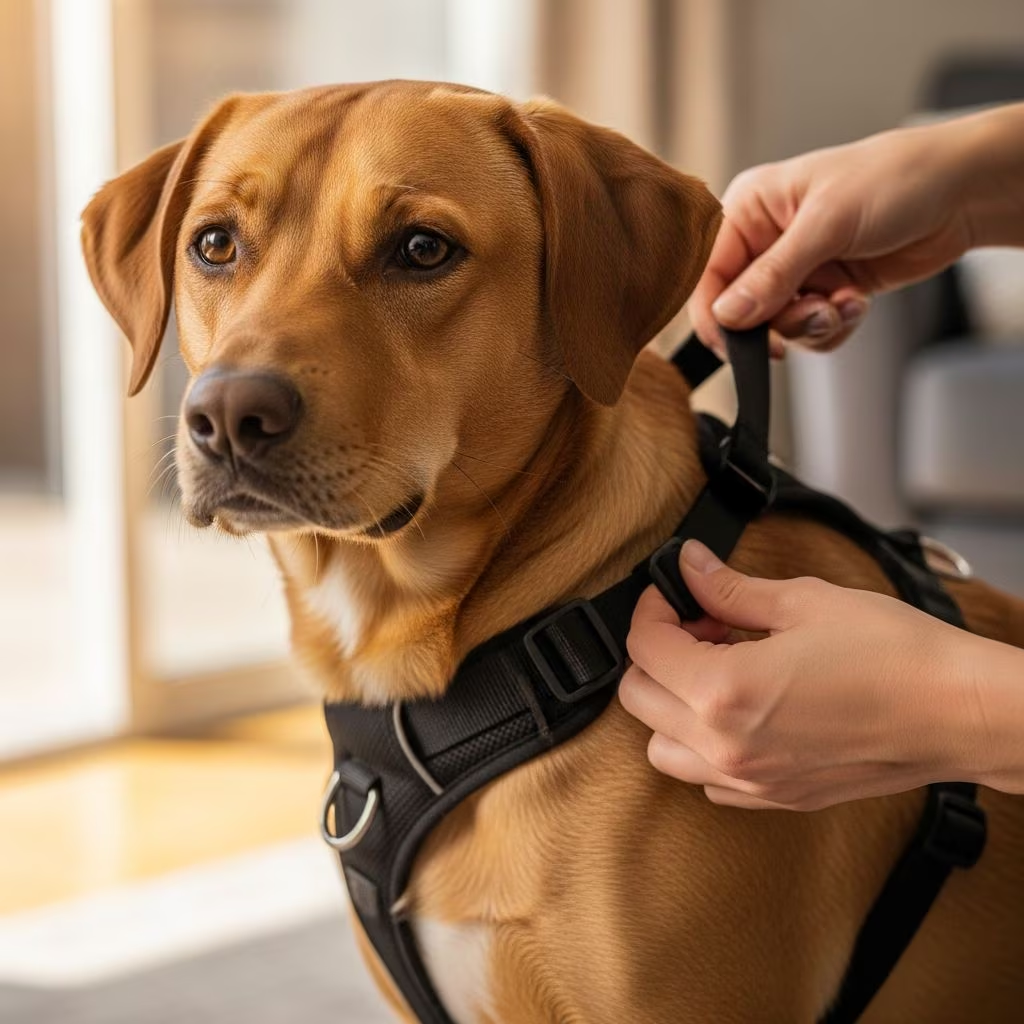
How to Put on a Dog Harness: A Complete Guide
Putting on a dog harness correctly is essential for your pet’s safety, comfort, and control during walks and outdoor activities. A well-fitted harness distributes pressure evenly across your dog’s body, preventing injury and ensuring they stay secure. Whether you’re a new dog owner or looking to improve your harness-fitting technique, this comprehensive guide will walk you through the process for different harness types and provide valuable tips for success.
Understanding Different Harness Types
Before learning how to put on a harness, it’s important to understand the different styles available. Each type has unique fitting requirements and benefits for different dogs and situations.
Overhead Harnesses
Overhead harnesses, also called traditional or back-clip harnesses, are the most common type. These harnesses slip over your dog’s head and feature a D-ring on the back where the leash attaches. They’re ideal for dogs that aren’t prone to pulling and provide a comfortable fit for regular walks.
Step-In Harnesses
Step-in harnesses are excellent for dogs who are nervous about having things placed over their heads. Instead of going over the head, your dog steps into two leg holes, making the process less intimidating for anxious or sensitive dogs.
Front-Clip Harnesses
Front-clip harnesses feature a D-ring on the chest rather than the back. This design helps reduce pulling by redirecting your dog’s forward motion when they tug on the leash, making them perfect for strong pullers.
Head Collar Harnesses
Head collar harnesses slip over your dog’s nose and behind their ears. They provide excellent control and are often recommended for training purposes or dogs with severe pulling behaviors.
How to Put On an Overhead Harness
The overhead harness is the most straightforward type to fit. Follow these step-by-step instructions to ensure proper placement and comfort.
Step 1: Position Your Dog
Start by getting your dog into a calm, standing, or sitting position. Stand, sit, or squat behind your dog so you have easy access to their body. Choose whichever position works best for you and your dog’s size. A calm dog makes the process easier and more pleasant for both of you.
Step 2: Identify Harness Components
Before slipping the harness on, take a moment to identify its key parts. Locate the wider loop (which has the buckle) and the narrower loop. The D-ring should be clearly visible—this is where the leash will attach. Position the harness with the D-ring facing upward on your dog’s back.
Step 3: Slip the Harness Over the Head
Gently slip the wider loop (chest piece) over your dog’s head first, followed by the narrower loop (neck piece). Make sure the harness sits properly with the wider loop positioned toward the back of your dog’s body. The D-ring should be centered on their back between the shoulder blades.
Step 4: Guide the First Leg Through
Guide your dog’s front leg through the first leg hole. The leg should now sit between the chest loop and the neck loop. This positioning is crucial for proper weight distribution and comfort.
Step 5: Buckle the Harness
Bring the buckles together under your dog’s body so that the other leg is properly positioned between the loops. Secure all buckles and clasps. If the buckle doesn’t reach, loosen the strap slightly to allow proper closure without strain.
Step 6: Adjust for Proper Fit
Once buckled, adjust all straps to ensure a comfortable fit. Use the two-finger rule: you should be able to slip two fingers underneath any strap without resistance, but the harness shouldn’t be loose enough to slip off.
How to Put On a Step-In Harness
Step-in harnesses are excellent for nervous dogs and provide a gentler fitting experience. Here’s how to properly fit this style.
Preparation and Positioning
Lay the harness flat on the ground so you can clearly see the two triangle-shaped openings where your dog’s front legs will go. The buckles should be visible on top, with the D-rings underneath. Make sure the wider strap that goes around the chest is positioned closest to you, and the narrower strap is farthest away.
Guiding Your Dog Into Position
Hold your dog gently from behind and position their body so each front foot enters one of the triangular leg holes. The middle strap should run between your dog’s front legs. This positioning is key to ensuring the harness fits correctly and comfortably.
Pulling the Harness Up
Take hold of the harness on either side and smoothly pull it up toward your dog’s chest. As you lift, the harness will naturally conform to your dog’s body shape. Make sure all straps are aligned properly without twisting.
Securing the Clasps
Pick up the two ends of the harness and clip or buckle them together on your dog’s back. Ensure all fasteners are secure before moving forward. Check that the D-ring is properly positioned on your dog’s back between the shoulder blades.
Final Adjustment
Adjust the straps to achieve the perfect fit using the two-finger rule. Try gently pulling the harness over your dog’s head to verify it’s secure and won’t slip off during a walk.
How to Put On a Front-Clip Harness
Front-clip harnesses require a slightly different approach due to their unique design with the D-ring positioned on the chest.
Positioning Your Dog
Have your dog face you while standing or sitting calmly. This positioning gives you easy access to their neck and chest area, where the D-ring will be positioned.
Placing the Head Strap
If your front-clip harness has a head strap, gently slide it over your dog’s head first, being careful not to hurt their ears. Alternatively, some front-clip harnesses have a clip and buckle configuration instead of a head strap. In this case, fasten it around your dog’s neck and tighten to the appropriate tension.
Adding the Chest Strap
Loop the chest strap around your dog’s body and bring the ends together on their chest. Make sure the D-ring is centered and will align with the center of their chest when the harness is properly fitted.
Securing and Adjusting
Fasten all buckles and straps securely. The chest strap should sit across the front of your dog’s body without restricting their movement or breathing. Use the two-finger rule to ensure the fit is snug but comfortable.
How to Fit a Head Collar Harness
Head collar harnesses require careful fitting to ensure comfort and proper function.
Initial Placement
Hold the head collar open and gently slip it over your dog’s nose first. Be patient and use treats to make this process positive and stress-free.
Positioning the Straps
Guide the straps behind your dog’s ears and ensure they sit comfortably without being too tight or too loose. Again, use the two-finger rule to check that you can fit exactly two fingers underneath the straps—no more and no less.
Securing the Buckle
Fasten the buckle securely behind your dog’s head. Make sure all connections are tight to prevent the collar from slipping, but not so tight that it causes discomfort.
Leash Attachment
Clip the leash to the D-ring located under your dog’s chin. This positioning allows for excellent directional control during walks.
Ensuring Proper Harness Fit
A properly fitted harness is crucial for your dog’s comfort and safety. Understanding how to check fit is just as important as knowing how to put the harness on.
The Two-Finger Rule
The most reliable method for checking harness fit is the two-finger rule. You should be able to slip exactly two fingers between the harness and your dog’s body at all key contact points. This ensures the harness is snug enough to prevent escape but loose enough to allow comfortable breathing and movement.
Key Areas to Check
Examine the fit at these critical points:
– Around the neck area- Behind the front legs- Across the chest- Around the ribcage- Between the back legs
Each of these areas should allow the two-finger test without resistance.
Ensuring Shoulder Blade Freedom
Make sure the shoulder blades remain unimpeded and can move freely. Harnesses should come up from your dog’s belly to their chest bone and then around below their neck, allowing full shoulder mobility without restriction.
Common Fitting Mistakes to Avoid
Even experienced dog owners sometimes make fitting errors. Here are the most common mistakes and how to avoid them.
Leaving the Harness Too Loose
An overly loose harness can slip off or fail to provide proper control. If you can fit more than two fingers under any strap, tighten it. A loose harness defeats its purpose and puts your dog at risk.
Over-Tightening the Straps
Conversely, over-tightening restricts your dog’s breathing and movement, causing discomfort and potential injury. Always use the two-finger rule as your guide.
Twisted or Misaligned Straps
Twisted straps can cause chafing and uneven pressure distribution. Before finalizing the fit, ensure all straps run smoothly along your dog’s body without crossing or twisting.
Incorrect D-Ring Placement
The D-ring should be positioned on your dog’s back for standard harnesses, centered between the shoulder blades. For front-clip harnesses, it should be centered on the chest. Incorrect placement affects both control and comfort.
Ignoring Signs of Discomfort
Watch for signs of chafing, rubbing, or your dog trying to escape or remove the harness. These indicate a fitting problem that needs immediate attention.
Tips for Success
Making harness fitting a positive experience benefits both you and your dog.
Create a Routine
Dogs thrive on routine and predictability. Establish a consistent process for putting on the harness. Decide on a position (sitting is usually best) and stick with it. Use specific verbal cues like “harness time” or “walk” so your dog knows what to expect.
Use Positive Reinforcement
Make the harness experience positive by using treats and praise. Reward your dog for sitting still and cooperating during the fitting process. This builds positive associations with the harness.
Practice Patience
Some dogs, especially puppies or rescue dogs, may need time to adjust to wearing a harness. Go slowly and don’t force the process. Patience pays off with a dog that cooperates willingly.
Check the Fit Regularly
As your dog grows or gains or loses weight, their harness fit will change. Regularly inspect and readjust to maintain proper fit and prevent chafing or discomfort.
Measuring Your Dog for the Right Size
Before purchasing a harness, accurate measurement ensures you get the right size.
Measuring the Chest
Use a soft tape measure to measure around your dog’s chest, just behind their front legs and over the shoulder blades. This is the most critical measurement for harness fit. Start at the bottom of the ribcage, bring the tape up and over the back, and down to where you started.
Recording Your Measurements
Write down all measurements and consult the manufacturer’s size chart. Different brands may have varying sizing, so always check the specific product’s guidelines.
Accounting for Growth
If you’re fitting a puppy, measure every few weeks as they grow. You may need to adjust straps frequently or eventually move up to a larger size.
Frequently Asked Questions
Q: How can I tell if my dog’s harness is too tight?
A: A harness is too tight if you can’t fit two fingers under the straps, if your dog shows signs of restricted breathing, or if there are visible marks or hair loss at contact points. Loosen the straps immediately if you notice these signs.
Q: Can I use a harness on a puppy?
A: Yes, harnesses are excellent for puppies and often recommended over collars. However, puppies grow quickly, so you’ll need to adjust or replace the harness frequently as they develop.
Q: Is it better to use a harness or a collar?
A: Harnesses are generally safer than collars because they distribute pressure evenly across the body rather than concentrating it on the neck. This makes them particularly beneficial for puppies, senior dogs, and breeds prone to breathing issues.
Q: How do I help my dog adjust to wearing a harness?
A: Introduce the harness gradually using positive reinforcement. Let your dog investigate it, reward them for approaching it, then practice putting it on for short periods before taking walks. Make it a positive experience with treats and praise.
Q: How often should I replace my dog’s harness?
A: Replace the harness when it shows signs of wear, when your dog outgrows it, or if it no longer provides a snug fit. For growing puppies, this might be every few months. For adult dogs, a well-made harness can last a year or more with proper care.
Q: Can a harness help with pulling?
A: Yes, front-clip harnesses are specifically designed to reduce pulling by redirecting your dog’s forward momentum. They’re effective for strong pullers and can be used as a training tool alongside positive reinforcement techniques.
Q: What should I do if my dog tries to escape the harness?
A: A properly fitted harness should be impossible to escape. If your dog is trying to slip out, the harness is likely too loose. Check the fit using the two-finger rule and tighten the straps as needed.
References
- A Step-by-Step Guide: How to Put on a Dog Harness with Diagrams — PetsCare. 2025. https://www.petscare.com/news/post/how-to-put-on-dog-harness
- How to Put on a Dog Harness – American Kennel Club — American Kennel Club. 2025. https://www.akc.org/expert-advice/training/how-to-put-on-a-dog-harness/
- How to Put on a Dog Harness – EzyDog — EzyDog. 2025. https://store.ezydog.com/blogs/news/how-to-put-on-a-dog-harness
- How To Put On a Dog Harness | Chewtorials — Chewy. 2025. https://www.youtube.com/watch?v=z08AGhd5AJM
- How to Put On A Dog Harness – Spark Paws — Spark Paws. 2025. https://www.sparkpaws.com/blogs/community/how-to-put-on-a-dog-harness
- Guide: How Should a Harness Fit on a Dog and More — Tails of Connection. 2025. https://www.tailsofconnection.com/trendingblog/guide-how-should-a-harness-fit-on-a-dog-and-more
- How to Fit a Dog Harness — 2 Hounds Design. 2025. https://2houndsdesign.com/blogs/blog/how-to-fit-a-dog-harness



