

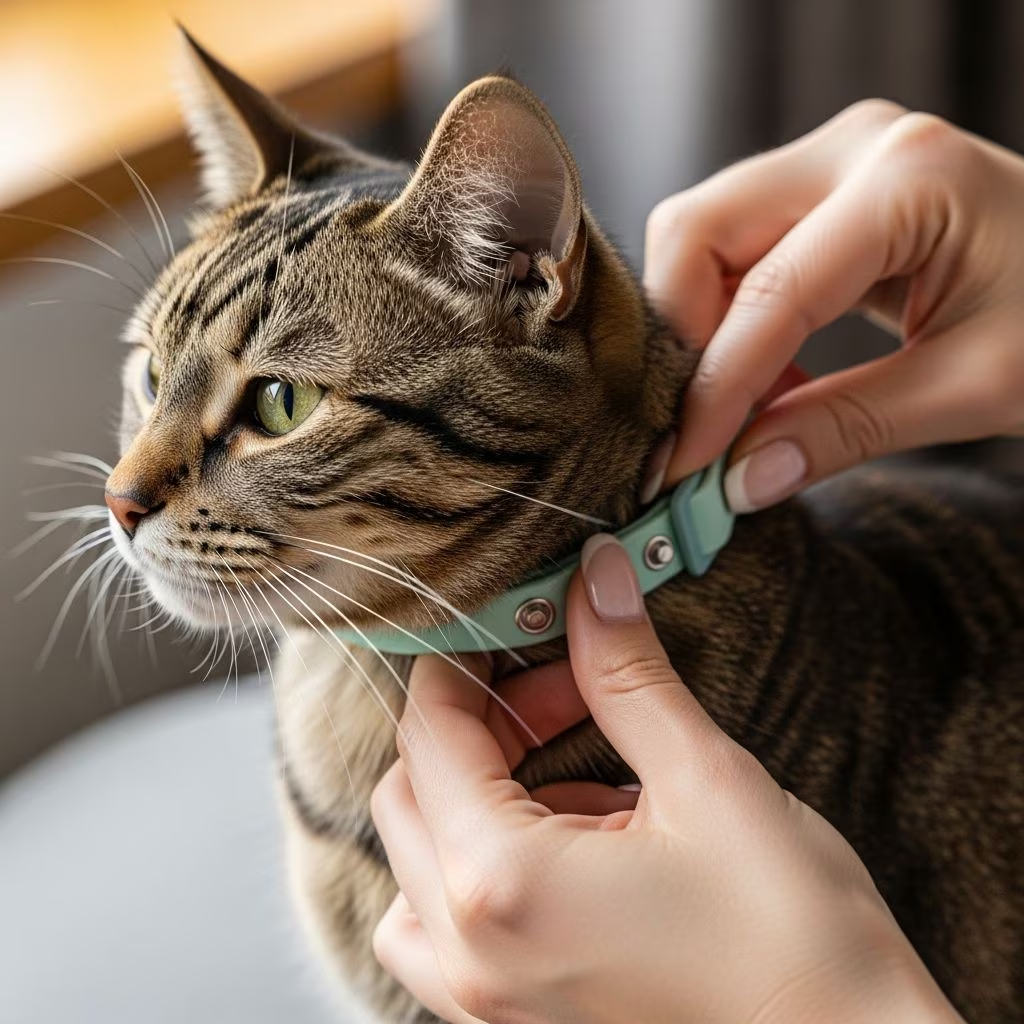
Putting a collar on your cat can feel daunting, especially if your feline friend is resistant or has never worn one before. However, a properly fitted collar is essential for identification, attaching ID tags, or GPS trackers, enhancing your cat’s safety whether they roam outdoors or stay indoors. This guide provides a complete roadmap, from selecting the right collar to advanced training techniques, ensuring a positive experience for both you and your cat.
Why Should You Put a Collar on Your Cat?
Collars serve critical purposes beyond aesthetics. They hold ID tags with your contact information, crucial for lost cats to be returned home quickly. GPS trackers on collars allow real-time location monitoring, vital for outdoor cats. Even indoor cats benefit from collars during escapes or vet visits. Safety features like breakaway mechanisms prevent choking hazards if caught on objects. According to training experts, collars also aid in behavioral training and microchip backups for identification.
- Identification: Tags provide immediate owner contact details.
- Tracking: GPS devices help locate wandering cats.
- Safety: Breakaway collars release under pressure, protecting against strangulation.
- Training: Builds tolerance for handling and accessories.
Types of Cat Collars
Choosing the right collar type is foundational. Breakaway collars are safest for most cats, featuring a clasp that releases if excessive force is applied, preventing injury. Adjustable collars allow custom fitting for growing kittens or varying neck sizes. Elastic collars offer some give but are less recommended due to unreliability. Avoid non-breakaway collars for unsupervised wear. Lightweight materials like nylon or leather with suede lining ensure comfort.
| Type | Pros | Cons | Best For |
|---|---|---|---|
| Breakaway | Safest; releases under pressure | May come off too easily | Outdoor/indoor cats |
| Adjustable | Custom fit; grows with cat | Bulkier buckle | Kittens, varying sizes |
| Elastic | Stretches slightly | Unreliable safety | Not recommended |
| Quick-Release | Easy on/off | Less durable | Indoor use |
How to Choose the Right Collar for Your Cat
Select based on your cat’s size, lifestyle, and age. Measure neck circumference with string or tape—aim for a collar where two fingers fit snugly beneath. Kittens under 16 weeks or 2.5kg should not wear collars due to weight requirements for breakaway function. Opt for thin (3/8″–1/2″) lightweight collars to minimize discomfort. Check for smooth edges, sturdy buckles, and quality materials. Custom collars suit unique sizes.
How to Measure Your Cat for a Collar
Accurate measurement prevents ill-fitting collars. Use a soft measuring tape or string around the neck at the widest point, just below the jawline. Add space for two fingers (about 1–2 cm). Measure during calm moments. For adjustable collars, note minimum and maximum lengths. Re-measure growing kittens monthly. Proper fit: snug but allowing fingertip slide, compressing fur if fluffy.
- Calm your cat with pets or treats.
- Wrap tape/string around neck base.
- Record measurement; add 1–2 cm allowance.
- Test fit: two fingers under collar.
Step-by-Step Guide: How to Put a Collar on a Cat
Never force a collar on a resistant cat. Use positive reinforcement for gradual introduction. Choose calm times post-meal or play.
Step 1: Prepare and Desensitize
Place the collar near your cat’s favorite spot. Rub it with their scent via cloth or bed. Reward sniffing with treats and praise. Repeat daily until they approach willingly.
Step 2: Initial Contact and Fitting
Hold collar under chin (avoid overhead swoop). Fasten quickly behind neck while delivering treats. Check fit: one fingertip slides snugly. Remove immediately after 10–30 seconds. Sessions last 1–2 minutes.
Step 3: Build Tolerance
Daily sessions increase wear time: 1 minute, then 5, 10, up to hours. Distract with play or food. Practice clasp opening/closing on back first. If disoriented, reassure—normal reaction.
Step 4: Add Accessories and Supervise
Once comfortable, attach ID tags or trackers. Monitor for chewing or pawing. Remove during sleep, eating, illness, or flea treatments.
Cat Collar Training Techniques
Clicker training excels for collar acceptance. Phase 1: Lure head through loose loop (leash handle/slip) with food. Phase 2: Cat enters independently; practice clasp on back. Transition to actual collar. Positive reinforcement only—no scolding.
- Tools: Clicker, high-value treats (tuna, chicken).
- Phases: Desensitize, loop entry, clasp practice, full wear.
- Timeline: 1–2 weeks for full comfort.
Safety Tips for Cat Collars
Inspect weekly for wear. Ensure breakaway function: test release force matches cat’s weight. Never use on kittens too light to trigger release. Remove for baths, meds. Watch for rubbing, hair loss—signs of poor fit. Indoor cats may need less robust collars.
- Fit test: Two fingers under collar.
- Weight check: Minimum for breakaway.
- Supervise initial days.
- No elastic for safety risks.
Common Mistakes to Avoid
Rushing application causes fear. Too tight/loose fits risk injury. Forcing ignores cat’s pace. Overhead approach startles. Punishing reactions worsens aversion. Skipping desensitization leads to resistance.
- Avoid: Tightening beyond fingertip fit.
- Don’t: Leave on unsupervised initially.
- Skip: Non-breakaway for outdoors.
Troubleshooting: What If Your Cat Hates the Collar?
Pawing/rolling is normal—distract, reward calm. If persistent, restart desensitization. Switch softer materials. Shorten sessions. Get help holding if needed, but prioritize trust. Takes 2 weeks typically.
Frequently Asked Questions (FAQs)
What age can kittens wear collars?
Wait until over 16 weeks or 2.5kg to ensure breakaway safety.
How tight should a cat collar be?
Snug with one-two fingertips sliding underneath, compressing fur if fluffy.
Can indoor cats wear collars?
Yes, for ID during escapes, but lighter quick-release styles suffice.
What if my cat keeps pawing it off?
Normal initially; build tolerance gradually with treats and distractions.
Should I remove the collar at night?
Yes, for unrestricted movement and hygiene.
Conclusion
With patience and these steps, collaring your cat becomes routine. Prioritize safety and positivity for a confident, protected pet.
References
- Cat Collar Training & How To Nail It In Just 3 Steps — Tractive. 2023. https://tractive.com/blog/en/training-en/cat-collar-training
- The Ultimate Cat Collar Guide: The Perfect Fit, Safety — YouTube (Jackson Galaxy). 2022-10-15. https://www.youtube.com/watch?v=80VS5zC-Q-U
- Cat Collar Training: How and Why to Do It — Cat School. 2024. https://www.catschool.co/cat-training-articles/cat-collar-training-how-and-why-to-do-it-1
- The Ultimate Cat Collar Guide — Hiro + Wolf. 2023-05-20. https://hiro-and-wolf.com/blogs/dog-blog/the-ultimate-cat-collar-guide
- How to Introduce a Collar to a Cat That Has Never Worn One Before — Cheshire & Wain. 2024. https://www.cheshireandwain.com/en-us/blogs/journal/how-to-introduce-a-collar-to-a-cat-that-has-never-worn-one-before



