

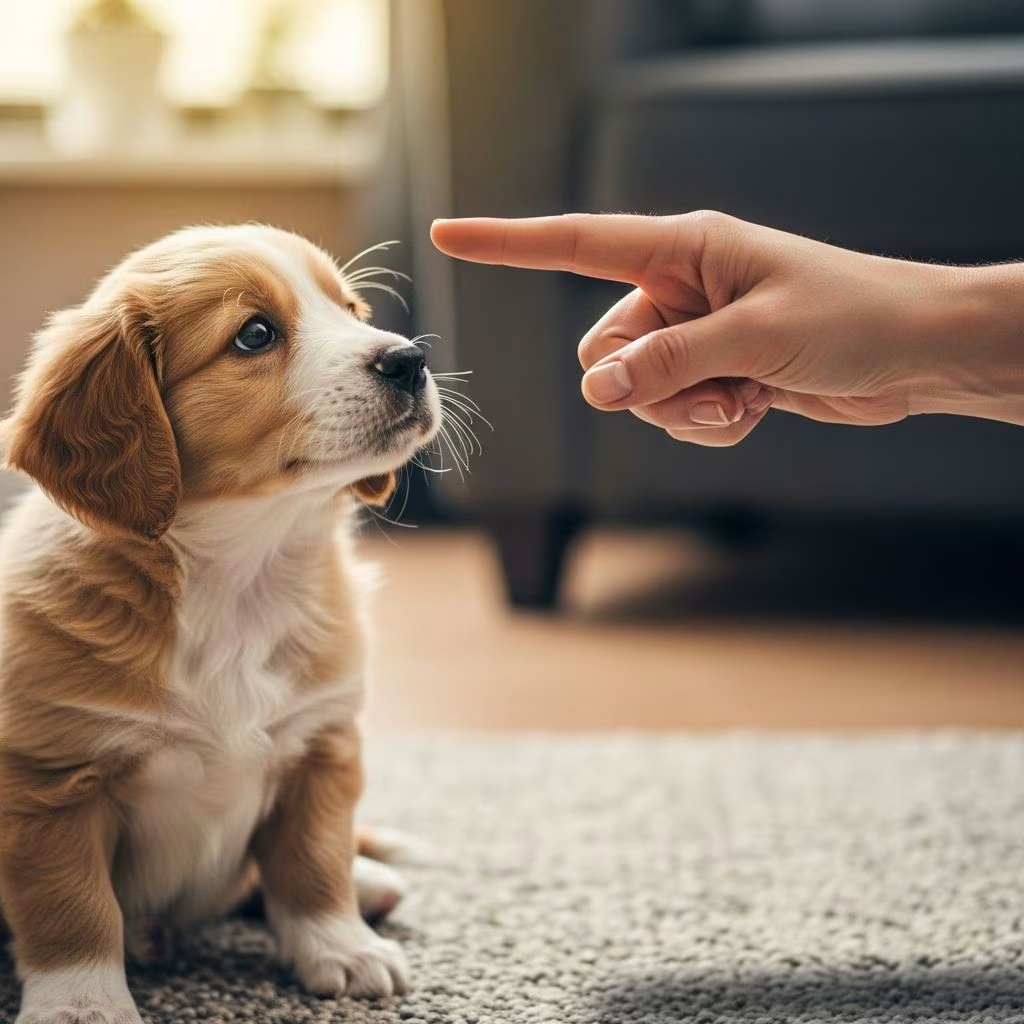
Punishment is an outdated and ineffective method for training puppies. Modern experts recommend **positive reinforcement** to teach desired behaviors, build confidence, and foster eager obedience.
Why Punishment Doesn’t Work for Puppies
Dogs do not comprehend punishment as humans do, leading to insecurity, fear, and eventual disobedience rather than learning. When scolded, puppies may display “guilty” looks not from remorse, but from reading human cues and fearing repercussions. Studies show dogs scolded for misdeeds exhibit appeasement behaviors regardless of actual guilt, confirming punishment confuses rather than corrects.
Positive reinforcement, backed by animal learning science, rewards good actions to encourage repetition. Veterinarians and certified trainers overwhelmingly endorse it over aversive methods, as it strengthens the human-dog bond without fear. Punishing a puppy for jumping or biting fails to teach alternatives, leaving them unsure of expectations. Instead, positive methods equip puppies with tools for success in challenging situations.
What Is Positive Reinforcement?
**Positive reinforcement** involves adding a rewarding stimulus—like treats or praise—immediately after a desired behavior to increase its likelihood. This science-based approach teaches puppies what to do, not just what to avoid, making training clear and enjoyable.
Unlike punishment, which erodes trust, positive reinforcement creates willing learners. Dogs trained this way are more responsive long-term, as they associate commands with rewards rather than pain. Key benefits include boosted confidence, reduced anxiety, and fewer behavioral regressions.
How to Use Positive Reinforcement Effectively
Implement positive reinforcement systematically for best results. Start in low-distraction environments, then gradually increase challenges.
Treat-Based Rewards
Treats are foundational for new skills or high-distraction settings. Use **high-value treats** (e.g., liver bits, freeze-dried meat) for difficult tasks, delivering them precisely and promptly so puppies link action to reward.
- Match treat value to task difficulty: High-value for new tricks, lower for basics.
- Fade treats gradually: Transition to verbal praise or play as proficiency grows.
- Examples: Chicken bits for recall in parks; kibble for simple sits at home.
This precise timing helps puppies understand causation, accelerating learning.
Praise and Affection
Pair treats with enthusiastic praise and petting to wean off food rewards. Use a rhythm: treat, pet, praise, repeat. Dogs crave genuine affection, making it a powerful reinforcer when timed right. Avoid head pats if disliked—opt for chest scratches.
- Be animated: High-pitched “Good boy!” with tail wags.
- Combine elements: Builds multi-sensory positive associations.
- Phase treats: Soon, voice and touch suffice for compliance.
Identify Alternative Behaviors
Teach incompatible alternatives to unwanted actions. For jumping, practice the “sit game”: Command sit, reward with pets; stop if they break position.
Repeat with family and guests. Puppies quickly learn sitting earns love, extinguishing jumps. Other examples:
- Chewing: Redirect to toys, reward engagement.
- Pulling: Reward loose-leash walking.
This proactive method prevents issues by filling behavioral voids.
Counterconditioning
For fears (e.g., strangers, vacuums), pair triggers with rewards. Reward any calm response upon trigger sight, reshaping emotional responses over time.
Progress slowly: Start distant, increase proximity as positivity builds. This classical conditioning turns negatives into positives, ideal for reactivity.
How to Stop Nipping and Biting
Nipping is normal puppy exploration, but essential to curb early. Puppies learn **bite inhibition** from littermates—soft mouthing without pain. Separating before 8 weeks hinders this; supplement at home.
Discouraging Rough Play Through Yelping
Mimic sibling feedback: Yell “Ow!” sharply at rough nips, then freeze play for 30-60 seconds. Resume gently if calm. Consistent application teaches pressure limits without fear.
- Use high-pitched yelp for authenticity.
- Withdraw attention fully—no eye contact.
- Redirect to toys post-timeout.
Combine with positive reinforcement: Reward gentle play lavishly.
Common Puppy Training Mistakes to Avoid
Even well-intentioned owners falter. Here’s a table of pitfalls and fixes:
| Mistake | Why It Fails | Positive Fix |
|---|---|---|
| Rubbing nose in mess | Creates fear, no learning | Clean discreetly; reward potty outside |
| Physical corrections | Suppresses, doesn’t teach | Teach alternatives like sit |
| Inconsistent rewards | Confuses puppy | Precise, immediate treats |
| Ignoring good behavior | Misses reinforcement chance | Praise every success |
Building a Strong Puppy-Human Bond
Positive methods fortify relationships through shared joy, unlike punishment’s damage. Play enhances this: Use games for reinforcement, distraction, and fear reduction. Aggressive pups (often 80% fear-driven) thrive on play-based positives, conquering triggers humanely.
Consistent routines amplify success. Daily sessions (5-10 mins) yield confident adults.
Frequently Asked Questions (FAQs)
What age should puppy training start?
Immediately upon adoption—puppies learn fastest at 8-16 weeks.
Do puppies remember punishment?
They recall fear associations, not lessons, leading to anxiety.
Can positive reinforcement work for aggressive puppies?
Yes, by addressing root fears via counterconditioning and play.
How long to stop nipping?
With consistency, most improve in 2-4 weeks; full inhibition by 6 months.
What if my puppy ignores commands?
Increase reward value, reduce distractions, ensure proper timing.
Advanced Tips for Lasting Results
For stubborn cases, layer techniques: Use play-training for aggression, turning corrections into games. Track progress in a journal to refine approaches. Enroll in positive-only classes for socialization. Patience yields a joyful, obedient companion.
Embrace this shift: Your puppy deserves training that nurtures, not scares. Positive reinforcement transforms challenges into triumphs, creating lifelong partners.
References
- How to Reprimand Your Dog: A Guide to Positive Reinforcement — Kinship. 2023. https://www.kinship.com/dog-behavior/how-to-punish-puppy
- Positive Punishment for Dogs: Choosing the Best Training Rewards — Kinship. 2023. https://www.kinship.com/dog-behavior/positive-punishment-for-dogs
- Dogs Do Not Actually Feel Guilt — Kinship. 2023. https://www.kinship.com/dog-behavior/dogs-do-not-feel-guilt
- Why Positive Reinforcement Training Works — Kinship. 2023. https://www.kinship.com/dog-behavior/positive-reinforcement-training-works
- AVSAB Position Statement on Humane Dog Training — American Veterinary Society of Animal Behavior. 2021-01-01. https://avsab.org/wp-content/uploads/2018/03/AVSAB-Humane-Dog-Training_Position-Statement_download-10-3-14.pdf
- Littermates For Life: Do Puppies Remember Their Siblings? — Rover. 2023. https://www.rover.com/blog/do-puppies-remember-siblings/



