

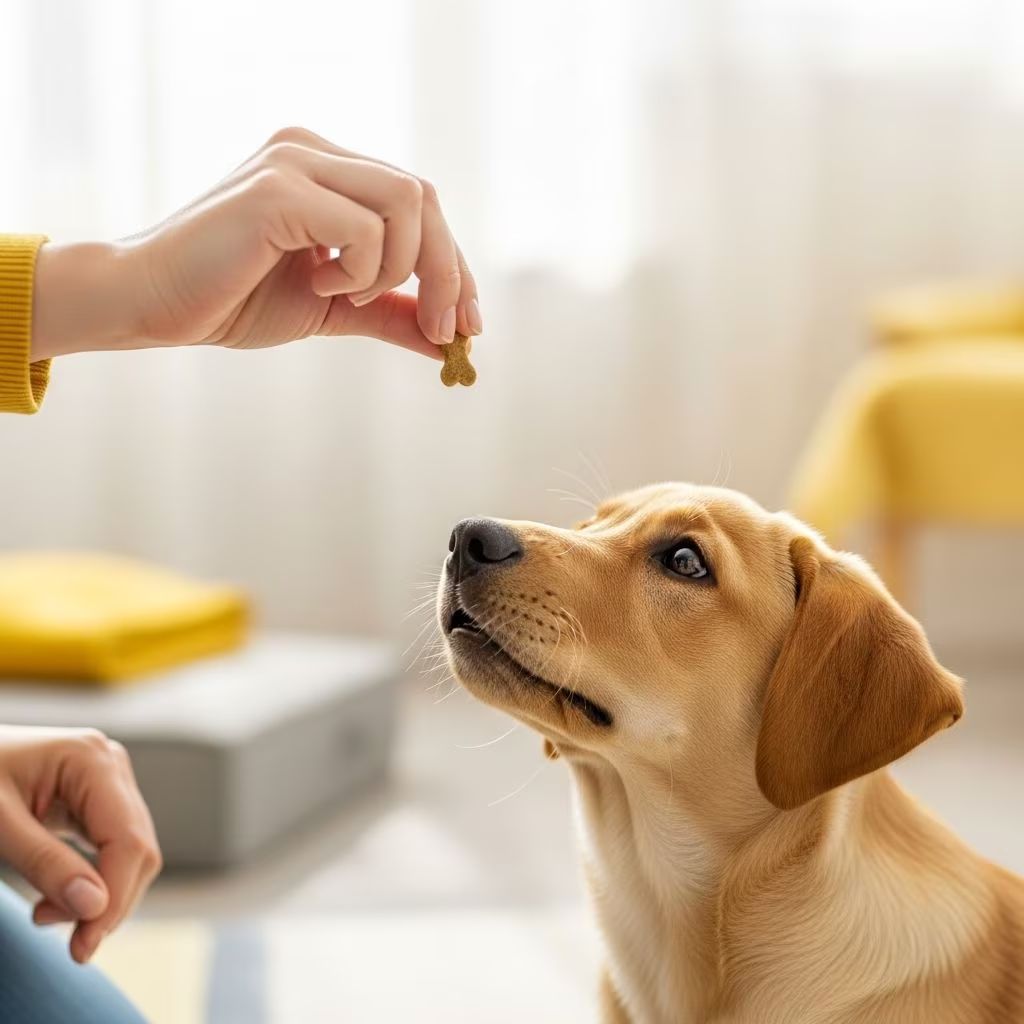
Punishment is an outdated and ineffective method for training puppies, as dogs do not comprehend it and it can lead to insecurity and disobedience. Modern veterinarians and trainers advocate positive reinforcement, which builds confidence and eagerness in dogs by rewarding desired behaviors based on learning science.
Positive reinforcement teaches puppies exactly what to do, rather than just what not to do, fostering willing compliance over fear-based responses. This approach has evolved from historical dominance methods, promoting healthier human-dog bonds through science-backed techniques.
Treat-based rewards
In early training stages, high-value treats are essential for reinforcing new or challenging behaviors, especially in distracting environments. Use treats like liver, low-sodium turkey dogs, or freeze-dried raw kibble pieces to deliver quick, precise rewards that link the action to the payoff.
As proficiency grows, gradually reduce treat frequency, transitioning to praise and affection. This fading process ensures long-term reliability without dependency, maintaining motivation through varied rewards.
- Select treats by value: High for complex tasks, lower for basics.
- Timing is critical: Reward within seconds of the behavior.
- Vary treats to prevent boredom and maintain interest.
Studies from animal behavior experts confirm that immediate, high-value rewards accelerate learning by strengthening neural pathways associated with positive outcomes.
Praise and affection
Pair treats with enthusiastic verbal praise and physical affection from the start to create a multi-layered reward system. Follow a rhythm of treat, pet, voice, repeating to embed all elements.
Enthusiasm matters—use high-pitched, excited tones and gentle pets on areas your puppy enjoys, like the chest rather than the head. This combination helps phase out treats seamlessly, as puppies associate behaviors with overall positivity.
Over time, many puppies respond eagerly to voice alone, viewing training as a joyful interaction. This method enhances the emotional bond, making your puppy more attuned to your cues in daily life.
Identify alternative behavior
Redirect unwanted actions by teaching incompatible alternatives, such as the “sit” game for jumping. Instruct your puppy to sit before petting; reward lavishly while seated, then withdraw attention if they break position.
Repeat consistently with all household members and guests. Puppies quickly learn that sitting yields affection, transforming pushy requests into polite ones. This technique applies broadly: Use “leave it” for scavenging or “down” for excited greetings.
- Practice in low-distraction settings first.
- Ignore fully during non-compliance—no eye contact or talking.
- Re-engage immediately upon correct behavior.
This proactive strategy prevents rehearsal of bad habits, promoting calm, predictable interactions.
Counterconditioning
Counterconditioning changes emotional responses to triggers by pairing them with rewards. Whenever the trigger appears—regardless of reaction—offer treats to associate it with positivity.
For example, if leashes signal anxiety, present the leash and reward calmly. Repetition rewires fear to anticipation. Progress gradually: Start at a distance, increasing proximity as comfort builds.
This method is powerful for fears like strangers, vacuums, or car rides, backed by behavioral science showing conditioned emotional responses can be reversed through consistent pairing. Patience yields lasting confidence.
How to stop nipping and biting
Nipping is normal puppy exploration, but proper bite inhibition—learned from littermates and dam—is crucial. Keeping puppies with siblings until at least eight weeks teaches pressure control, preventing serious bites later.
Without this, puppies may bite too hard unintentionally. Early intervention ensures they grow into safe companions.
Discouraging rough play through yelping
Mimic littermate reactions: When nipping hurts, emit a high-pitched yelp, stop play, and withdraw attention for 30-60 seconds.
Resume only when calm. This teaches self-regulation without harm. Combine with toy redirection to channel energy positively. Consistency across play sessions reinforces the lesson swiftly.
Table: Nipping Intervention Steps
| Step | Action | Expected Outcome |
|---|---|---|
| 1. Yelp sharply | High-pitched “ouch!” | Puppy pauses, surprised |
| 2. Stop interaction | Turn away, no attention | Learns rough play ends fun |
| 3. Wait for calm | Ignore until settled | Encourages gentle resumption |
| 4. Reward softness | Praise gentle mouthing | Builds inhibition |
Experts note this mirrors natural dam-puppy dynamics, effectively teaching boundaries.
Why Punishment Doesn’t Work
Dogs lack human-like guilt; “guilty looks” stem from fear of punishment cues, not remorse. Research shows behaviors misinterpreted as guilt appear post-scolding, regardless of infraction.
Alexandra Horowitz’s studies reveal owners misread appeasement signals, leading to misguided punishment that erodes trust. Believing in dog guilt justifies harshness but ignores root causes, worsening issues.
Positive methods address behaviors directly, avoiding fear cycles. Veterinary behaviorists emphasize reinforcement prevents aggression escalation.
Common Myths in Puppy Training
Myth: Comforting fearful puppies reinforces fear. Reality: Gentle support builds security without reward linkage.
Myth: Punishment teaches quickly. Fact: It suppresses temporarily but risks shutdown or backlash. Positive reinforcement proves faster and durable long-term.
Frequently Asked Questions (FAQs)
What if positive reinforcement seems slow?
Initial progress may feel gradual, but consistency yields permanent results. Track small wins; fade rewards as habits form.
Can all puppies learn bite inhibition?
Yes, with early, consistent yelping and redirection. Even older puppies improve through play-pause cycles.
Is ignoring puppies cruel?
No—brief timeouts teach boundaries humanely, mimicking pack dynamics. Always follow with positive re-engagement.
How do I handle jumping guests?
Practice sit-for-greeting drills. Instruct guests to ignore until seated, rewarding compliance.
What treats are safest?
Small, soft, low-calorie options like freeze-dried liver. Avoid toxic foods; consult vets for allergies.
Building a Training Routine
Integrate sessions daily: 5-10 minutes multiple times, varying locations. Use life rewards—meals for sits, walks for leash manners—to generalize skills.
Enroll in positive-only classes for socialization. Monitor progress; consult certified trainers if stalled.
Patience transforms mischievous puppies into responsive partners. Positive methods not only curb issues but enhance joy in ownership.
References
- Kinship: How to Reprimand Your Dog: A Guide to Positive Reinforcement — Kinship. 2023. https://www.kinship.com/dog-behavior/how-to-punish-puppy
- Dogs Do Not Actually Feel Guilt — Kinship. 2023. https://www.kinship.com/dog-behavior/dogs-do-not-feel-guilt
- 9 Myths About Your Puppy—Busted By a Behaviorist — Kinship. 2023. https://www.kinship.com/dog-behavior/puppy-myth-busting
- Positive Punishment for Dogs — Kinship. 2023. https://www.kinship.com/dog-behavior/positive-punishment-for-dogs



