

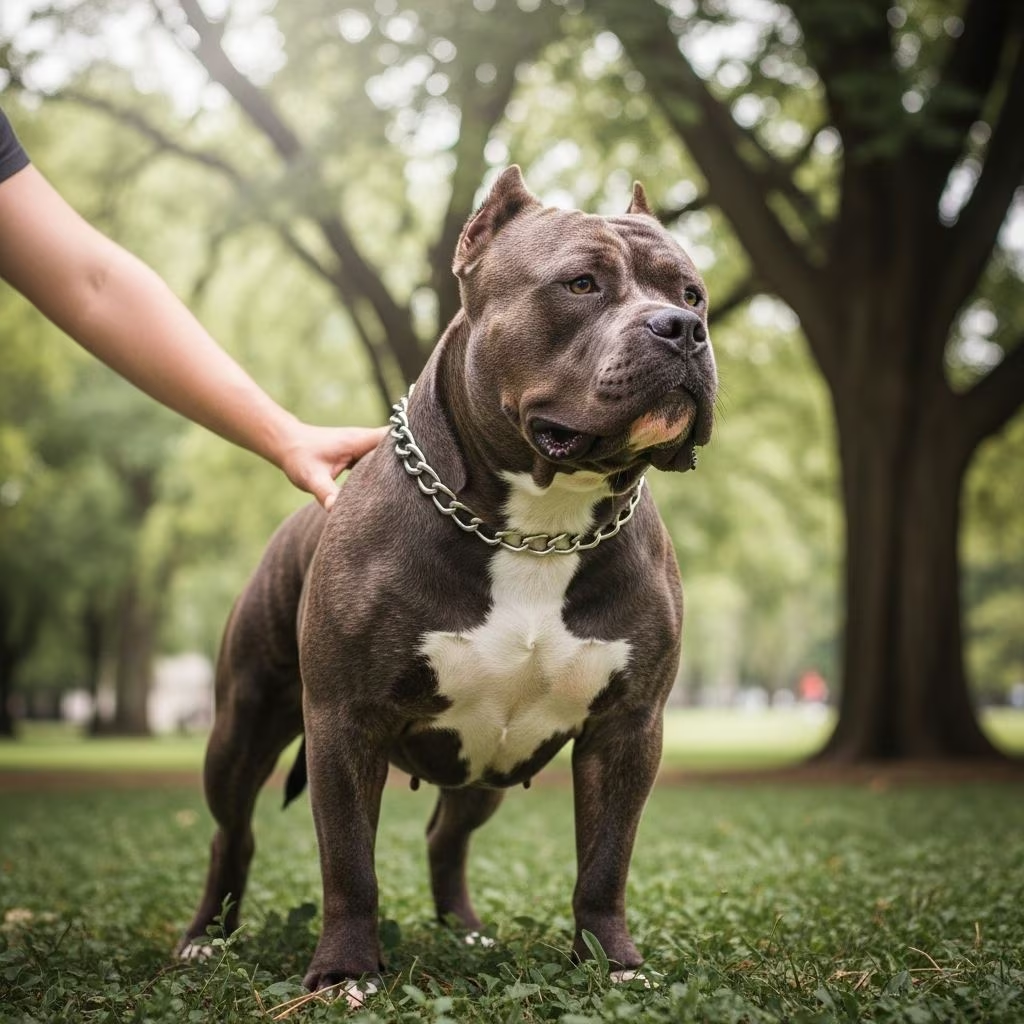
The XL Bully, a powerful breed stemming from the American Bully and American Pit Bull Terrier lineages, is renowned for its loyalty and affection when properly trained and socialised. However, due to concerns over size, strength, and reported incidents, the UK government banned XL Bullies under the Dangerous Dogs Act effective from late 2023, with full enforcement by early 2024. This ban has sparked debate, with statistics from Bully Watch UK indicating that American Bully dogs were linked to 44% of dog attacks on people in 2023 despite comprising just 1% of the dog population. Despite this, experts emphasise that temperament is shaped by genetics, upbringing, training, and socialisation rather than breed alone, as supported by a Science study finding breed accounts for less than 10% of behaviour variation.
Owners of existing XL Bullies can apply for a Certificate of Exemption to legally keep their dogs, provided they meet stringent requirements including neutering, microchipping, third-party insurance, and adherence to public behaviour rules like mandatory muzzling and leashing. Post-ban, cruelty cases surged 164% according to the RSPCA, highlighting the need for responsible ownership amid rising neglect. This comprehensive guide outlines practical steps to prepare your XL Bully, comply with the law, and advocate for your pet’s safety.
What can you do to protect your XL Bully?
The UK government’s exemption scheme allows responsible owners to retain their XL Bullies by applying for a Certificate of Exemption before deadlines (initially February 2024, with grace periods extended). To qualify, dogs must be neutered (or scheduled for it), microchipped, insured, and owners must ensure the dog is never unmuzzled or off-lead in public. Non-compliance risks seizure, destruction of the dog, unlimited fines, or up to 14 years imprisonment.
- Apply promptly: Submit via the official government portal with vet certificates for neutering and microchipping.
- Secure insurance: Obtain third-party liability coverage specific to banned breeds.
- Maintain records: Keep all documentation updated, as spot checks may occur.
Beyond legalities, proactive training mitigates risks associated with the breed’s physical capabilities. Poor breeding practices, often prioritising aesthetics over temperament, have contributed to issues, with many UK XL Bullies tracing back to a single sire, Kimbo, linked to aggression in offspring. Good breeders select for health and stable temperaments, underscoring the importance of owner diligence.
Prepare your dog
Addressing behavioural issues early is crucial, as XL Bullies must demonstrate calm public behaviour under the exemption. Start training now to ensure your dog walks nicely on a lead, tolerates a muzzle comfortably, remains relaxed around strangers and other dogs, and ignores triggers. Dog behaviourist Gayle Lucy of K9 Coach UK warns against last-minute cramming: “What I would not advise is waiting until the deadline to put a muzzle on your dog and start walking on lead.”
Focus on positive reinforcement techniques. Use high-value treats to reward calm states and gradually desensitise to public stimuli. Professional trainers experienced with bully breeds can assess and correct subtle issues like resource guarding or over-excitement, preventing escalation.
Check their XL Bully ‘type’
The legislation targets dogs of ‘XL Bully type,’ encompassing purebreds, crossbreeds, or those matching the official description: height over 20 inches at shoulder, blocky head, muscular build, etc. Review the government’s detailed criteria to confirm your dog’s classification. Even if not a pure XL, similar-looking dogs may face scrutiny, so err on the side of caution with protective measures.
If unsure, consult a vet or breed expert. Misidentification risks unnecessary stress, but preparation ensures compliance regardless.
Reinforce lead training
XL Bullies must remain on a lead in public at all times, making loose-lead walking essential for safety and legality. Gayle Lucy stresses: “The number one most important training for XL Bully types right now is a loose lead heel: when your dog walks comfortably by your side, at your pace, calmly.”
Step-by-step loose lead training:
- Use a fixed-length, non-extendable lead and standard collar or harness.
- Hold the lead with hand against your body; if it pulls away, stop walking until the dog returns to position.
- Mark and reward (e.g., ‘yes!’ + treat) correct positioning with a food marker.
- Practice on real walks, not just sessions, for habit formation through repetition.
- Expect proficiency in weeks with consistent timing.
This builds confidence, reducing reactivity. Avoid flexi-leads, which encourage pulling.
Start muzzle training now
Muzzles are mandatory in public, so acclimate your dog positively to avoid aversion. Choose a well-fitting basket muzzle allowing panting, drinking, and treat access.
Muzzle training protocol (per Gayle Lucy):
- Introduce the muzzle visually; mark effort (e.g., looking at it) with a food marker and treat.
- Build association: touch nose to muzzle for rewards.
- Progress to resting on face, then fastening straps briefly, rewarding tolerance.
- Gradually increase wear time during calm activities like meals or walks.
- Pair with fun: feed meals through muzzle to create positive links.
Never force it; resistance breeds fear. Most dogs adapt in days with patience.
Secure your home and speak to your housing provider or landlord
Escapes can lead to fatal consequences under the ban: unlimited fines or 14 years prison for owners, plus euthanasia risk for the dog. Fortify your home:
- Install sturdy fences (min. 6ft, no gaps), double-gated yards.
- Secure doors/windows with locks; supervise near entrances.
- Use crate training for containment when unsupervised.
Notify landlords or housing providers early, providing exemption proof. Some may impose restrictions, so review tenancy agreements.
Understanding the XL Bully Ban Context
The ban followed fatal attacks, but critics argue it targets symptoms, not causes like irresponsible ownership and bad breeding. XL Bullies aren’t inherently more dangerous than other large breeds (e.g., Rottweilers, Cane Corsos), all capable of harm if untrained. RSPCA advocates breed-neutral laws focusing on deeds, not looks. Post-ban, abandonment and cruelty rose, with shelters overwhelmed.
| Aspect | Pre-Ban | Post-Ban (1 Year) |
|---|---|---|
| Cruelty Cases (RSPCA) | Baseline | +164% for XL Bullies |
| Attack Attribution | 44% of attacks (1% pop.) | Debated: owner fault |
| Breed Influence on Behaviour | <10% per Science study | Training key |
Frequently Asked Questions (FAQs)
Q: Can I still keep my XL Bully after the ban?
A: Yes, with a Certificate of Exemption if neutered, microchipped, insured, and compliant with muzzling/leashing.
Q: How do I apply for the exemption?
A: Via gov.uk with vet docs; deadlines were strict, check for extensions.
Q: Are XL Bullies aggressive by nature?
A: No, aggression stems from training, socialisation, and breeding, not breed alone.
Q: What if my dog looks like an XL Bully but isn’t?
A: Follow type description; train as precaution.
Q: How long does muzzle training take?
A: Days to weeks with positive methods.
Q: Is the ban effective?
A: Cruelty rose; experts call for owner-focused laws.
References
- How to Protect Your XL Bully Under the New Ban in the UK — Kinship. 2024. https://www.kinship.com/uk/dog-behaviour/how-to-protect-your-xl-bully
- What Is an XL Bully Dog? Size, Breed and More — Kinship. 2024. https://www.kinship.com/uk/dog-lifestyle/what-is-an-xl-bully-dog
- Statement on the XL Bully Ban — The Dog’s Way. 2023. https://www.thedogsway.co.uk/journal/statement-on-the-xl-bully-ban
- XL Bully Cruelty and Neglect Cases Surge One Year After Ban — Kinship. 2024. https://www.kinship.com/uk/dog-lifestyle/xl-bully-cruelty-rise-post-ban
- More Evidence That Breed Does Not Equal Behavior — Kinship (citing Science study). 2024. https://www.kinship.com/dog-behavior/breed-behavior-study



