

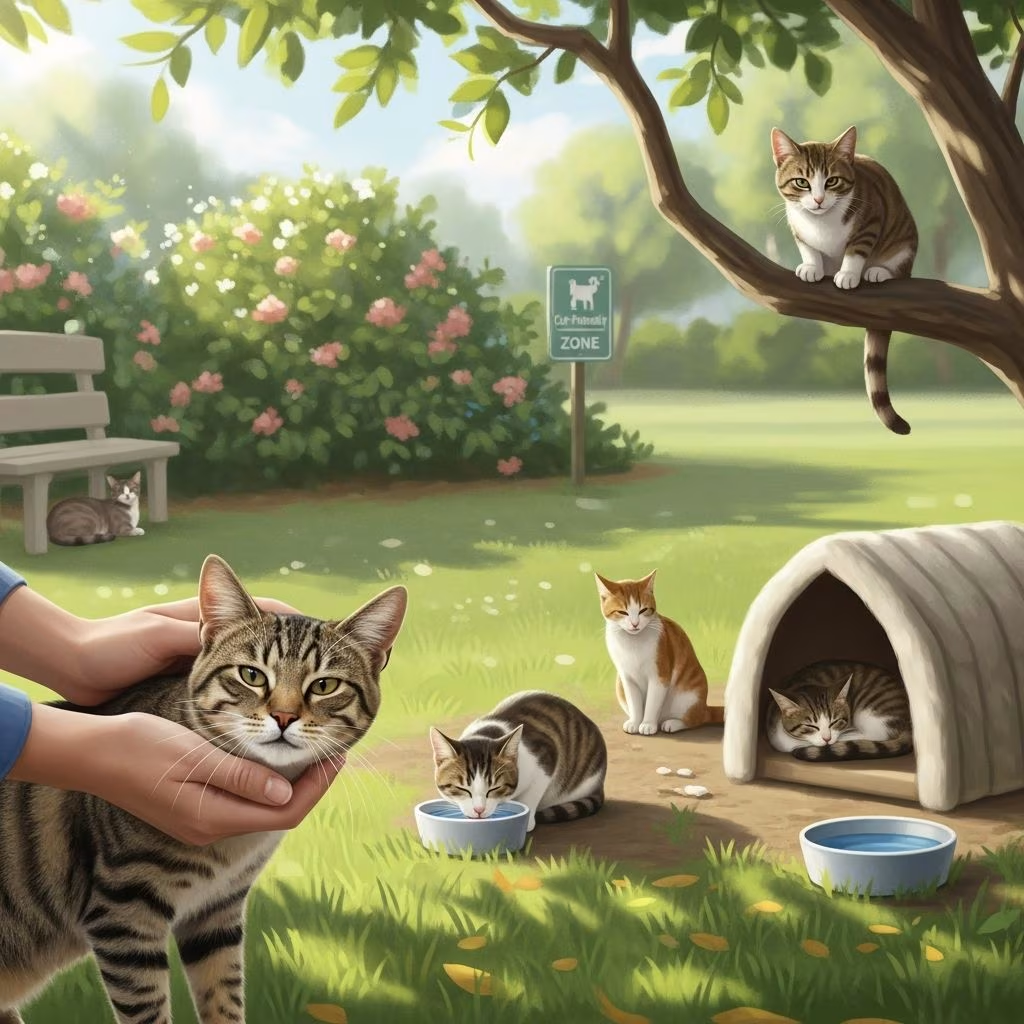
How to Protect Cats in Your Community
Community cats, also known as stray or free-roaming cats, are felines who prefer to live outdoors rather than in traditional home environments. These resilient animals are valued members of our communities, yet they face unprecedented challenges when they enter the shelter system. Well-intentioned community members often bring community cats to shelters, hoping to help them find homes. However, because these cats are not accustomed to living with humans, they are unlikely to be adopted. Sadly, this means most of them do not leave shelters alive. The statistics are sobering: nearly 70% of animals killed in shelters are cats, and the majority of these are community cats. Fortunately, community cat programs are creating significant change across the nation, and you can be an integral part of this lifesaving movement.
Understanding the Crisis: Community Cats at Risk
The shelter crisis affecting community cats represents one of the most pressing animal welfare issues in the United States. For every dog killed in a shelter, more than two cats meet the same fate, and most of these are community cats who never had a chance at adoption. This disparity highlights the urgent need for alternative approaches to cat management and welfare. The traditional shelter model, which relies on impoundment and euthanasia, has proven ineffective and inhumane for community cats. These animals, having lived independently outdoors, cannot readily adjust to indoor shelter environments or the demands of family life. Their instincts, behaviors, and temperament make them unsuitable candidates for traditional adoption.
The tragedy of this situation lies in the preventable nature of these deaths. Community cats are not sick or suffering; they are simply cats who have adapted to outdoor living. They are among the most at-risk animals when they enter the shelter system, vulnerable to stress-related illness, behavioral problems in captivity, and ultimately, euthanasia decisions made by overwhelmed shelter staff. Understanding this crisis is the first step toward becoming an effective advocate for community cat protection.
The TNVR Solution: Trap-Neuter-Vaccinate-Return
Community cat programs across the country are implementing the trap-neuter-vaccinate-return (TNVR) method, a proven, humane, and effective approach to protecting community cats and managing their populations. TNVR represents a paradigm shift in how we approach outdoor cat welfare, moving away from lethal control methods toward sustainable, compassionate solutions. The method works by:
- Trapping: Humanely capturing community cats using safe, non-harmful traps
- Neutering/Spaying: Performing surgical sterilization to prevent reproduction
- Vaccinating: Administering rabies and other critical vaccinations to protect cat health
- Returning: Releasing the cats back to their outdoor homes where they are cared for by community members
The science supporting TNVR is clear and conclusive. Research demonstrates that there are only two proven methods to reduce and eventually eliminate community cat populations: intensive TNVR efforts or intensive eradication efforts such as poisoning, disease introduction, lethal trapping, and hunting—methods primarily used on small oceanic islands. Given the horrific nature of eradication methods and costs that can exceed $100,000 per square mile, TNVR represents the only practical and humane solution for American communities.
Community Cat Programs Are Saving Lives
Best Friends Animal Society and partner organizations operate more large-scale TNVR programs than any other organizations in the country. These efforts are demonstrating remarkable results in reducing shelter killing and improving community cat welfare. Shelters implementing comprehensive TNVR programs are reducing the number of cats killed in their facilities at 12 times the rate of other shelters. This dramatic difference illustrates the profound impact that evidence-based community cat management can achieve.
Through TNVR initiatives, shelters nationwide are transforming their communities and saving countless lives. These programs work in collaboration with local governments to remove outdated legislation that limits TNVR effectiveness. When shelters partner with community organizations and advocates to implement TNVR, they create a sustainable model that benefits both cats and communities. The cats remain in environments where they thrive, community members are empowered to care for their neighborhood cats, and shelter resources are redirected toward animals that benefit from indoor placement.
Debunking Myths About Community Cats and TNVR
Misconceptions about TNVR and community cat welfare often hamper implementation efforts. Understanding and addressing these myths is essential for effective advocacy.
Myth: TNVR Doesn’t Work
The scientific evidence overwhelmingly supports TNVR’s effectiveness. The vast body of research confirms that TNVR successfully reduces and eventually eliminates community cat populations through population management rather than lethal control. Community cats managed through TNVR programs are healthy and thriving, with firsthand data from large-scale programs demonstrating positive welfare outcomes. The only alternative population control method—eradication through lethal means—is impractical and inhumane in modern American communities.
Myth: TNVR Compromises Community Cat Welfare
Evidence from numerous studies and direct experience from organizations operating extensive TNVR programs shows that the vast majority of community cats are healthy and even thriving. Community cats adapted to outdoor living demonstrate resilience and vitality when their populations are managed humanely. Additionally, studies show that approximately 30-50% or more of TNVR-treated cats are eventually adopted into homes when abandoned kittens or cats appear at managed colony feeding sites, further reducing overall community cat population impacts.
Myth: Most Residents Oppose TNVR
Public opinion research reveals strong community support for TNVR. A 2014 national survey commissioned by Best Friends showed 68% preference for TNVR over impoundment followed by lethal injection, compared to just 24% supporting lethal control. A 2017 survey found nearly identical results: 72% of respondents supported TNVR versus 18% favoring impoundment and lethal injection. Additional research commissioned by Alley Cat Allies found 81% of respondents thought leaving a cat outdoors was more humane than having it caught and euthanized. Even when informed that an outdoor cat might die in two years from traffic accidents, support for leaving cats in their communities remained strong at 72%. At a time when Americans are deeply divided on policy issues, approximately 7 in 10 Americans agree that TNVR is the best way to manage community cats.
Taking Action: How You Can Help Protect Community Cats
You have the power to create positive change for community cats in your community. Consider these actionable steps:
Join Community Cat Advocacy Efforts
Become part of organized advocacy teams working to protect community cats. Best Friends Action Team members receive regular communications about opportunities to support TNVR initiatives and advocate for pet-friendly policies. Working together with fellow community members amplifies your voice and creates meaningful change at local and state levels.
Support Local TNVR Programs
Volunteer with established TNVR programs in your area or help create new initiatives. Community cat caregiver programs operating in cities like Salt Lake City and Houston demonstrate the power of dedicated volunteers. Your involvement ensures community cats receive food, water, shelter, and veterinary care.
Develop Caregiver Contingency Plans
If you care for community cats, create backup plans ensuring continuity of care. Document feeding schedules, shelter locations, veterinary contacts, and emergency procedures. Share this information with trusted community members so that if you become unavailable, other caregivers can maintain care for your colony.
Advocate for Policy Change
Use your voice to encourage elected officials to support pet-friendly laws and policies. Remove legislation that limits TNVR effectiveness in your community. Contact local government representatives, attend city council meetings, and educate officials about TNVR benefits.
Accessing Advocacy Resources
Effective advocacy requires proper tools and information. Comprehensive advocacy toolkits provide templates, social media graphics, fact sheets, and organizing guides. These resources help community members educate their neighbors, engage elected officials, and coordinate advocacy campaigns. Best Friends provides free grassroots advocacy resources designed for organizing people to save dogs and cats in communities of all sizes.
Frequently Asked Questions
Q: What exactly are community cats?
A: Community cats are felines who prefer outdoor living and are often called stray, feral, or free-roaming cats. They are valued community members, often cared for by residents, and are not suitable for adoption into homes.
Q: Why is TNVR better than shelter impoundment?
A: TNVR keeps cats in environments where they thrive while controlling population growth. Community cats entering shelters typically cannot be adopted and face euthanasia. TNVR provides a humane, sustainable alternative.
Q: How can I start a TNVR program in my community?
A: Contact local animal shelters, veterinary clinics, and advocacy organizations. Use available grassroots advocacy toolkits to organize community support and work with officials to implement TNVR initiatives.
Q: Is TNVR expensive?
A: TNVR costs less than ongoing shelter care and is far more humane than lethal eradication methods. Many communities find funding through grants, donations, and government partnerships.
Q: What should I do if I find a community cat?
A: Contact local TNVR programs or community cat advocates. Do not bring the cat to a shelter. Help coordinate its care or contact organizations working to protect community cats in your area.
Building Compassionate Communities
Creating compassionate communities for pets and people requires coordinated effort across multiple stakeholders. No single organization, including animal shelters, should bear sole responsibility for local pet welfare. Only through collaborative work can community members and stakeholders ensure that every pet who can be saved is saved and given a safe place to call home. Animal services represent human services—when we address animal-related issues, we contribute to community health, well-being, and compassion.
The goal to achieve no-kill communities nationwide by 2025 depends on passionate individuals armed with accurate information engaging on behalf of pets. When advocates present evidence-based solutions like TNVR to elected officials and decision-makers, they listen. Together, we can create compassionate, no-kill communities nationwide for cats and the people who love them. Your involvement matters. Your voice counts. Your actions save lives.
References
- Trap-Neuter-Vaccinate-Return Programs — Best Friends Animal Society. 2025. https://bestfriends.org/advocacy/protecting-community-cats
- What Every Advocate Should Know About Community Cats — Best Friends Animal Society. 2025. https://bestfriends.org/pet-care-resources/what-every-advocate-should-know-about-community-cats
- Caring for Cats in Your Community — Best Friends Animal Society. 2025. https://bestfriends.org/volunteer/protecting-community-cats/caring-for-cats
- Grassroots Advocacy Toolkit: Introduction — Best Friends Animal Society. 2025. https://bestfriends.org/pet-care-resources/grassroots-advocacy-toolkit-introduction
- Advocacy for Animals: Defending the Pets Who Need It Most — Best Friends Animal Society. 2025. https://bestfriends.org/advocacy



