

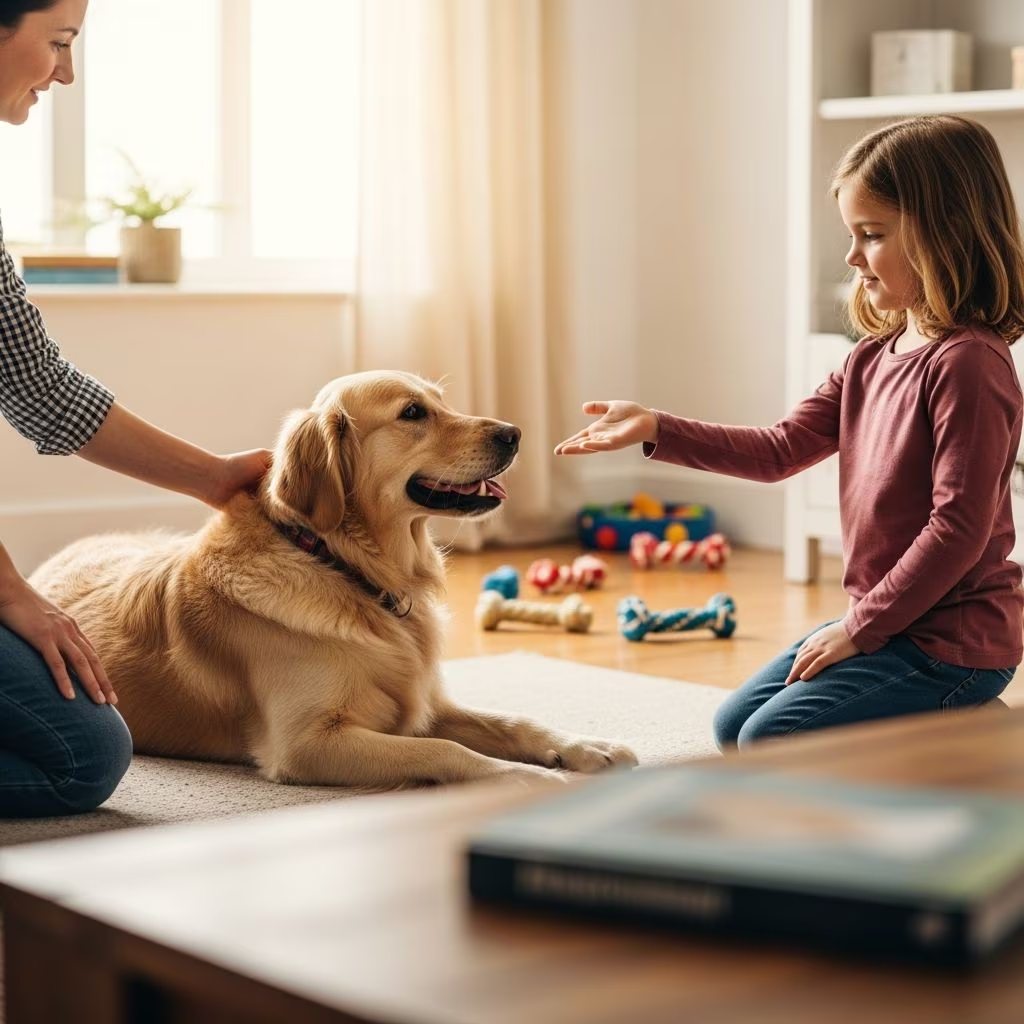
How to Prevent Dog Biting Children: Essential Safety Guide
Dog bites are a significant concern for families with children. Each year, approximately 4.5 million people are bitten by dogs in the United States, and children are disproportionately affected by these incidents. Children are more likely to suffer serious injuries from dog bites, particularly to vulnerable areas such as the head, face, and neck, often requiring medical attention. Understanding how to prevent dog bites is crucial for protecting your children while fostering positive relationships between kids and canine companions.
Understanding the Scope of Dog Bite Incidents
According to the U.S. Center for Disease Control, approximately 4.7 million people are bitten by dogs annually, with about 800,000 cases requiring medical intervention. Alarmingly, roughly half of all dog bite victims are children under twelve years old, and children between five and nine years of age face the greatest risk. What many parents don’t realize is that most dog bites occur with dogs that children already know, whether they are family pets or dogs belonging to friends and neighbors.
Homes with multiple dogs report higher incidence rates of bites than single-dog households. However, the encouraging news is that many bites are entirely avoidable through education, supervision, and understanding canine behavior. By learning to read a dog’s body language and teaching children appropriate interaction skills, families can significantly reduce the likelihood of bite incidents.
The Importance of Constant Supervision
One of the most critical prevention strategies is maintaining constant supervision when children and dogs interact. This rule applies regardless of how well you know the dog or how gentle it seems. Never leave infants, babies, or children under six years old alone with a dog, even if it’s your own family pet. Any dog, regardless of breed or temperament, has the potential to bite if provoked, frightened, or uncomfortable.
Supervision becomes increasingly important during specific life stages. From birth to six months, interactions should be minimal and quiet, with no period of unsupervised time. Between six months and one year, keep pet food and feeding areas away from crawling and toddling children, as they may grab at ears, tails, or other body parts, triggering defensive reactions from the dog.
Teaching Children Safe Dog Interaction
How to Approach Dogs Safely
Educating children about proper dog interaction is fundamental to bite prevention. One essential rule is teaching children to always ask the dog’s owner before petting any dog. If the owner grants permission, the dog should be allowed to sniff the child first before any petting occurs. Children should pet only the dog’s body, avoiding sensitive areas like the face and tail. Additionally, children should maintain a calm demeanor and avoid making direct eye contact, as these actions can make dogs feel threatened.
Dogs to Avoid
Children must learn to identify and avoid potentially dangerous situations with dogs. Key rules include:
- Never approach a strange dog that is not on a leash or without explicit permission from the owner
- Avoid dogs that are displaying signs of aggression, such as growling or barking
- Stay away from dogs who are loose, behind a fence, or tied up
- Do not interact with dogs belonging to “friendly strangers” without adult supervision and approval
Recognizing High-Risk Situations
Certain situations dramatically increase the likelihood of a dog bite. Never allow children to bother a dog that is sleeping, eating, caring for puppies, or chewing a toy or bone. Dogs in these situations are more likely to respond aggressively, even toward people they know well and love. Children should understand that a resting or occupied dog needs space and should not be disturbed under any circumstances.
Understanding Canine Body Language
Learning to read a dog’s body language is a critical first step in preventing injuries. Dogs communicate through various signals and clues that warn humans about their emotional state. When children understand these warning signs, they can recognize when a dog is feeling anxious, afraid, threatened, or aggressive, and they can take appropriate action by giving the dog space.
Common Warning Signs
Dogs may bite for various reasons, including fear, illness, pain, protectiveness, control issues, high prey drive, or simply because they’re tired of being bothered and their warnings are being ignored. Signs that a bite might occur include:
- Stiffness in the dog’s body
- Raised hackles (hair standing up on the back and neck)
- Pinned back ears
- Intense staring or whale eye (white showing around the eyes)
- Bared teeth or snarling
- Growling or barking
- Tail tucking or rigid tail position
- Lip licking or yawning in non-eating contexts
If you notice any of these signs in your dog when interacting with children, intervene immediately and give your dog space to calm down.
Avoiding Rough Play and Overstimulation
Children should maintain calm behavior around dogs and avoid rough play at all times. Never allow children to engage in games that might excite or frustrate the dog, such as tug-of-war, wrestling, or chasing games. These activities can blur the line between play and aggression, leading to unexpected bites.
Parents should teach children that dogs are not toys. Hugging, climbing on, or handling dogs roughly can stress animals and provoke defensive reactions. Instead, encourage gentle interactions where children treat dogs with respect and allow the dog to control the interaction.
What to Do If a Dog Approaches
Despite best efforts to avoid dangerous situations, sometimes unknown or loose dogs may approach children. Teaching children the correct response is vital for their safety. If an unfamiliar dog approaches, children should:
- Stay calm and quiet
- Avoid eye contact with the dog
- Stand still and straight, like a tree
- Stare at their feet
- Never run or scream
- Back away slowly if the dog loses interest
This strategy, known as the “tree” technique, helps signal to the dog that the child is not a threat. Often, the dog will realize after a few sniffs that the child poses no danger and will leave. While this doesn’t guarantee an attack won’t occur, it significantly reduces the likelihood of an aggressive encounter.
Training and Socialization
In addition to teaching children safe practices, training your own dog to interact appropriately with children is equally important. Proper socialization from puppyhood helps dogs become comfortable with the presence of children and teaches them appropriate ways to interact. Dogs should learn commands like “leave it,” “sit,” and “stay,” which can be used to manage their behavior in situations with children.
A well-trained dog that has been exposed to children in positive, controlled environments is much less likely to bite. Consider enrolling your dog in obedience classes and exposing them to children in supervised settings to build positive associations.
What to Do If a Dog Bite Occurs
Despite all precautions, dog bites may still happen. If your child is bitten, take immediate action:
- Assess the severity of the bite. If it’s severe, call 911 or go to an emergency department immediately
- Immediately wash the wound with soap and water to remove animal saliva and reduce infection risk
- Call your pediatrician even for minor bites, as they may require antibiotics, a tetanus shot, or rabies vaccination
- Ask the dog’s owner for proof of rabies vaccination
- Seek medical attention promptly, as animal saliva contains bacteria that can cause serious infections
Medical professionals typically treat dog bites with thorough cleansing and may prescribe antibiotics and vaccines to prevent infection and rabies exposure.
Frequently Asked Questions
Q: At what age can children safely pet dogs without constant supervision?
A: Children under six years old should never be left alone with a dog. For children over six, supervision should still be maintained, with strict guidelines about how to interact with dogs and which situations to avoid.
Q: Can certain dog breeds be trained not to bite?
A: While proper training and socialization help all dogs, any dog breed has the potential to bite if provoked, frightened, or in pain. The key is proper supervision, training, and teaching children appropriate behavior, regardless of breed.
Q: What should I do if my child is afraid of dogs?
A: Work with your child to gradually build confidence through exposure to calm, well-trained dogs in controlled environments. Never force interaction, and allow your child to set the pace for building relationships with dogs.
Q: Is it safe to leave my child alone with a family pet?
A: No. You should never leave children under six alone with any dog, including family pets. Even well-behaved, known dogs can bite if startled, in pain, or overstimulated.
Q: How can I tell if my dog is uncomfortable with children?
A: Watch for warning signs like stiffness, tail tucking, whale eye, ears back, growling, or moving away from children. If you notice these signs, keep your dog and children separated and consult a professional dog trainer or behaviorist.
References
- Tips to Prevent Your Child From a Dog Bite — The Children’s Trust. 2024. https://www.thechildrenstrust.org/news/parenting-our-children/tips-to-prevent-your-child-from-a-dog-bite/
- Dog Bite Prevention — ASPCApro. 2024. https://www.aspcapro.org/resource-library/dog-bite-prevention
- Dog Bite Prevention Tips: What to Look Out For — ASPCA. 2024. https://www.aspca.org/news/dog-bite-prevention-tips-what-look-out



