

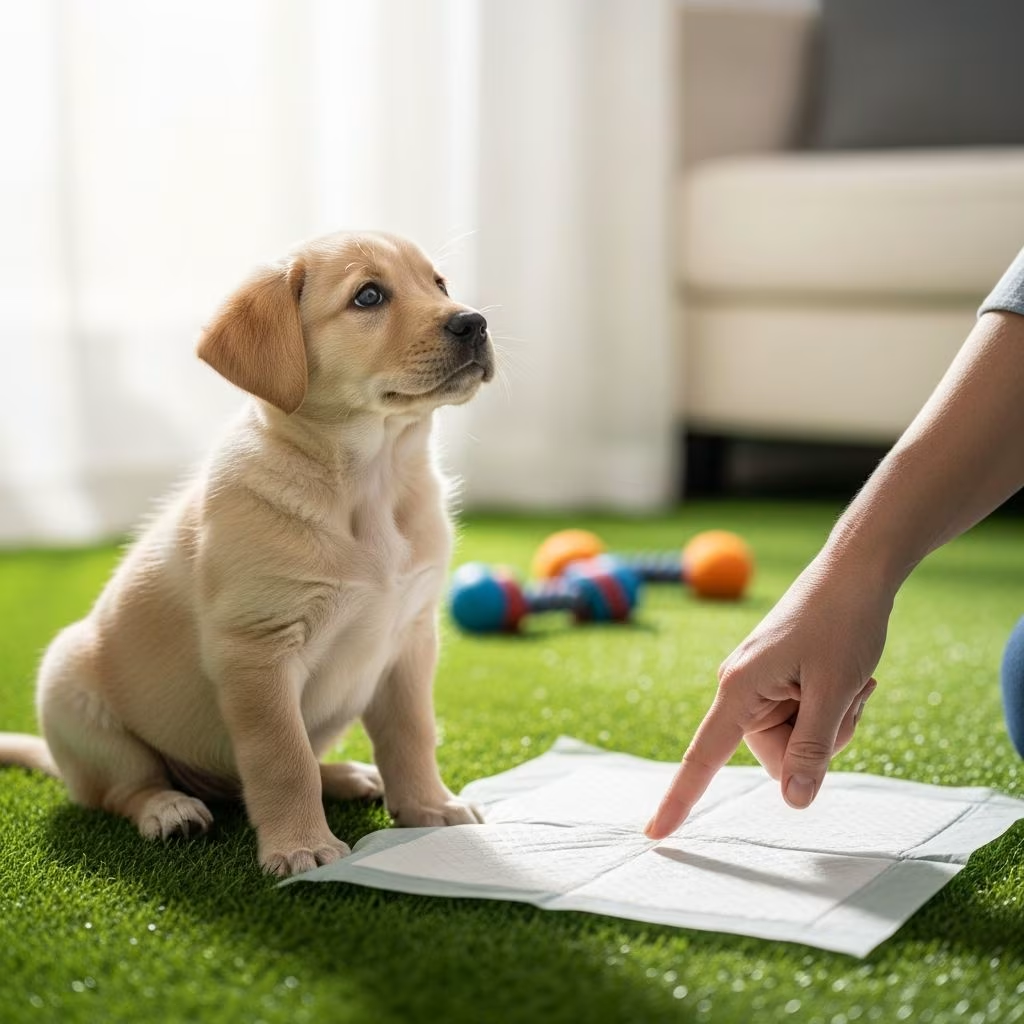
How to Potty Train Your Puppy: A Complete Guide to Success
Potty training is one of the most important responsibilities you’ll undertake as a new puppy owner. It requires patience, consistency, and a solid understanding of your puppy’s needs and behaviors. Whether you’re bringing home a young puppy or adopting an older dog, establishing a reliable potty training routine is essential for a harmonious household. This comprehensive guide will walk you through proven techniques and strategies to help your puppy learn where and when it’s appropriate to eliminate, setting the foundation for a well-behaved companion.
Key Principles of Successful Puppy Potty Training
Before diving into the specific steps, it’s important to understand the fundamental principles that make potty training successful. The most critical elements include maintaining a consistent schedule, using positive reinforcement, providing frequent opportunities to eliminate, and preventing accidents through proper supervision and confinement. When these elements work together, puppies learn quickly and develop reliable bathroom habits.
Step 1: Take Your Puppy Out at Least Once Every 30 Minutes
Frequent potty breaks are the cornerstone of successful puppy potty training. Young puppies have limited bladder control and need opportunities to relieve themselves regularly throughout the day. Taking your puppy outside on leash at least once every 30 minutes when awake is essential during the initial training phase.
Using a leash during potty breaks serves multiple purposes. First, it helps your puppy learn to potty while on leash, which is valuable for future walks and outdoor bathroom trips. Second, the leash prevents your puppy from becoming distracted by the surrounding environment. Without a leash, puppies often get sidetracked by interesting sights, sounds, and smells, which can delay or prevent them from focusing on the task at hand—finding an appropriate place to eliminate.
Establish a regular schedule that includes potty breaks first thing in the morning, last thing at night, after meals, after playtime, after naps, and after time spent in their crate. By maintaining this predictable routine, your puppy’s body learns when to expect bathroom opportunities, making the training process more efficient.
Step 2: Stand Still in a Designated Potty Spot
Once you’re outside with your puppy, choose a specific designated potty area and stand still in that location. Remaining motionless serves an important purpose: it keeps your puppy in a confined enough space that they’ll become bored with exploring relatively quickly and redirect their focus toward eliminating. When you’re moving around or playing, your puppy’s attention is divided, and they’re less likely to concentrate on pottying.
Additionally, maintaining silence while your puppy does their business is crucial. By keeping quiet, you help your puppy focus on elimination rather than engaging with you. Talking, playing, or interacting with your puppy during this time can distract them from their primary objective. Simply stand calmly and quietly for approximately five minutes, allowing your puppy the space and peace they need to go to the bathroom.
Step 3: Reward Immediately With Positive Reinforcement
The moment your puppy eliminates outside, provide immediate positive reinforcement. This is absolutely critical for successful potty training. Offer enthusiastic praise, give them a small treat, and allow them extra playtime or supervised indoor time as a reward. The immediacy of the reward is key—your puppy must make the connection between eliminating outside and receiving positive consequences.
Positive reinforcement works because puppies naturally repeat behaviors that result in rewarding outcomes. By consistently rewarding outdoor elimination, you’re reinforcing the desired behavior and making it more likely your puppy will want to repeat it in the future. The reward doesn’t need to be elaborate; simple praise and a small treat are often highly effective.
Step 4: Manage Accidents Appropriately
Accidents will happen during the potty training process, and it’s crucial that you respond correctly when they do. Never punish your puppy for having an accident indoors. Punishment creates fear and confusion and can actually slow down the training process. Puppies don’t eliminate indoors out of spite or defiance; they simply haven’t yet learned bladder control or where they’re supposed to go.
If you catch your puppy in the act of having an accident indoors, calmly interrupt them, take them outside immediately, and reward them if they finish outside. If you discover an accident after the fact, simply clean it up thoroughly with an enzymatic cleaner to remove all scent markers, which can encourage your puppy to use that spot again. Focus your energy on reinforcing desired behaviors rather than punishing mistakes.
Step 5: Use Confinement Tools Strategically
Crate training and using puppy pens are invaluable tools during potty training. Dogs naturally avoid soiling their sleeping areas, so using a properly sized crate helps prevent accidents when you can’t actively supervise your puppy. When you can’t watch your puppy, confine them to their crate for short periods. After removing them from the crate, take them directly outside to their designated potty spot.
Puppy pens provide a larger confined space that allows your puppy more room to move while still limiting their access to the entire house. This controlled environment helps prevent accidents and keeps your puppy safe. Combining confinement tools with frequent potty breaks significantly accelerates the training process.
Step 6: Repeat These Steps Throughout the Day
Consistency is absolutely essential for potty training success. Give your puppy numerous chances to eliminate in appropriate potty areas, and consistently use positive reinforcement each time they do. The more times your puppy successfully goes to the bathroom outside and receives a reward, the faster they’ll learn the routine. Conversely, the fewer accidents your puppy has indoors, the quicker they’ll develop reliable bathroom habits.
Think of potty training as a learning process where repetition strengthens the connection between eliminating outside and positive outcomes. Each successful potty trip reinforces the desired behavior, while preventing accidents through proper supervision ensures your puppy doesn’t practice the unwanted behavior of eliminating indoors.
Keep Track of Your Puppy’s Potty Habits
Creating a house-training chart or keeping notes about your puppy’s bathroom habits is an incredibly valuable practice. Record when and where your puppy potties, along with any accidents that occur. Over time, this information reveals patterns that help you understand which times of day your puppy is most likely to need a bathroom break, where accidents tend to happen, and when your puppy might not need a potty break.
These insights allow you to refine your training approach and gradually reduce the frequency of potty breaks as your puppy demonstrates improved bladder control. Your chart becomes a tool that helps you optimize your schedule and identify any potential issues early on. Many puppies show patterns like needing to go 20-30 minutes after eating or immediately upon waking, and tracking these patterns helps you anticipate needs before accidents occur.
Be Patient and Celebrate Small Wins
Potty training requires patience, and every puppy learns at their own pace. Some puppies seem to grasp the concept quickly, while others need more time and repetition. Avoid becoming frustrated or discouraged if progress seems slow. Celebrate small victories along the way—successfully completing a potty break, going longer without accidents, or gradually sleeping through the night without needing an indoor bathroom trip.
Remember that consistency and patience from you as the pet parent significantly influence how quickly your puppy learns. Maintaining a regular routine, supervising closely, and providing consistent positive reinforcement will help your puppy understand what’s expected and reduce stress for both of you during the training process.
How Long Does It Take to Potty Train a Puppy?
There’s no universally “normal” timeline for potty training because every puppy is different, and the results depend heavily on how consistent you are with training. Some puppies grasp the concept and become reliably housetrained within one to two weeks, while others may need several months to achieve full reliability. Factors that influence training duration include the puppy’s age, breed, individual temperament, and your dedication to maintaining a consistent routine.
Most puppies show significant progress within the first few weeks of consistent training, but complete reliability—meaning zero accidents for an extended period—often takes longer. Once your puppy has achieved a “clean” month with zero accidents, you’ve reached an important milestone indicating successful potty training.
Can You Potty Train a Puppy in Seven Days?
The short answer is: probably not completely. While seven days is an impressive timeframe, it’s generally too short to expect a puppy to be fully and reliably housetrained. One week is simply not enough time for most puppies to develop consistent bladder control and fully internalize the bathroom routine, especially if they’re young.
However, you can make substantial progress in seven days with intense, consistent effort. By taking your puppy out frequently, providing numerous opportunities to eliminate in appropriate areas, offering consistent positive reinforcement, and maintaining meticulous records, you can establish a strong foundation and help your puppy develop initial understanding of the expected behavior. Think of seven days as the beginning of the training journey rather than the complete destination.
Puppy Potty Training Quick Reference
Daily Routine Essentials:
– Take your puppy to a potty area on leash at least once every 30 minutes while awake; one to two outings are sufficient at night for most puppies- Stand still and quietly watch for five minutes to see if elimination occurs- Praise and immediately offer a treat as soon as your puppy eliminates outside- If no elimination occurs, return your puppy to an indoor confinement area for 10-20 minutes, then take them outside again- After successful elimination, allow 10-15 minutes of playtime outdoors or carefully supervised indoor time- Repeat these steps consistently throughout the day
Training Your Dog to Go Potty on Command
Beyond basic potty training, teaching your puppy to eliminate on command provides additional control and convenience. Use a consistent word cue such as “go potty” or “hurry up” right before your puppy eliminates. With consistent repetition over many bathroom trips, your puppy will eventually associate the phrase with the act of eliminating.
This training technique is particularly useful during inclement weather or when you need your puppy to go to the bathroom within a specific timeframe. The command works best when you use it during times when your puppy naturally needs to eliminate, such as 20-30 minutes after eating or right after waking from a nap. Once your puppy reliably responds to the command, you have a powerful tool for managing their bathroom schedule.
Potty Pad Training as an Alternative
For situations where outdoor potty breaks aren’t always possible, potty pad training offers a viable alternative. To train your puppy to use pee pads, guide them onto the pad using their leash and use your potty command while they’re on the pad. With consistent training and multiple repetitions, puppies can learn to use pee pads reliably within about a week, though consistency is absolutely key.
If you’re training with pads positioned outside, you can gradually move the pad indoors as your puppy becomes more reliable. The same principles apply: frequent opportunities, positive reinforcement, and consistency. However, be aware that potty pad training introduces an intermediate step that some trainers feel may complicate the transition to outdoor-only toileting later.
Addressing Potty Training Regression
Sometimes puppies who were progressing well in potty training suddenly regress and have more accidents. If this happens, review your house-training chart and consider what might have changed. Common causes of regression include reduced frequency of potty breaks, changes to your puppy’s feeding schedule, disruptions to their routine, moving to a new home, or stressful events.
To address regression, return to more frequent potty breaks, reinforce your routine, and ensure you’re maintaining consistent positive reinforcement. If regression persists or you suspect a medical issue, consult your veterinarian to rule out urinary tract infections or other health concerns that could interfere with training progress.
Creating Your Puppy’s Daily Schedule
Dogs thrive on predictability, so establishing a detailed daily schedule significantly supports potty training success. Your schedule should include specific times for meals, potty trips, playtime, training sessions, crate time, and wind-down periods. By following this schedule consistently, your puppy learns what to expect and when, making the entire process more manageable for both of you.
Include potty breaks after waking, before and after meals, after playtime, before bedtime, and periodically throughout the day. The more predictable your puppy’s day is, the more reliably they’ll develop regular bathroom habits.
Frequently Asked Questions
Q: How many times a day should I take my puppy outside for potty breaks?
A: Young puppies need to go outside at least every 30 minutes while awake. As they grow and develop better bladder control, you can gradually reduce frequency. A general rule is that a puppy can hold their bladder for approximately one hour per month of age, plus one. So a two-month-old puppy can typically hold it for about three hours.
Q: What should I do if my puppy has an accident in the house?
A: Never punish your puppy for accidents. Instead, calmly clean the area thoroughly with an enzymatic cleaner to remove scent markers. If you catch them in the act, gently interrupt and take them outside immediately. Focus on rewarding outdoor elimination rather than punishing indoor accidents.
Q: Is crate training necessary for potty training?
A: While not absolutely required, crate training is highly beneficial for potty training. Dogs naturally avoid soiling their sleeping areas, making a properly sized crate an effective tool for preventing accidents when you can’t actively supervise your puppy.
Q: How do I know when my puppy is fully potty trained?
A: Most trainers consider a puppy fully housetrained after achieving a “clean” month with zero accidents. This typically indicates that your puppy has developed reliable bladder control and consistently understands where and when to eliminate.
Q: Can I potty train an older puppy differently than a young puppy?
A: Yes, older puppies often learn more quickly than very young puppies because they have better bladder control. However, the fundamental principles remain the same: frequent potty breaks (though perhaps less frequent than for young puppies), positive reinforcement, consistency, and proper supervision. Most older puppies can become housetrained within a couple of weeks with dedicated effort.
Q: What’s the best treat to use for potty training rewards?
A: Use small, low-calorie treats that your puppy loves. The treat should be quick to consume so your puppy associates the elimination with the reward. Some puppies are just as motivated by enthusiastic praise and playtime as they are by food treats.
References
- How To Potty Train a Puppy — Chewy. 2025. https://www.chewy.com/education/dog/new-dog/how-to-potty-train-your-dog-in-7-days
- How to Potty Pad Train Your Dog: A Step-By-Step Guide — Chewy. 2025. https://www.chewy.com/education/dog/training-and-behavior/3-steps-potty-pad-training-dog
- How to Potty Train an Older Dog — Chewy. 2025. https://www.chewy.com/education/dog/training-and-behavior/how-to-potty-train-an-older-dog
- Puppy Training 101: Your Guide to Training Your Puppy — Chewy. 2025. https://www.chewy.com/education/dog/new-dog/basic-puppy-training
- How to Crate Train Your Puppy — Chewy. 2025. https://www.chewy.com/education/dog/new-dog/how-to-crate-train-a-puppy-a-step-by-step-guide-from-an-expert



