

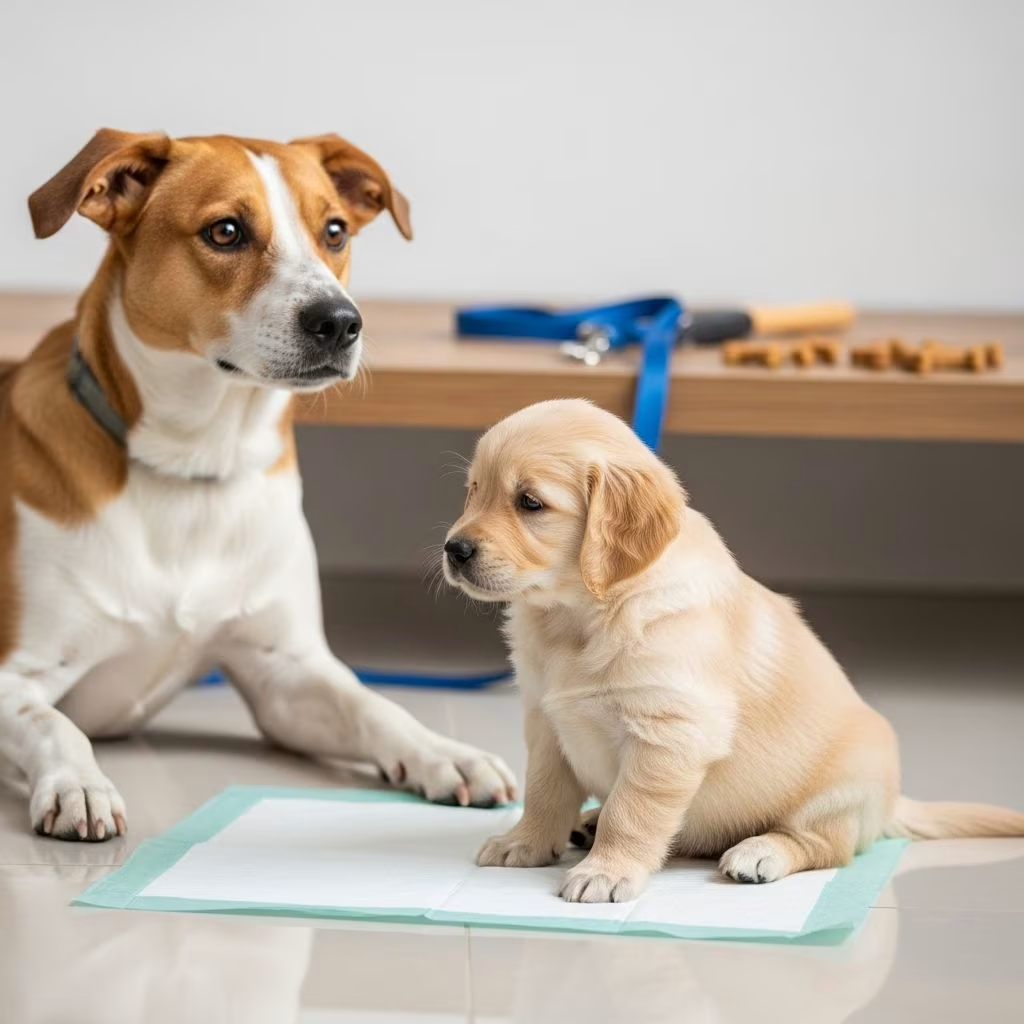
How to Potty Train a Puppy or Dog
Bringing a new puppy or adult dog home is an exciting experience, but it often comes with the responsibility of establishing proper bathroom habits. Potty training, also known as house-training, is the process of teaching your dog where it’s appropriate to pee and poop. While this task can seem daunting, house-training a dog can take anywhere from days to weeks and will progress much more smoothly when you establish a predictable routine. With patience, consistency, and the right approach, you can successfully teach your new companion the proper place to eliminate.
Understanding the Basics of House-Training
House-training is fundamentally about establishing boundaries and teaching your dog acceptable elimination habits. Whether you’re working with a young puppy or an adult dog, the principles remain consistent. The key to success lies in creating an environment where your dog understands expectations, receives clear communication, and is rewarded for appropriate behavior. Before you begin, understand that every dog is unique—some may catch on in a few days, while others may require several weeks of consistent training.
Supervise Your Puppy or Dog
Supervision is one of the most critical components of successful potty training. For the first couple of weeks after bringing a new dog home, regardless of age, constant supervision is essential when your dog has access to the house. During times when you cannot actively monitor your dog, it’s wise to restrict their movement using containment strategies.
Creating a Safe Containment Space
You can restrict your dog’s movement by using a crate or confining them to a small, easy-to-clean room such as a bathroom equipped with a child gate in the doorway. This designated space should never become a place of punishment or discomfort. Instead, transform it into a comfortable den where your dog feels safe and secure. Include your dog’s bed, fresh water, and appropriate chew toys to create a welcoming environment. Feed your dog in this space to establish it as their personal sanctuary. This positive association is crucial because dogs naturally avoid eliminating in areas where they sleep and eat.
Preventing Escape and Accidents
When confining your dog, ensure that nothing negative happens in this space and keep children out of the area. The containment zone should be just large enough for your dog to move around comfortably but not so large that they can eliminate in one corner and sleep in another. This natural dog instinct to keep their sleeping area clean will work in your favor during the training process.
Set Up a House-Training Schedule
A predictable daily schedule is fundamental to successful potty training. Dogs are creatures of habit and thrive on routine, so establishing consistent times for outdoor bathroom breaks significantly improves training outcomes.
Daily Potty Break Schedule
Walk your dog on leash to the designated elimination spot at these key times throughout the day:
- Immediately after waking up in the morning
- After each meal
- After naps or rest periods
- After playtime or exercise
- Every couple of hours in between
- One final time before bedtime
Making Potty Breaks Purposeful
To reinforce that outdoor trips have a specific purpose, avoid playing with your dog during these bathroom breaks. Instead, keep the outing focused and calm. Use a consistent word or phrase such as “do your business” to remind your dog of their duty. This verbal cue becomes a powerful signal that it’s time to eliminate. As soon as your dog pees or poops, immediately provide enthusiastic praise and a treat as a reward. This positive reinforcement creates a strong association between appropriate elimination and receiving rewards.
Be Mindful When Potty Training Puppies
Puppies present unique challenges during house-training because their physical development directly impacts their ability to control their bladder and bowels. Understanding these developmental differences is crucial for setting realistic expectations and avoiding frustration.
Bladder Control Development
Puppies cannot hold their bladders and bowels for more than a few hours at a time. Even the most intelligent and well-intentioned puppy must wait until their muscles develop before they can exercise appropriate bladder and bowel control. Young puppies typically need to eliminate every two to three hours, making frequent outdoor breaks necessary. During the first 12 weeks of life, puppies are still developing the muscles required to hold their urine, so you’ll need to take them out much more frequently than adult dogs.
Managing Your Schedule
If you must be away from home for more than two or three hours while potty training a puppy, arrange for someone to help by walking the puppy during your absence. This might be a family member, friend, or professional pet sitter. Without these midday breaks, your puppy will be forced to have accidents, which can actually prolong the training process.
Indoor Elimination Considerations
Some owners choose to train puppies to eliminate on paper or in a litter box initially. If you select this approach, the space where the puppy is contained must be large enough to accommodate both a sleeping area and a separate elimination spot, since dogs naturally avoid eliminating where they sleep. However, it’s important to understand that a puppy trained to eliminate on paper or in a litter box might develop a lifelong surface preference. As an adult, the dog may continue to eliminate on paper if it’s available in the house. Additionally, allowing a puppy to eliminate indoors can significantly prolong the process of teaching them to eliminate outdoors exclusively.
Cleaning Up Accidents Properly
Accidents are a normal part of the house-training process, especially with puppies. How you clean these accidents is just as important as the training itself.
Using Enzymatic Cleaners
When accidents occur, always use an enzymatic cleaner rather than standard household cleaners. Urine contains pheromones, which are chemical markers that essentially signal to your dog, “Go potty here.” Only enzymatic cleaners break down these pheromones at a molecular level, preventing your dog from detecting the scent and returning to the same spot to eliminate again. Regular cleaning products simply mask the odor without eliminating the pheromones, which means your dog can still smell the marker even if you cannot.
Understanding the Difference Between Marking and Accidents
It’s important to distinguish between a dog who has accidents due to incomplete house-training and a dog who is marking territory. Dogs who mark their territory are typically older, unneutered males who are trying to establish dominance or claim space. Early neutering will significantly reduce a dog’s inclination to mark surfaces. Additionally, if a dog who is already house-trained starts having accidents after a period of success, consult with your veterinarian because there might be an underlying medical cause such as a urinary tract infection, diabetes, or other health issues.
Using Positive Reinforcement Effectively
Positive reinforcement is the most effective method for teaching your puppy where to eliminate. When your puppy successfully goes to the bathroom in the appropriate place, provide immediate praise and treat rewards. This creates a strong positive association with the correct behavior. Conversely, never punish your puppy for accidents. Punishment-based methods are ineffective and can actually damage your relationship with your dog. If you scold your puppy after finding an accident, the puppy only learns to fear you and may become confused about what behavior you’re trying to correct.
Essential Equipment for Potty Training Success
Before bringing your new puppy home, gather the necessary supplies to set yourself up for success:
- A large dog crate appropriate for your dog’s size
- Baby gates to block off unsupervised areas
- Paper towels for cleanup
- Enzymatic cleaner for thorough accident cleanup
- High-value treats for positive reinforcement
- A leash for controlled outdoor trips
- Your dog’s bed and water bowl for the containment space
Creating a Long-Term Routine
As your dog progresses through house-training and begins to show consistent success, you can gradually adjust the schedule to align with your own daily routine. However, maintain consistency as much as possible—dogs thrive on predictability. Most puppies can be reliably house-trained within a few weeks to a few months, though individual timelines vary based on the puppy’s age, breed, temperament, and your consistency with training.
Frequently Asked Questions
Q: How long does potty training typically take?
A: House-training can take anywhere from a few days to several weeks, depending on the individual dog’s age, temperament, and your consistency with the training routine. Puppies may take longer than adult dogs because they’re still developing bladder control.
Q: What should I do if my puppy has an accident in the house?
A: Clean up the accident thoroughly with an enzymatic cleaner to remove pheromones. Never punish your puppy, as this creates fear and confusion. Simply continue with your regular training schedule and reinforce positive outdoor behavior.
Q: Can I use a crate for potty training?
A: Yes, crate training is an excellent tool for potty training. Dogs naturally avoid eliminating where they sleep, so a properly-sized crate can help your puppy learn to hold their bladder until they’re taken outside.
Q: How often should I take my puppy outside?
A: Puppies should go outside after meals, after naps, after playtime, and every couple of hours in between. Most puppies need outdoor breaks every 2-3 hours, with one final break before bedtime.
Q: What if my previously house-trained dog starts having accidents?
A: If an already house-trained dog suddenly has accidents, consult your veterinarian to rule out medical issues such as urinary tract infections, diabetes, or other health conditions.
Q: Should I use punishment if my dog has an accident?
A: No, punishment is ineffective and counterproductive. Dogs cannot connect punishment with past actions, and it only creates fear. Instead, focus on positive reinforcement when your dog eliminates in the correct location.
References
- How to Potty Train a Puppy or Dog — Best Friends Animal Society. 2025-11-28. https://bestfriends.org/pet-care-resources/how-potty-train-puppy-or-dog
- Puppy Potty Training — Best Friends Animal Society. 2025-11-28. https://bestfriends.org/stories/features/puppy-potty-training
- Housetraining Your New Puppy — The Rescue Crew. 2025-11-28. https://www.rescuecrew.org/housetraining-your-new-puppy.html
- How to Crate Train a Puppy or Dog — Best Friends Animal Society. 2025-11-28. https://bestfriends.org/pet-care-resources/how-crate-train-puppy-or-dog
- Puppy 101: A Quick-Start Guide to Caring for Your New Puppy — Best Friends Pet Care. 2025-11-28. https://bestfriendspetcare.com/puppy-101-quick-start-guide-caring-new-puppy/



