

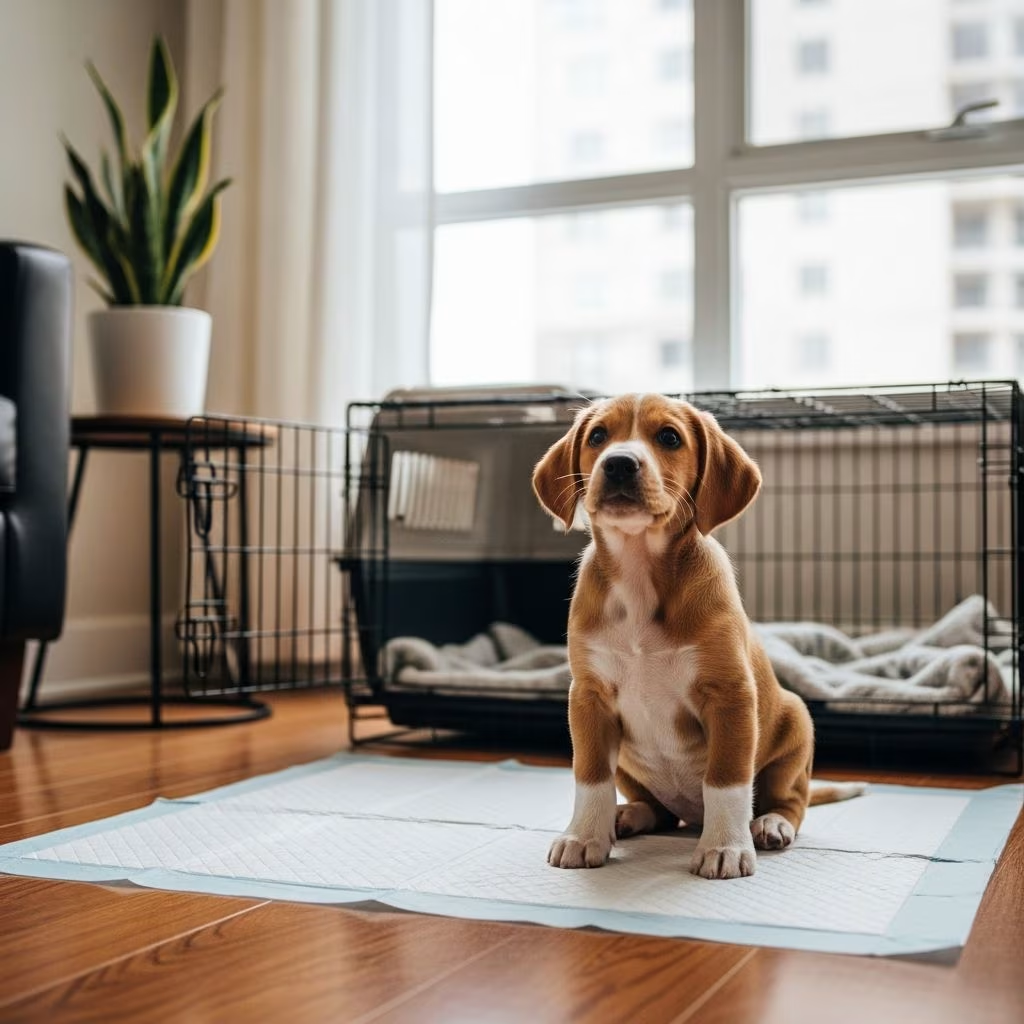
Apartment living presents unique challenges for potty training puppies due to limited space, shared areas, and the time required to reach outdoor spots. However, with **consistency**, **positive reinforcement**, and adapted strategies like puppy pads or crate training, you can successfully train your puppy to develop reliable indoor or outdoor habits.
The key is establishing a routine that aligns with your puppy’s natural elimination schedule—after eating, drinking, playing, or waking—while using tools suited to apartment constraints. Puppies under 12 weeks can typically hold their bladder for only 1-2 hours, making frequent monitoring essential.
Why Potty Training in an Apartment is Different
In houses with yards, puppies learn quickly by going outside freely, but apartments often involve elevators, stairs, hallways, and neighbors, delaying access by crucial minutes. This can lead to accidents if you miss subtle cues like sniffing or circling.
- **Limited outdoor access**: Travel time exceeds young puppies’ bladder capacity, frustrating both pet and owner.
- **Space constraints**: Small floor plans require designated indoor areas to prevent messes in living spaces.
- **Neighbor considerations**: Odors and noise demand discreet, effective methods to maintain harmony.
- **Distractions**: Hallways and elevators can overwhelm puppies, breaking focus on the task.
Indoor solutions like puppy pads bridge the gap, allowing gradual transition to outdoor habits as puppies mature.
Step-by-Step Guide to Potty Training Your Apartment Puppy
Success hinges on a structured approach: supervision, scheduling, and rewards. Start young—ideally at 8 weeks—and involve all household members for uniformity.
1. Set Up a Designated Potty Area
Choose a consistent, accessible spot away from food, beds, and high-traffic zones, like a balcony corner, bathroom, or laundry area. Use puppy pads, artificial turf, or a smart indoor toilet for easy cleanup.
- Place pads or turf on waterproof mats to contain messes.
- For balconies, secure with gates to prevent falls.
- Smart devices notify you of use for immediate praise.
Introduce the area by walking your puppy there on a leash, encouraging sniffing without forcing.
2. Create a Potty Schedule
Puppies eliminate every 30-60 minutes when awake, plus after key events. Feed on a schedule (3-4 meals/day) to predict needs.
| Time/Event | Action |
|---|---|
| Every 1-2 hours when awake | Take to potty area |
| After meals/drinks | Immediate potty break (10-15 min wait) |
| After play/naps | Direct to area |
| Before bed | Last break, limit water evening |
| Overnight (8-12 weeks) | Crate; hold 4-6 hours max |
Stick to this rigidly for 2-4 weeks until patterns emerge.
3. Use Crate Training
Dogs avoid soiling sleeping areas, so crates mimic dens. Size for standing/turning only—no room for accidents.
- Introduce gradually with treats/toys for positivity.
- Crate when unsupervised, leaving, or sleeping.
- Limit crate time to age in months +1 (e.g., 3 months = 4 hours max).
Combine with tethers or baby gates for supervised freedom.
4. Puppy Pad Training
Ideal for apartments: pads absorb urine, mimicking grass scent.
- Select a quiet, easy-access spot; never relocate once started.
- Show puppy the pad; walk them on it to acclimate texture (no treats on pad).
- Carry/lead puppy there at scheduled times or on cues (sniffing, whining).
- Praise/treat 3-5 steps away after success to avoid food-pad association.
- Gradually reduce pads, moving closer to door for outdoor transition.
Change soiled pads promptly; use holders for stability.
5. Leash Training for Outdoor Transitions
Once pads are mastered (around 12-16 weeks), introduce leashed outdoor trips.
- Use elevator/stairs calmly; reward focus.
- Designate a consistent outdoor spot (e.g., building lawn).
- Say cue like “potty” en route; jackpot reward outside.
6. Positive Reinforcement Techniques
Reward desired behavior instantly—no punishment, as it causes fear.
- **Verbal praise**: Excited “Good potty!”
- **Treats**: High-value, given away from spot.
- **Play**: Short tug session post-success.
- Ignore accidents; clean with enzymatic cleaners to erase scents.
Track progress in a journal: note times, successes, cues.
Common Challenges and Solutions
Apartment training isn’t linear; setbacks happen.
| Challenge | Solution |
|---|---|
| Accidents despite schedule | Increase supervision; revert to constant tethering. |
| Fear of elevator/stairs | Desensitize with short, treat-rewarded trips. |
| Pad chewing/missing | Use covered holders; stand puppy on pad longer. |
| Regression (teething, illness) | Reset schedule; vet check if persistent. |
| Neighbor complaints | Communicate; use odor-neutralizing products. |
Tools and Products for Apartment Potty Training
- Puppy pads: Disposable/absorbent; scented for attraction.
- Artificial grass: Washable, realistic texture.
- Smart potties: Self-cleaning, app alerts.
- Crates/ex-pens: Wire/plastic for safety/comfort.
- Enzymatic cleaners: Nature’s Miracle brand removes pheromones.
- Leashes/tethers: 4-6 ft for control.
Tips for Long-Term Success
- Supervise 100%: No free roam until 6 months reliable.
- Everyone consistent: Share schedule with walkers/family.
- Age-appropriate expectations: Full training by 4-6 months.
- Health check: UTIs mimic poor training—vet if issues.
- Transition fully outdoors by 6 months for health/boundaries.
Patience pays: Most puppies master it in 4-6 months with diligence.
Frequently Asked Questions (FAQs)
Q: How long does it take to potty train an apartment puppy?
A: Typically 4-6 months with consistency; younger puppies (8-12 weeks) progress in 2-4 weeks on pads.
Q: Should I use puppy pads or go straight outside?
A: Pads first for apartments, then transition; direct outside risks accidents from delays.
Q: What if my puppy hates the crate?
A: Associate with positives gradually; short sessions, never force. Consult trainer if phobia develops.
Q: Can I punish for accidents?
A: No—causes anxiety, hiding to eliminate. Clean and redirect positively.
Q: How do I handle overnight needs?
A: Crate train; set alarm for 4-6 hour breaks initially, fading as bladder strengthens.
Q: Best for high-rise apartments?
A: Pads or indoor turf initially; desensitize to elevators for outdoor shifts.
References
- How To Potty Train a Puppy in an Apartment — Brilliant Pad. 2023. https://www.brilliantpad.com/blogs/news/challenges-with-doggie-diapers
- How To Potty Train a Puppy in an Apartment — Whole Dog Journal. 2024-01-15. https://www.whole-dog-journal.com/puppies/how-to-potty-train-a-puppy-in-an-apartment/
- How to Potty Train a Puppy: Tips and Techniques — Kinship. 2024. https://www.kinship.com/dog-behavior/potty-train-a-puppy



