

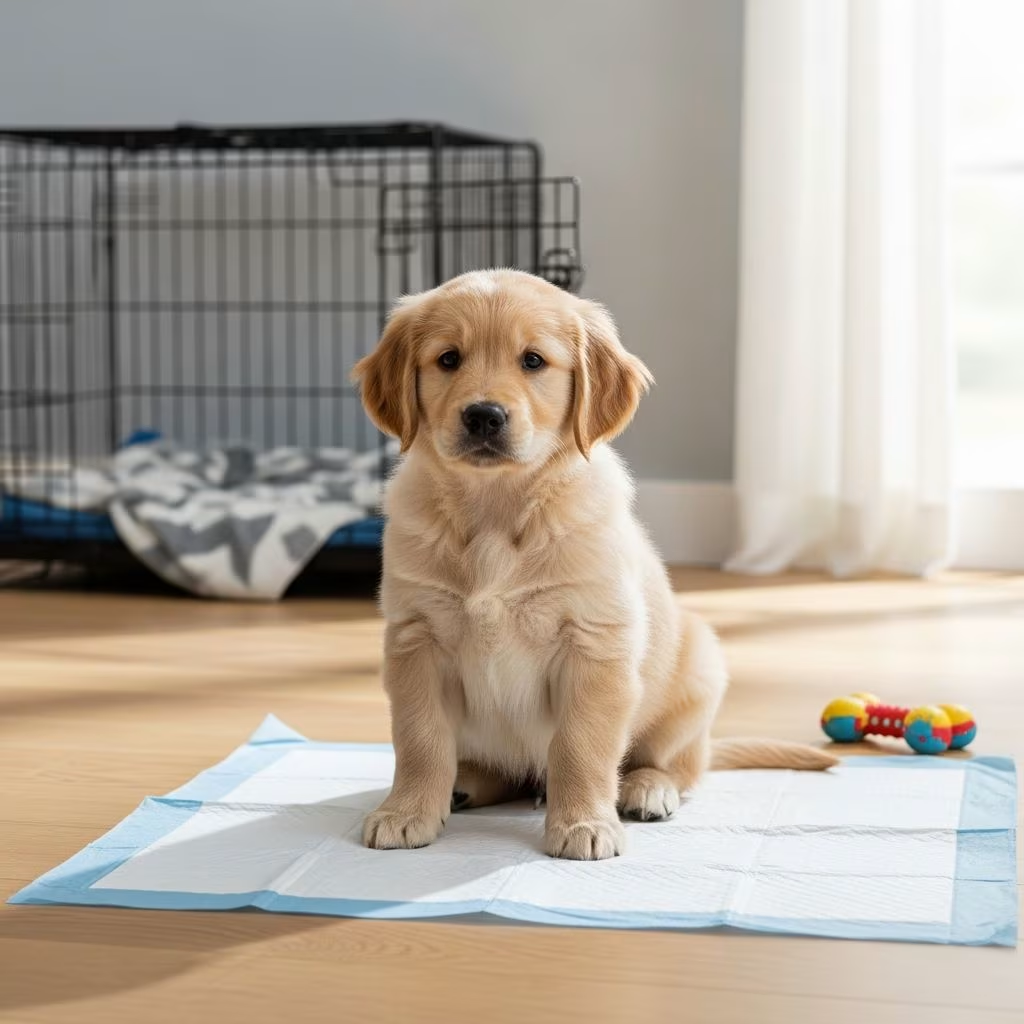
How to Potty Pad Train Your Dog: A Complete Guide
Potty pad training is an invaluable skill for dog owners who want to manage indoor bathroom habits or provide an alternative to outdoor elimination. Whether you have a small breed, a large dog, a young puppy, or a senior companion, potty pad training can be accomplished with patience, consistency, and the right approach. This comprehensive guide will walk you through everything you need to know to successfully train your dog to use pee pads.
Understanding Potty Pad Training Basics
Potty pad training involves teaching your dog to eliminate on designated pads rather than anywhere in your home. This is particularly useful for apartment dwellers, elderly dogs with mobility issues, dogs with medical conditions, or situations where frequent outdoor access isn’t possible. The process requires multiple stages and a commitment to consistency, but most dogs can become pad trained within a week of dedicated training.
The key to successful potty pad training lies in understanding that dogs need clear guidance about where and when to eliminate. Simply placing a pad on the floor and hoping your dog will figure it out rarely works. Instead, you must actively teach your dog through commands, positive reinforcement, and strategic placement of the training pads.
Step 1: Train Your Dog to Go to the Bathroom on Command
The foundation of potty pad training is teaching your dog to eliminate on command. This verbal cue becomes a powerful tool that allows you to direct your dog’s bathroom behavior whenever and wherever needed.
Establishing a Consistent Command
Choose a specific phrase that you’ll use consistently throughout training. Common commands include “Go potty,” “Do your business,” or “Hurry up.” The exact words matter less than consistency—using the same phrase every time helps your dog make the connection between the command and the action.
For dogs who have already completed house training, use your chosen command before they go to the bathroom every time you take them outside for walks or let them out. This reinforces the command in situations where your dog already knows what to do. For puppies new to training, watch for natural times when they’re likely to need elimination—immediately after waking up, after playtime, or shortly after eating (typically within 20-30 minutes).
Building the Command Through Repetition
As Amanda Farah, National Training and Behavior Coordinator at Best Friends Animal Society, explains, dogs truly learn the command when they respond consistently. Initial success means your dog eliminates when you give the cue. True mastery occurs when your dog will even “fake” eliminating when given the command at times they don’t actually need to go. This demonstrates genuine understanding of the command rather than simple coincidence.
Using Positive Reinforcement
Every time your dog responds to the command and eliminates, provide immediate praise and rewards. Positive reinforcement is absolutely critical to potty pad training success. Use enthusiastic verbal praise, treats, or play as rewards. The timing matters—reward your dog immediately after they finish eliminating, not after you’ve returned inside. This immediate feedback strengthens the association between the command, the action, and the reward.
Step 2: Find a Good Potty Spot for the Pee Pad
Location significantly impacts potty pad training success. The right placement helps your dog understand where elimination is appropriate and makes the training process faster and more effective.
Placement for Established Dogs
For dogs who have already completed house training, place the potty pad in areas where your dog typically eliminates. If your dog has a favorite outdoor spot in the yard, observe where they naturally go. If possible, place the pad in a similar location or a space that resembles their preferred potty area. This capitalizes on their existing habits and makes the transition to pad use more intuitive.
Confinement for Puppies
When puppy pad training, confine your dog to a small area containing the potty pad. Use dog gates to section off a hallway or small room, a playpen, or a designated corner of your home. This restricted space serves multiple purposes: it prevents your puppy from eliminating elsewhere in your home, increases the likelihood they’ll use the pad when nature calls, and simplifies supervision and reinforcement of good behavior.
Environmental Considerations
Choose a location with flooring that’s easy to clean in case of accidents during training. Tile, laminate, or vinyl floors are preferable to carpet. Additionally, select a quiet, easily accessible spot where your dog can reach the pad without obstacles. Your dog should feel comfortable using the pad without feeling rushed or pressured.
Avoiding Confusion
Remove anything resembling a pad from the vicinity of the training area. Thin throw rugs, yoga mats, or fabric mats can confuse your dog, making them think any similar texture is an appropriate elimination spot. This simple precaution prevents accidents and mixed signals during training.
Step 3: Introduce the Potty Pad
Proper introduction of the potty pad is crucial. This step determines whether your dog understands the pad’s purpose and accepts it as their designated bathroom area.
The Importance of Leash Training
Always use a leash when initially introducing the potty pad. Many people make the mistake of placing a pad down and hoping their dog will discover and use it independently. This approach rarely works because dogs need clear direction and teaching. A leash gives you the control necessary to physically guide your dog onto the pad and demonstrate the desired behavior.
Guided Introduction Process
Put your dog on a leash and guide them onto the pad. Once they’re on the pad, use your established command such as “go potty.” If your dog is already well-trained to eliminate on command, they may go immediately. If not, remain patient and keep trying, focusing on times when your dog typically needs to eliminate—20-30 minutes after eating, immediately after waking, or following play sessions.
If training your dog with a pad outside initially, you can gradually move the pad indoors and continue the training process. This transition helps dogs understand that the pad itself, not just the outdoor location, is the appropriate elimination spot.
Handling Initial Challenges
If your puppy is well-trained to eliminate on command, they should use the pad on cue relatively quickly. If not, maintain consistency by repeatedly guiding them to the pad at opportune times. Continue using your command and waiting for elimination. Even if they don’t eliminate on a particular attempt, you’re still reinforcing the routine and teaching them where they should go when the need arises.
Step 4: Staying Consistent
Consistency is the most critical factor in successful potty pad training. This step separates dogs that are reliably pad trained from those that continue having accidents.
Maintaining Your Training Routine
Don’t reduce training efforts after just a few successes. Continue taking your dog to the pad on schedule and using your chosen command. Always follow successful elimination with enthusiastic praise and treats. Gradually, your dog will begin using the pad independently without needing the verbal cue. When this happens, intensify your rewards—even more praise and treats signal that your dog has achieved a major training milestone.
Timeline for Success
With consistent, dedicated training, most dogs can become pad trained within approximately one week. However, this timeline depends entirely on your commitment to consistency. If you take breaks from training or allow your puppy to roam freely and eliminate wherever they want, the process will take significantly longer. Gaps in training create confusion and set back your progress.
Preventing Regression
Maintain your training schedule even after your dog shows consistent success. This prevents regression and reinforces the behavior as a permanent habit rather than a temporary trick. The investment of time in continued consistency now pays dividends in long-term reliability.
Special Applications and Uses for Potty Pads
Beyond basic potty pad training, these pads serve several practical purposes for dog owners.
Crate Training Support
If you need to confine your dog to a crate for extended periods, lining the crate with potty pads provides a safety net for emergency elimination. However, use this approach cautiously and only as a final resort. Dogs naturally prefer not to eliminate where they sleep, so while potty pads provide an option, they shouldn’t become the normal routine.
Puppy Training Advantage
Potty pads are invaluable when house training puppies. Young puppies have limited bladder control and cannot hold elimination for extended periods. Pads provide designated spots where accidents are expected and acceptable while your puppy develops the physical and mental ability to control their bladder.
Common Mistakes to Avoid
Understanding what not to do is as important as knowing what to do. Several common mistakes sabotage potty pad training efforts.
Lack of Active Training
The biggest mistake is assuming your dog will automatically know to use the pad. Placing a pad down and hoping your dog figures out its purpose inevitably leads to disappointment and accidents. Your dog needs active teaching and guidance. Using a leash ensures you can direct your dog to the pad at appropriate times and demonstrate the behavior you want to establish.
Insufficient Positive Reinforcement
Dogs repeat behaviors that result in rewards. If you fail to provide immediate, enthusiastic praise and treats after successful pad use, your dog lacks motivation to use the pad consistently. Make successful elimination the best thing that happened to your dog that day, and they’ll eagerly seek out the pad.
Inconsistent Scheduling
Skipping training sessions or allowing your dog to roam freely without access to the pad creates confusion about where elimination is appropriate. Maintain a consistent schedule of guided pad visits and supervision to reinforce the habit.
Why Potty Pad Training Matters
Successful potty pad training is transformative for both dogs and owners. It dramatically reduces indoor accidents, decreasing the stress and frustration of constantly cleaning up messes. For your dog, it provides clarity about appropriate elimination locations and reduces the anxiety of accidents that result in punishment or conflict. Pad training creates a practical solution for situations where outdoor bathroom access isn’t immediately available, benefiting senior dogs with mobility limitations, dogs recovering from surgery, apartment dwellers, or pets whose owners work long hours.
Frequently Asked Questions
Q: How long does potty pad training typically take?
A: With consistent, dedicated training, most dogs can become pad trained within one week. However, the timeline varies depending on your dog’s age, prior training history, and how consistently you follow the training protocol. Gaps in training or reduced consistency will extend the timeline.
Q: Can older dogs learn potty pad training?
A: Yes, absolutely. Dogs of all ages can learn to use potty pads. For older dogs who have already completed house training, the transition may actually be faster because they understand the concept of designated elimination areas. The training process remains the same regardless of age.
Q: What if my dog refuses to eliminate on the pad?
A: Persistence and patience are essential. Focus on taking your dog to the pad during times when they naturally need to eliminate—after eating, after waking, and after play. Keep a leash on your dog to prevent them from leaving the pad before attempting elimination. If your dog still won’t go, take them back to a confined area for 10-20 minutes and try again.
Q: Should I punish accidents during pad training?
A: No, punishment is counterproductive during potty pad training. Instead, focus entirely on rewarding successful pad use with praise and treats. Accidents happen during training—that’s normal. Simply clean them up thoroughly and continue consistent training. Punishment creates fear and confusion rather than understanding.
Q: Can I use potty pads as a permanent solution?
A: Yes, potty pads can serve as a permanent elimination solution for dogs whose owners cannot provide frequent outdoor bathroom breaks, senior dogs, or dogs with medical conditions. The training process is the same whether you intend pad use to be temporary or permanent.
Q: What command phrases work best for potty pad training?
A: Common effective phrases include “Go potty,” “Do your business,” “Hurry up,” or “Pee pee.” The specific phrase matters less than consistency—using the same phrase repeatedly helps your dog make the connection between the command and the action.
Conclusion
Potty pad training your dog is an achievable goal that requires three essential steps: teaching your dog to eliminate on command, finding an appropriate potty pad location, and introducing the pad with consistent guidance. By staying committed to a reliable routine, providing immediate positive reinforcement, and avoiding common training mistakes, you’ll have a reliably pad-trained dog in approximately one week. This training opens new possibilities for managing your dog’s bathroom needs and solves practical challenges that many dog owners face. Start your potty pad training today with patience, consistency, and plenty of rewards, and you’ll soon enjoy the benefits of a well-trained companion.
References
- How to Potty Pad Train Your Dog — Chewy. 2024. https://www.chewy.com/education/dog/training-and-behavior/3-steps-potty-pad-training-dog
- How to Potty Train a Puppy in 7 Days — Chewy. 2024. https://www.chewy.com/education/dog/new-dog/how-to-potty-train-your-dog-in-7-days
- Puppy Training 101: Your Guide to Training Your Puppy — Chewy. 2024. https://www.chewy.com/education/dog/new-dog/basic-puppy-training
- 7 Common Puppy Training Mistakes — Chewy. 2024. https://www.chewy.com/education/dog/new-dog/7-common-puppy-training-mistakes



