

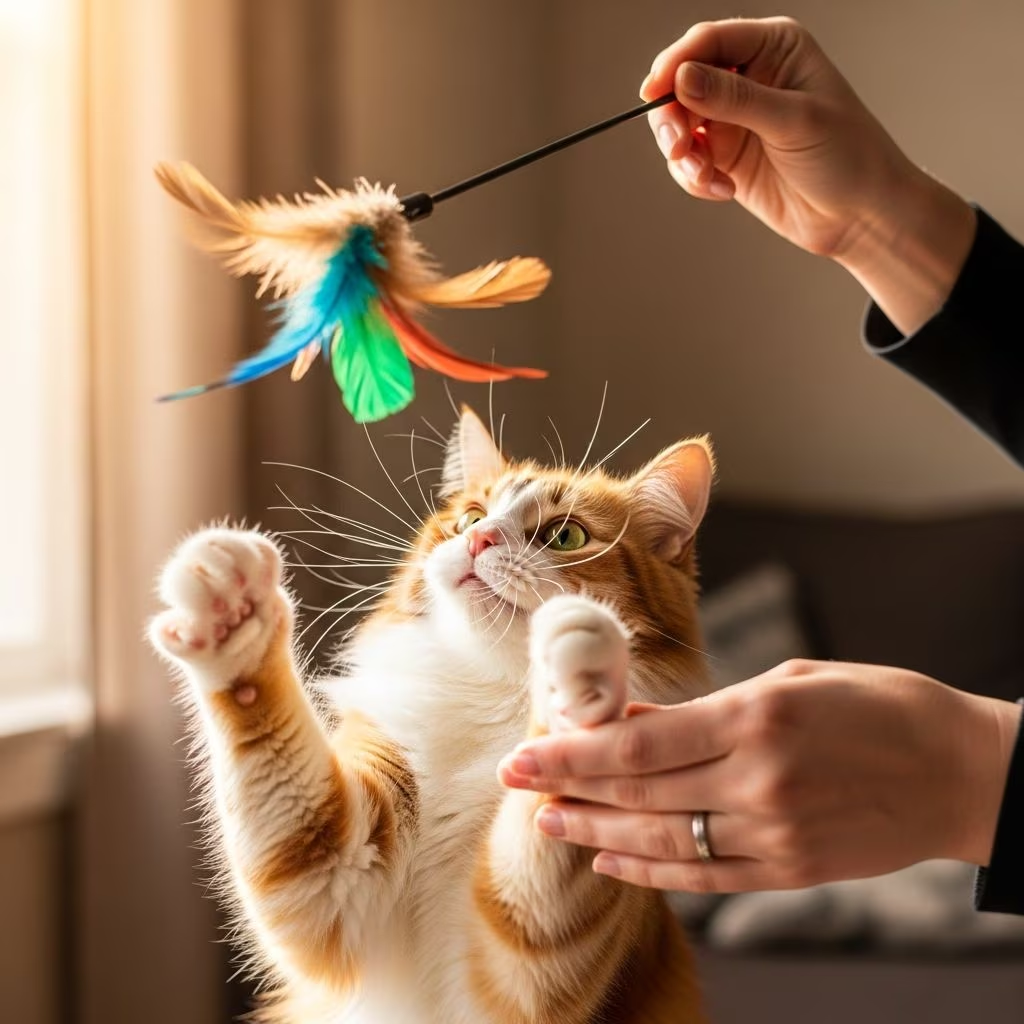
Mikel Delgado, a certified applied animal behaviorist (CAAB) and certified cat behavior consultant (CCBC), emphasizes that play is fundamental to a cat’s well-being, just as crucial as food, litter, or scratching posts. In her book How to Play With Your Cat: The Essential Guide to Interactive Play for a Happier, Healthier Feline, released on March 5, she outlines why cat parents must prioritize interactive play over leaving cats to solo toys.
Delgado, who has worked with cats professionally for over 20 years, including eight years at the San Francisco SPCA and as co-founder of Feline Minds, describes herself as a ‘playful person’ who loves puzzles, games, art, and music. Her passion translates into practical advice for fostering stronger bonds and reducing behavior issues through play.
Why Play is Essential for Cats
Play provides mental stimulation, physical exercise, and emotional fulfillment, mimicking natural hunting behaviors that prevent boredom, stress, and destructive actions. Delgado notes that many owners underestimate play, assuming feeding and litter maintenance suffice, but cats thrive on social interaction and endorphin-releasing activities akin to human exercise.
Interactive play strengthens the human-cat bond, reduces anxiety, and channels predatory instincts appropriately. Without it, cats may develop habits like ankle-biting or hand-pouncing, interpreting human body parts as prey.
Start Play Early: Why Kittens Need It Most
Kittens have boundless energy and are honing life skills like stalking and pouncing. Delgado stresses starting young to avoid bad habits: ‘Nine times out of 10, new kitten owners complain they’re “too wild,” climbing curtains or jumping on hands.’ Early play teaches appropriate outlets, preventing escalation into adult behavior problems.
- High energy levels: Kittens burn off excess vigor through play, avoiding hyperactivity.
- Skill development: Perfects hunting techniques on toys, not humans.
- Habit prevention: Redirects pouncing from feet or hands to proper toys.
Four Types of Cat Play
Delgado categorizes play into four essential types, each fulfilling different instincts. Understanding these helps tailor sessions for maximum benefit.
1. Locomotive Play
Involves chasing and running, satisfying the drive to pursue moving objects. Use wand toys or laser pointers to simulate fleeing prey across rooms, encouraging sprints and leaps.
2. Predatory Play
Mimics the full hunt sequence: stalk, chase, pounce, capture, and ‘kill.’ Interactive toys where you control movement are ideal, as they replicate unpredictable prey better than static solo toys.
3. Object Play
Cats bat, carry, and manipulate items like balls or mice. Provide variety, but combine with interactive elements for engagement. Solo object play suits independent sessions.
4. Social Play
Especially vital for kittens, involves play with humans or other cats. Builds social skills, teaches bite inhibition, and fosters relationships. Delgado warns against over-relying on tech; one-on-one time is irreplaceable.
Interactive Play vs. Solo Toys: The Key Difference
The biggest misconception? Owners stock up on balls and springs but miss that real hunting involves animated prey. ‘When you’re hunting, the prey is living and moving,’ Delgado explains. By moving toys yourself, you create unpredictability, engaging the cat’s predatory drive far more effectively than passive toys.
Solo toys have a place, especially for kittens, but interactive play—where you’re the ‘puppet master’—provides superior mental and physical outlets. Electronic toys like iPad games offer some value, but nothing beats hands-on sessions.
| Type | Interactive Play | Solo Toys |
|---|---|---|
| Engagement | High: Unpredictable movement mimics prey | Low: Predictable, less stimulating |
| Benefits | Full hunt cycle, bonding, exercise | Independent fun, supplementary |
| Best For | Daily sessions with owner | Alone time, kittens |
Redirecting Unwanted Play Behaviors
Kittens often bat at hands or feet because they’re cute and soft, but this reinforces bad habits. Delgado advises: ‘Let the cat approach for petting when relaxed.’ If they pounce, withdraw attention and redirect to toys.
For ankle-biting, common due to hunting instincts or boredom, increase playtime. Cats see moving ankles as targets; calm redirection and daily sessions curb this. If stress-related (e.g., excessive meowing, hiding), provide quiet spaces.
- Don’t punish: Cats don’t connect it to behavior; it increases stress.
- Redirect immediately: Offer kicker toys for batting instead of hands.
- End sessions properly: Simulate kill (toy goes limp), then feed to mimic hunt success.
Daily Play Routines for Success
Aim for 15-30 minutes twice daily, ideally morning and evening to match natural activity peaks. Vary toys to prevent boredom: wands for predatory, balls for object play.
Delgado’s tips:
- Observe your cat’s preferences—some love chase, others object manipulation.
- Rotate toys weekly for novelty.
- Play before meals to replicate ‘hunt then eat’ cycle, promoting satisfaction.
- For multi-cat homes, facilitate social play under supervision.
Tools and Toys Recommendations
Invest in durable, safe items:
- Wand toys: Feathers or strings for predatory/locomotive play.
- Kicker toys: Long, soft for biting/rabbit-kicking.
- Balls/tracks: For solo object play.
- Tunnel/chasers: Encourage exploration.
Avoid strings that can be swallowed; supervise laser play to prevent frustration.
Play for Adult and Senior Cats
Play isn’t just for kittens—adults need it for weight management, seniors for mobility and cognition. Adapt intensity: shorter, gentler sessions with slower movements.
Benefits Beyond Fun
Regular play reduces obesity, anxiety, and aggression; improves litter habits and sleep. Delgado sees it as an ‘antidote’ to modern indoor life, enhancing overall happiness.
Frequently Asked Questions (FAQs)
What if my cat ignores toys?
Start slow, use treats on toys, or mimic prey movement. Patience builds interest; try different types.
How much play does my cat need?
15-30 minutes twice daily, adjusted for age and energy. Watch for fatigue signs like yawning.
Why does my cat bite during play?
Overstimulation or poor redirection. End session if ears flatten or tail thrash; resume later.
Can play help aggressive cats?
Yes, by channeling instincts. Combine with behaviorist consult if persistent.
Is play important for indoor cats?
Absolutely—replaces outdoor hunting, preventing boredom-related issues.
References
- Your Cat Really Wants You to Play With Them—Here’s How — Kinship. 2024. https://www.kinship.com/cat-behavior/how-to-play-with-your-cat-mikel-delgado
- Why Does Your Cat Bite Your Ankles—and What to Do About It — Kinship. 2024. https://www.kinship.com/cat-behavior/why-does-my-cat-bite-ankles
- Mikel Delgado, CAAB, CCBC — Kinship. 2024. https://www.kinship.com/about-us/mikel-delgado-caab-ccbc



