

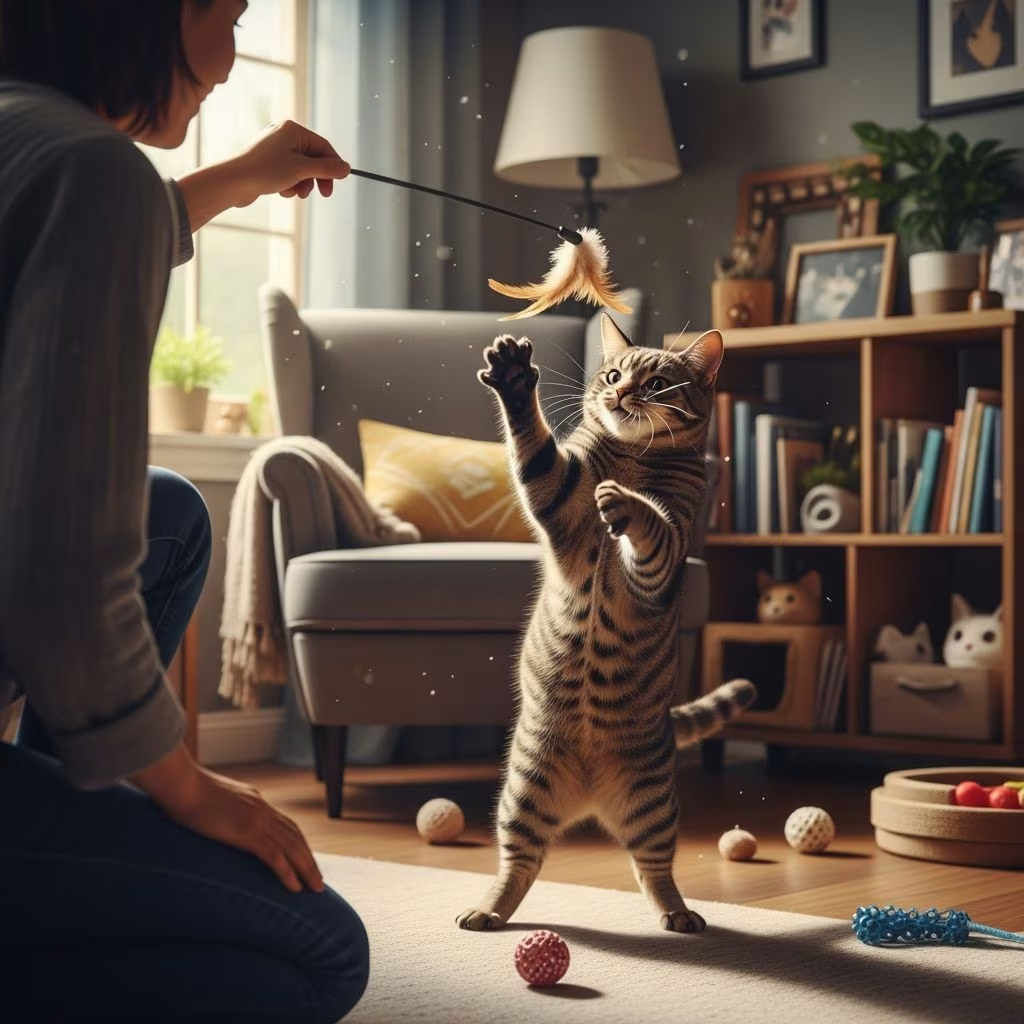
Dr. Mikel Delgado, a certified cat behavior consultant and author of How to Play With Your Cat: The Essential Guide to Interactive Play for a Happier, Healthier Feline, emphasizes that play is fundamental to your cat’s well-being. Far beyond mere entertainment, interactive play fulfills instinctual needs, provides exercise, reduces stress, and strengthens the bond between you and your cat. As Delgado notes, many cat owners overlook play, assuming food and litter suffice, but play rivals these basics in importance for mental stimulation and physical health.
In her book released on March 5, Delgado breaks down play into four essential types: locomotive, predatory, object, and social play. She debunks myths about self-sufficient toys like electronic devices, advocating for hands-on interaction. This article draws from Delgado’s expertise to guide you through why play matters, especially for young cats, how to handle overzealous play, common misconceptions, and practical tips with recommended toys.
Why Play Is Essential for Cats
Play mimics natural behaviors like hunting and exploring, releasing endorphins that combat boredom and anxiety, much like human exercise. Delgado explains that cats thrive on social interaction, mental challenges, and physical activity, which play provides in abundance. Neglecting it can lead to behavioral issues such as destructive scratching, excessive meowing, or aggression.
For kittens, play is critical during their high-energy developmental phase. They perfect life skills like stalking and pouncing, but without guidance, they may target inappropriate objects—like your hands or curtains. Starting play early prevents bad habits and channels their ‘wild’ energy productively. Adult cats also benefit, maintaining muscle tone, preventing obesity, and fostering emotional security.
Research supports this: studies show interactive play reduces stress hormones in cats and improves human-cat relationships. Delgado stresses that play should span a cat’s lifetime, adapting to their age and energy levels.
The Four Types of Cat Play
Delgado categorizes play into four types, each targeting different instincts. Understanding these helps tailor sessions to your cat’s needs.
- Locomotive Play: Involves running, jumping, and climbing. Toys like feather wands encourage chasing across rooms, building cardiovascular fitness and agility.
- Predatory Play: Simulates hunting sequences—stalk, pounce, capture. Interactive toys moved unpredictably best replicate live prey, satisfying deep instincts.
- Object Play: Manipulating items like balls or mice. Great for solo sessions but less effective alone for full hunting fulfillment.
- Social Play: Interaction with humans or other cats, building bonds through mutual engagement. Essential for socialized, affectionate felines.
Balancing these types ensures comprehensive enrichment. For multi-cat homes, social play reduces tension, while solo cats rely more on owner interaction.
Starting Play with Kittens: Why Early Intervention Matters
Kittens aged 2-6 months burst with energy, often labeled ‘too wild’ by new owners. Climbing curtains, ambushing feet—these are normal but must be redirected. Delgado advises daily 10-15 minute sessions to teach appropriate targets, preventing hand-playing that escalates into biting adults.
Young cats learn quickly; consistent play establishes routines. Use toys to exhaust their drive before bedtime, curbing night zoomies. Early play also socializes them, improving tolerance for petting and handling.
How to Respond When Your Kitten Plays Too Rough
It’s tempting to engage a cute, batting kitten, but hands should never be toys. Delgado recommends:
- Freeze movement if they grab your hand—sudden motion excites them more.
- Redirect to a toy like a kicker or wand immediately.
- Pet only when relaxed; let them initiate contact.
- End sessions if play escalates, walking away to signal boundaries.
This teaches that human skin isn’t prey. Reward calm behavior with treats or affection, using positive reinforcement.
Common Misconceptions About Cat Play
The biggest myth? Cats entertain themselves with solo toys. Delgado clarifies: balls and mice are fine supplements, but real hunting involves unpredictable, animated prey. Static toys don’t fully engage predatory instincts—you must ‘animate’ them.
Another error: relying on tech like laser pointers or app games. These have a role but lack the ‘kill’ phase, frustrating cats. Always end with a toy they can catch. Overlooking owner involvement assumes cats are solitary, ignoring their social needs.
Best Toys and Techniques for Interactive Play
Delgado recommends toys mimicking prey: long, stringy for dragging; kickers for ‘bunny kicking’; wands for aerial chases. Here’s a curated list:
| Toy Type | Description | Best For | Play Type |
|---|---|---|---|
| Wand Toys (e.g., Da Bird) | Feathers on flexible rod | Predatory, locomotive | High-energy chases |
| Kicker Toys | Plush, body-length for hugging/biting | Object, predatory | Bunny kicking practice |
| Spring Toys | Bouncing, erratic movement | Locomotive | Solo or assisted |
| Tunnel/Balls | Fabric tunnels with balls | Object, social | Exploration |
Session Tips:
- Play twice daily, 10-15 minutes each.
- Vary movements: drag, flick, hide toys.
- End with ‘capture’—let them ‘win.’
- Rotate toys to maintain novelty.
Adapting Play for Adult and Senior Cats
As cats age, energy wanes, but play persists. Adults need predatory outlets to prevent weight gain; seniors benefit from gentle locomotive play for joint health. Short, frequent sessions suit them, focusing on mental stimulation over exertion.
Play in Multi-Cat Households
Social play shines here, reducing rivalry. Supervise to ensure fair access; provide multiples of favorites. Delgado notes cats form bonds through play, mirroring wild social grooming.
Benefits Beyond Fun: Health and Behavior Improvements
Regular play aids digestion, reduces hairballs via grooming mimicry, and curbs stress-related litter issues. It enhances your cat’s confidence, making them more affectionate—rubbing, purring, following you. Delgado affirms play signals love reciprocally.
Frequently Asked Questions (FAQs)
What if my cat ignores toys?
Try ‘prey-like’ movement; tire them with food puzzles first. Patience—scent toys or catnip help.
How often should I play?
15-30 minutes daily, split sessions. Adjust for age.
Is laser play okay?
Yes, but pair with capturable toy to complete hunt.
My cat plays too aggressively—what now?
Redirect, time-outs. Consult behaviorist if persistent.
Can play help shy cats?
Absolutely—builds trust gradually with low-pressure toys.
References
- Your Cat Really Wants You to Play With Them—Here’s How — Kinship. 2023. https://www.kinship.com/cat-behavior/how-to-play-with-your-cat-mikel-delgado
- Does Your Cat Love You? How to Interpret Bonding Behavior — Kinship. 2023. https://www.kinship.com/cat-behavior/does-my-cat-love-me
- American Association of Feline Practitioners: Feline Environmental Needs Guidelines — Journal of Feline Medicine and Surgery. 2021-10-01. https://journals.sagepub.com/doi/full/10.1177/1098612X211043334
- Enrichment Guidelines for Cats — Winn Feline Foundation. 2022. https://www.winnfelinefoundation.org/education/cat-enrichment-guidelines/
- Play Behavior in Cats — Applied Animal Behaviour Science (Peer-reviewed). 2019. https://www.sciencedirect.com/science/article/pii/S016815911930001X



