

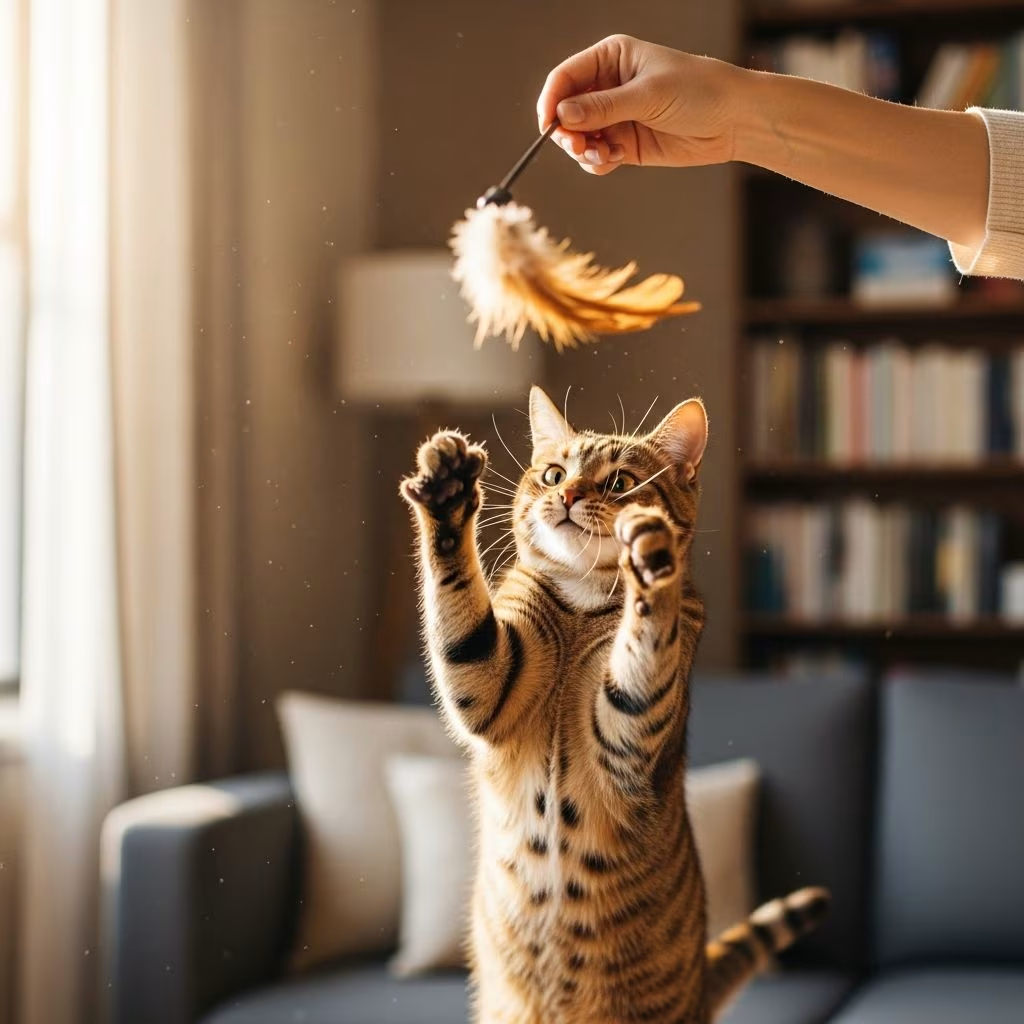
How to Play With Your Cat: A Complete Interactive Guide
Many cat parents assume their feline companions are content to entertain themselves with electronic toys or solo play sessions. However, cats genuinely need and want interactive play with their owners and with other cats, particularly during their kitten years. Understanding the different types of cat play and how to engage your cat properly can dramatically improve their physical health, mental wellbeing, and strengthen the bond between you and your pet.
Why Your Cat Really Wants You to Play With Them
Cats are naturally curious and energetic animals that require mental stimulation and physical exercise throughout their lives. Regular interactive play sessions provide essential outlets for these instincts. When you play with your cat, you’re not simply providing entertainment—you’re mimicking the natural behaviors that cats would engage in within their environment. This type of engagement prevents boredom, reduces stress-related behaviors, and helps maintain a healthy weight.
The key to effective play is understanding that your cat needs more than just access to toys. Electronic gadgets and automated play devices have their place, but they cannot fully replace the dynamic interaction that comes from one-on-one play between you and your cat. Your involvement makes the play experience unpredictable, engaging, and mentally stimulating in ways that solo toys simply cannot achieve.
The Four Types of Cat Play
Cat play can be categorized into four distinct types, each serving different purposes and engaging different instincts. Understanding these categories helps you provide comprehensive play experiences that address all aspects of your cat’s behavioral and physical needs.
1. Locomotive Play
Locomotive play involves movement and running. This type of play allows cats to exercise their muscles, build strength, and expend energy through physical activity. Locomotive play is characterized by quick bursts of speed, jumping, and directional changes. You can encourage this type of play by using toys that encourage your cat to chase, sprint across the room, or leap vertically. Wand toys that move unpredictably are excellent for encouraging locomotive play, as they prompt your cat to pursue and follow the toy in various patterns.
2. Predatory Play
Predatory play taps into your cat’s natural hunting instincts. When cats engage in predatory play, they exhibit behaviors directly related to how they would hunt in the wild: crouching, approaching slowly, pausing briefly while gathering focus, and then pouncing and striking. This type of play is particularly important because it allows cats to express their natural predatory behaviors in a safe, controlled environment.
The crucial difference between predatory play and actual hunting is control and consent. When you engage your cat in interactive predatory play using wand toys, you control the prey movements. Unlike a stationary toy, a living prey animal moves unpredictably, and by moving the toy yourself, you create that unpredictability. This makes the play experience more realistic and engaging for your cat than watching them bat at a stationary toy.
3. Object Play
Object play refers to your cat’s interaction with inanimate objects, including toys. Cats enjoy batting, pushing, and manipulating various objects with different textures, weights, and sizes. Solo-play toys—such as balls, feather toys, and other items your cat can play with independently—are important and valuable for enrichment. These toys provide entertainment and mental stimulation, especially when you’re not available to play directly with your cat.
However, it’s important to recognize that object play alone doesn’t provide the complete benefits of interactive play. While solo toys are fun and useful, they lack the dynamic interaction that comes from a playmate who responds to your cat’s actions and adapts their movements in real time.
4. Social Play
Social play involves interaction between cats or between a cat and a human. This type of play strengthens social bonds and teaches cats important social skills. In multi-cat households, social play between cats can provide exercise and enhance their social relationships. However, social play requires understanding the difference between healthy play and aggression or overly rough interactions.
Understanding Healthy Cat Play vs. Aggression
One of the most important skills for cat owners is the ability to distinguish between healthy play, aggression, and intermediate interactions. Because cat play and fighting behaviors share similar movements, it can be challenging to determine what’s actually happening between your cats.
Signs of Healthy Cat Play
Healthy play between cats exhibits several characteristic behaviors:
- Cats take regular breaks during which they pause and reassess the interaction
- The cats change positions frequently—the same cat is sometimes on top and sometimes on the bottom
- They use light-hearted attacks with minimal force, such as a few gentle pokes or tussles
- Their ears remain forward or to the side in a relaxed manner between bouts of activity
- They do not maintain a constant stare at each other
- After engaging, one cat may scamper away or leap into the air, and the other cat ignores this behavior
- Wrestling without vocalizing, especially when it lasts a long time, generally indicates playful behavior
Healthy play often follows a predictable pattern between regular playmates. Once two cats become familiar with each other’s play style, their interactions develop into a kind of dance where they know each other’s moves and what to expect.
Red Flags Indicating Aggressive Behavior
Several signs indicate that play may have crossed into aggression or is showing concerning patterns:
- An arched back or classic “Halloween cat” posture from one of the cats—this is never seen during healthy play between older kittens or adult cats
- Eyes locked on each other during pauses in action, rather than looking away or disengaging
- Ears pinned back when the cats aren’t actively tussling
- Frequent growling, which is not a typical part of healthy play
- One cat always being the attacker while the other is always defending—non-reciprocal interactions
- Lots of vocalizations combined with significant chasing, indicating conflict rather than play
- One cat consistently on top during wrestling bouts while the other is always on the bottom
Mismatched Play Styles
Sometimes cats engage in what appears to be play but is actually a mismatch between their play intensity levels. This is particularly common when introducing a rough player to a gentler player, or when cats of significantly different sizes or ages interact.
In mismatched play scenarios, one cat may be relentless in their engagement while the other becomes overwhelmed. Signs of this include one cat backing away, arching their back (indicating they’ve had enough), or hiding behind their owner or furniture. Good playmates will recognize these signals and back off, learning to moderate their intensity in future interactions.
Interactive Play Techniques for You and Your Cat
When playing directly with your cat, your role as puppet master is essential. You control the movements and unpredictability that make the experience engaging. Here are key techniques for effective interactive play:
Using Wand Toys Effectively
Wand toys—also called fishing pole toys—are among the most effective tools for interactive play. The key is moving the toy in ways that mimic prey behavior: making it skip across the floor, flutter through the air, dart unpredictably, and occasionally pause as if the prey is resting or hiding. The unpredictability you introduce makes the toy more interesting than a stationary object.
Mimicking Prey Movement
Real prey animals don’t move in perfectly straight lines or with predictable patterns. They change direction suddenly, pause unexpectedly, and move at varying speeds. By incorporating these elements into your toy movements, you create a more realistic hunting experience. Occasionally let the toy “escape” and hide, requiring your cat to search for it, which engages their natural stalking behavior.
Reading Your Cat’s Signals
Pay attention to your cat’s body language during play. If their ears flatten, they crouch lower to the ground, their pupils dilate, and their tail begins to swish—these are signs they’re fully engaged and ready to pounce. Conversely, if they walk away or seem disinterested, respect their signal and end the play session. Play should always be enjoyable for both of you.
Play Duration and Frequency Guidelines
Cats benefit from regular play sessions throughout the day. Rather than one long play session, multiple shorter sessions of 5-15 minutes tend to be more effective. Kittens may need more frequent play sessions as they’re developing and learning, while adult cats still need daily interactive play to maintain physical and mental health.
The frequency and intensity of play should match your cat’s age, energy level, and health status. Younger cats generally have higher energy levels and may need more vigorous play, while older or less energetic cats may prefer gentler, shorter sessions.
Play Safety Considerations
When engaging in interactive play, especially with multiple cats, safety should always be a priority. Ensure that play toys are safe and don’t have small parts that could be swallowed. Supervise play between cats to intervene if it escalates from healthy play to aggression. Provide each cat with their own toys and resting spaces to prevent resource guarding. If you notice any signs of genuine aggression or persistent mismatched play that doesn’t improve, consult with a veterinary behaviorist for guidance.
The Role of Technology in Cat Play
While interactive technology like iPad mouse games and electronic toys have a place in a cat’s enrichment routine, they should not replace direct interactive play with you or other cats. Electronic devices can provide supplemental enrichment and entertainment, particularly when you’re unavailable, but they lack the responsive, adaptive quality of interactive play. Use technology as part of a comprehensive play strategy rather than as a substitute for hands-on engagement.
Frequently Asked Questions
Q: How much time should I spend playing with my cat daily?
A: Most cats benefit from 20-30 minutes of interactive play spread throughout the day in multiple sessions. Kittens may need more frequent play, while older cats may prefer less intense sessions. Adjust based on your individual cat’s energy level and preferences.
Q: Is it normal for cats to play rough?
A: Some rough play is normal, especially between young kittens. However, healthy play should include breaks, position changes, and mutual engagement. If roughness escalates with growling, pinned ears, or one cat consistently avoiding the other, it may indicate aggression rather than play.
Q: Can electronic toys replace interactive play with me?
A: No. While electronic toys provide supplemental enrichment, they cannot replace direct interactive play. Your cat needs the unpredictability and responsiveness that only you can provide through hands-on play with wand toys and other interactive tools.
Q: How do I know when my cat has had enough playtime?
A: Signs that your cat is tired or overstimulated include walking away from the toy, moving more slowly, showing less interest in pouncing, or displaying signs of irritation like tail swishing or ear changes. Always end play sessions on a positive note before your cat becomes frustrated.
Q: Should I play with single cats differently than cats in multi-cat households?
A: Both single and multi-cat households benefit from interactive play with you, though cats in multi-cat homes may get additional social play from their feline companions. However, your direct engagement remains important for all cats, regardless of household composition.
Q: What types of toys are best for interactive play?
A: Wand toys with feathers, strings, or other dangling elements are ideal for interactive play because they allow you to mimic prey behavior. Avoid toys with small parts that could be swallowed, and rotate toys regularly to maintain your cat’s interest.
References
- Cat-Cat Play: The Good, the Bad, and the Ugly — International Association of Animal Behavior Consultants (IAABC) Journal. 2024. https://journal.iaabcfoundation.org/play-the-good-the-bad-and-the-ugly/
- This Is the Difference Between Cat Playing and Fighting — Kinship. 2024. https://www.kinship.com/cat-behavior/are-my-cats-playing-or-fighting
- Your Cat Really Wants You to Play With Them—Here’s How — Kinship. 2024. https://www.kinship.com/cat-behavior/how-to-play-with-your-cat-mikel-delgado
- Why Cats Need Daily Play: Benefits & Expert Tips — Kinship. 2024. https://www.kinship.com/uk/cat-behaviour/why-cats-need-play-daily
- Niche Expansion and the Natural History of Human-Cat Kinship — Journal of the History of Biology, University of Chicago Press. 2023. https://www.journals.uchicago.edu/doi/10.1086/737151



