

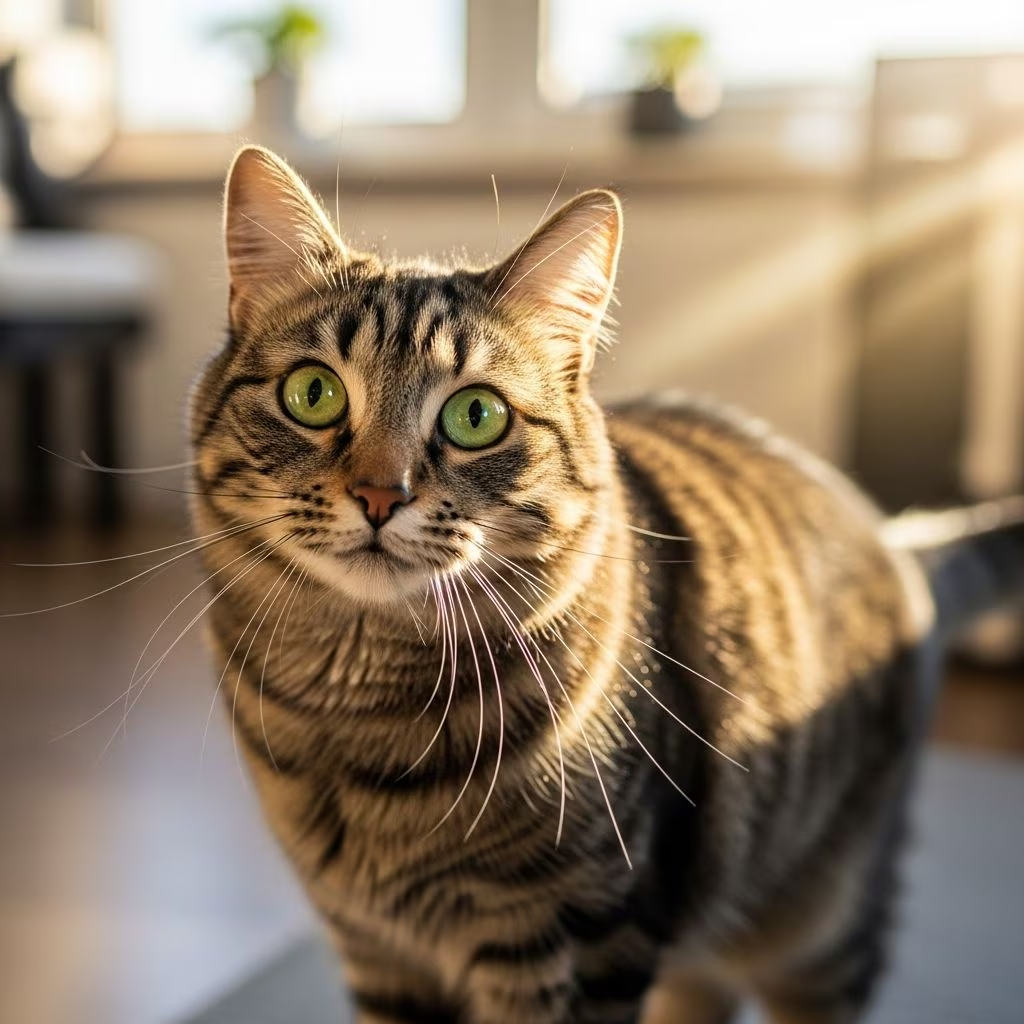
Capturing the elusive beauty of cats through photography requires patience, the right techniques, and an understanding of your feline subject’s unpredictable nature. Cats are masters of mischief and grace, often darting away just as you press the shutter. This guide provides step-by-step advice to help you take professional-quality photos of your cat, whether you’re a beginner with a smartphone or an advanced shooter with DSLR gear. We’ll cover everything from preparation and equipment to lighting, composition, and post-processing, ensuring you get sharp, expressive images that showcase your cat’s personality.
Preparation for Cat Photography
Before diving into your shoot, proper preparation sets the stage for success. Cats thrive in familiar environments, so start by grooming your cat lightly—brush their fur and wipe around the eyes, ears, and mouth for a fresh look. Choose a quiet time when your cat is relaxed, perhaps after a nap or meal, to minimize stress. Create a shot list to stay organized: include close-up portraits, action shots, and environmental images. This helps you gather props like toys or blankets in advance. Patience is key; observe your cat’s habits to anticipate moments of curiosity or play.
- Groom your cat: Removes loose fur and enhances their coat’s shine for better photos.
- Select the right time: Early morning or golden hour when cats are active yet calm.
- Shot list essentials: Portraits, eyes close-ups, paws, full-body in environment.
Essential Equipment for Photographing Cats
You don’t need expensive gear to start, but the right tools make a difference. Smartphones work well with apps that offer manual controls, but for superior results, use a DSLR or mirrorless camera with interchangeable lenses. Key items include:
| Item | Recommendation | Why It Helps |
|---|---|---|
| Camera Body | Any with burst mode and Animal Eye AF | Captures fast movement and sharp eyes |
| Lenses | 50mm prime, 70-200mm zoom, macro 100mm | Versatile focal lengths for portraits and details |
| Flash | Off-camera speedlight | Flexible lighting without red-eye |
| Tripod | Lightweight with flexible legs | Stable shots for low light |
Portrait lenses like 85-135mm allow close-ups without invading space, ideal for indoor shoots. Macro lenses excel at whiskers and paws. For budget options, a 50mm f/1.8 lens delivers creamy bokeh on any camera.
Mastering Lighting for Cat Photos
Lighting is the cornerstone of stunning cat photography. Natural light is best—position your cat near a north-facing window for soft, even illumination that flatters fur textures without harsh shadows. Golden hour (sunrise/sunset) adds warm glows and silhouettes. Experiment with front, side, and backlighting:
- Front light: Highlights details evenly.
- Side light: Creates depth and contours.
- Backlight: Produces halos around fur for ethereal effects.
For low light, use off-camera flash bounced off walls or ceilings to mimic natural light. Avoid direct flash into eyes to prevent red-eye and startling your cat. Continuous LED lights are pet-safe alternatives, providing steady illumination without flashes.
Camera Settings for Sharp Cat Photos
Cats move unpredictably, so prioritize settings that freeze action. Use shutter priority mode with 1/250s or faster to combat blur. Set ISO low (100-400) in bright light, bumping to 800-1600 indoors. Aperture f/2.8-f/5.6 keeps eyes sharp with blurred backgrounds.
- Shutter speed: Minimum 1/250s; 1/500s+ for jumps.
- Aperture: Wide for portraits (f/1.8-f/4), mid for groups.
- ISO: Auto with cap at 3200 to avoid noise.
- Focus mode: Continuous AF (AF-C) or Animal Eye AF for tracking eyes.
- Burst mode: High-speed continuous for sequences.
Shoot in RAW for editing flexibility, adjusting exposure and tones post-capture.
Composition Techniques: Get Down to Cat Level
To create intimate, engaging photos, get on your cat’s eye level—lie on the floor or use a low stool. This perspective draws viewers into the cat’s world, emphasizing expressions and body language. Follow the rule of thirds: place eyes or face at intersections for dynamic framing.
- Position cat off-center for natural flow.
- Lead lines from whiskers or paws guide the eye.
- Simplify backgrounds: plain walls or blurred outdoors.
Chase your cat naturally; let them lead to authentic poses. For controlled shots, lure with toys directed toward the lens for direct gazes.
Focus on the Eyes and Action Shots
The eyes are the soul of cat photos—nail focus there every time. Use single-point AF on the nearest eye, switching to manual if needed. Narrow aperture (f/8) increases depth of field for leeway. For action, burst mode captures pounces and leaps; predict movements from play patterns.
Creative Cat Photography Ideas
Elevate your portfolio with these ideas:
- Details: Macro of paws, whiskers, nose textures.
- Peekaboo: Cat peeking from boxes or behind furniture.
- Black-and-white: Emphasizes form and expression.
- Overhead: Unique patterns of sleeping or playing cats.
- Depth of field play: Shallow DOF isolates subject dramatically.
Try silhouettes against windows or high-key lighting for minimalist art.
Editing Your Cat Photos
Post-processing polishes raw captures. Use Lightroom or Photoshop to:
- Boost contrast and clarity for fur pop.
- Adjust whites for clean eyes.
- Crop tightly for impact.
- Convert to B&W for mood.
Avoid over-editing; enhance natural beauty. Batch process similar shots for efficiency.
Frequently Asked Questions
What is the best camera for photographing cats?
Any camera with fast burst mode and good AF works; mirrorless like Sony A7 series excel with Animal Eye AF.
How do I get my cat to look at the camera?
Use toys, laser pointers, or squeaky sounds directed at the lens to elicit direct eye contact.
What shutter speed for moving cats?
1/500s or faster; use burst mode for sequences.
Can I photograph cats at night?
Yes, with fast lenses (f/1.4), high ISO, or continuous lights; stabilize on tripod.
How to avoid blurry photos?
Fast shutter, good light, continuous AF, and lots of practice.
References
- 22 Cat Photography Tips and Ideas for Beautiful Images — Digital Photography School. 2023-05-15. https://digital-photography-school.com/9-tips-taking-better-photos-cats/
- How to Photograph Kittens and Cats — Sassy Koonz. 2022-08-10. https://sassykoonz.com/how-to-photograph-kittens/
- 8 Tips for Taking Purrfect Pictures of Cats — Shocks Photography. 2024-03-20. https://shocksphotography.com/blog/8-tips-for-taking-purrfect-pictures-of-cats
- Everything You Need To Know About Cat Photography — 500px ISO. 2023-11-05. https://iso.500px.com/cat-photography-tips/
- A Content Creator’s Guide to Taking Pictures of Your Cat — FELIWAY. 2024-01-12. https://www.feliway.co.uk/blogs/news/a-content-creators-guide-to-taking-pictures-of-your-cat



