

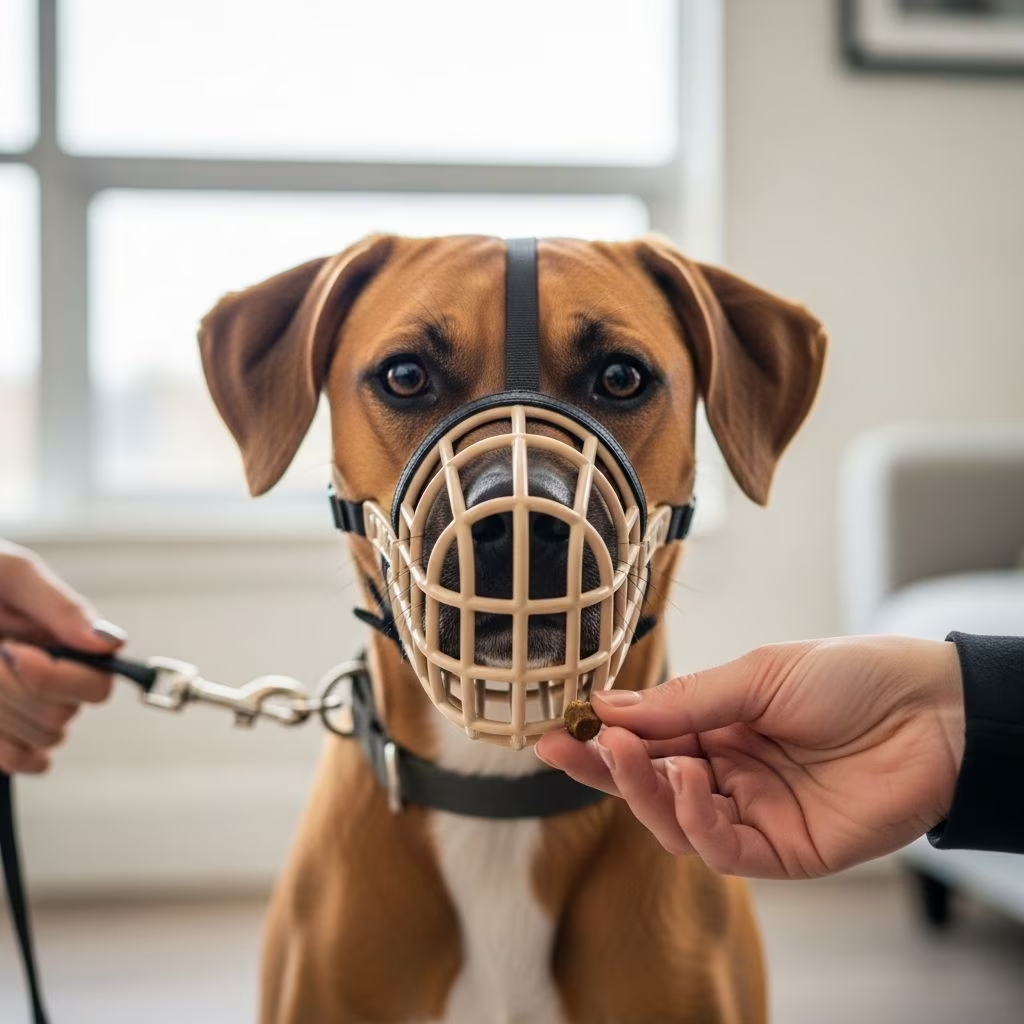
Muzzle training teaches your dog to comfortably wear a muzzle using positive reinforcement, turning a potentially scary tool into a positive experience. This skill is vital for safety during vet visits, grooming, or situations where biting risks exist, benefiting dogs, owners, and professionals alike.
Why Muzzle Train Your Dog?
Muzzles prevent bites from fearful, reactive, or pain-responsive dogs, ensuring safety without punishment. Contrary to myths, proper muzzles allow panting, drinking, and treat-feeding, promoting welfare rather than restriction.
- Safety at vets: Vets often request muzzles for unknown behaviors, protecting everyone involved.
- Grooming and handling: Essential for dogs sensitive to touch or tools.
- Public access: Helps reactive dogs in crowded areas or comply with breed laws.
- Resource guarding: Manages food or toy protection safely.
- Medical needs: Prevents self-injury post-surgery or during seizures.
Training early, ideally in puppyhood, builds lifelong comfort, but all ages can learn with patience.
Benefits of Muzzle Training
Well-trained dogs view muzzles as cues for rewards, reducing stress and improving behavior outcomes. It empowers owners to manage risks proactively, fostering trust and enabling more freedom.
| Benefit | Impact on Dog | Impact on Owner |
|---|---|---|
| Stress Reduction | Associates muzzle with treats | Confident handling |
| Safety | Prevents injuries | Peace of mind |
| Access | More outings | Legal compliance |
| Health Care | Easier treatments | Safer vet visits |
Choosing the Right Muzzle
Select a basket-style muzzle like Baskerville Ultra for airflow, panting, drinking, and treat access. Avoid nylon or cloth muzzles that restrict jaws, unsuitable for extended wear.
- Basket muzzles: Plastic, rubber, or wire; ideal for training.
- Fit check: Snout fully inside, one finger under straps, can’t paw off.
- Size: Measure snout length/width; test pant/drink.
- Avoid: Velcro snouts, headcollars (not muzzles).
Have multiple for trials; comfort ensures success.
Preparation Before Training
Choose quiet sessions, high-value treats (cheese, hot dogs, peanut butter), and a plan. Track progress; go at dog’s pace to avoid setbacks.
- Allow 3-5 short daily sessions (2-5 mins).
- Neutral environment, no stress.
- End on success; progress varies (days to weeks).
How to Muzzle Train Your Dog: Step-by-Step Guide
Follow these force-free steps using counterconditioning and desensitization for positive associations.
Step 1: Introduce the Muzzle
Place muzzle on floor; reward sniffing/touching. Repeat until eager. Pairs sight/smell with treats.
Step 2: Encourage Nose Entry
Put treat inside; let dog eat freely. Name it “muzzle!” Advance when nose enters willingly.
Step 3: Hold Without Fastening
Treats in muzzle; hold straps briefly behind head (seconds). Praise calmly; release. Repeat till relaxed.
Step 4: Desensitize Clasp
Practice clasp noise alone, then with nose in: fasten, immediate unfasten, reward. No rushing.
Step 5: Fasten and Reward
Fasten loosely (1-2 fingers under strap); treat through holes. Talk soothingly.
Step 6: Build Duration
Start seconds, extend gradually while rewarding. Feed meals through muzzle.
Step 7: Add Movement
Walk short distances, cue sits; integrate into routines like walks.
Step 8: Practice in Context
Vet, groomer simulations; real scenarios once fluent.
Full mastery: 1-7 days for basics, weeks for reliability. Repeat steps if regression.
Troubleshooting Common Issues
Problems arise from rushing; always revert positively.
- Fear of sight: Cover briefly, reveal with treats; longer intro.
- Resists entry: Smaller treats, liquid (Cheez Whiz).
- Clasp panic: Desensitize separately.
- Paws it off: Distract with games; tighten fit later.
- Regression: Backtrack steps; shorter sessions.
Advanced Muzzle Training Tips
- Surprise parties: Random treat tosses with muzzle.
- Treat trails: Smear peanut butter inside.
- Pair with fun: Games, toys through muzzle.
- Group classes: For socialization.
Safety and Maintenance
Check fit regularly; supervise always. Clean with mild soap; store dry. Never use for punishment.
Frequently Asked Questions (FAQs)
Why does my vet want a muzzle?
To ensure safety if your dog is in pain or fearful; it’s standard protocol.
Can any dog be muzzle trained?
Yes, all ages/breeds with positive methods; seek pro help for severe cases.
How long until ready for vet?
Varies; aim weeks of practice for comfort.
What treats work best?
High-value: hot dogs, cheese, liver; fit through holes.
Is a muzzle cruel?
No, when trained properly; enhances safety and quality of life.
Can dogs eat/drink in it?
Basket types yes; nylon no.
References
- Muzzle training your dog: your step-by-step guide — Woodgreen Pets. 2023-01-01. https://woodgreen.org.uk/pet-advice/dog/muzzle-training-your-step-by-step-guide/
- Basket muzzle training — Cornell University College of Veterinary Medicine. 2024-05-15. https://www.vet.cornell.edu/departments-centers-and-institutes/riney-canine-health-center/canine-health-topics/basket-muzzle-training
- Muzzle Training Your Dog — San Diego Humane Society. 2023-08-20. https://sdhumane.org/resources/muzzle-training-your-dog/
- Muzzle Training Your Dog | The Battersea Way — Battersea Dogs & Cats Home (YouTube). 2022-06-10. https://www.youtube.com/watch?v=_JfhC37fceE
- Muzzle Training — Muzzle Up! Project. 2024-02-28. https://muzzleupproject.com/muzzle-training/



