

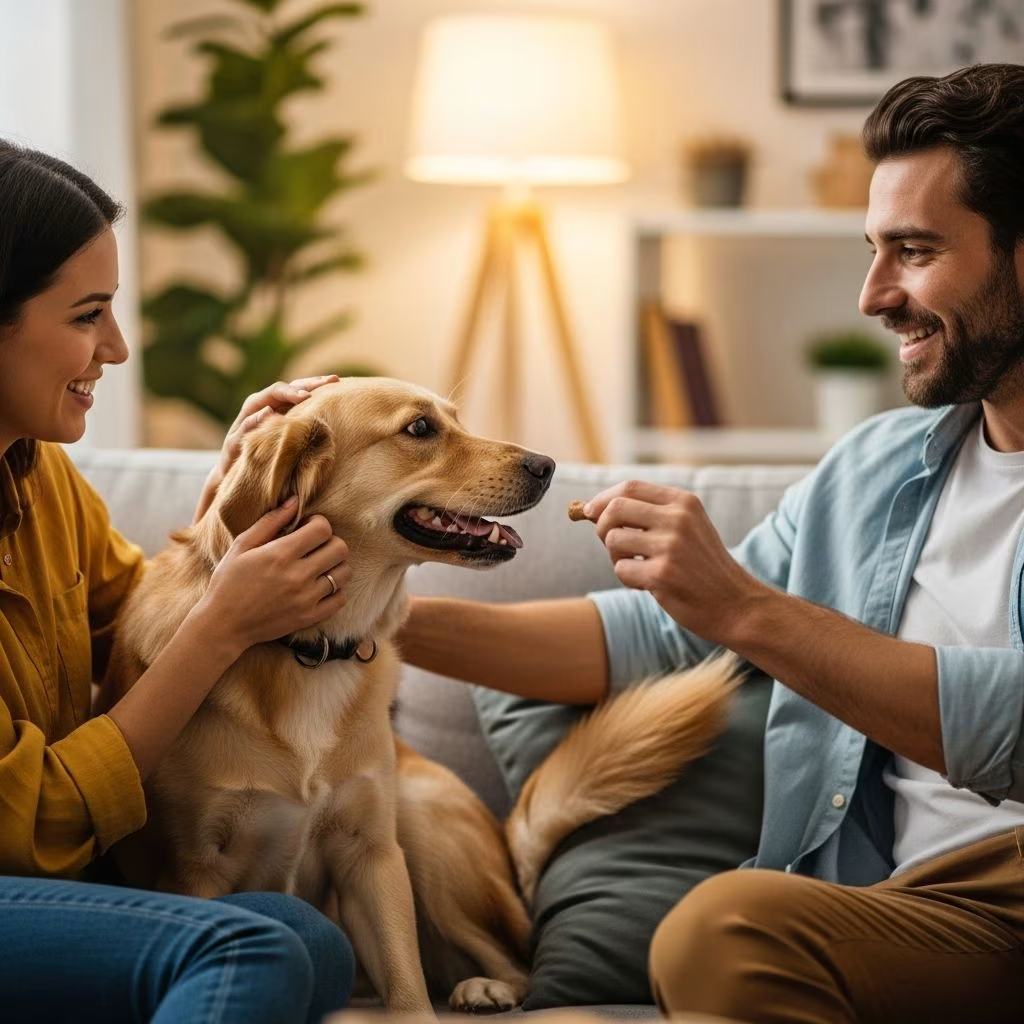
Dogs often form deep emotional bonds with their owners, sometimes viewing romantic partners as rivals for attention. Scientific studies confirm that dogs experience jealousy similar to humans, exhibiting behaviors like pushing, snapping, or whining when owners interact affectionately with perceived rivals. This article explores the science behind dog jealousy and provides practical, step-by-step strategies to prevent and address it, ensuring a harmonious home.
Do Dogs Really Get Jealous?
Yes, dogs experience jealousy, a complex emotion rooted in their social nature. A landmark study published in PLOS ONE found that dogs displayed significantly more jealous behaviors—such as snapping, pushing between owner and rival, or touching the rival—when owners showed affection to a realistic stuffed dog compared to nonsocial objects like a fleece-covered pumpkin. Dogs pulled harder on leashes (over twice the force) toward owners petting a fake dog versus an object, even when the rival was hidden behind a barrier.
Researchers at UC San Diego observed that dogs try to interrupt owner-rival interactions, suggesting a primordial form of jealousy to protect social bonds. This aligns with canine pack instincts, where resources like attention are guarded for survival. Patricia McConnell, PhD, notes jealousy in dogs mirrors that in preverbal children, involving tension and aggression toward rivals.
Jealousy signs include barking, whining, crowding you, resource guarding, or even house soiling when a partner is present. A 2018 Animal Cognition study showed mixed results due to small samples, but overall evidence supports dogs’ emotional capacity.
Why Your Dog Might Be Jealous of Your Partner
Partners often disrupt a dog’s exclusive access to you, triggering rivalry. If your dog was your sole companion before, sudden affection toward a human ‘rival’ can provoke protests. Dogs perceive you as their primary resource for food, play, and love.
Common triggers:
- Your partner receiving pets, cuddles, or time on the couch you usually share with your dog.
- Changes in routine, like date nights or overnight stays, reducing one-on-one time.
- Favoritism perceptions, such as your partner feeding treats first.
- New smells, voices, or movements from the partner exciting the dog’s territorial instincts.
Research indicates dogs detect favoritism and whine or bark for their turn. Unlike objects, partners represent social threats, eliciting stronger responses.
Signs Your Dog Is Jealous of Your Partner
Recognizing jealousy early prevents escalation. Watch for these behaviors, supported by studies:
| Behavior | Description | Study Evidence |
|---|---|---|
| Pushing/Blocking | Dog inserts itself between you and partner. | Observed in 41.7% of dogs toward fake rivals. |
| Snapping/Growling | Aggressive displays toward partner. | Significantly higher with social rivals. |
| Whining/Barking | Vocal demands for attention. | Common when detecting favoritism. |
| Resource Guarding | Protecting toys, bed, or you. | Pack survival trait. |
| Attention-Seeking | Pawing, jumping, or accidents. | Efforts to regain focus. |
Aggressive jealous dogs still show other signs like pushing (100% in study). Body language guides like Lili Chin’s Doggie Language help interpret these.
How to Stop Your Dog from Being Jealous of Your Partner
Address jealousy proactively without rewarding bad behavior. Ignore outbursts—scolding gives attention, reinforcing it. Use positive reinforcement to rebuild security.
Step 1: Never Reward Jealousy
Turn away, cross arms, or calmly remove the dog during episodes. This extinguishes attention-seeking without punishment. Reward calm behavior instead.
Step 2: Equalize Attention
Schedule daily one-on-one time with your dog before partner interactions. Use walks, training, or play to reaffirm your bond.
Step 3: Train ‘Place’ and ‘Stay’
Teach your dog to go to a mat or bed on cue and stay, rewarding heavily. Practice during couple time to create positive associations.
- Start with short durations, high-value treats (e.g., chicken).
- Gradually increase time while you and partner cuddle nearby.
- Aim for 15-30 minutes of relaxed ‘place’ time daily.
Step 4: Partner Builds Positive Associations
Your partner should offer treats, toys, or walks independently. Feed the dog, play fetch—make partner synonymous with good things. Avoid forcing interactions; let dog approach.
Step 5: Desensitize Gradually
Begin with partner at a distance, progressing to proximity. Reward calm responses. If tension arises, increase distance and retry.
Professional trainers recommend patience; jealousy fades with consistency.
Training Exercises to Reduce Dog Jealousy
Structured exercises leverage operant conditioning:
- Attention Pivot: Sit with partner. Call dog, reward for sitting calmly, then return to partner. Repeat 10x daily.
- Leave It Game: Have partner hold treat; cue ‘leave it,’ reward from your hand. Builds impulse control.
- Parallel Play: You play with dog toy while partner does the same nearby. Merge gradually.
- Mat Training: As above, with progressive proximity.
Studies show dogs respond well to consistent rewards over punishment. Track progress in a journal.
Common Mistakes When Dealing with Jealous Dogs
- Punishing Outbursts: Reinforces via attention.
- Forcing Interactions: Heightens fear/aggression.
- Inconsistent Rules: Confuses dog; everyone must enforce.
- Neglecting Exercise: Unspent energy fuels misbehavior.
- Ignoring Early Signs: Allows escalation to bites.
Instead, prioritize prevention and positivity.
When to Seek Professional Help
If jealousy involves aggression (snapping, biting), resource guarding endangering partner, or persists after 4-6 weeks of training, consult a certified trainer or veterinary behaviorist. Red flags: growling at partner near food/bed, stiff posture, or redirected bites.
Medication may help severe cases alongside behavior mod, per vets.
Frequently Asked Questions (FAQs)
Can all dogs get jealous of partners?
Yes, any dog can, especially those with strong owner bonds or past exclusivity. Social breeds may compete more.
How long does it take to fix dog jealousy?
2-8 weeks with consistency; varies by dog age, breed, history.
Should I rehome my jealous dog?
No, jealousy is trainable. Proper management works for most.
Does neutering reduce jealousy?
It may temper aggression but doesn’t eliminate emotional jealousy.
What if my partner hates dogs?
Work on gradual tolerance with pro help; mutual respect key.
Long-Term Strategies for Harmony
Maintain routines, provide enrichment (puzzles, chews), ensure exercise (30-60 min daily). Family meetings align on rules. Celebrate progress—jealousy managed leads to stronger bonds.
Understanding jealousy as a natural emotion helps; with science-backed tools, your dog, partner, and home thrive.
References
- Do Dogs Get Jealous? — Kinship. 2023. https://www.kinship.com/dog-behavior/do-dogs-get-jealous
- Do Dogs Get Jealous? Exploring Emotion in Your Four-Legged Friend — Richmond Family Magazine. 2023. https://richmondfamilymagazine.com/life/pets/dogs-get-jealous/
- Jealousy in Dogs — PMC / NIH (PLOS ONE). 2014-07-23. https://pmc.ncbi.nlm.nih.gov/articles/PMC4108309/
- Dog Jealousy Study Suggests Primordial Origins — UCSD Today. 2014-07-23. https://today.ucsd.edu/story/dog_jealousy_study_suggests_primordial_origins_for_the_green_eyed_monster
- Introducing a New Dog to a Jealous Dog — Whole Dog Journal. 2023. https://www.whole-dog-journal.com/behavior/introducing-a-new-dog-to-a-jealous-dog/
- How to Introduce a New Dog to a Jealous Dog — Kinship. 2023. https://www.kinship.com/dog-behavior/introducing-a-new-dog-to-a-jealous-dog



