

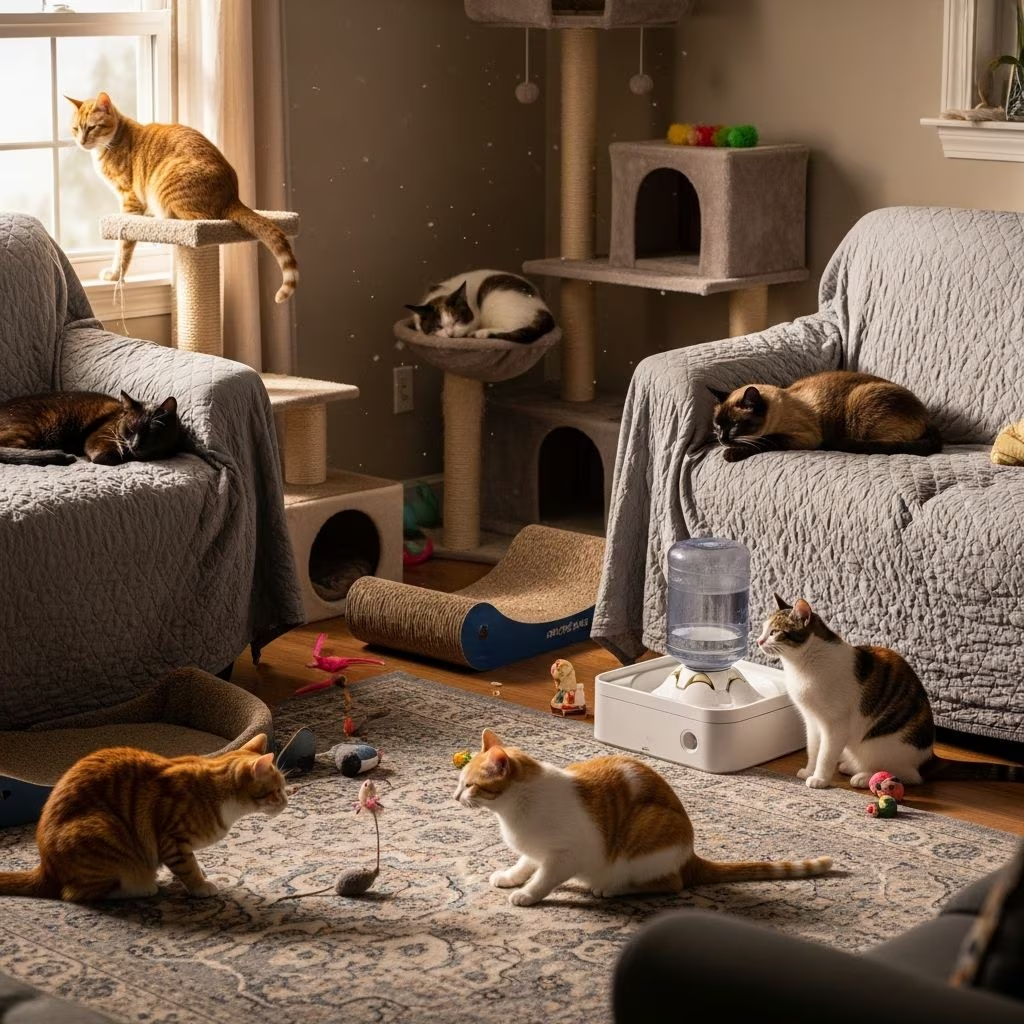
Living with multiple cats can bring endless joy, companionship, and entertainment to your home. However, creating a harmonious multi-cat household requires careful planning to prevent conflicts, stress, and territorial behaviors. Cats are naturally independent but also social creatures that thrive when their needs for resources, space, and attention are met. This guide outlines nine vet-approved tips to ensure your feline family lives peacefully together, drawing from expert insights on cat behavior and welfare.
The 9 Ways to Make Your Home a Multi-Cat Paradise
Transforming your space into a cat-friendly paradise involves strategic resource distribution, thoughtful introductions, and ongoing attention. Below are the key strategies to minimize hissing, fighting, and anxiety while maximizing play and bonding.
1. Offer Enough Litter Trays
One of the most critical aspects of multi-cat living is providing adequate litter facilities. The golden rule is one litter tray per cat plus one extra. For two cats, that’s three trays; for four cats, five trays. This prevents competition and reduces the risk of inappropriate elimination, which can stem from stress or territorial disputes.
Place trays in quiet, accessible locations throughout your home, such as different rooms or floors, but avoid clustering them. Keep them away from food and water areas, as cats prefer separation of elimination and eating zones. Scoop trays daily and fully change litter weekly to maintain hygiene and appeal. Creative placement—like under stairs or in bathroom corners—can help in smaller spaces without compromising privacy.
- Pro Tip: Use different litter types if your cats have preferences, but introduce changes gradually.
- Common Mistake: Placing all trays in one spot, leading to bullying.
2. Provide Food and Water Bowls for All
Cats rarely share food or water bowls comfortably, especially during meals. Equip your household with one set of bowls per cat to avoid mealtime skirmishes. Whether you free-feed or schedule meals, individual stations promote peace.
Distribute bowls across multiple areas: one in the kitchen, another in the living room, and more in quieter spots. Use stainless steel or ceramic bowls for durability and easy cleaning, and elevate them for older cats or those with arthritis. Fresh water is essential—consider fountains to encourage hydration, as running water mimics natural sources.
In multi-cat setups, monitor eating habits to detect bullying early. Some cats may guard bowls, so observe and adjust placements accordingly.
3. Have Different Sleeping Spots
Cats sleep up to 16 hours daily, making ample resting options vital. While some cats cuddle together, others demand solitude. Provide a variety of sleeping spots to accommodate all preferences and prevent disputes over favorites.
Offer cat beds, caves, window perches, baskets, and even open drawers or warm closets. Include sunny windowsills for warmth and bird-watching, shaded nooks for cool retreats, and elevated shelves for security. In a three-cat home, aim for at least five distinct spots.
- Soft, washable beds for cuddlers.
- Enclosed caves for privacy-seekers.
- Vertical spaces like cat trees for territorial cats.
Diversify to match personalities—resource guarding over beds is a top conflict trigger.
4. Vertical Space Is Important
Cats love heights for safety, observation, and play. Install shelves, cat trees, and wall-mounted perches to create a three-dimensional environment. This expands usable space without floor clutter, allowing shy cats to escape and bold ones to survey.
Start with modular shelving systems that interlock, providing ramps and jumps. Place trees near windows for entertainment. Vertical real estate reduces floor tension, as cats claim ‘their’ levels.
| Space Type | Benefits | Examples |
|---|---|---|
| Floor Level | Safety for kittens/elderly | Beds, litter areas |
| Mid-Level | Play and transition | Shelves, ramps |
| High-Level | Observation, escape | Top perches, trees |
5. Spread Resources Around
Minimize sharing flashpoints by distributing essentials widely. Recap: one litter tray per cat +1, individual bowls, one bed per cat minimum, plus extras. Add scratching posts, toys, and climbing structures proportionally.
Space resources to avoid proximity—litter far from food, toys rotated to prevent boredom. In a six-cat home, that’s seven trays, six bowl sets, and abundant toys. This setup fosters equity and cuts aggression by 50-70% per behavior studies.
6. Scratching Posts and Toys for All
Scratching satisfies natural urges for claw maintenance and marking. Provide varied posts: sisal, cardboard, horizontal for some breeds. Toys should abound—wand toys, balls, lasers—rotated weekly.
Ensure enough for simultaneous play, preventing toy guarding. Puzzle feeders add mental stimulation, mimicking hunting.
7. Introduce Them Gradually
Slow introductions set lifelong tones. Prepare resources pre-arrival. Confine new cat to a room with essentials for days/weeks. Swap scents via blankets, then allow supervised sniffs under doors.
Progress to brief visual meets via baby gates, feeding on opposite sides to link positively. Full integration may take weeks—separate at hisses, retry later. Bond individually with each cat during this phase.
- Quarantine new cat 7-14 days for health checks.
- Scent swapping daily.
- Visual access after 3-5 days.
- Supervised meetings post-positive signs.
8. Watch for Stress Signals
Monitor body language: flattened ears, swishing tails, dilated pupils signal tension. Puffed fur, blocking paths, or urine spraying indicate issues. Intervene early with separation, Feliway diffusers, or vet consults for medical rules-outs.
Enrich environment with play sessions to diffuse stress. Track interactions via journal for patterns.
9. Spend Time with Every Cat
Individual attention prevents resentment. Dedicate 10-15 minutes daily per cat for play, grooming, petting. New arrivals need extra bonding, but don’t neglect residents.
Use clicker training or laser pointers for fun. This builds trust, reduces anxiety, and reinforces your role as provider.
Frequently Asked Questions (FAQs)
Can Multiple Cats Live Together?
Yes, most cats happily coexist with ample resources and proper introductions. They enjoy companionship, grooming each other, and play, though personalities vary.
How Many Cats Is Too Many?
No fixed number—consider space, time, and budget. Rule: space for resources without crowding. Three cats suit medium homes; assess per-cat needs.
Pros and Cons of Multiple Cats?
Pros: Constant companionship, shared play, fuller toy use.
Cons: More litter/cleaning, higher costs, potential conflicts.
What If My Cats Fight?
Separate immediately, check resources/health, reintroduce slowly. Consult vet for persistent issues.
Conclusion
A multi-cat home offers companionship but demands preparation. Follow these tips for litter, food, space, and intros to ensure thriving felines. Monitor dynamics, adapt as needed, and enjoy the purr-fect pack life.
References
- Multi-Cat Guidelines — American Association of Feline Practitioners. 2023-05-15. https://catvets.com/resources/multi-cat-household-guidelines
- Litter Box Management for Multiple Cats — Cornell University College of Veterinary Medicine. 2024-02-10. https://www.vet.cornell.edu/departments-centers-and-institutes/cornell-feline-health-center/health-information/feline-health-topics/litter-box-how-often-clean-it
- Cat Behavior in Multi-Cat Homes — International Cat Care. 2023-11-20. https://icatcare.org/advice/multi-cat-households/
- Feline Social Behavior — Journal of Feline Medicine and Surgery (Sage Journals). 2022-09-01. https://doi.org/10.1177/1098612X221099999
- Environmental Enrichment for Cats — The Humane Society of the United States. 2024-01-05. https://www.humanesociety.org/resources/enriching-your-cats-environment



