

How to Leash Train a Dog: A Complete Step-by-Step Guide
Walking on a leash doesn’t come naturally for many dogs. Does your dog pull you down the street? Do they run circles around you or treat their leash like a tug toy? You’re not alone. The good news is that with the right training approach, most dogs can learn to walk politely beside you. Proper leash training opens up a world of fun activities for you and your pup, from hiking and dog-friendly restaurants to basic neighborhood walks.
Whether you’re working with a new puppy, an adult dog, or a senior companion, understanding how to leash train a dog should be at the top of your pet parent priority list. Since there are so many situations where dogs must be leashed, this essential skill will pay dividends for life.
Why Positive Reinforcement Works Best
The key to successful leash training is understanding that yanking on the leash doesn’t help your dog learn what they’re supposed to do—and can actually cause injury to your pup. Instead, positive reinforcement works far better. This means rewarding your dog with treats whenever they’re at your side or moving in the direction you want them to go.
Training a dog to walk on a leash is fundamentally about teaching your dog where you want them to be. By using treats and praise consistently, you’re creating a positive association with being near you during walks. This approach builds trust and makes your dog more eager to stay close rather than pulling ahead.
Before You Begin: Training Session Length
Remember that walking on leash isn’t a skill most dogs learn overnight. Keep your initial training sessions around 10-15 minutes, or even shorter if you’re working with a puppy, since that’s about as long as the typical dog’s attention span will last. When you move to outdoor walks, you can work up to longer sessions—there’s a lot more out there to keep your dog entertained, after all.
Essential Leash Training Supplies
Before you get started with leash training, make sure you have the right equipment:
– Smaller treats (like Pet Botanics training rewards treats) work well because you can feed your dog many during your session- A treat pouch to free up your hands- A clicker (optional but helpful for marking correct behavior)- A quality front-clip harness (recommended over a collar to prevent neck injury)- A fixed-length leash of appropriate size for your dog
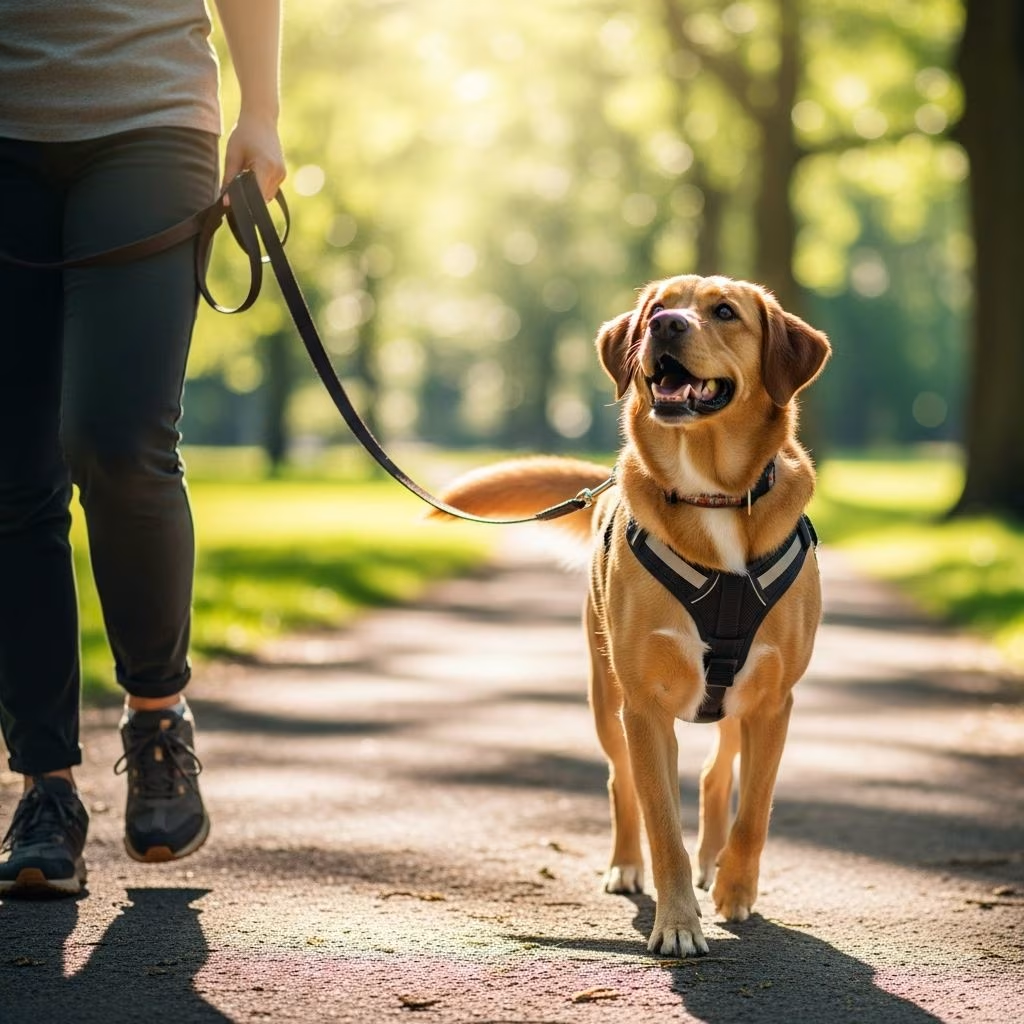
I recommend clipping the dog leash onto a dog harness instead of a dog collar. A quality front-clip harness can help prevent neck injury to pups and can assist you if the dog pulls unexpectedly. The harness provides better control and distributes pressure more evenly across your dog’s body.
Step-by-Step Leash Training Instructions
Step 1: Start in a Small, Quiet Space Indoors
In the beginning, practice leash walking in a small, boring indoor space, like a bathroom or a hallway. Stand quietly near your dog holding a fixed-length leash by the handle. Give your dog the full length of the leash. Avoid absentmindedly wrapping the leash around your hand because that changes the leash length and makes it harder for your dog to learn how much room they have to move.
Starting indoors eliminates outdoor distractions and helps your dog focus on learning the basics of walking beside you. The confined space also makes it easier for you to manage your dog’s movements and reward them quickly when they do the right thing.
Step 2: Introduce the Harness and Leash—With Treats!
If your dog isn’t used to wearing a harness, make the introduction positive and rewarding. Use a treat to lure your dog’s head through the neck hole, and continue feeding treats at each stage of the harnessing process:
– One treat when the harness goes on- Another treat when you clip the harness- A third treat when you attach the leash
This creates a positive association with the harness and leash, making your dog excited about putting them on rather than resistant.
Step 3: Practice Tiny Steps and Reward Movement
Once your dog is comfortable with the harness and leash, take tiny steps forward in your small indoor space. Click your clicker or say “yes” and treat your dog every time they move along with you. Focus on rewarding the behavior you want—walking beside you without tension on the leash.
Initially, you may need to reward every single step. This frequent reinforcement helps your dog understand exactly what behavior earns them treats. As your dog improves, you can gradually space out the rewards.
Step 4: Move to a Larger Training Space
Once your dog is good at this in the small space, move to a larger space and practice stepping forward, clicking and treating each time your dog moves with you. Then practice in a relatively calm outdoor space, like your yard.
Gradually expanding your training environment helps your dog generalize the leash walking behavior to new settings. Each new location presents slightly more challenges and distractions, allowing your dog to build confidence progressively.
Step 5: Extend Training to the Real World
Once your dog is walking nicely outside when you click and feed every step, you can start to click and feed less often. The key is to work within your dog’s limits. Many trainers recommend walking out to the sidewalk, turning one direction and going as far as possible on a loose leash, then turning around and going back to the door. Repeat this process by turning in different directions.
Over the course of multiple walks, gradually extend how far you go. With practice, you’ll be walking comfortably on leash together all over the neighborhood. Start with shorter distances and only add more distance when your dog consistently maintains a loose leash.
Addressing Common Leash Training Challenges
Handling Lunging or Chasing Behavior
If your dog lunges or starts chasing something, stop walking and hold steady. Instead of yanking on the leash, call your dog’s name in a cheerful tone, make kissy noises, or stamp your feet. Once you have your dog’s attention, praise them, hand them a treat, and then walk away, feeding treats with each step, until your dog calms down.
This approach redirects your dog’s focus away from the trigger and back to you. By rewarding them for refocusing on you, you’re teaching them that paying attention to you is more valuable than pursuing the distraction.
Correcting Pulling Behavior
“Untraining” a leash puller is a challenge because you’re competing with muscle memory. Dogs get used to the idea that tension around their neck means forward progress. The secret to curbing a dedicated puller is to teach your dog that pulling never works—meaning, when they pull, the walk comes to a complete stop.
Any time your dog forges ahead and the leash goes tight, stop in your tracks. When your dog slackens the leash by taking a few steps back to you, continue walking. Keep in mind that you’ll have to repeat this sequence frequently until your dog understands that a tight leash makes the walk stop.
It’s best to start working on leash walking behavioral challenges as soon as you notice problems rather than waiting until your dog makes them a permanent part of their behavior.
Managing the “Tug of War” Leash Behavior
If your dog treats their leash like a tug toy, don’t engage in the tug of war. Instead, move the leash gently toward your dog so all tension is released and they can’t get that satisfying tug feeling. If necessary, use two leashes on walks: if your dog grabs one, you can let it fall to the ground while keeping your grip on the other leash.
Once your dog has dropped the leash, start walking, praising and rapid-fire treating. Most dogs decide pretty quickly that walking with you is way more fun than tugging on the leash.
Advanced Techniques for Loose Leash Walking
As your dog progresses, you can employ more advanced techniques to maintain control and encourage good leash walking habits. When your dog pulls, anchor your leash hand against your belly button and calmly walk away with the leash held firmly at your abdomen, creating steady but gentle pressure on your dog as you go. Direct your gaze, shoulders and hips in the direction you’re walking—to your dog, this implies that you’re walking toward something, which just might spark their curiosity and inspire them to join you.
This body language technique communicates your intentions clearly to your dog and makes following you seem more natural and rewarding.
Choosing the Right Leash Equipment
Leash walking tools are simple in theory—all you need is a leash and a collar—but the options are limitless and can be confusing. The two guiding factors when choosing leash walking equipment should be comfort (both human and canine) as well as safety.
Choosing a leash that’s too short makes it difficult for your dog to walk without having tension on the leash, which might accidentally encourage pulling. Conversely, choosing one that’s too long makes it tough for you to manage it. A standard 4-6 foot leash works well for most dogs during training.
Hands-free leashes are another option if you’re looking to exercise with your dog without constantly jerking on your dog’s collar as you swing your arms. Your core, versus your hand, can send a much more stable message to your dog. While it’s more common to find one that goes around your waist, some can be configured multiple different ways, including an over-the-shoulder option. Experiment with the fit of a hands-free leash so it feels stable and doesn’t stress your back.
Frequently Asked Questions
Q: How do I train a dog to walk beside me?
A: To train a dog to walk beside you, practice tiny steps on leash in a small, quiet space and treat them whenever they move along with you. Gradually work up to different areas of your home, larger steps and fewer treats, until they eventually learn to walk beside you while on leash.
Q: How do I teach my dog not to pull on their leash?
A: To teach your dog not to pull on their leash, start by practicing tiny steps in a small, quiet space and treat them whenever they move along with you rather than pulling on the leash. It’s also a good idea to use a harness with a front clip to deter them from pulling. Remember that consistency is key—ensure that pulling never results in forward progress.
Q: How long does it take to leash train a dog?
A: The timeline varies depending on your dog’s age, temperament, and previous experiences. Puppies may take several weeks to months, while adult dogs can sometimes learn faster. Consistency with 10-15 minute daily training sessions will yield the best results.
Q: Can senior dogs learn to walk on leash properly?
A: Yes, dogs of any age can learn to walk on leash with patience and positive reinforcement. Senior dogs may learn at a different pace, but they’re absolutely capable of mastering this skill.
Q: What should I do if my dog ignores treats during training?
A: If your dog isn’t motivated by treats, try training before mealtimes when they’re hungrier, use higher-value treats they love, or consider using toys or praise as rewards instead.
Conclusion: The Long-Term Benefits
Training dogs to walk on leash opens up a world of possibilities for them and you. Dogs need practice to master this challenging skill, and by working through the steps above, you’re on your way to relaxing, enjoyable walks for you both. Stay patient, and remember: it’s worth the time and effort. After all, this is a skill that will pay dividends for life.
Whether you’re training a new puppy, rehabilitating an adult puller, or teaching a senior dog, the principles of positive reinforcement remain the same. With consistency, patience, and the right approach, your dog will become a pleasure to walk alongside.
References
- How to Leash Train a Dog: A Step-by-Step Guide — Chewy Education. 2025. https://www.chewy.com/education/dog/training-and-behavior/leash-train-dog-2
- Stop Your Dog From Pulling on the Leash — Chewy Education. 2025. https://www.chewy.com/education/dog/training-and-behavior/what-to-do-if-your-dog-is-pulling-on-the-leash
- How to Pick the Best Dog Leash for Your Pooch — Chewy Education. 2025. https://www.chewy.com/education/dog/training-and-behavior/how-to-pick-the-best-dog-leash-for-your-pooch
- 6 Dog Walking Mistakes You’re Probably Making — Chewy Education. 2025. https://www.chewy.com/education/dog/training-and-behavior/training-training-tips-6-dog-walking-mistakes-youre-probably-making



