

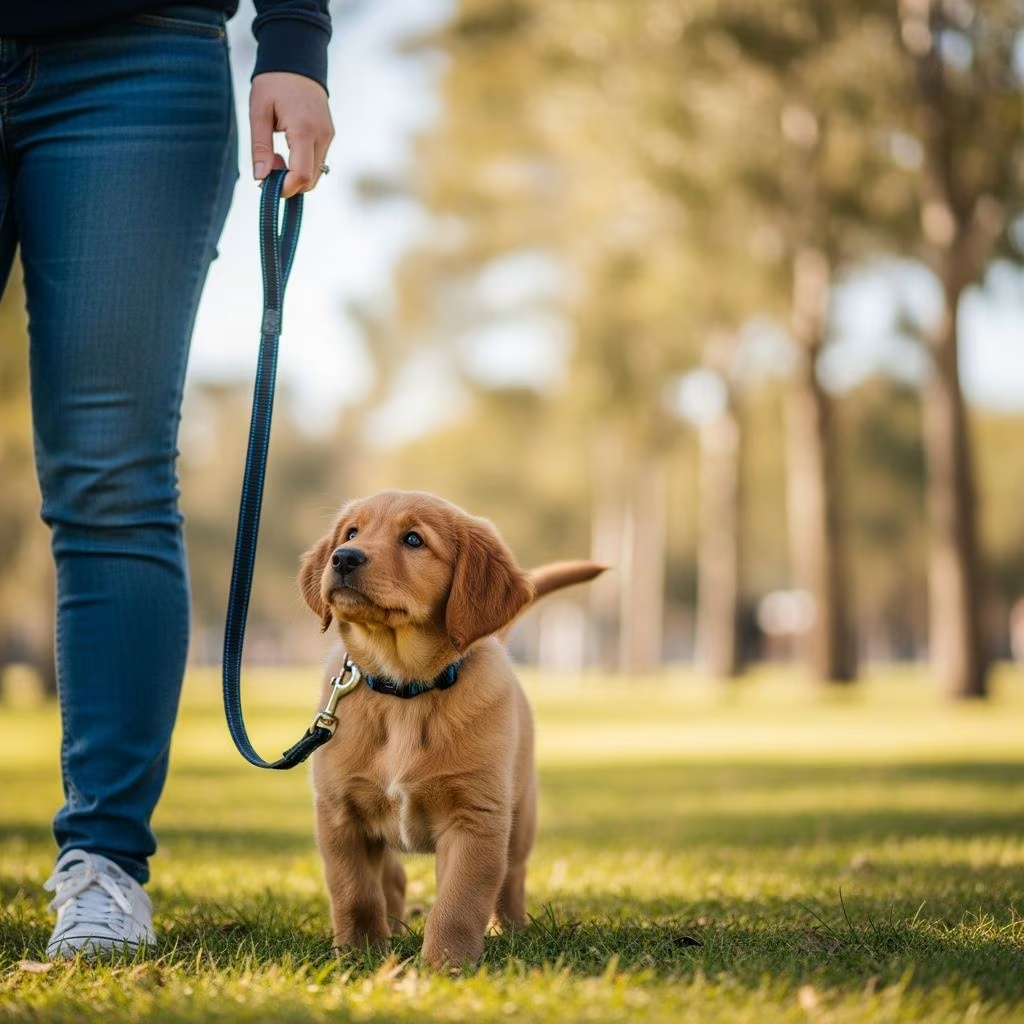
Dogs do not automatically know how to walk politely beside us on a leash — it is a learned skill that takes practice, patience, and consistency. Leash-training your puppy early makes walks safer, calmer, and far more enjoyable for both of you.
This guide walks you through the basics of leash-training, step-by-step training exercises, common challenges, and tips for handling leash reactivity, all using positive, reward-based methods supported by modern behavior science.
The Basics of Leash-Training a Puppy
Leash-training means teaching your puppy to:
- Walk near your side without pulling or lagging.
- Check in with you before rushing toward distractions.
- Move with you when you change speed or direction.
- Relax and enjoy walks without excessive tension or anxiety.
Young puppies naturally want to follow their caregivers, which makes puppyhood an ideal time to begin leash skills. You can start gentle leash training as soon as your puppy is home and comfortable wearing basic equipment like a collar or harness.
Most puppies can develop solid leash manners within a few weeks of consistent, short sessions. However, many dogs go through a “teenage” phase around 8–12 months where they test boundaries and may temporarily seem to “forget” their training. Plan to keep reinforcing good leash habits throughout adolescence rather than expecting training to be fully finished in puppyhood.
Essential Equipment for Leash-Training
Before you start, gather a few key tools to keep training safe and comfortable:
- Flat collar or well-fitted harness that does not restrict shoulder movement or put pressure on the neck.
- Standard leash (about 1.5–2 meters / 4–6 feet), not a retractable line, so you can manage tension consistently.
- Small, soft treats your puppy loves, cut into pea-sized pieces.
- Optional: a clicker or a consistent reward marker word such as “Yes!”
Research suggests harnesses and well-fitted equipment reduce pressure on the neck and may lower the risk of injury compared to relying solely on collars, especially for dogs that pull.
The Top Steps to Leash-Train Your Puppy
Leash-training works best when you build skills gradually. The following steps move from low-distraction indoor practice to real-world walks.
Step 1: Let Your Puppy Wear the Leash or Harness Indoors
Start by helping your puppy feel comfortable with their walking gear before you focus on formal walking.
- Put the harness or collar on briefly, then reward with treats, play, or praise.
- Let your puppy move freely around the house while wearing the gear, supervised.
- If they seem worried or scratch at the harness, distract them with a simple game or a sniffing activity, then remove the gear after a short period.
- Gradually increase the time they wear the harness or collar so it becomes part of normal life.
If the leash itself is new, clip it on and let your puppy drag it under close supervision so they get used to the weight and feel, preventing any sudden surprises once you start active training.
Step 2: Begin in a Safe, Low-Distraction Area
Early leash-training should happen somewhere quiet, such as your living room, hallway, or fenced yard. Puppies learn best when they are not overwhelmed or overstimulated.
- Choose a time when your puppy is alert but not overly excited or exhausted.
- Clip on the leash in your quiet space.
- Stand still and wait for your puppy to approach or look at you.
- Mark that attention (with a click or a word) and reward at your side.
The goal is to teach your puppy that being close to you, especially near your leg, is highly rewarding. You are building the foundation for loose-leash walking by making your side the “best place to be.”
Step 3: Build Value at Your Side and Take a Few Steps
Once your puppy is happy to stand near you, you can begin moving together.
- Hold a treat at the level of your leg, right where you want your puppy’s head or shoulder to be.
- Let your puppy come to that spot and take the treat.
- Take a single step forward. If your puppy moves with you and stays close, mark and reward at your side again.
- Repeat 1–3 steps at a time, always rewarding in the position you want.
As your puppy understands the game, gradually reduce how often you show the treat first:
- Take one or two steps before rewarding.
- Work up to several steps, then a short straight line across the room.
- Keep the leash loose; avoid pulling your puppy into position.
Short, frequent sessions of 3–5 minutes match the typical attention span of puppies and reduce frustration for both of you.
Step 4: Transition from Indoors to Outdoor Environments
When your puppy can walk beside you with a loose leash indoors, it is time to gradually add more distractions.
- Start in a fenced yard or very quiet outdoor space if possible.
- Repeat the same walking game: a few steps at your side, mark, and reward.
- Keep sessions short so your puppy does not get too overstimulated.
- Slowly introduce busier environments: a quiet sidewalk, then a slightly more active street.
Because smells, sounds, and sights outdoors are highly stimulating, you may need to increase the value of your rewards outside (for example, using higher-value treats) to compete with these distractions.
Step 5: Relax the Leash and Use the Real World as a Reward
As your puppy becomes reliable about staying near you with treats, you can start using access to the environment as another reward.
- Walk with a loose leash and wait for your puppy to glance back or check in with you.
- When they do, give a verbal cue such as “Okay, go sniff!” and allow them to move to a nearby smell or spot.
- If they pull hard toward something, stop and wait until they return to you or the leash relaxes, then move forward again.
This teaches your puppy that polite walking and checking in are how they earn the chance to explore, rather than pulling you toward interesting things.
| Training Phase | Main Goal | Typical Rewards |
|---|---|---|
| Indoor introduction | Comfort with equipment and staying near you | Treats, praise, short play |
| Early loose-leash walking | Following your movement at your side | Frequent food rewards at your leg |
| Outdoor transition | Maintaining focus with light distractions | High-value treats, calm praise |
| Real-world walks | Consistent loose-leash walking | Access to sniffing and exploring as a reward |
The Benefits of Leash-Training
Good leash skills do more than make walks pleasant; they support your dog’s safety, well-being, and social success.
Safety
- A dog who walks on a loose leash is easier to control around traffic, other dogs, or sudden surprises.
- Reduced pulling lowers the risk of falls or shoulder injuries for guardians, especially older adults.
- Using humane equipment and avoiding harsh corrections can lower the risk of neck or trachea injuries compared with high-force methods.
Bonding and Communication
- Leash-training relies on clear, consistent communication, which helps your puppy learn to trust and pay attention to you.
- Positive reinforcement-based training has been associated with improved dog–owner relationships and lower signs of fear or stress during training.
Physical and Mental Health
- Comfortable, predictable walks support regular exercise, which helps maintain a healthy weight and cardiovascular fitness.
- Exploring new environments and smells provides mental enrichment, reducing boredom and some forms of problem behavior.
- Calmer walks make it easier to practice other cues like “sit,” “stay,” and “leave it” in real life.
How to Handle Leash Reactivity
Leash reactivity refers to intense reactions, such as barking, lunging, or growling, when a dog sees triggers like other dogs, people, or moving objects while on a leash. This is often driven by frustration, fear, or overexcitement, and can be made worse by tight leashes or harsh corrections.
If your puppy shows early signs of reactivity, address it with careful management and positive training.
Foundations for Reactive Dogs
- Begin training far away from triggers, at a distance where your puppy can notice them but still remain calm.
- Pair the sight of the trigger with treats, games, or praise to help shift your dog’s emotional response from concern to positive expectation.
- Ask for simple behaviors your puppy already knows (such as eye contact or a hand target), then reward generously.
Gradual Exposure with Positive Reinforcement
- Ask a friend with a calm dog or neutral person to appear at a safe distance.
- If your puppy remains relaxed or glances at the trigger and then back at you, mark and reward.
- Repeat until your puppy consistently offers calm responses.
- Slowly reduce the distance over multiple sessions, always staying below the point where your puppy becomes overwhelmed.
Do not rush this process; some dogs need many short sessions over weeks or months. Avoid punishing reactive behavior, as this may increase fear or anxiety and does not address the underlying emotional cause.
Techniques for Effective Puppy Leash-Training
Several general principles make your leash-training more successful and humane.
Keep Sessions Short and Clear
- Limit focused training to 3–5 minutes at a time, several times a day.
- End sessions before your puppy becomes overly distracted or tired.
- Use a consistent cue word such as “Let’s go” or “Close” to signal when formal walking practice starts.
Use Positive Reinforcement
- Reward the behaviors you want: checking in with you, staying by your side, and keeping the leash loose.
- Ignore or calmly interrupt unwanted behavior by stopping movement, rather than jerking the leash.
- Evidence from behavior research supports reward-based methods as effective and less likely to cause fear or aggression than punishment-based approaches.
Be Consistent with Rules and Cues
- Decide in advance: is pulling ever going to work? If not, make sure everyone in the household follows the same rule.
- Use the same words and gestures each time for key cues like “sit,” “wait,” and “let’s go.”
- Practice in different locations so your puppy learns that leash rules apply everywhere, not just at home.
Common Leash-Training Challenges (and Solutions)
Even with careful training, most puppies run into a few common hurdles. Addressing them early keeps bad habits from becoming long-term patterns.
Puppy Pulling on the Leash
Puppies pull because they naturally want to move faster toward interesting things. To reduce pulling:
- When your puppy pulls, stop moving. Do not yank back; simply become a “tree.”
- Wait for the leash to loosen or for your puppy to turn back toward you.
- Mark and reward, then move off again in a slightly different direction.
- Reward generously whenever your puppy walks beside you with a slack leash.
Puppy Stopping or Refusing to Walk
- Check for fear triggers such as loud noises, busy roads, or unfamiliar surfaces.
- Use cheerful encouragement and high-value treats to coax a few steps, then reward.
- Keep early walks short and end on a positive note.
Puppy Biting or Chewing the Leash
- This often signals that your puppy is overstimulated, frustrated, or unsure what to do.
- Calmly redirect them to a tug toy or chew held in your opposite hand.
- Shorten the walk or move to a calmer environment if biting persists.
Overexcitement Around People or Dogs
- Increase distance from exciting dogs or people until your puppy can focus on you.
- Reward calm behavior and eye contact before allowing polite greetings.
- If your puppy becomes too excited, skip the greeting and walk away once they can move with you again.
The Bottom Line: Building Lifelong Leash Skills
Leash-training a puppy is an investment that pays off throughout your dog’s life. By starting in calm environments, using clear cues and consistent rewards, and gradually adding real-world distractions, you teach your puppy that walking near you on a loose leash is both safe and rewarding.
Staying patient, keeping training sessions short, and focusing on positive reinforcement will help your puppy grow into a confident adult dog who can enjoy walks in a wide range of environments.
Frequently Asked Questions (FAQs)
Q: When should I start leash-training my puppy?
You can begin gentle leash-training as soon as your puppy is home and comfortable wearing a collar or harness, typically at 8–10 weeks of age. Start indoors with very short, positive sessions and gradually progress to outdoor spaces.
Q: How long does it take to leash-train a puppy?
Many puppies grasp basic loose-leash walking within a few weeks of consistent practice. However, expect to reinforce skills throughout adolescence, when dogs often test boundaries and may temporarily regress.
Q: Is it better to use a collar or a harness for leash-training?
A well-fitted harness that does not limit shoulder movement or rub sensitive areas is generally recommended, especially for puppies that pull. Research indicates that collars can create higher forces on the neck, potentially increasing the risk of injury in strong pullers.
Q: How can I stop my puppy from biting the leash?
Leash biting often means your puppy is overstimulated or frustrated. Move to a calmer area, shorten the walk, and provide an appropriate tug toy to hold instead. Reward calm walking and remove opportunities to play with the leash itself.
Q: What should I do if my puppy is reactive on leash?
Work at a distance where your puppy can see triggers without overreacting, and pair each sighting with treats and praise. Gradually decrease the distance over time while monitoring body language. For intense or persistent reactivity, consult a qualified, reward-based trainer or veterinary behaviorist.
References
- AVSAB Position Statement on Humane Dog Training — American Veterinary Society of Animal Behavior. 2021-10-01. https://avsab.org/resources/position-statements/
- Puppy Socialization — American Veterinary Medical Association. 2020-06-15. https://www.avma.org/resources/pet-owners/petcare/puppy-socialization
- An Investigation of Force Potential against the Companion Dog Neck Associated with Collar Use — Joshua Bailey et al., Journal of Veterinary Behavior. 2024-10-01. https://doi.org/10.1016/j.jveb.2024.07.003
- Environmental Enrichment for Dogs — Royal Society for the Prevention of Cruelty to Animals (RSPCA). 2022-03-10. https://www.rspca.org.uk/adviceandwelfare/pets/dogs/environment
- Do aversive-based training methods compromise dog welfare? A literature review — Ana Catarina Vieira de Castro et al., Journal of Veterinary Behavior. 2020-07-01. https://doi.org/10.1016/j.jveb.2019.12.075



