

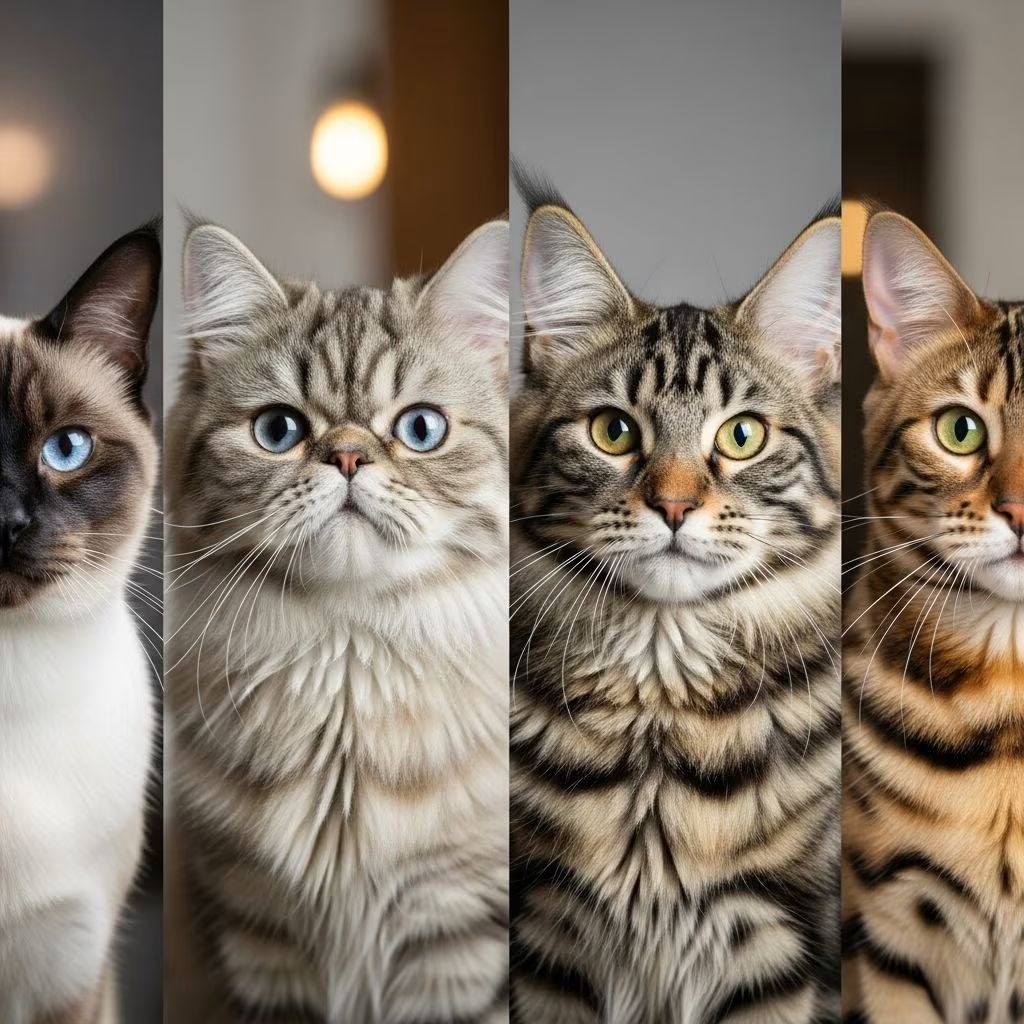
Determining your cat’s breed can reveal fascinating insights into its personality, health predispositions, and ancestry. Most pet cats are mixed breeds, but recognizing key traits like size, coat patterns, and behavior helps narrow down possibilities. This guide covers physical characteristics, behavioral cues, and modern tools like AI classifiers and DNA testing to identify your feline’s breed accurately.
Why Knowing Your Cat’s Breed Matters
Understanding your cat’s breed provides valuable information for care. Certain breeds have specific health needs, such as Persians prone to respiratory issues or Maine Coons requiring more grooming due to long fur. It also explains temperament—active Bengals versus laid-back Ragdolls—and aids in tailored nutrition and exercise. Even for mixed breeds, identifying dominant traits informs better pet parenting.
With over 40 recognized cat breeds by organizations like The International Cat Association (TICA), identification starts with observation. Combine multiple traits for reliability, as single features rarely confirm a breed.
Step 1: Assess Size and Weight
Cat breeds vary significantly in size, from petite Singapuras to giants like Maine Coons. Measure your cat’s length from nose to tail base and weigh it regularly.
- Small breeds (under 8 lbs): Singapura (smallest domestic breed at 4-8 lbs), Munchkin (dwarf legs make them appear small).
- Medium breeds (8-12 lbs): American Shorthair, Domestic Shorthair mixes, Abyssinian.
- Large breeds (12+ lbs): Maine Coon (up to 25 lbs), Norwegian Forest Cat, Siberian.
Munchkins are notable for short legs, not overall small size, sharing genetics with other dwarf breeds. Track growth; kittens reach adult size by 1-2 years. Example: A 15-lb cat with tufted ears likely has Maine Coon heritage.
Face Shape and Features
Facial structure offers strong clues, though not all breeds have distinct shapes.
- Round face: Persian, Exotic Shorthair—broad skulls with short noses (brachycephalic).
- Triangular face: Siamese, Oriental Shorthair—wedge-shaped heads.
- Square muzzle: American Shorthair, British Shorthair.
- Long, narrow face: Abyssinian, Somali.
Observe whisker pads and chin; flat faces correlate with breathing issues in Persians.
Ears
Ear shape, size, and placement distinguish breeds.
| Ear Type | Breeds | Characteristics |
|---|---|---|
| Large, wide-set | Maine Coon, Norwegian Forest | Lynx tips (tufts), alert posture. |
| Curled backward | American Curl | Unique cartilage curl, varying degrees. |
| Folded forward | Scottish Fold | Genetic fold; health concerns like arthritis. |
| Tall, pointed | Siamese, Bengal | Sometimes cupped or flared. |
Normal ears are upright and triangular; deviations point to specific breeds.
Eyes
Eye shape and color are genetic markers.
- Almond-shaped: Siamese (blue), Abyssinian (gold/green).
- Round: Persian (copper/blue), British Shorthair.
- Odd-eyed (heterochromia): Turkish Van, Japanese Bobtail—linked to white spotting gene.
Most cats have yellow/green eyes; vivid blue suggests pointed breeds like Siamese.
Coat Colors, Patterns, and Length
Coat is a major identifier. Length first:
- Short hair: American Shorthair, Bengal, Sphynx (hairless).
- Medium: Scottish Fold, British Shorthair.
- Long hair: Persian, Maine Coon, Ragdoll.
Patterns:
- Solid color: Black (Bombay), white (Turkish Angora), red—simple, no markings.
- Bi-color/Piebald: Base color + white patches; e.g., tuxedo cats.
- Tortoiseshell: Black/orange patches, no white—mostly females.
- Calico: Tri-color (white + two others)—99% female.
- Pointed: Darker face/ears/tail/paws (Siamese, Himalayan)—temperature-sensitive pigmentation.
- Tabby: Mackerel (striped), classic (swirls), spotted (Bengal).
Hairless breeds like Sphynx have wrinkled skin; Rex breeds (Cornish, Devon) have curly fur.
Tail
Tails are mostly standard, but exceptions stand out.
- Long, standard: Most breeds.
- Short/bobbed: Japanese Bobtail (pom-pom shape), American Bobtail, Kurilian Bobtail—natural, not cropped.
- Bushy: Maine Coon.
Short tails are rare and breed-specific.
Behavior and Personality
Temperament correlates with breeds, though environment influences it.
- Affectionate/lap cats: Ragdoll, Persian.
- Playful/energetic: Bengal, Abyssinian.
- Calm/independent: Russian Blue, Chartreux.
- Vocal: Siamese, Oriental.
- Social: Maine Coon (dog-like).
Observe hunting style, vocalization, and social needs.
Methods to Confirm Your Cat’s Breed
Compile traits into a search: “cat breed + [trait1] + [trait2] + …” e.g., “cat breed calm large long fur tan points”. Cross-reference breed lists per trait for overlaps.
AI and App Tools
Upload photos to AI classifiers for instant predictions. Nyckel’s free tool uses the Oxford Cats Dataset, identifying 14 breeds like Persian and American Shorthair with confidence scores. Apps like Cat Scanner analyze images in seconds. Useful for visuals but less accurate for mixed breeds.
Genetic Testing (Most Accurate)
DNA tests analyze cheek swabs for precise breed composition, health risks, and wildcat ancestry. Top options:
| Test | Breeds Detected | Key Features |
|---|---|---|
| Basepaws | 21+ breeds, 4 categories | Wildcat Index, 13 disease screens, lifetime updates. |
| Wisdom Panel | Comprehensive | Health risks, detailed ancestry. |
Ideal for mixes; vets recommend for breeding or health planning. Accuracy depends on database size. Consult your vet for kits like Basepaws.
Frequently Asked Questions (FAQs)
What if my cat shows traits from multiple breeds?
It’s likely a mixed breed. DNA testing reveals percentages, e.g., 40% Maine Coon, 30% Persian.
Can I identify breed from kitten photos?
Partially; coat and face emerge early, but size and behavior take time. Wait 6-12 months.
Are most pet cats purebred?
No, over 95% are domestic shorthairs/mixes. Purebreds are rare outside breeders.
Do hairless cats have breeds?
Yes, Sphynx, Lykoi,Elf—identified by skin texture and body type.
Is genetic testing worth it?
Yes for health insights and curiosity; screens for 20+ conditions.
Final Tips for Breed Identification
Document photos from multiple angles, note measurements, and behaviors. Consult breed standards from CFA or TICA. For shelters, accurate ID aids adoptions. Patience yields rewarding discoveries about your cat’s heritage.
References
- Identify cat breeds using AI – Nyckel — Nyckel. 2025. https://www.nyckel.com/pretrained-classifiers/cat-breed-identifier/
- 3 Ways To Determine Your Cat’s Breed — YouTube. 2023-10-01. https://www.youtube.com/watch?v=tbEYFtjGfio
- What Breed Is My Cat? Vet Approved Identification Guide — Catster. 2025. https://www.catster.com/lifestyle/what-breed-is-my-cat/
- 4 Best Cat Breed DNA Tests in 2025 — DNA Weekly. 2025-01-01. https://www.dnaweekly.com/blog/best-cat-breed-dna-test/
- Cat Identification Guide — Alley Cat Allies. 2024. https://apps.alleycat.org/resources/cat-identification-guide/



