

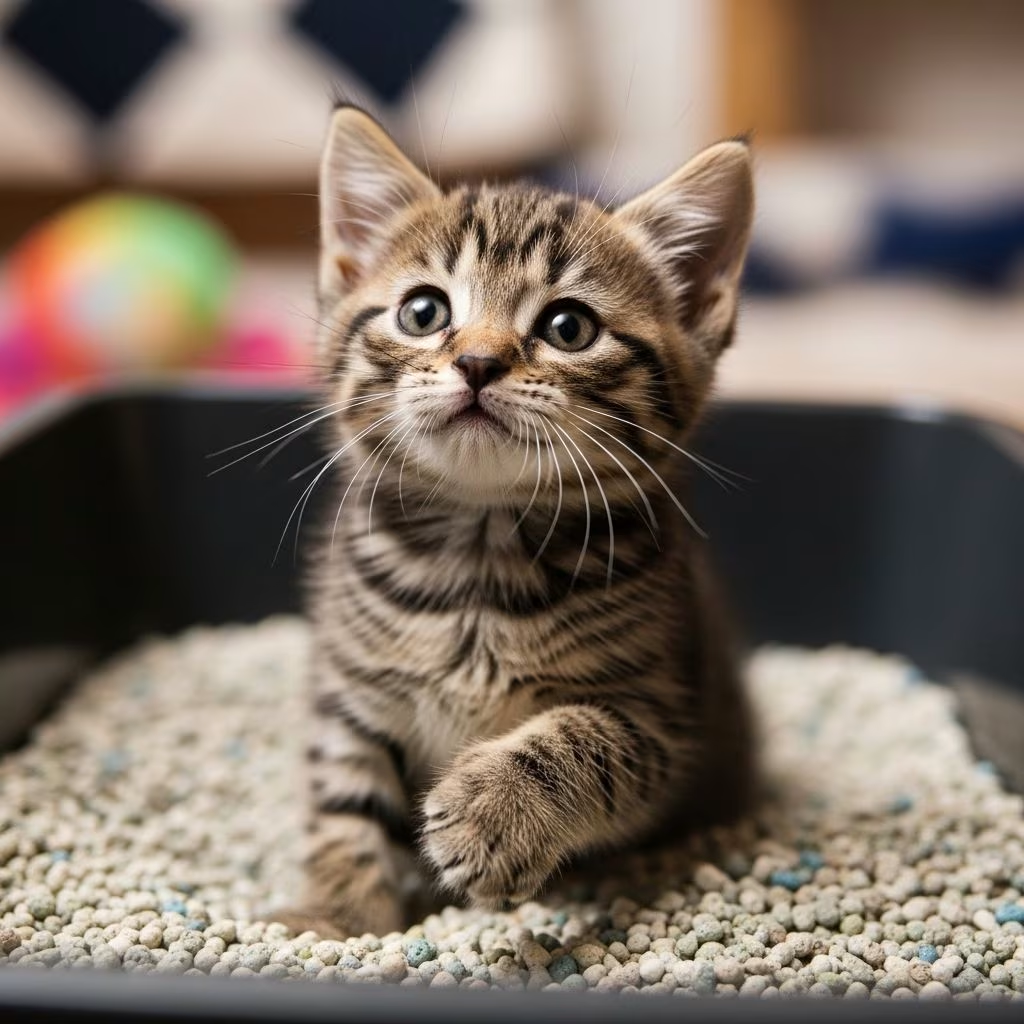
Kittens have tiny bladders and developing digestive systems, making it crucial to recognize when they need to eliminate. Early detection of these **signs** prevents accidents, speeds up litter training, and builds good habits from the start. This guide covers everything from behavioral cues to training strategies and when to seek veterinary help.
Understanding Kitten Bladder and Bowel Development
Newborn kittens cannot eliminate on their own; mother cats stimulate them by licking until around **3 weeks of age**. At this stage, introduce a litter box gently. By 4-8 weeks, most kittens instinctively seek soft substrates like litter to dig and bury waste, mimicking natural behaviors.
Young kittens (under 8 weeks) can only hold urine for 1 hour per month of age, similar to puppies. Frequent breaks are essential—every 1-2 hours, after meals, play, and naps. As they mature to 3-4 months, reliability improves with consistent training.
- Bladder capacity: Small; expect urination every 2-4 hours in young kittens.
- Bowel movements: 3-4 times daily, often after eating.
- Key factor: Diet influences frequency—kibble-fed kittens poop less often than wet food eaters.
Common Signs Your Kitten Needs to Pee or Poop
Watch for these **pre-elimination behaviors** to intervene quickly. Missing them leads to accidents, as many owners overlook subtle cues like sniffing or circling.
| Sign | Description | Urgency Level |
|---|---|---|
| Sniffing the floor | Nose to ground, intense smelling in corners or new spots | High—immediate action needed |
| Scratching/pawing | Scraping floor or furniture as if digging a hole | High—often seconds from going |
| Crouching or circling | Low posture, walking in tight circles | Medium to high |
| Whining or restlessness | Vocalizing, pacing, or hiding behind furniture | Medium—building pressure |
| Disappearing suddenly | Slipping away to quiet areas like under couches | High—instinct to hide |
These signals appear most reliably after triggers: waking, eating, drinking, or vigorous play. Place the kitten in the litter box immediately upon spotting them—gently, without scolding. Praise calmly after success to reinforce the behavior.
How Often Do Kittens Need to Pee and Poop?
Frequency varies by age, diet, and health. Use this as a baseline:
- 2-4 weeks: Every 1-2 hours; stimulate if needed.
- 4-8 weeks: Pee 4-6 times daily; poop 3-4 times.
- 2-4 months: Pee every 3-4 hours; poop 2-3 times.
- Over 4 months: Adults pee 2-4 times, poop 1-2 times daily.
Schedule potty breaks: upon waking, 15-30 minutes post-meal, after play, and before bed. Limit water at night to reduce accidents.
Steps to Litter Train Your Kitten Effectively
Litter training succeeds 95% of the time with proper setup. Follow these steps:
- Choose the right litter: Sandy, clumping litter mimics soil; avoid scented or dusty types for kittens.
- Optimal box setup: Low-sided box, quiet, accessible spot—not near food or noisy appliances. One box per kitten, plus one extra.
- Introduce at 3 weeks: Place kitten in box after meals; dig litter with your hand to demonstrate.
- Confine initially: Use a single room with box, food, and toys to prevent roaming accidents.
- Positive reinforcement: Praise and treat immediately after use—never delay rewards.
Transition pads to box gradually if starting outdoors.
Common Litter Training Mistakes and Fixes
Avoid these pitfalls to accelerate success:
- Mistake 1: Inconsistent schedule. Fix: Timed breaks every few hours.
- Mistake 2: Punishing accidents. Fix: Ignore mistakes; clean with enzymatic cleaners to erase scents. Punishment causes fear and hiding.
- Mistake 3: Wrong box location. Fix: Quiet, private, easy access.
- Mistake 4: Ignoring medical issues. Fix: Vet check for UTIs if sudden changes.
- Mistake 5: Family inconsistency. Fix: Unified commands like “litter time.”
What to Do After a Kitten Accident
Stay calm—accidents are learning opportunities. Steps:
- Interrupt gently without yelling: Clap or say “no” softly, carry to box.
- Clean thoroughly: Enzymatic cleaners remove pheromones drawing them back.
- Assess cause: Was a sign missed? Box dirty? Schedule off?
- Reward successes: High-value treats build positive associations.
Never rub nose in mess—it damages trust.
When to See a Vet for Potty Problems
Rule out health issues if:
- Sudden accidents after training.
- Blood, straining, or frequent small urinations (UTI signs).
- Diarrhea, constipation, or unusual poop.
- No improvement after 4 weeks of consistent training.
Parasites, diet issues, or infections common in kittens. Early vet visits prevent chronic problems.
Advanced Tips for Reliable Litter Habits
- Fed on schedule for predictable poops.
- Multiple boxes in multi-cat homes.
- Scoop daily; full clean weekly.
- Monitor for stress: Moves or new pets can cause regressions.
Patience yields results—most kittens are reliable by 4 months.
Frequently Asked Questions (FAQs)
Q: How long does litter training take?
A: 1-4 weeks for most; full reliability in 3-4 months with consistency.
Q: What if my kitten ignores the litter box?
A: Check location, litter type, cleanliness; vet for UTIs.
Q: Can I use potty pads for kittens?
A: Yes, initially; transition to litter to avoid pad confusion.
Q: Why is my trained kitten having accidents?
A: Medical issue, stress, dirty box, or missed signs—investigate.
Q: When can kittens start litter training?
A: Around 3 weeks; stimulate younger ones.
References
- Top 10 Potty Training Mistakes & How to Fix Them Fast — Best Care Pet Hospital. 2023. https://www.bestcarepethospital.com/potty-training-mistakes/
- How to Litter Train a Kitten: Tips From Cat Experts — Chewy. 2024. https://www.chewy.com/education/cat/new-cat/how-to-litter-train-your-new-kitten-in-5-easy-steps
- How & When to Litter Train a Kitten — Purina US. 2024. https://www.purina.com/articles/cat/kitten/training/how-to-litter-train-kitten
- House Training for Kittens and Cats — VCA Animal Hospitals. 2024. https://vcahospitals.com/know-your-pet/kitten-behavior-and-training—litter-box-training
- Introducing Your Kitten to Their Litter Environment — Hartz. 2023. https://www.hartz.com/introducing-your-kitten-to-their-litter-environment/
- Litter Training — Kitten Lady. 2023. http://www.kittenlady.org/litter



