

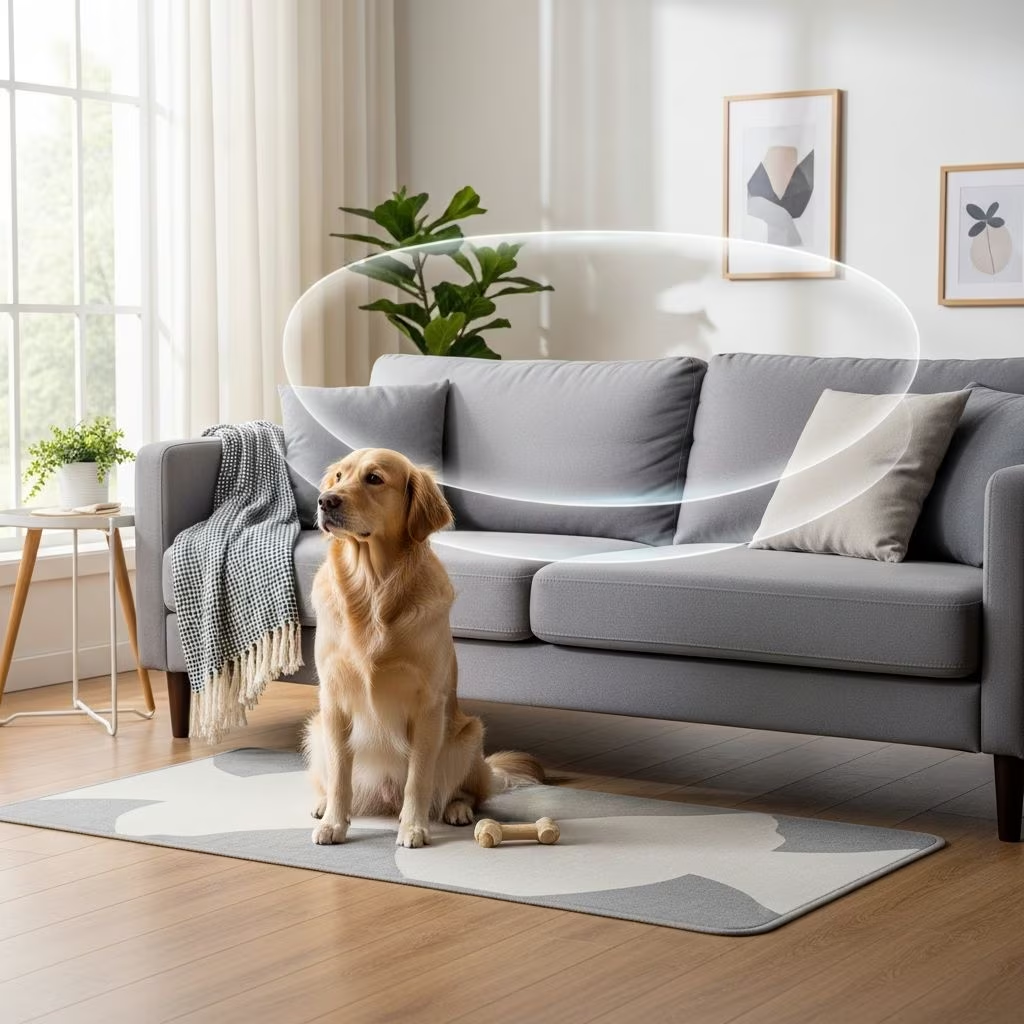
Having your furry companion snuggle up on the couch can seem endearing at first, but it often leads to fur-covered cushions, potential damage to your furniture, and an uncomfortable situation when guests arrive. The good news is that with patience, consistency, and the right training techniques, you can teach your dog to respect furniture boundaries. Professional dog trainers have developed effective strategies that work for puppies and adult dogs alike, transforming your couch from a forbidden temptation into a space your dog willingly avoids.
Why Training Your Dog to Stay Off the Couch Matters
Beyond keeping your furniture pristine, teaching your dog proper boundaries creates a safer and more harmonious living environment. Dogs that jump on furniture may accidentally injure small children, and expensive sofas can suffer permanent damage from claws and constant jumping. More importantly, establishing clear rules helps your dog understand what behaviors are acceptable in your home, reducing frustration for both you and your pet.
1. Establish a No-Couch Rule Early and Consistently
The foundation of successful furniture training begins the moment your dog joins your household. Enforcing a no-couch rule from day one creates a clear expectation that’s easier to maintain than trying to reverse years of couch privileges. Consistency is absolutely critical—if you allow your dog on the couch one day but not the next, you’ll confuse them and undo your training progress.
According to Bradley Phifer, CBCC-KA, CPDT-KSA, CCPDT, executive director and owner of Bradley Phifer Dog Training in Indianapolis, an early and consistent boundary is key to success. This means everyone in your household must enforce the same rules without exception. If one family member allows couch access while another prohibits it, your dog will become confused about where they stand.
Creating a Unified Household Approach
Before you begin training, gather all household members and establish the ground rules. Discuss whether you want your dog to never access the couch or if you’re willing to allow couch time under specific conditions with permission. Once everyone agrees on the policy, make sure every person enforces it equally. This unified approach dramatically increases training effectiveness and prevents mixed messages that could derail your efforts.
2. Give Your Dog Their Own Comfortable Space
Dogs are naturally drawn to comfortable, cozy spots where they can rest and observe their surroundings. Rather than simply telling your dog “no,” provide an attractive alternative that meets these needs. A designated dog bed, mat, or crate placed strategically in your living room gives your dog their own comfortable territory to settle into instead of the couch.
Setting Up the Ideal Dog Bed Location
Place your dog’s bed near the couch so they can still be part of the family activities while respecting furniture boundaries. The proximity makes the bed an appealing alternative rather than a punishment zone. Choose a bed that suits your dog’s size and comfort preferences—memory foam beds work well for older dogs, while younger dogs may prefer raised beds that provide a vantage point for observing the household.
When introducing the bed, walk your dog over to it and use positive reinforcement. Praise them enthusiastically and offer treats when they step onto the bed. Ask them to lie down, reward them again, and continue feeding treats every few seconds while they remain on the bed. This creates a positive association with their designated space, making it feel like a reward rather than a consolation prize.
Teaching the “Go to Bed” Cue
Once your dog is comfortable with their bed, teach them a reliable “go to bed” cue. Start by luring them onto their bed with a high-value treat, rewarding them for lying down, and gradually adding the verbal cue. Over time, your dog will learn to go to their bed on command, even when the couch seems tempting. This cue becomes invaluable during moments when your dog might otherwise gravitate toward the furniture.
3. Teach Your Dog a Reliable “Off” Cue
Even with prevention strategies in place, your dog will occasionally attempt to climb on the couch, especially during the learning phase. Having a very reliable “off” cue gives you an immediate tool to redirect this behavior. The word “off” is preferable to “down” since most people use “down” to mean “lie down,” which could create confusion in your dog’s mind.
Step-by-Step Training for the “Off” Command
Step 1: Capture the Behavior – Next time your dog has his paws up on something—whether it’s the couch, a chair, or even your leg—say “off” in a clear, calm voice. Wait a beat and then toss a treat to the side. Your dog will have to get his paws off whatever he’s on to retrieve the treat.
Step 2: Praise and Reinforce – As soon as your dog gets all four paws on the ground, praise him enthusiastically and toss another treat by his feet. This teaches him that staying on the floor is worth his effort and attention. The positive association with the “off” command and reward is essential for long-term compliance.
Step 3: Build Consistency – Repeat this sequence consistently until your dog starts getting off objects as soon as he hears the word “off,” even before you toss the treat. At this level, your dog understands the behavior cognitively. Continue using treats, but you can gradually take more time to find one before tossing it. After a few weeks, reduce treat frequency to every few repetitions, then switch to praise and petting.
Using the “Off” Cue Effectively
When trained this way, the “off” cue works universally—whether your dog jumps on a person, places paws on the front door, or climbs onto the couch. This versatility makes it one of the most valuable commands in your training arsenal. For dogs who get overly excited, professional trainers recommend keeping them on a leash during everyday scenarios while learning the command. A gentle leash tug combined with the verbal cue provides additional guidance when needed.
4. Teach Your Dog a “You Have Permission to Get on the Couch” Cue
If you prefer complete couch freedom for your dog, skip this step. However, many pet owners appreciate allowing cuddle time on the couch under specific conditions. Teaching a permission-based cue like “Up!” helps your dog clearly understand when they’re welcome and when they’re not, eliminating ambiguity.
Training the “Up” Command
Step 1: Introduce the Cue – Grab some high-value treats and walk over to the couch. Pat the cushion with your hand while saying “up” (or whatever permission cue you prefer). Make this action fun and inviting.
Step 2: Reward and Settle – As soon as your dog jumps up on the couch, praise him warmly and feed him a treat. Let him settle in beside you for a little while before telling him to get “off.” This teaches him that jumping on the couch in response to permission is a positive experience.
Step 3: Practice and Repeat – Repeat steps one and two several times, then take a break. Sessions of 5-10 minutes work best for maintaining your dog’s focus and enthusiasm.
Step 4: Build Independence – Continue practicing until your dog starts jumping onto the couch as soon as you say “up,” before you even pat the couch. Once he reaches this level, your dog clearly understands the behavior. You can quickly phase out treats for this command because getting on the couch and spending quality time with you provides its own positive reinforcement.
Establishing Clear Household Rules
Once your dog understands both “up” and “off,” establish these household rules and ensure everyone follows them:
Rule 1: If your dog jumps up on the couch without permission, whoever is nearby should say “off” and encourage the dog to go to their bed instead.
Rule 2: When people want cuddle time, they can invite the dog onto the couch by saying “up.”
This clear distinction removes confusion and helps your dog understand that the couch isn’t permanently off-limits—it’s just a space they access with permission.
Block Access When You’re Away
During the training phase, preventing unsupervised access to the couch helps prevent your dog from practicing the unwanted behavior when you’re not there to correct it. Use baby gates to restrict access to rooms with furniture, or close doors to keep your dog in designated areas. This management strategy prevents your dog from rehearsing couch-climbing when you can’t provide immediate feedback.
5. Reinforce Good Behavior
Positive reinforcement is one of the most powerful tools in dog training. Reward your dog with treats, praise, or their favorite chew toy when they choose to lie on their own bed or on the floor beside the couch instead of on it. If your dog is near the couch but remains on the floor, reinforce this choice immediately with treats or attention.
Proactive Redirection
Watch for moments when your dog seems to be thinking about jumping on furniture. This early intervention allows you to redirect them to their bed before the unwanted behavior occurs. Redirect with your “go to bed” cue, then reward them for complying. This proactive approach prevents problem behaviors before they start, making training more efficient and rewarding for your dog.
Consistency in Reward Systems
Always toss treats whenever your dog obeys the cues “go to bed” or “off.” Be generous with praise and attention for making good choices. Dogs repeat behaviors that result in positive outcomes, so making their bed seem like the best place in the house encourages them to choose it voluntarily.
Training Essentials You’ll Need
Before beginning your training program, gather the following items:
- High-value training treats that your dog loves
- A comfortable dog bed or mat
- Patience and a positive attitude
- Enthusiasm for the training process
- A commitment to consistency from all household members
Keep training treats readily available by carrying some with you or hiding them around the house. This allows you to reward good behavior immediately when opportunities arise, strengthening the learning process.
Frequently Asked Questions
Q: How long does it take to train a dog to stay off the couch?
A: Training duration varies by dog, but most dogs see significant progress within 2-4 weeks of consistent training. Puppies often learn faster than adult dogs, and stubborn breeds may require longer. Consistency is more important than speed—maintain your training schedule even if progress seems slow.
Q: What if my dog refuses to get off the couch?
A: If your dog ignores the “off” command, you may need to use a higher-value treat, improve the lure technique, or take a step back to review basic training. Never force or physically drag your dog off furniture, as this can damage your relationship and create fear. Instead, make the floor more rewarding than the couch.
Q: Can I train an older dog to stay off the couch?
A: Yes, absolutely. While younger dogs may learn faster, older dogs can learn new rules with patience and consistency. Use higher-value treats and maintain extra consistency since the dog has longer-established habits. Professional trainers can provide additional support if needed.
Q: Should I use punishment if my dog gets on the couch?
A: No, punishment is counterproductive and can create fear and anxiety around the couch area. Positive reinforcement—rewarding good behavior—is far more effective and maintains your bond with your dog. Simply redirect unwanted behavior and reward the correct alternative.
Q: What should I do if someone else in my household lets my dog on the couch?
A: Communication is essential. Explain the training goals to all household members and ask for their cooperation. If rules aren’t enforced consistently, training progress will stall. Consider having a family meeting to discuss the importance of unified boundaries.
Q: Is there a difference between training puppies and adult dogs to stay off furniture?
A: The techniques are the same, but puppies may learn faster since they have fewer established habits. With adult dogs, especially those allowed on furniture previously, you may need extra patience and consistency to override old patterns. Professional training can accelerate results.
Troubleshooting Common Challenges
Your Dog Jumps on the Couch When You’re Not Looking
This is normal during the learning phase. Use management strategies like baby gates or closed doors to limit unsupervised access. Increase your training frequency and be more vigilant about catching and redirecting the behavior before it happens.
Your Dog Gets on the Couch Despite Training
This suggests the treat reward isn’t valuable enough, the cues aren’t firmly established, or consistency is lacking. Upgrade to higher-value treats, practice cues more frequently, and ensure all household members enforce rules equally.
Your Dog Seems Confused About the Rules
Confusion indicates mixed messages from different household members. Have a conversation with everyone about consistent rule enforcement. Consider creating a visual reminder of household couch rules to post near furniture as a helpful reference.
Creating Long-Term Success
Training your dog to stay off the couch isn’t a one-time event but an ongoing process. Continue reinforcing good behavior even after your dog has mastered the commands. Occasional refresher training sessions maintain the behavior and prevent regression. When your dog consistently chooses their bed over the couch, you’ll have successfully created a peaceful living environment where everyone—including your furry friend—knows the rules and respects them.
Remember that patience, consistency, and positive reinforcement create lasting behavior change. Your dog wants to make you happy and understand what you expect. By providing clear cues, rewarding good choices, and maintaining consistent boundaries, you’ll transform your couch from a tempting furniture piece into a space your dog willingly avoids, allowing you to enjoy a clean, damage-free sofa for years to come.
References
- How to Train Dogs to Stay Off Furniture — Chewy Education. 2025. https://www.chewy.com/education/dog/training-and-behavior/how-to-train-dogs-to-stay-off-furniture
- How To Teach a Dog The ‘Off’ Command: Step-by-Step Guide — Chewy Education. 2025. https://www.chewy.com/education/dog/training-and-behavior/basic-dog-training-commands-off
- How To Keep Your Dog Off the Couch — Chewy Education. 2025. https://www.chewy.com/education/dog/training-and-behavior/how-to-keep-your-dog-off-the-couch
- How To Keep Dogs off the Couch and Other Furniture — PetMD. 2025. https://www.petmd.com/dog/behavior/how-to-keep-dogs-off-the-couch



