
How To Keep Cats Off Kitchen Counters: 10 Vet-Approved Ways
Discover 10 vet-approved strategies to deter your cat from kitchen counters safely and effectively.
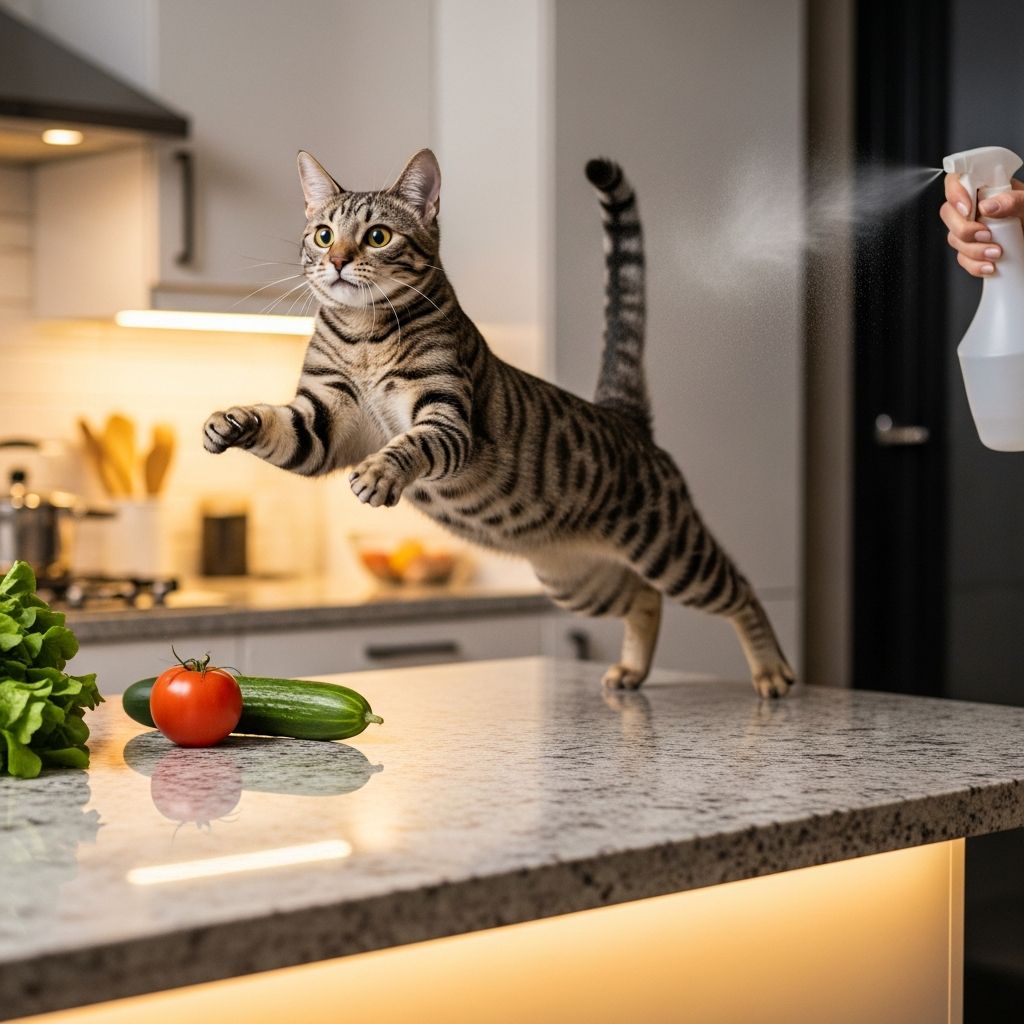
Cats are naturally curious explorers, often drawn to high perches like kitchen counters for food, views, or warmth. However, this habit poses hygiene risks for food prep areas and safety hazards for your feline, such as sharp objects or toxins. This comprehensive guide outlines
10 vet-approved strategies
to discourage counter-jumping while fostering positive behavior. By removing temptations, providing alternatives, and using humane deterrents, you can reclaim your counters without punishment, which experts agree is ineffective and stressful for cats.Why Do Cats Jump on Kitchen Counters?
Understanding your cat’s motivations is key to effective training. Cats seek elevated spots for security, hunting instincts, and oversight of their territory. In kitchens, counters offer access to
food scraps
,sinking water
,sunlit windows
, orprime bird-watching views
. Previous rewarding experiences reinforce the behavior: a quick lick of residue or sunny nap makes counters irresistible. Additionally, easy access via chairs or stools facilitates jumps. Addressing these drivers holistically prevents relapse.Hygiene concerns are paramount—cats track litter box bacteria onto surfaces used for meals. Safety risks include falls, burns from hot stoves, or ingesting harmful items like onions or chocolate. Training promotes a healthier home environment for both you and your pet.
The 10 Ways to Keep Cats Off Kitchen Counters
1. Remove Your Cat’s Temptations
The simplest first step is eliminating attractants. Cats jump for
food remnants
, so wipe counters meticulously after meals and cooking. Store ingredients in sealed containers or cover with tight lids—note that plastic wrap alone may not suffice, as clever cats can paw through it. Promptly wash dishes and avoid leaving sinks full, as dripping faucets mimic hunting prey. Consistency teaches cats that counters yield no rewards, reducing appeal over time.Implement a routine: post-meal wipe-downs with pet-safe cleaners ensure no scents linger. This method, endorsed by veterinary behaviorists, breaks the reward cycle without confrontation.
2. Reward Your Cat’s Desired Behavior
Positive reinforcement trumps punishment. Ignore counter jumps—attention, even scolding, reinforces the action. Instead, praise and treat cats on approved perches like cat trees or window seats. Use high-value treats or play sessions immediately upon spotting good behavior. Over weeks, cats associate alternative spots with positivity, shifting habits naturally.
For best results, place treats only on alternatives during training. Patience is essential; track progress with a journal to note improvements.
3. Provide Alternative Perches
Cats crave height—deny counters by offering superiors. Install
cat trees
,wall shelves
, orwindow perches
near kitchens for surveillance. Multi-level options with scratching posts mimic counter benefits. Position them for optimal views, adding toys or beds to entice.DIY solutions include sturdy shelves bolted securely. This satisfies innate climbing needs, preventing counter reliance. Many owners report success within days of introducing appealing alternatives.
4. Use Double-Sided Tape or Sticky Paws
Make counters uninviting tactilely. Apply clear
double-sided tape
or commercial Sticky Paws strips along edges where cats leap. The unexpected stickiness startles without harm, associating counters with discomfort. Cats dislike paw adhesion, often avoiding treated areas long-term even after removal.Reapply as needed; it’s invisible, preserving aesthetics. Safe for most surfaces, this passive deterrent works unsupervised.
5. Try Aluminum Foil or Plastic Runners
Crumple
aluminum foil
over counters—the crinkly texture and sound repel many cats. Alternatively, place plastic carpet runners nubby-side up for an unpleasant paw feel. These low-cost options create temporary barriers during training.Results vary; some cats adapt by pushing materials aside. Combine with other methods for efficacy, rotating to prevent habituation.
6. Employ Scent Deterrents
Citrus peels, vinegar sprays, or pheromone products like Sentry Stop That! exploit cats’ aversions. Spray edges sparingly—cats detest strong citrus or unfamiliar scents. Pheromone formulas calm while deterring.
Refresh daily; test for surface safety. This sensory method complements physical changes.
7. Keep Chairs Out of the Way
Block launch pads by pulling chairs from counters temporarily. Cats use them as steps; separation disrupts access, breaking the pattern. Reintroduce once habits fade, monitoring for recidivism.
This logistical tweak requires minimal effort and pairs well with perches.
8. Close the Blinds
Windows lure with sun and views. Draw blinds over counter-adjacent panes, eliminating warmth and entertainment. Install perches elsewhere for sunlight substitution.
Simple yet effective for view-driven jumpers.
9. Place Deterrents on the Counters
Humane noise-makers like coin-filled bottles or lightweight cans topple easily, startling cats via clatter. Position strategically; the surprise reinforces avoidance.
Avoid heavy items; focus on safe, startling effects.
10. Use a Physical Barrier
For persistent cases, install
baby gates
or kitchen barriers. These prevent unsupervised access, ideal for multi-cat homes or when away. While seeming drastic, they safeguard against dangers like hot appliances or toxins.Custom panels offer aesthetics; long-term peace justifies investment.
Additional Tips for Success
- Consistency is Crucial: All household members must enforce rules uniformly.
- Monitor When Absent: Use cameras to verify behavior; adjust tactics accordingly.
- Enrich Environment: Puzzle feeders and interactive toys curb boredom-driven jumps.
- Health Check: Rule out medical issues like hyperthyroidism prompting restlessness.
Common Mistakes to Avoid
Punishing cats—yelling or spraying water—creates fear, not learning, and worsens hidden behaviors. Never use harsh methods; they erode trust. Inconsistency allows mixed signals. Overlooking alternatives dooms efforts, as unmet needs drive persistence.
Pros and Cons of Popular Methods
| Method | Pros | Cons |
|---|---|---|
| Double-Sided Tape | Invisible, effective long-term, safe | Needs reapplication, surface residue |
| Aluminum Foil | Cheap, easy setup | Cats may adapt, unsightly |
| Alternative Perches | Addresses root need, permanent | Initial cost/space |
| Physical Barriers | Foolproof safety | Inconvenient access |
Frequently Asked Questions (FAQs)
What if my cat only jumps when I’m not looking?
Use pet cameras to observe and apply deterrents consistently. Reward alternatives proactively.
Is it okay to punish my cat for counter jumping?
No—punishment causes stress without teaching. Focus on positives and prevention.
How long does training take?
Typically 2-4 weeks with consistency; vary by cat.
Are commercial deterrents safe?
Choose vet-approved, non-toxic options like Sticky Paws.
Will my kitten outgrow this?
Train early; habits solidify quickly.
References
- Association of American Feed Control Officials (AAFCO) Guidelines on Pet Food Safety — AAFCO. 2024-01-15. https://www.aafco.org/
- American Veterinary Medical Association (AVMA) Position on Feline Behavior Management — AVMA. 2023-06-20. https://www.avma.org/
- Journal of Feline Medicine and Surgery: Environmental Enrichment for Cats — Sage Journals (Peer-reviewed). 2022-11-01. https://doi.org/10.1177/1098612X221127890
- Cornell University College of Veterinary Medicine: Cat Behavior FAQs — Cornell University. 2025-03-10. https://www.vet.cornell.edu/departments-centers-and-institutes/cornell-feline-health-center/
- Humane Society of the United States: Positive Reinforcement Training for Cats — HSUS. 2024-08-05. https://www.humanesociety.org/
Similar Articles








Read full bio of Sneha Tete




